
Perù, scoperta una tomba Chimú di 600 anni ricca di tesori
Una piattaforma funeraria quasi intatta è riemersa a Chan Chan, l’antica capitale del regno Chimú. Gli archeologi hanno trovato 38 individui, ornamenti, armi, oggetti in metallo e tracce di un pigmento sacro: una scoperta che potrebbe cambiare ciò che sappiamo sui rituali funerari dell’élite pre-incaica.
Per più di seicento anni è rimasta nascosta sotto strati di terra e pietre, protetta dal tempo e, soprattutto, dai saccheggiatori che hanno compromesso molti dei siti funerari dell’antica civiltà Chimú.
Ora, nel cuore di Chan Chan, in Perù, gli archeologi hanno riportato alla luce una piattaforma funeraria quasi intatta contenente i resti di 38 individui, insieme a oggetti preziosi e testimonianze rituali che aprono una nuova finestra sulla società che dominò la costa settentrionale del Perù prima dell’espansione degli Inca.

Il ritrovamento è avvenuto nel complesso fortificato di Utzh An, conosciuto in passato come Palazzo Gran Chimú e considerato il più grande dei complessi monumentali di Chan Chan. La scoperta è stata definita eccezionale dal Ministero della Cultura del Perù proprio perché gli archeologi hanno avuto la possibilità di studiare una sepoltura conservata nel suo contesto originario, con i resti umani e gli oggetti ancora associati al rituale funerario.
Una tomba rimasta nascosta per oltre sei secoli
La piattaforma funeraria presenta una struttura particolarmente articolata, con una camera centrale e due camere laterali. La camera principale misura circa 1,2 metri di larghezza e 5 metri di profondità e può essere raggiunta attraverso un ingresso seguito da una scalinata che scende per circa 2,5 metri. Al suo interno gli archeologi hanno individuato i resti di un individuo accompagnato da numerosi manufatti realizzati in conchiglia e metallo.

Le due camere laterali hanno invece dimensioni maggiori. Una di esse non ha restituito resti scheletrici, ma ha conservato armi ed emblemi metallici, mentre nell’altra sono stati rinvenuti fino a questo momento 20 individui. Gli altri 18 sono stati individuati in altri punti della stessa piattaforma funeraria, portando il totale a 38 persone sepolte.
Si tratta di un contesto archeologico completo, nel quale è possibile osservare il rapporto tra gli individui, gli oggetti deposti con loro e la struttura stessa della sepoltura.
Chi erano le persone sepolte nella piattaforma funeraria?
Gli studi preliminari indicano che i defunti appartenevano a gruppi di alto rango della società Chimú. Attorno ai resti sono stati infatti rinvenuti ornamenti raffinati e oggetti legati alla sfera cerimoniale, elementi che suggeriscono l’importanza sociale delle persone sepolte.
Tra i reperti sono state individuate anche tracce di pigmento rosso, riconducibili al cinabro, una sostanza particolarmente significativa nei rituali funerari andini. Le analisi dovranno chiarire ulteriormente la composizione del pigmento e il suo utilizzo all’interno del complesso funerario.
Sono emersi inoltre ornamenti, manufatti in conchiglia, oggetti metallici e armi, insieme a numerosi elementi che possono contribuire a ricostruire il livello sociale e il ruolo dei defunti.

Un corpo sepolto in una posizione insolita
Tra i 38 individui individuati nella piattaforma funeraria ce n’è uno il cui trattamento funerario appare molto diverso rispetto alla consuetudine Chimú.
Il corpo è stato deposto completamente disteso sul fondo di una delle camere.
La posizione è particolarmente significativa perché le sepolture Chimú conosciute sono generalmente caratterizzate da individui collocati in posizione flessa o seduta-flessa. La disposizione completamente estesa rappresenta quindi un’anomalia che dovrà essere studiata con attenzione.
Gli archeologi hanno ipotizzato che questa particolarità possa essere collegata a un rituale di sacrificio oppure a una differenza gerarchica molto marcata, ma al momento si tratta di un’ipotesi che dovrà essere verificata attraverso ulteriori analisi.

Armi, metalli e ceramiche raccontano una società complessa
Nelle camere sono state recuperate armi ed emblemi metallici, mentre il complesso degli oggetti associati alle sepolture comprende anche manufatti in conchiglia e altri materiali preziosi.
Gli archeologi hanno inoltre documentato circa 60 reperti ceramici, tra bottiglie con ansa a staffa e recipienti che presentano caratteristiche stilistiche riconducibili all’influenza Inca. Questi materiali sono particolarmente importanti perché possono fornire nuove informazioni sui rapporti tra Chimú e Inca durante le fasi finali della storia del regno.
Chan Chan, la gigantesca capitale di fango dei Chimú
Per comprendere la portata della scoperta bisogna entrare idealmente a Chan Chan, l’antica capitale del regno Chimú. Situata nei pressi dell’attuale città di Trujillo, nella regione di La Libertad, Chan Chan è considerata la più grande città in adobe dell’America preispanica e rappresenta uno dei più importanti complessi archeologici del continente sudamericano.
La civiltà Chimú si sviluppò lungo la costa settentrionale dell’attuale Perù tra il primo e il secondo millennio d.C., raggiungendo il suo massimo sviluppo prima dell’espansione dell’Impero Inca.

Il loro territorio arrivò a estendersi per circa 1.000 chilometri lungo la costa del Pacifico, dal confine tra Perù ed Ecuador fino all’area di Lima.
Chan Chan era un enorme centro politico, amministrativo, religioso e cerimoniale, costruito prevalentemente in terra cruda e organizzato in grandi complessi monumentali.
Ed è proprio all’interno di uno di questi complessi, Utzh An, che il passato ha appena restituito uno dei suoi segreti meglio conservati.
Perché questa scoperta è così importante
La questione fondamentale è che la piattaforma è rimasta quasi intatta. Molte delle conoscenze precedenti sulle sepolture dell’élite Chimú derivano infatti da contesti che sono stati saccheggiati nel corso del tempo, rendendo difficile ricostruire la posizione originale dei corpi e degli oggetti. In questo caso, invece, gli archeologi possono studiare i materiali nel luogo in cui furono deposti circa sei secoli fa.
Un oggetto estratto da una tomba saccheggiata può raccontare molto della cultura che lo ha prodotto, ma quando viene trovato insieme al corpo, nel punto esatto in cui era stato collocato durante il rituale funerario, diventa parte di una storia molto più complessa.
Può raccontare chi era quella persona, quale posizione occupava nella società, quali simboli accompagnavano il suo viaggio nell’aldilà e quali rituali furono compiuti al momento della sepoltura.
Gli archeologi stanno ancora leggendo questa storia
Gli specialisti stanno documentando minuziosamente la posizione degli oggetti e dei resti umani, utilizzando anche tecniche di fotogrammetria ad alta precisione per creare modelli tridimensionali del contesto archeologico prima della rimozione dei reperti.
Questo permette di conservare digitalmente non soltanto gli oggetti, ma anche le relazioni spaziali che li legavano tra loro
La posizione di un ornamento, la distanza tra un corpo e un’arma, la presenza di un pigmento, il modo in cui è stato deposto un recipiente: tutti questi elementi possono contribuire a ricostruire una pratica funeraria rimasta nascosta per più di seicento anni.

Un passato ancora tutto da scoprire
La scoperta di Utzh An dimostra ancora una volta quanto poco sia stato raccontato, e quanto invece resti ancora da scoprire, della grande civiltà Chimú.
Secondo le informazioni diffuse dopo il ritrovamento, gli interventi nel settore di Utzh An avevano raggiunto circa il 79% di avanzamento a luglio 2026, mentre le indagini proseguiranno per approfondire i rituali funerari dell’élite Chimú e la successiva presenza Inca nella regione.
Sotto la terra di Chan Chan non sono riemersi soltanto 38 individui vissuti più di sei secoli fa. È riemerso un frammento di una società sofisticata, gerarchica e profondamente legata ai rituali, una società che aveva costruito una delle più straordinarie città di terra dell’America precolombiana.
Una storia che il tempo aveva nascosto e che oggi, lentamente, gli archeologi stanno tornando a leggere
Per il momento il sempre vostro Michelangelo Buonarroti vi saluta dandovi appuntamento ai prossimi post e sui social.

Peru: 600-Year-Old Chimú Tomb Rich in Treasures Discovered
A nearly intact funerary platform has been unearthed at Chan Chan, the ancient capital of the Chimú Kingdom. Archaeologists discovered the remains of 38 individuals, along with ornaments, weapons, metal objects, and traces of a sacred pigment—a find that could reshape our understanding of pre-Inca elite funerary rituals.
For over six centuries, it lay hidden beneath layers of earth and stone, shielded from the ravages of time and, crucially, from the looters who have compromised many burial sites of the ancient Chimú civilization. Now, in the heart of Chan Chan, Peru, archaeologists have brought to light a nearly intact funerary platform containing the remains of 38 individuals, alongside precious objects and evidence of rituals that offer a new window into the society that dominated Peru’s northern coast prior to the Inca expansion.
The discovery was made within the Utzh An fortified complex—formerly known as the Gran Chimú Palace and considered the largest of Chan Chan’s monumental complexes. Peru’s Ministry of Culture has hailed the find as exceptional, precisely because it allowed archaeologists to study a burial preserved in its original context, with human remains and artifacts still associated with the funerary ritual.
A Tomb Hidden for Over Six Centuries
The funerary platform features a complex layout, comprising a central chamber and two side chambers. The main chamber measures approximately 1.2 meters in width and 5 meters in depth; it is accessed via an entrance leading to a staircase that descends about 2.5 meters. Inside, archaeologists identified the remains of an individual accompanied by numerous artifacts made of shell and metal.
The two side chambers, by contrast, are larger in size. One of these yielded no skeletal remains but preserved weapons and metal emblems, whereas the other has so far yielded the remains of 20 individuals. Another 18 individuals were identified at other points on the same funerary platform, bringing the total number of burials to 38.
This constitutes a complete archaeological context, allowing for the observation of the relationship between the individuals, the objects interred with them, and the structure of the burial itself.
Who were the people buried in the funerary platform?
Preliminary studies indicate that the deceased belonged to high-ranking groups within Chimú society. Indeed, refined ornaments and objects associated with ceremonial practices were found surrounding the remains—elements suggesting the high social status of the buried individuals.
Traces of red pigment were also identified among the finds; these appear to be cinnabar, a substance of particular significance in Andean funerary rituals. Further analysis is required to clarify the pigment’s composition and its specific use within the funerary complex.
Additionally, ornaments, shell artifacts, metal objects, and weapons were uncovered, alongside numerous other items that may help reconstruct the social status and roles of the deceased.
A body buried in an unusual position
Among the 38 individuals identified on the funerary platform, one stands out due to burial treatment that differs significantly from standard Chimú customs.
The body was laid out fully extended on the floor of one of the chambers.
This position is particularly significant because known Chimú burials typically feature individuals placed in a flexed or seated-flexed posture. The fully extended position therefore represents an anomaly that warrants careful study.
Archaeologists have hypothesized that this unusual feature might be linked to a sacrificial ritual or a stark hierarchical distinction; however, this remains a hypothesis that requires verification through further analysis. Weapons, metals, and ceramics reveal a complex society
Weapons and metal emblems were recovered from the chambers, while the assemblage of objects associated with the burials also includes artifacts made of shell and other precious materials.
Archaeologists have also documented approximately 60 ceramic items, including stirrup-spout bottles and vessels displaying stylistic features indicative of Inca influence. These materials are particularly significant as they may provide new insights into the relationship between the Chimú and the Inca during the final stages of the kingdom’s history.
Chan Chan, the Chimú’s colossal mud-brick capital
To grasp the significance of the discovery, one must mentally step into Chan Chan, the ancient capital of the Chimú kingdom. Located near the modern-day city of Trujillo in the La Libertad region, Chan Chan is considered the largest adobe city in pre-Hispanic America and stands as one of the most important archaeological complexes of the South American continent.
The Chimú civilization developed along the northern coast of present-day Peru between the first and second millennia AD, reaching its peak before the expansion of the Inca Empire.
Their territory extended for approximately 1,000 kilometers along the Pacific coast, stretching from the border between Peru and Ecuador to the Lima area.
Chan Chan was a massive political, administrative, religious, and ceremonial center, built primarily of unbaked earth and organized into large monumental complexes.
It is precisely within one of these complexes—Utzh An—that the past has just yielded one of its best-kept secrets.
Why this discovery is so important
The crucial point is that the platform remained almost intact. Much of what was previously known about Chimú elite burials came from contexts that had been looted over time, making it difficult to reconstruct the original placement of bodies and objects. In this instance, however, archaeologists can study the materials exactly where they were deposited some six centuries ago.
An object recovered from a looted tomb can reveal a great deal about the culture that created it; yet, when found alongside the body—in the precise spot where it was placed during the funeral ritual—it becomes part of a far more complex story.
It can reveal who the person was, the position they held in society, the symbols accompanying their journey to the afterlife, and the rituals performed at the time of burial.
Archaeologists are still deciphering this story
Specialists are meticulously documenting the positions of the objects and human remains, employing high-precision photogrammetry techniques to create three-dimensional models of the archaeological context before the artifacts are removed. This makes it possible to digitally preserve not only the objects themselves but also the spatial relationships that connected them.
The position of an ornament, the distance between a body and a weapon, the presence of pigment, the way a vessel was placed—all these elements can help reconstruct a funerary practice that had remained hidden for over six hundred years.
A past still waiting to be discovered
The discovery at Utzh An demonstrates once again how little has been told—and how much remains to be discovered—about the great Chimú civilization.
According to information released following the find, work in the Utzh An sector was approximately 79% complete as of July 2026, while investigations will continue to shed further light on Chimú elite funerary rituals and the subsequent Inca presence in the region.
It is not merely the remains of 38 individuals who lived over six centuries ago that have emerged from the soil of Chan Chan. A fragment of a sophisticated, hierarchical society deeply rooted in ritual has also come to light—a society that built one of the most extraordinary earthen cities of pre-Columbian America.
A story that time had concealed, and which archaeologists are now slowly beginning to read once more.
For now, yours truly, Michelangelo Buonarroti, bids you farewell and looks forward to seeing you in future posts and on social media.

Sostienici – Support Us
Se questo blog ti piace e ti appassiona, puoi aiutarci a farlo crescere sempre più sostenendoci in modo concreto condividendo i post, seguendo le pagine social e con un contributo che ci aiuta ad andare avanti con il nostro lavoro di divulgazione. . ENGLISH: If you like and are passionate about this blog, you can help us make it grow more and more by supporting us in a concrete way by sharing posts, following social pages and with a contribution that helps us to move forward with our dissemination work.
10,00 €
-
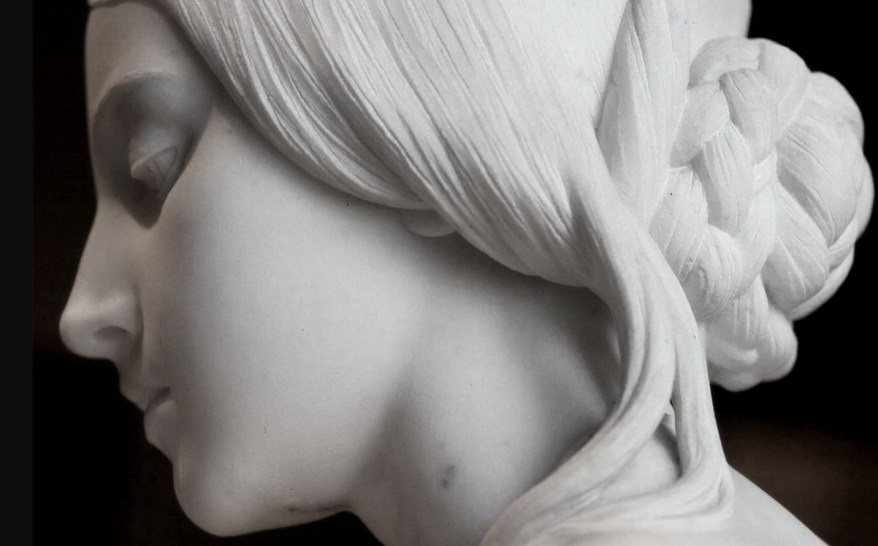
21 ottobre 1816: nasce Pietro Magni, lo scultore che trasformò una giovane lettrice in un capolavoro
🇮🇹Il 21 ottobre 1816 nasceva Pietro Magni, lo scultore della Giovane leggitrice. Scopri la storia dell’opera ignorata a Brera e diventata un successo nel 1861… 🇬🇧On October 21, 1816, Pietro Magni—the sculptor behind The Young Reader was born. Discover the story of this work, which was initially overlooked at the Brera Academy before becoming a…
-

21 ottobre 1556: muore Pietro Aretino, il ‘flagello dei principi’ che attaccò il mio Giudizio Universale
🇮🇹Il 21 ottobre 1556 moriva Pietro Aretino, poeta e polemista rinascimentale. Dopo aver chiesto invano un mio disegno, si scagliò contro il Giudizio Universale… 🇬🇧On October 21, 1556, Pietro Aretino—a Renaissance poet and polemicist—died. After having asked me in vain for a drawing, he lashed out against The Last Judgment…
-
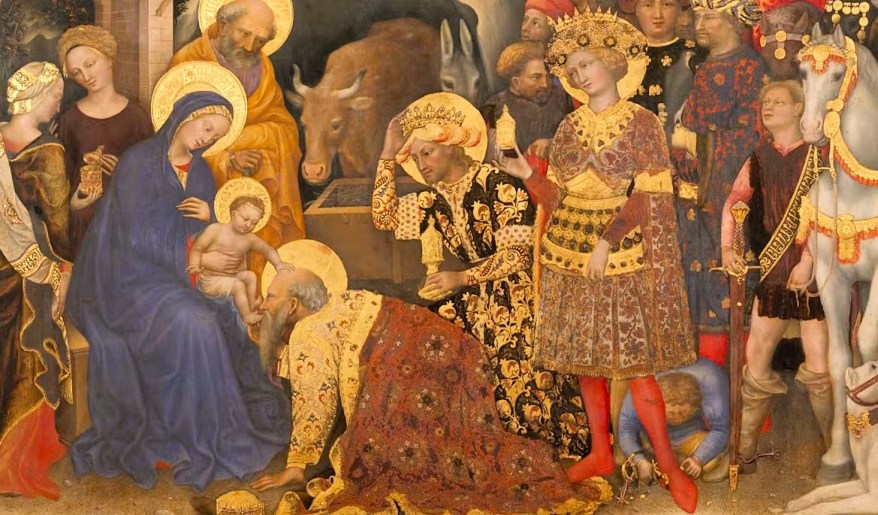
L’Adorazione dei Magi di Gentile da Fabriano: il Natale più ricco e spettacolare del Rinascimento
🇮🇹Oro, mantelli ricamati e un corteo di sovrani: scopri l’Adorazione dei Magi di Gentile da Fabriano, capolavoro del 1423 agli Uffizi… 🇬🇧Gold, embroidered cloaks, and a procession of sovereigns: discover the Adoration of the Magi by Gentile da Fabriano, a 1423 masterpiece housed at the Uffizi…
Condividi:


Questo sono io




sostienici

Sostienici – Support Us
Se questo blog ti piace e ti appassiona, puoi aiutarci a farlo crescere sempre più sostenendoci in modo concreto condividendo i post, seguendo le pagine social e con un contributo che ci aiuta ad andare avanti con il nostro lavoro di divulgazione. . ENGLISH: If you like and are passionate about this blog, you can help us make it grow more and more by supporting us in a concrete way by sharing posts, following social pages and with a contribution that helps us to move forward with our dissemination work.
€10,00


Davvero interessante questo ritrovamento, ottima notizia 👏👏👏👏👏👍👍👍👍👌👌👌😉😊
"Mi piace"Piace a 1 persona
🙂
"Mi piace"Piace a 1 persona