

Venerdì Santo: gli “Ecce Homo” più intensi della storia dell’arte
Il Venerdì Santo è il giorno del dolore e il momento in cui l’arte occidentale si confronta con una delle immagini più potenti e universali della tradizione cristiana: l’Ecce Homo. La scena, tratta dal Vangelo di Giovanni, racconta il momento in cui Ponzio Pilato mostra alla folla Gesù flagellato pronunciando la celebre frase “Ecco l’uomo”.
Un momento carico di tensione morale e drammatica, che nei secoli ha suscitato forti emozioni negli artisti di ogni epoca, trasformandosi in uno dei soggetti più profondi e stratificati della storia dell’arte.
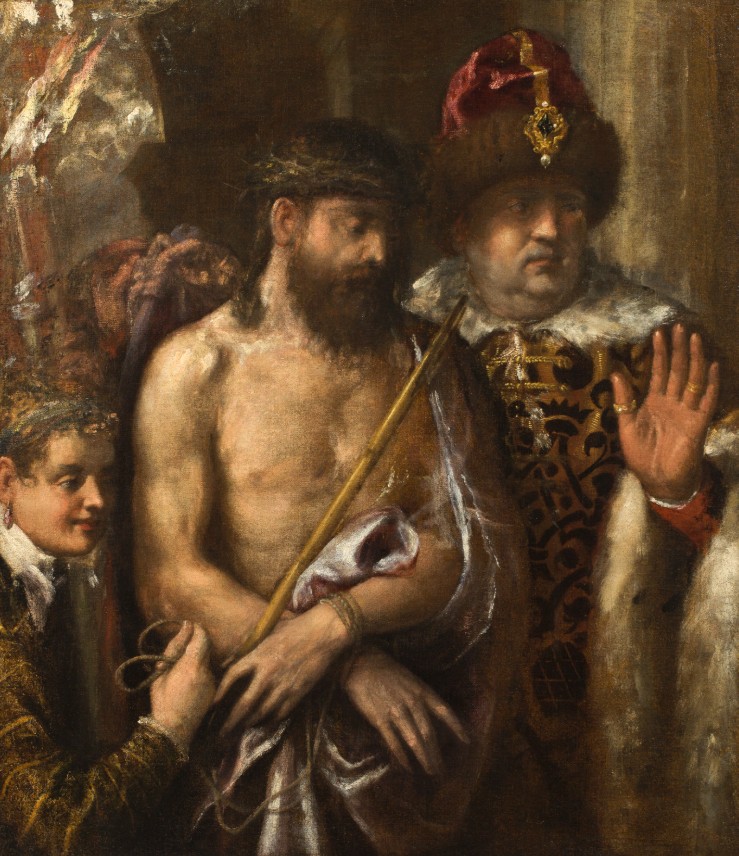
Ecce Homo: significato e forza di un’immagine universale
L’iconografia dell’Ecce Homo si concentra su un Cristo umiliato e sofferente, coronato di spine e rivestito di un mantello purpureo, simbolo di una regalità derisa.
Non è soltanto la rappresentazione di un episodio evangelico, ma una riflessione visiva sulla fragilità umana, sull’ingiustizia e sulla responsabilità collettiva. Gli artisti, di epoca in epoca, hanno reinterpretato questa scena accentuando ora l’aspetto devozionale, ora quello psicologico, ora ancora la dimensione teatrale del racconto.
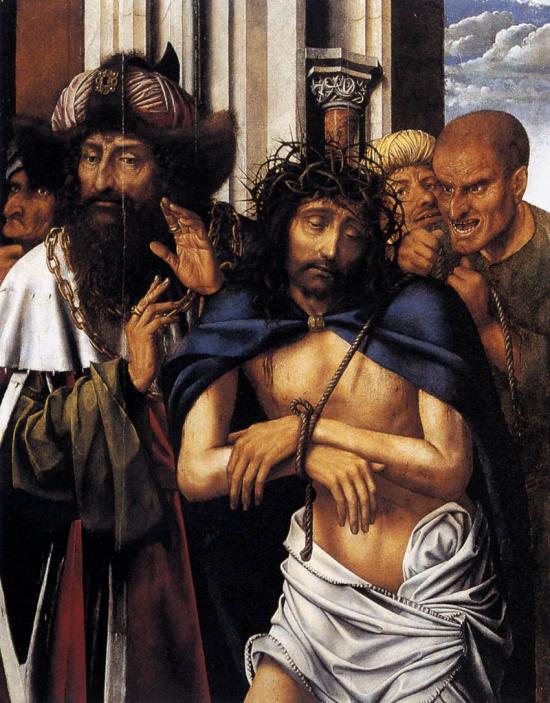
Antonello da Messina: il dolore che incontra lo sguardo
Con Antonello da Messina, l’Ecce Homo assume una dimensione intima e quasi sconvolgente. Il volto di Cristo emerge dallo sfondo scuro con una presenza viva, concreta, in cui ogni dettaglio – le lacrime, il sangue, lo sguardo – è reso con una precisione straordinaria. Non c’è folla, non c’è narrazione complessa: esiste solo l’incontro diretto tra l’immagine e lo spettatore, chiamato a partecipare emotivamente al dolore.
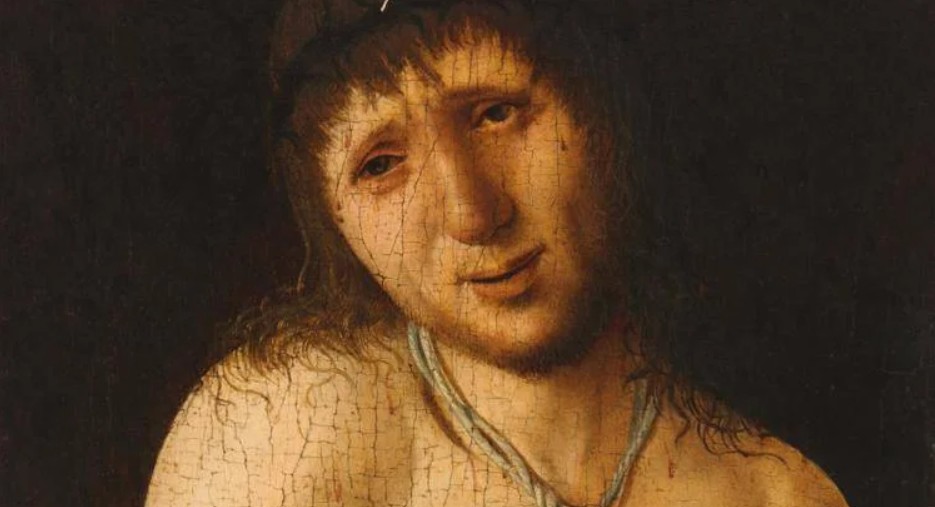
Bosch: la folla e la deformazione del male
Nelle opere di Hieronymus Bosch la scena si amplia e si trasforma in una rappresentazione quasi visionaria. Cristo è circondato da figure caricaturali, volti grotteschi e inquietanti che incarnano la crudeltà e l’irrazionalità della massa. Qui l’Ecce Homo diventa una denuncia della violenza collettiva, una riflessione sulla perdita di umanità di fronte al potere della folla.
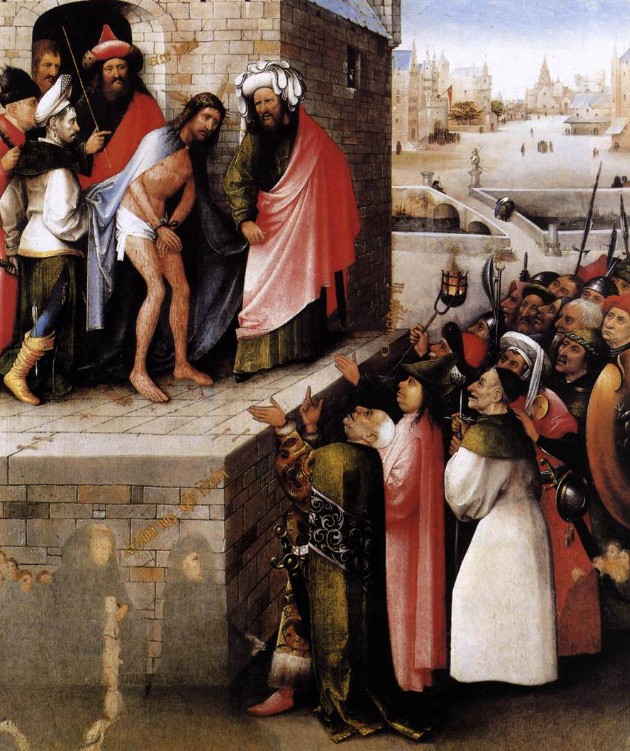
Mantegna: la costruzione del dramma
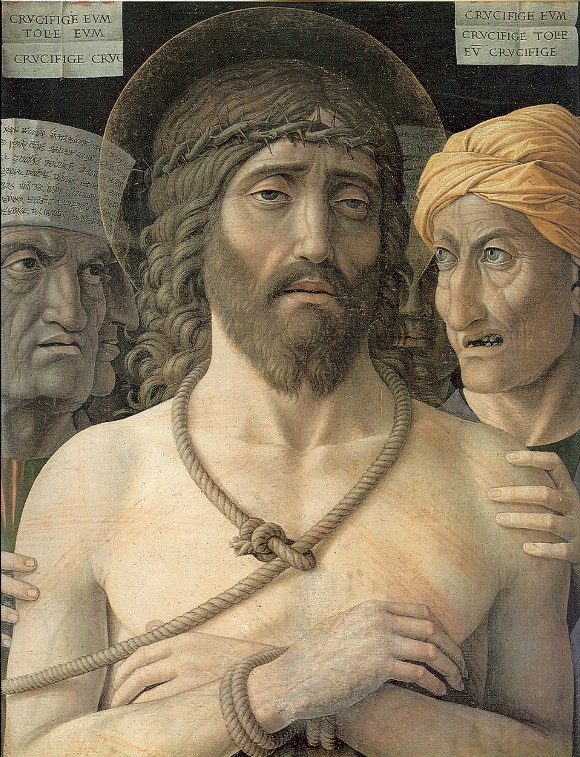
Con Andrea Mantegna la scena acquista una struttura rigorosa e solenne. L’artista organizza lo spazio con precisione prospettica, quasi come un palcoscenico sul quale si svolge il dramma. Il corpo di Cristo appare scolpito, definito con una forza plastica che accentua il senso di sacrificio.
La tensione non è solo emotiva, ma anche architettonica, costruita attraverso linee e volumi.
Il Cinquecento: tra luce, colore e sentimento
Nel corso del Cinquecento, l’Ecce Homo si arricchisce di nuove sfumature espressive.
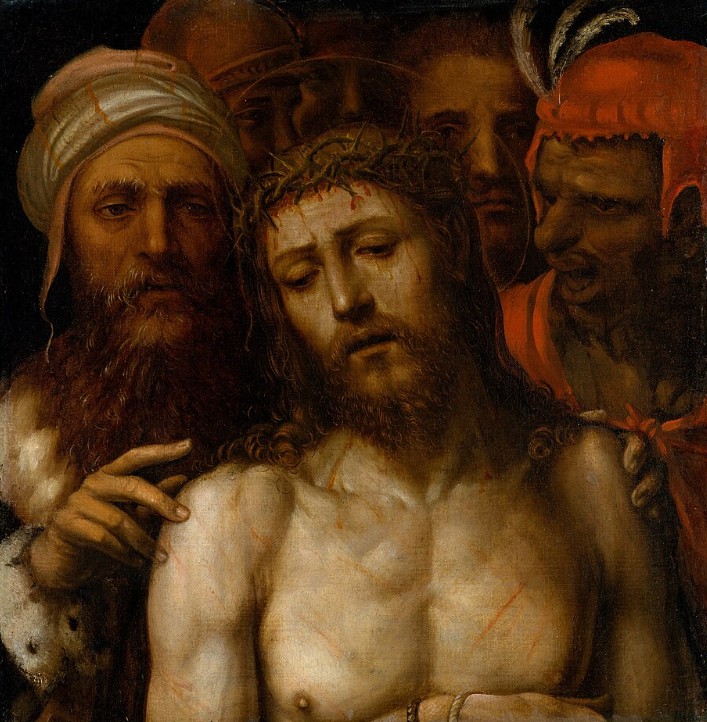
Correggio introduce una luce morbida che avvolge la figura di Cristo, trasformando il dolore in una dimensione più intima e meditativa. Con il Sodoma, la scena si carica di pathos, mentre Tiziano amplifica il dramma attraverso il colore, utilizzando toni intensi e vibranti che rendono la sofferenza quasi palpabile.
Tintoretto: il teatro della fede
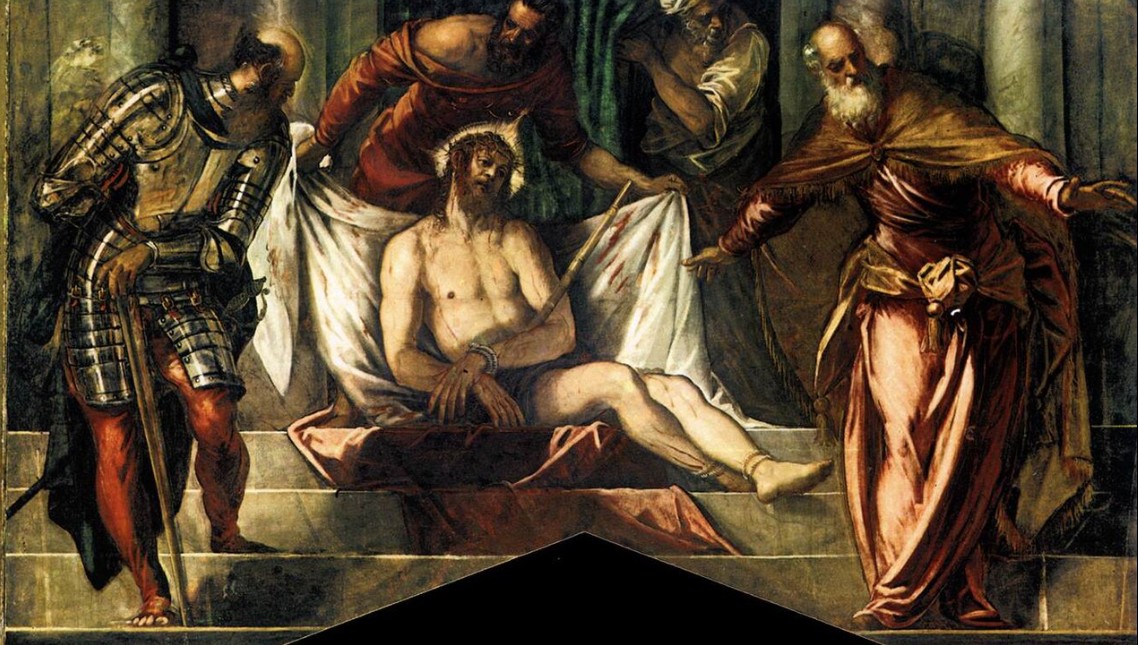
Nell’interpretazione di Tintoretto, l’Ecce Homo diventa una scena carica di energia e movimento. La luce taglia lo spazio, le figure si dispongono in una composizione dinamica e coinvolgente, e lo spettatore si trova immerso in un racconto visivo che sembra svolgersi sotto i suoi occhi.
È una pittura che coinvolge emotivamente e quasi fisicamente.
Il Seicento: pathos, eleganza e intensità
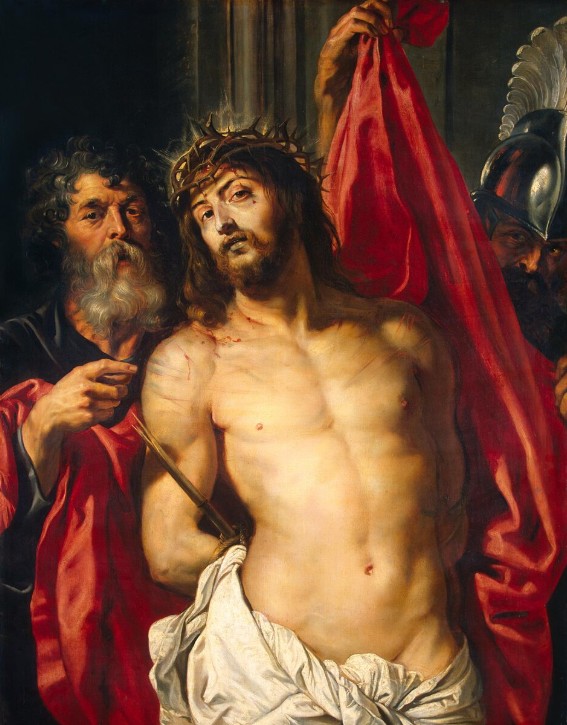
Nel Seicento, artisti come Peter Paul Rubens e Antoon van Dyck portano l’Ecce Homo verso una dimensione ancora più teatrale e raffinata.
Le composizioni si arricchiscono di movimento e di contrasti luminosi, mentre la figura di Cristo viene resa con una sensibilità che unisce dramma ed eleganza. Anche Jan Cossiers contribuisce a questa evoluzione, accentuando la tensione emotiva e il dialogo tra luce e ombra.
L’Ecce Homo di Antonio Ciseri: il dramma visto da dentro
Tra tutte le interpretazioni, quella di Antonio Ciseri rappresenta una svolta sorprendente. Realizzata nel 1871, l’opera si distingue per una scelta compositiva radicale: lo spettatore osserva la scena da dietro Ponzio Pilato, come se fosse testimone diretto dell’evento.

Questa prospettiva ribalta completamente il punto di vista tradizionale. Pilato non è più una figura distante, ma un uomo reale, colto in un momento di esitazione e conflitto interiore. Il suo gesto sembra sospeso, come se fosse consapevole dell’ingiustizia che sta per compiersi. Cristo, posto lateralmente, non domina la scena con la sofferenza fisica, ma con una presenza silenziosa e dignitosa che amplifica la tensione morale.

La precisione nei dettagli, quasi fotografica, si unisce a una ricostruzione storica accurata, rendendo l’opera straordinariamente realistica. Tuttavia, ciò che colpisce maggiormente è la dimensione psicologica: Ciseri non racconta solo un evento, ma esplora la coscienza dei protagonisti, trasformando l’Ecce Homo in una riflessione moderna sulla responsabilità e sul giudizio.
“Ecco l’uomo”, oggi come allora
Dall’intensità raccolta di Antonello alla teatralità di Tintoretto, fino alla profondità psicologica di Ciseri, l’Ecce Homo rimane una delle immagini più potenti della storia dell’arte. E’ il riflesso dell’umanità intera, colta nel momento in cui deve confrontarsi con il dolore, la giustizia e la propria coscienza.
Un’immagine che, ancora oggi, invita a guardare davvero. E a comprendere fino in fondo il significato di quelle parole: “Ecco l’uomo.”
Per il momento il sempre vostro Michelangelo Buonarroti vi saluta dandovi appuntamento ai prossimi post e sui social.
Good Friday: The Most Intense “Ecce Homo” Paintings in Art History
Good Friday is the day of sorrow and the moment when Western art confronts one of the most powerful and universal images in Christian tradition: the Ecce Homo. The scene, taken from the Gospel of John, depicts the moment when Pontius Pilate shows the flagellated Jesus to the crowd, uttering the famous phrase, “Behold the man.”
A moment charged with moral and dramatic tension, it has aroused strong emotions in artists throughout the centuries, becoming one of the most profound and multifaceted subjects in art history.
Ecce Homo: The Meaning and Power of a Universal Image
The iconography of the Ecce Homo focuses on a humiliated and suffering Christ, crowned with thorns and clad in a purple robe, a symbol of mocked royalty.
It is not simply the representation of a Gospel episode, but a visual reflection on human frailty, injustice, and collective responsibility. Artists, from era to era, have reinterpreted this scene, sometimes emphasizing the devotional aspect, sometimes the psychological, sometimes the theatrical dimension of the story.
Antonello da Messina: Pain Meets the Eye
With Antonello da Messina, the Ecce Homo takes on an intimate and almost shocking dimension. Christ’s face emerges from the dark background with a living, concrete presence, in which every detail—the tears, the blood, the gaze—is rendered with extraordinary precision. There is no crowd, no complex narrative: there is only the direct encounter between the image and the viewer, called to emotionally participate in the pain.
Bosch: The Crowd and the Deformation of Evil
In the works of Hieronymus Bosch, the scene expands and transforms into an almost visionary representation. Christ is surrounded by caricatured figures, grotesque and disturbing faces that embody the cruelty and irrationality of the masses. Here, the Ecce Homo becomes a denunciation of collective violence, a reflection on the loss of humanity in the face of the power of the crowd.
Mantegna: The Construction of the Drama
With Andrea Mantegna, the scene acquires a rigorous and solemn structure. The artist organizes the space with precise perspective, almost like a stage on which the drama unfolds. Christ’s body appears sculpted, defined with a plastic force that accentuates the sense of sacrifice.
The tension is not only emotional, but also architectural, constructed through lines and volumes.
The 16th Century: Between Light, Color, and Sentiment
During the 16th century, the Ecce Homo was enriched with new expressive nuances.
Correggio introduced a soft light that envelops the figure of Christ, transforming the pain into a more intimate and meditative dimension. With Sodom, the scene is charged with pathos, while Titian amplifies the drama through color, using intense and vibrant tones that make the suffering almost palpable.
Tintoretto: The Theater of Faith
In Tintoretto’s interpretation, the Ecce Homo becomes a scene charged with energy and movement. Light cuts through the space, the figures are arranged in a dynamic and engaging composition, and the viewer is immersed in a visual narrative that seems to unfold before their eyes.
It is a painting that engages emotionally and almost physically.
The 17th Century: Pathos, Elegance, and Intensity
In the 17th century, artists such as Peter Paul Rubens and Anthony van Dyck took the Ecce Homo to an even more theatrical and refined dimension.
The compositions are enriched with movement and light contrasts, while the figure of Christ is rendered with a sensitivity that combines drama and elegance. Jan Cossiers also contributes to this evolution, accentuating the emotional tension and the dialogue between light and shadow.
Antonio Ciseri’s Ecce Homo: Drama Seen from Within
Among all the interpretations, Antonio Ciseri’s represents a surprising breakthrough. Created in 1871, the work stands out for its radical compositional choice: the viewer observes the scene from behind Pontius Pilate, as if directly witnessing the event.
This perspective completely overturns the traditional point of view. Pilate is no longer a distant figure, but a real man, caught in a moment of hesitation and internal conflict. His gesture seems suspended, as if aware of the injustice about to be committed. Christ, positioned to the side, dominates the scene not with physical suffering, but with a silent and dignified presence that amplifies the moral tension.
The almost photographic precision of detail combines with an accurate historical reconstruction, making the work extraordinarily realistic. However, what is most striking is the psychological dimension: Ciseri does not simply narrate an event, but explores the consciences of the protagonists, transforming Ecce Homo into a modern reflection on responsibility and judgment.
“Behold the Man,” then as now
From the intimate intensity of Antonello to the theatricality of Tintoretto, to the psychological depth of Ciseri, the Ecce Homo remains one of the most powerful images in the history of art. It is a reflection of humanity as a whole, captured in the moment of confronting pain, justice, and its own conscience.
An image that, even today, invites us to truly look. And to fully understand the meaning of those words: “Behold the Man.”
For now, yours truly, Michelangelo Buonarroti bids you farewell, and we look forward to seeing you in future posts and on social media.

Sostienici – Support Us
Se questo blog ti piace e ti appassiona, puoi aiutarci a farlo crescere sempre più sostenendoci in modo concreto condividendo i post, seguendo le pagine social e con un contributo che ci aiuta ad andare avanti con il nostro lavoro di divulgazione. . ENGLISH: If you like and are passionate about this blog, you can help us make it grow more and more by supporting us in a concrete way by sharing posts, following social pages and with a contribution that helps us to move forward with our dissemination work.
10,00 €
Condividi:


Questo sono io





sostienici

Sostienici – Support Us
Se questo blog ti piace e ti appassiona, puoi aiutarci a farlo crescere sempre più sostenendoci in modo concreto condividendo i post, seguendo le pagine social e con un contributo che ci aiuta ad andare avanti con il nostro lavoro di divulgazione. . ENGLISH: If you like and are passionate about this blog, you can help us make it grow more and more by supporting us in a concrete way by sharing posts, following social pages and with a contribution that helps us to move forward with our dissemination work.
€10,00


