
Il Dio Fluviale: apre al pubblico la sala espositiva
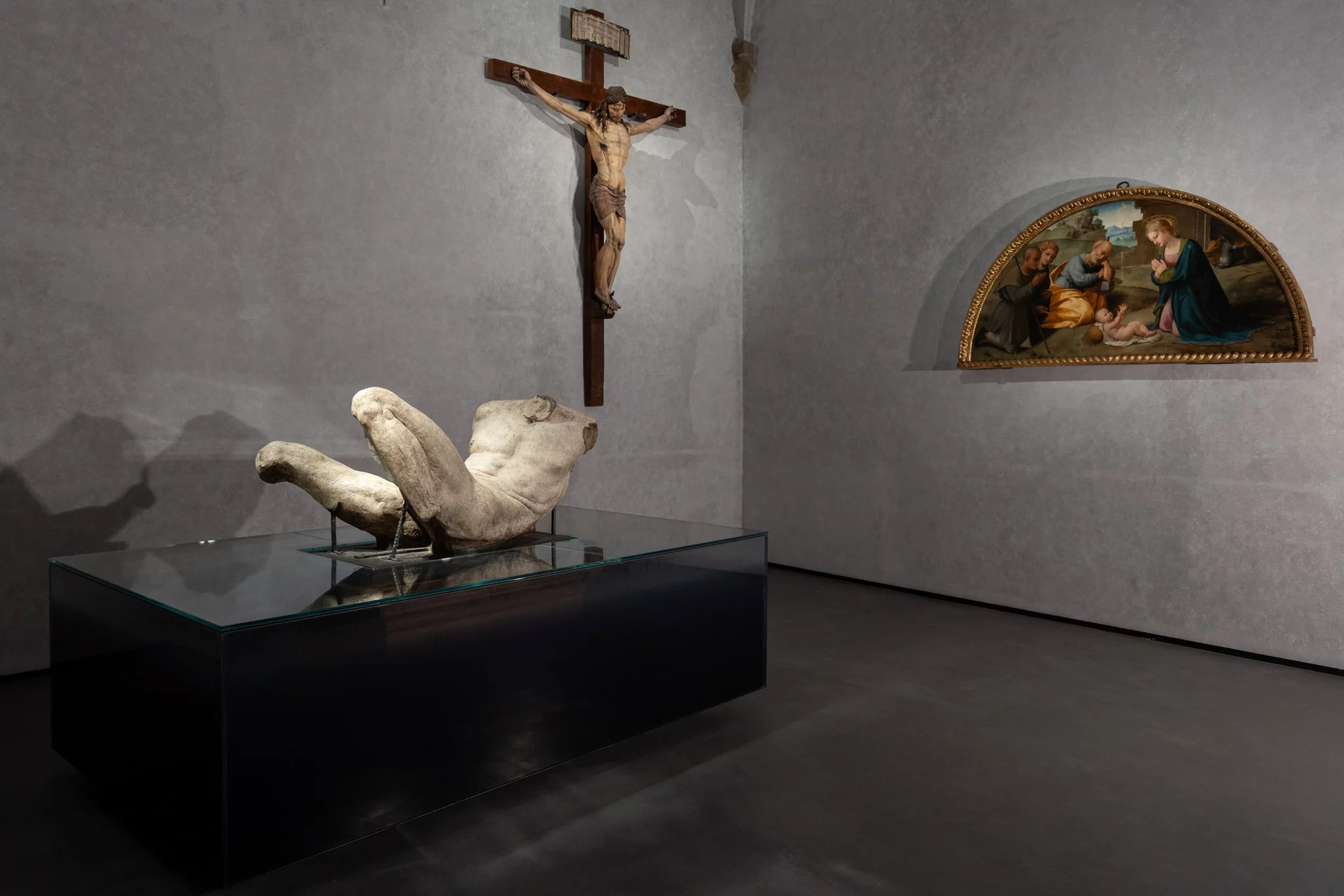
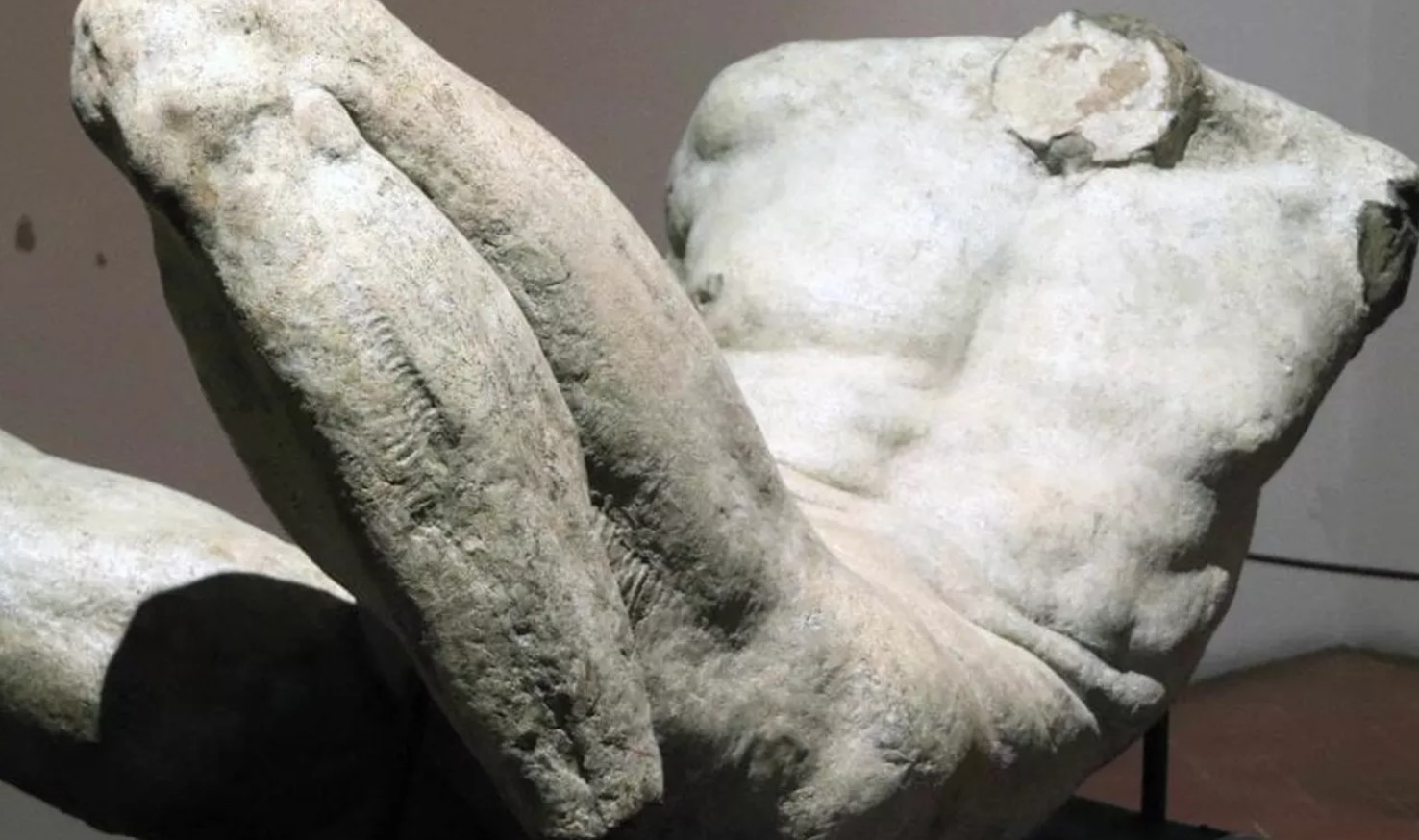
Il modello del Dio Fluviale è il fulcro della nuova sala espositiva allestita all’Accademia del Disegno e delle Arti di Firenze.
Per realizzare quell’opera adoperai materiali effimeri: non era destinato certo a sopravvivermi così a lungo. Era infatti un semplice modello che poi mi avrebbe consentito di scolpire il soggetto studiato nel candido marmo di Carrara per la Sagrestia Nuova.
La realizzazione del Dio Fluviale
Per sostenere il Dio Fluviale realizzai uno scheletro intrecciando fra di loro fili di ferro, rinforzandoli con un’accurata fasciatura di paglia e spago. Per modellare la figura sovrapposi più strati di argilla. Scelsi argilla magra ricavandola dal letto dell’Arno nei pressi di San Niccolò e in parte grassa, prelevata a Montespertoli. Ma non è tutto.
Assieme all’argilla impastai delle fibre vegetali, cimature e anche peli di animali. Se potrà sembrarvi strano quel colorito superficiale così chiaro è perché adoperai pure il bianco di piombo. Sostanza non certo salubre ma ai miei tempi mica si avevano tutte quelle conoscenze che avete oggi sulla tossicità degli elementi.
Il restauro e la nuova collocazione
Il modello è stato restaurato a partire dal 2015, momento in cui venne richiesto il prestito per la mostra dal titolo ‘I Medici e le Arti a Firenze nel secondo Cinquecento’ allestita a Palazzo Strozzi.
Il restauro fu eseguito da Rosanna Moradei e sostenuto economicamente da Friends of Florence. Dopo il trattamento antitarlo, fu eseguito il consolidamento della struttura interna e delle superfici, rimuovendo anche la patina color bronzo che era stata stesa in epoca successiva alla mia.

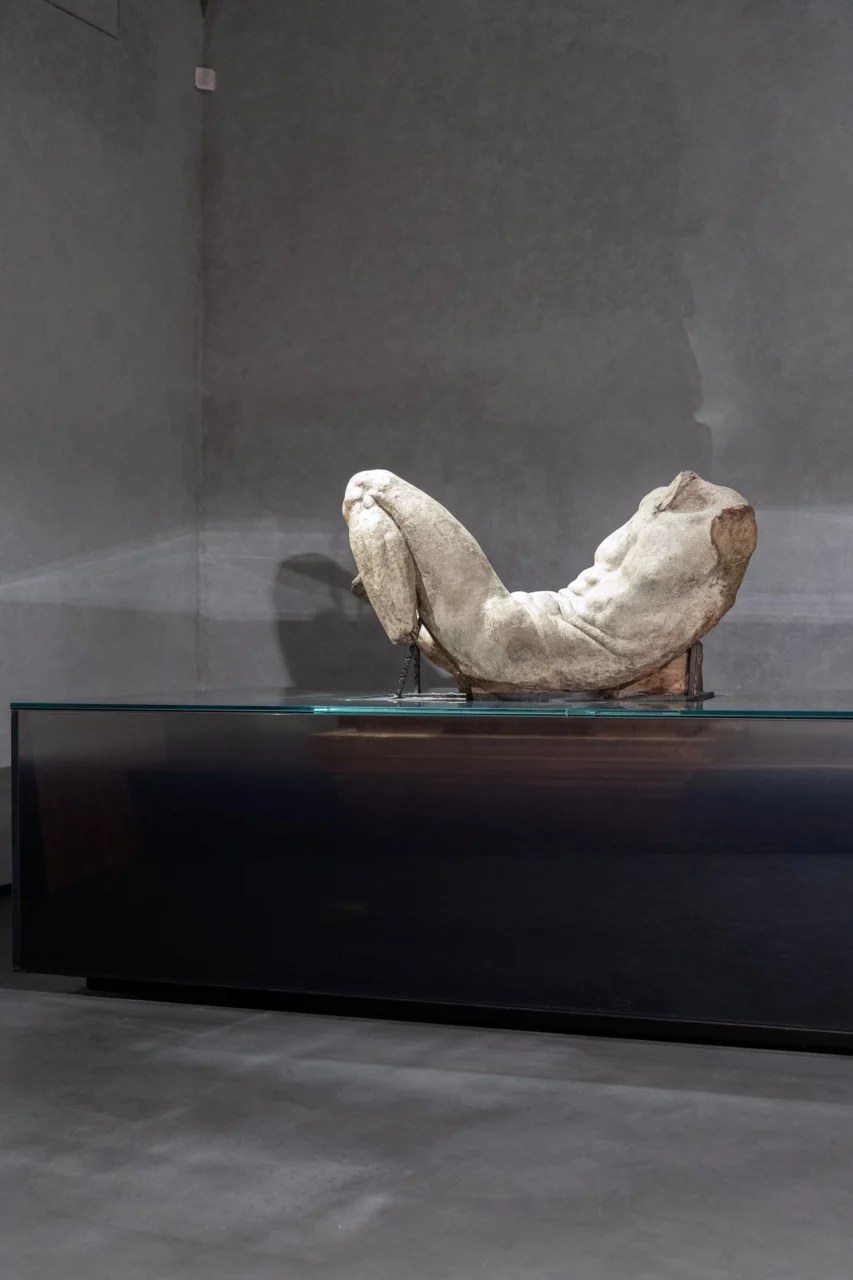
La nuova collocazione ha un aspetto molto sobrio ed è ridotta all’essenziale, con un proteggo architettonico siglato dagli architetti David Palterer e Norberto Medardi.
Il Dio Fluviale è collocato al di sopra di una base in legno inglobata in un paralepipedo di vetro veneziano. Il vetro è stato inserito per evocare in qualche modo la presenza dell’acqua e del fiume che la figura rappresenta.
Le altre opere nella sala del Sangallo e del Granacci
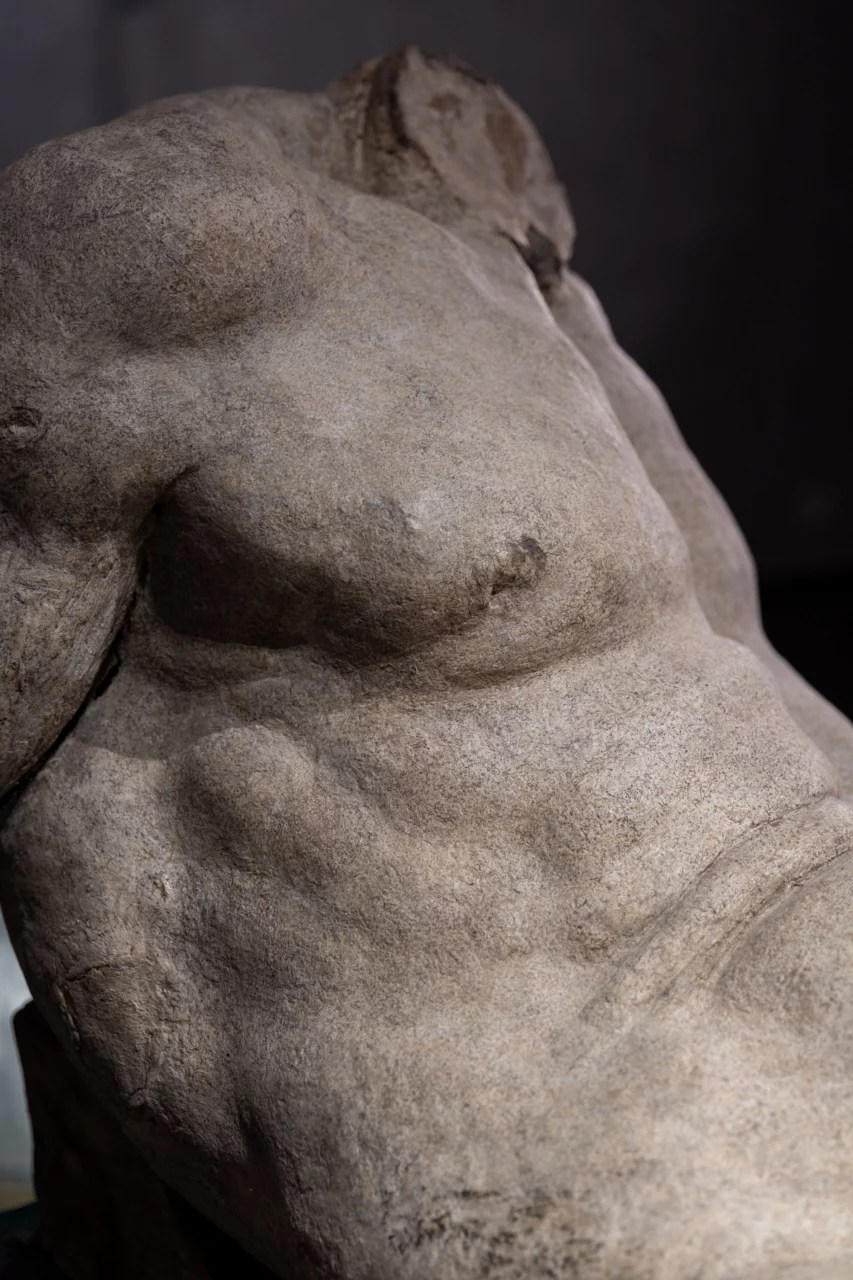
All’interno della nuova sala il Dio Fluviale non è solo ma sono presenti anche una lunetta realizzata dal mio amico di gioventù Francesco Granacci e un Crocifisso in legno che proviene dalla Bottega del Sangallo. Tali opere sono arrivate all’Accademia del Disegno e delle Arti agli inizi dell’Ottocento.
La Lunetta del Granacci risale al 1500 e raffigura l’Adorazione dei Pastori mentre il Crocifisso arriva dalla Cappella di San Luca e, da poco restaurato, è tornato ad avere la policromia originale.
Come accedere alla nuova sala dedicata al Dio Fluviale
Dal 19 ottobre 2025 la sala potrà essere visitata dal pubblico. Avrà l’ingresso al numero 6 di Via Orsanmichele e sarà accessibile lunedì, martedì, mercoledì e venerdì dalle 10.00-13.00 e 14.00-17.00 nel periodo invernale, e con orario 10.00-12.30 e 16.00-18.00 nel periodo estivo.
Per aperture il sabato e la domenica, consultare il sito (www.aadfi.it). L’ingresso è soggetto a una donazione volontaria non inferiore a 5 euro.
Per il momento il sempre vostro Michelangelo Buonarroti vi saluta dandovi appuntamento ai prossimi post e sui social.
New location for the River God
The model of the River God is the centerpiece of the new exhibition hall at the Academy of Drawing and Arts in Florence.
To create this work, I used ephemeral materials: it was certainly not destined to outlive me for so long. It was, in fact, a simple model that would later allow me to sculpt the studied subject in pure white Carrara marble for the New Sacristy.
The Creation of the River God
To support the River God, I created a skeleton by intertwining iron wires, reinforcing them with careful wrapping of straw and twine. To model the figure, I superimposed several layers of clay. I chose lean clay from the Arno River bed near San Niccolò, along with some rich clay from Montespertoli. But that’s not all.
I mixed in plant fibers, trimmings, and even animal hair with the clay. If the light surface color may seem strange to you, it’s because I also used lead white. This is certainly not a healthy substance, but in my time, people didn’t have the knowledge about the toxicity of elements that they have today.
Restoration and New Location
The model has been restored since 2015, when it was requested for loan for the exhibition “The Medici and the Arts in Florence in the Second Half of the 16th Century,” held at Palazzo Strozzi.
The restoration was carried out by Rosanna Moradei and financially supported by Friends of Florence. After woodworm treatment, the internal structure and surfaces were consolidated, including the removal of the bronze-colored patina that had been applied after my time.
The new location has a very sober appearance and is reduced to the essentials, with an architectural design by architects David Palterer and Norberto Medardi.
The River God is placed atop a wooden base embedded in a Venetian glass paralepiped. The glass was inserted to somehow evoke the presence of water and the river the figure represents.
The other works in the Sangallo and Granacci rooms
In the new room, the River God is not alone; there is also a lunette created by my youthful friend Francesco Granacci and a wooden Crucifix from the Sangallo workshop. These works arrived at the Academy of Drawing and Arts in the early 19th century.
The Granacci Lunette dates back to 1500 and depicts the Adoration of the Shepherds, while the Crucifix comes from the Chapel of San Luca and, recently restored, has been restored to its original polychrome.
How to access the new room dedicated to the River God
The room will be open to the public from October 19, 2025. The entrance is at Via Orsanmichele 6 and will be open Monday, Tuesday, Wednesday, and Friday from 10:00 am to 1:00 pm and 2:00 pm to 5:00 pm in the winter, and from 10:00 am to 12:30 pm and 4:00 pm to 6:00 pm in the summer.
For opening hours on Saturdays and Sundays, please visit the website (www.aadfi.it). Admission is subject to a voluntary donation of no less than €5.
For now, Michelangelo Buonarroti bids you farewell and says hello to his future posts and social media.

Sostienici – Support Us
Se questo blog ti piace e ti appassiona, puoi aiutarci a farlo crescere sempre più sostenendoci in modo concreto condividendo i post, seguendo le pagine social e con un contributo che ci aiuta ad andare avanti con il nostro lavoro di divulgazione. . ENGLISH: If you like and are passionate about this blog, you can help us make it grow more and more by supporting us in a concrete way by sharing posts, following social pages and with a contribution that helps us to move forward with our dissemination work.
10,00 €
Articoli
Condividi:


Questo sono io





sostienici

Sostienici – Support Us
Se questo blog ti piace e ti appassiona, puoi aiutarci a farlo crescere sempre più sostenendoci in modo concreto condividendo i post, seguendo le pagine social e con un contributo che ci aiuta ad andare avanti con il nostro lavoro di divulgazione. . ENGLISH: If you like and are passionate about this blog, you can help us make it grow more and more by supporting us in a concrete way by sharing posts, following social pages and with a contribution that helps us to move forward with our dissemination work.
€10,00


