
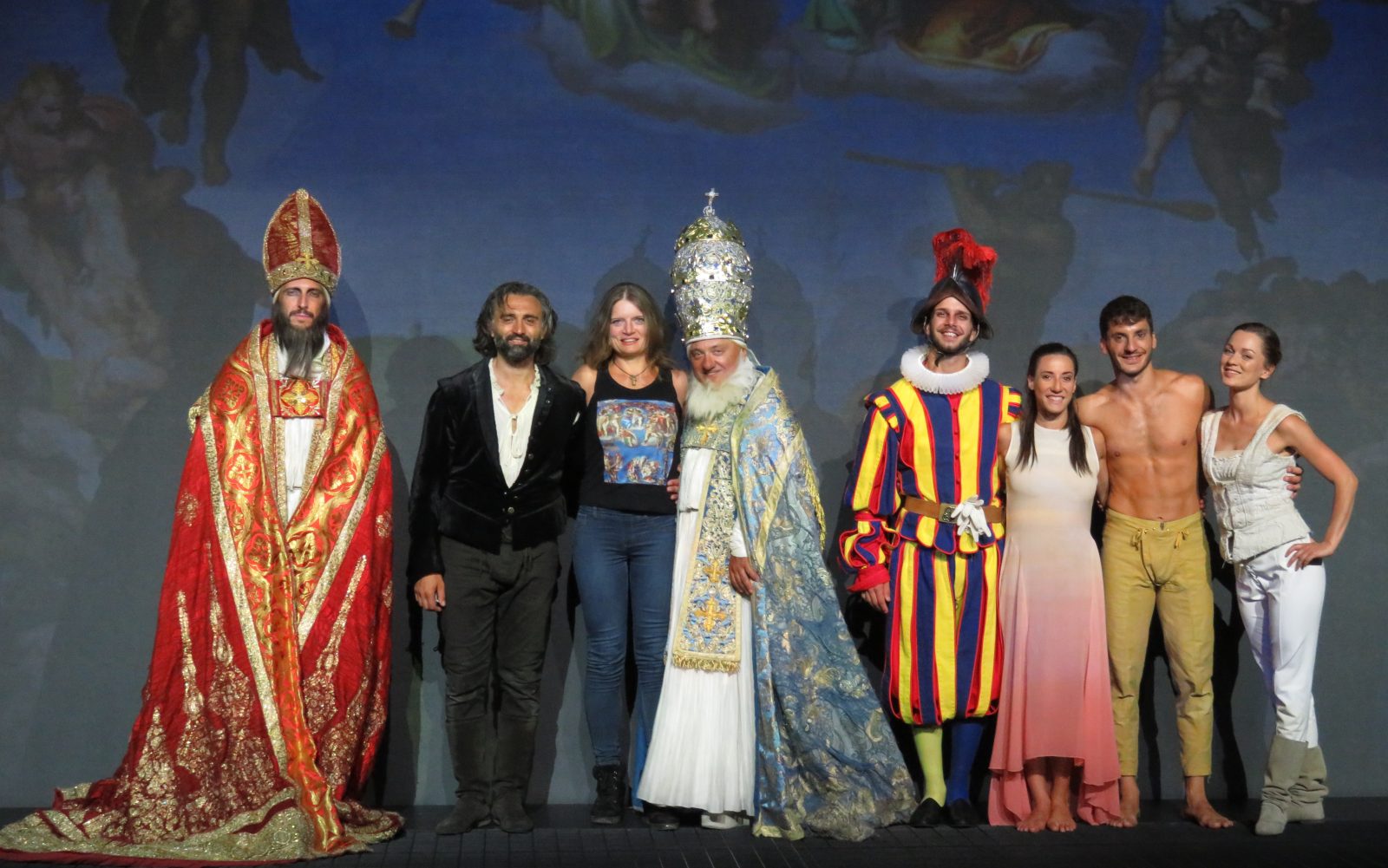
La Pietà Rondanini: una supplica scolpita nel marmo
È una preghiera scolpita nel marmo, una supplica alla clemenza di Dio al termine della mia vita affinché avesse pietà di me che pretesi dar la vita ai sassi.
La Pietà Rondanini è una litania che scuote l’anima e riempie testa e cuore di pensieri volti verso il Divino.
Difficile rimanere indifferenti dinanzi a tanto struggimento. Quella Madre che cerca di trattenere il corpo del Figlio ormai privo di vita, appoggiandolo al ventre quasi provasse a proteggerlo come quando era neonato, è un’immagine universale che travalica qualsiasi credo.
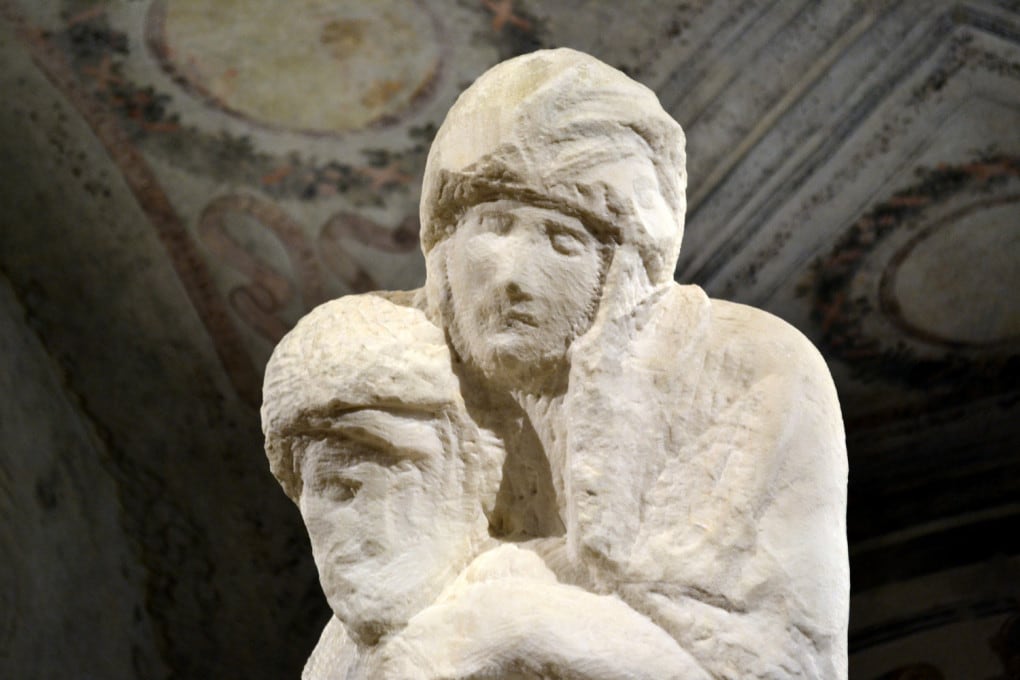
Il progetto iniziale per scolpire la mia estrema Pietà viene fatto risalire tra il 1552 e il 1553, quando all’epoca avevo raggiunto l’età di 78 anni.
Lavorai di subbia, mazzuolo e gradine su quel marmo fino a una manciata di giorni prima di passare a miglior vita il 18 febbraio del 1564, nella mia casa laboratorio di Macel de’ Corvi a Roma.
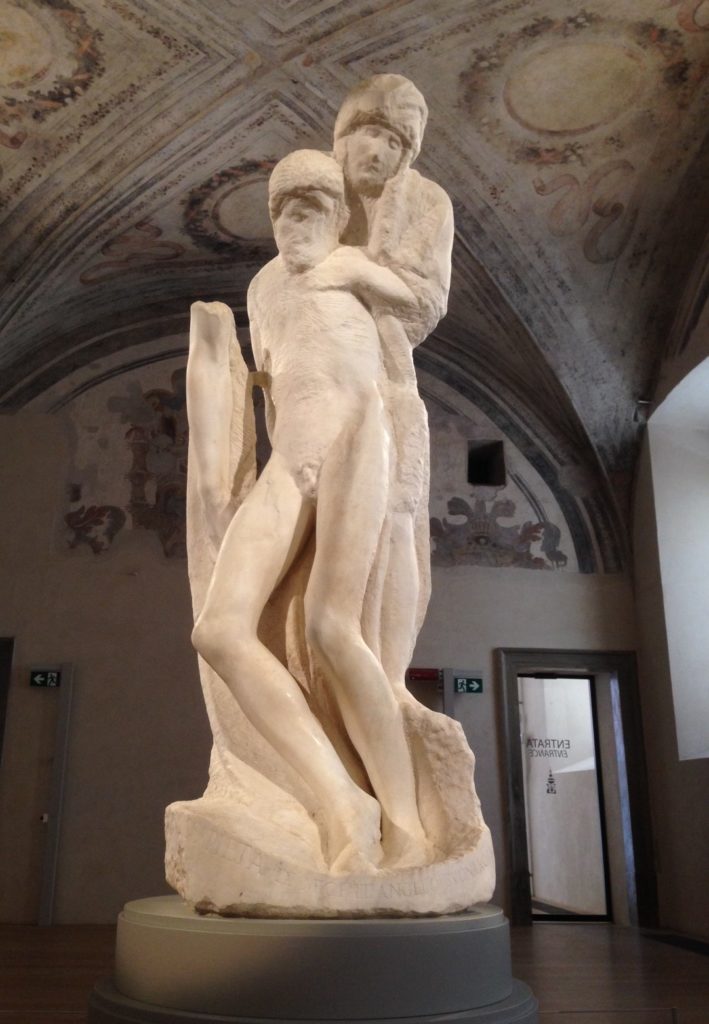
“In una stantia a basso, coperta a tetto: un’altra statua principiata per uno Christo con un’altra figura di sopra, attaccate insieme, sbozzate et non finite”.
Così scrisse il notaio Roberto Ubaldini redigendo l’inventario di casa mia a Macel de’ Corvi la mattina del 19 febbraio del 1564, data successiva al mio decesso.
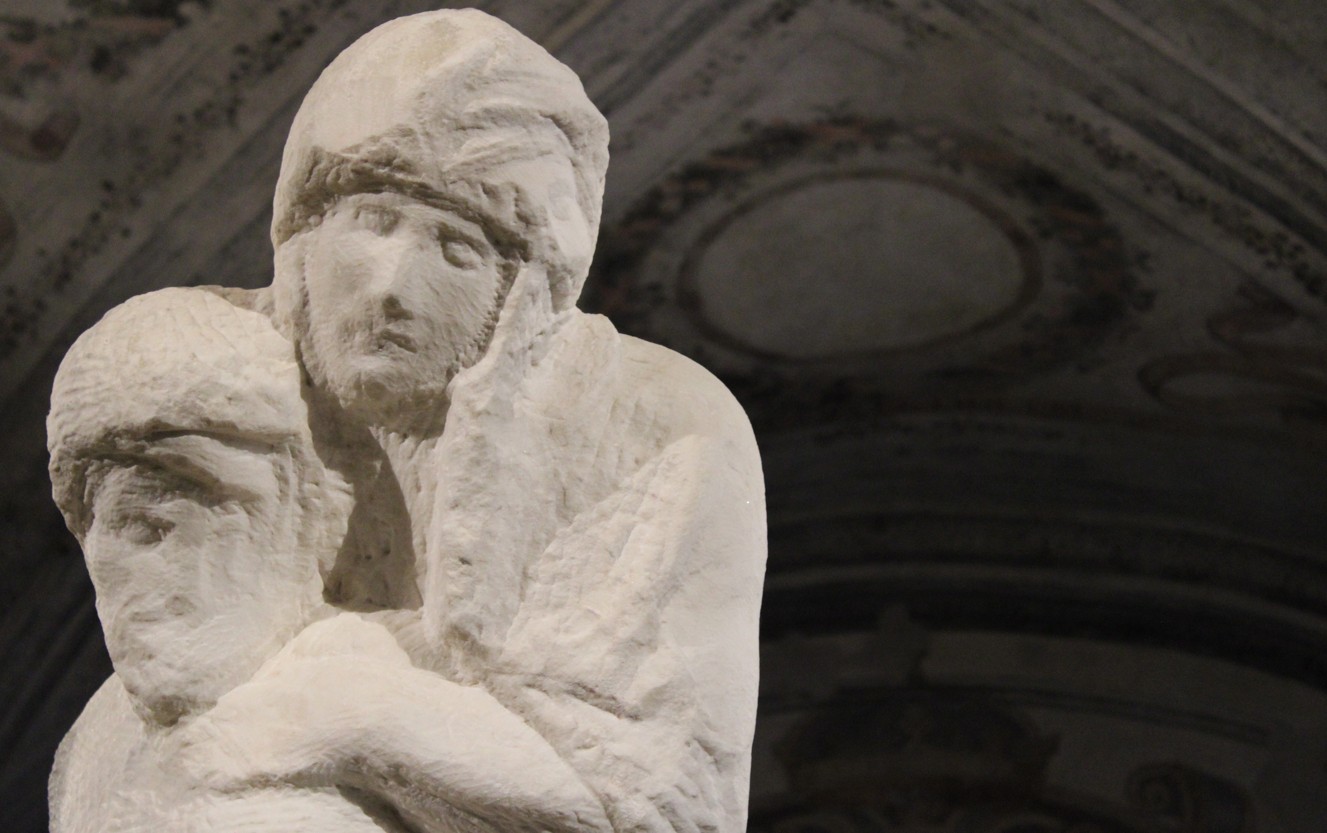
Osservando la Pietà Rondanini noterete che parti condotte quasi a termine del primo progetto si alternano a quelle appena abbozzate del secondo, ideato dopo un repentino ripensamento.
Per il momento il sempre vostro Michelangelo Buonarroti vi saluta dandovi appuntamenti ai prossimi post e sui social.

The Rondanini Pietà: a plea carved in marble
It is a prayer carved in marble, a plea to God’s mercy at the end of my life, to have mercy on me, who attempted to give life to stones.
The Rondanini Pietà is a litany that stirs the soul and fills the head and heart with thoughts directed toward the Divine. It is difficult to remain indifferent in the face of such anguish. That Mother trying to hold the body of her lifeless Son, leaning him against her womb as if trying to protect him as she did when he was a newborn, is a universal image that transcends all creeds.
The initial project to sculpt my final Pietà dates back to between 1552 and 1553, when I was 78 years old.
I worked with a chisel, mallet, and chisel on that marble until a handful of days before passing away on February 18, 1564, in my home/workshop in Macel de’ Corvia, Rome.
“In a low room, covered with a roof: another statue begun as a Christ with another figure above, attached together, roughly hewn, and unfinished.”
So wrote the notary Roberto Ubaldini when compiling the inventory of my house in Macel de’ Corvi on the morning of February 19, 1564, after my death.
Looking at the Rondanini Pietà, you’ll notice that parts of the first project, almost completed, alternate with those barely sketched out from the second, conceived after a sudden change of heart.
For now, yours truly, Michelangelo Buonarroti bids you farewell, and looks forward to seeing you in future posts and on social media.

Sostienici – Support Us
Se questo blog ti piace e ti appassiona, puoi aiutarci a farlo crescere sempre più sostenendoci in modo concreto condividendo i post, seguendo le pagine social e con un contributo che ci aiuta ad andare avanti con il nostro lavoro di divulgazione. . ENGLISH: If you like and are passionate about this blog, you can help us make it grow more and more by supporting us in a concrete way by sharing posts, following social pages and with a contribution that helps us to move forward with our dissemination work.
10,00 €
Condividi:


Questo sono io





sostienici

Sostienici – Support Us
Se questo blog ti piace e ti appassiona, puoi aiutarci a farlo crescere sempre più sostenendoci in modo concreto condividendo i post, seguendo le pagine social e con un contributo che ci aiuta ad andare avanti con il nostro lavoro di divulgazione. . ENGLISH: If you like and are passionate about this blog, you can help us make it grow more and more by supporting us in a concrete way by sharing posts, following social pages and with a contribution that helps us to move forward with our dissemination work.
€10,00


