

14 luglio 1564: il mio maestoso funerale con quel catafalco quasi Barocco
Era un giorno come oggi, il 14 luglio del 1564, quando in quel di Firenze, a distanza di cinque mesi dalla mia morte, vennero celebrate le mie esequie solenni.
Fu Cosimo I de’ Medici che aveva fortemente voluto mettere in piedi tutta messinscena di cui nemmeno un sovrano sarebbe stato degno. Fece infatti allestire dai più grandi artisti del tempo una macchina scenografica incredibile della quale ancora si parla per la sua maestosità.
Lui che non era riuscito a farmi tornare da vivo in quel di Firenze, tanto s’era speso per far tornare perlomeno le mie spoglie mortali in terra natìa. Non fu lui materialmente a trafugare la salma ma diede un grande supporto appoggiando l’impresa portata a compimento dal mi nipote Lionardo.
Ve ne ho parlato nel dettaglio QUA.

Il grande catafalco funebre nella navata centrale della Basilica di San Lorenzo
Il catafalco funebre allestito per l’occasione era qualcosa di mai visto prima, con una scenografia a metà tra il solenne e la sontuosità barocca.
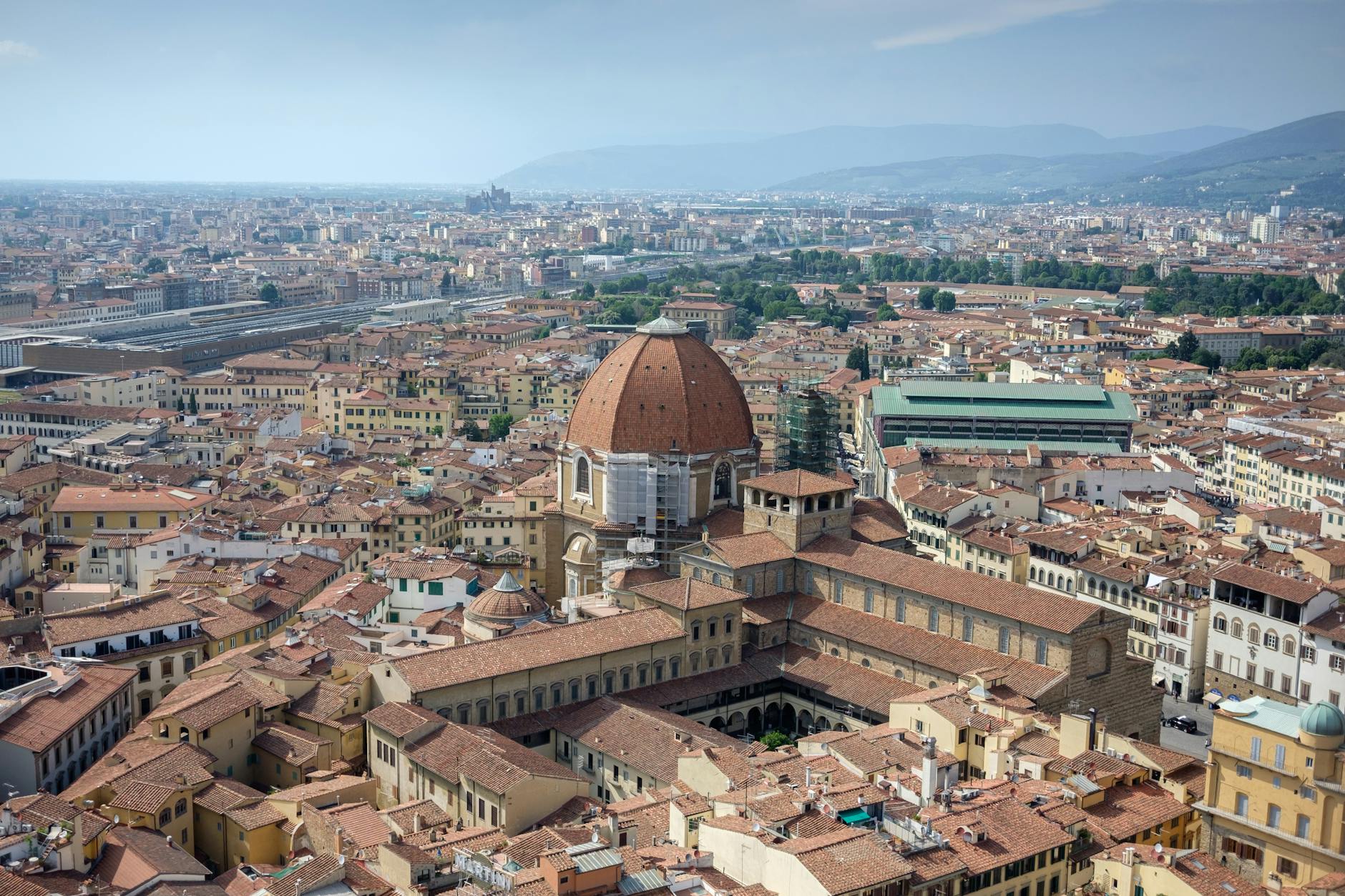
Quella macchina scenografica venne collocata nella navata centrale della Basilica di San Lorenzo, la chiesa di famiglia dei Medici. Aveva una forma piramidale e attorno bruciavano incensi tra le ondeggianti fiamme delle torce.
Al vertice della struttura venne collocata una scultura in terracotta dipinta per farla somigliare al marmo, raffigurante la Fama. La figura ritta in piedi sopra una palla spiegava le ali mentre soffiava in una tromba dotata di tre campane terminali.
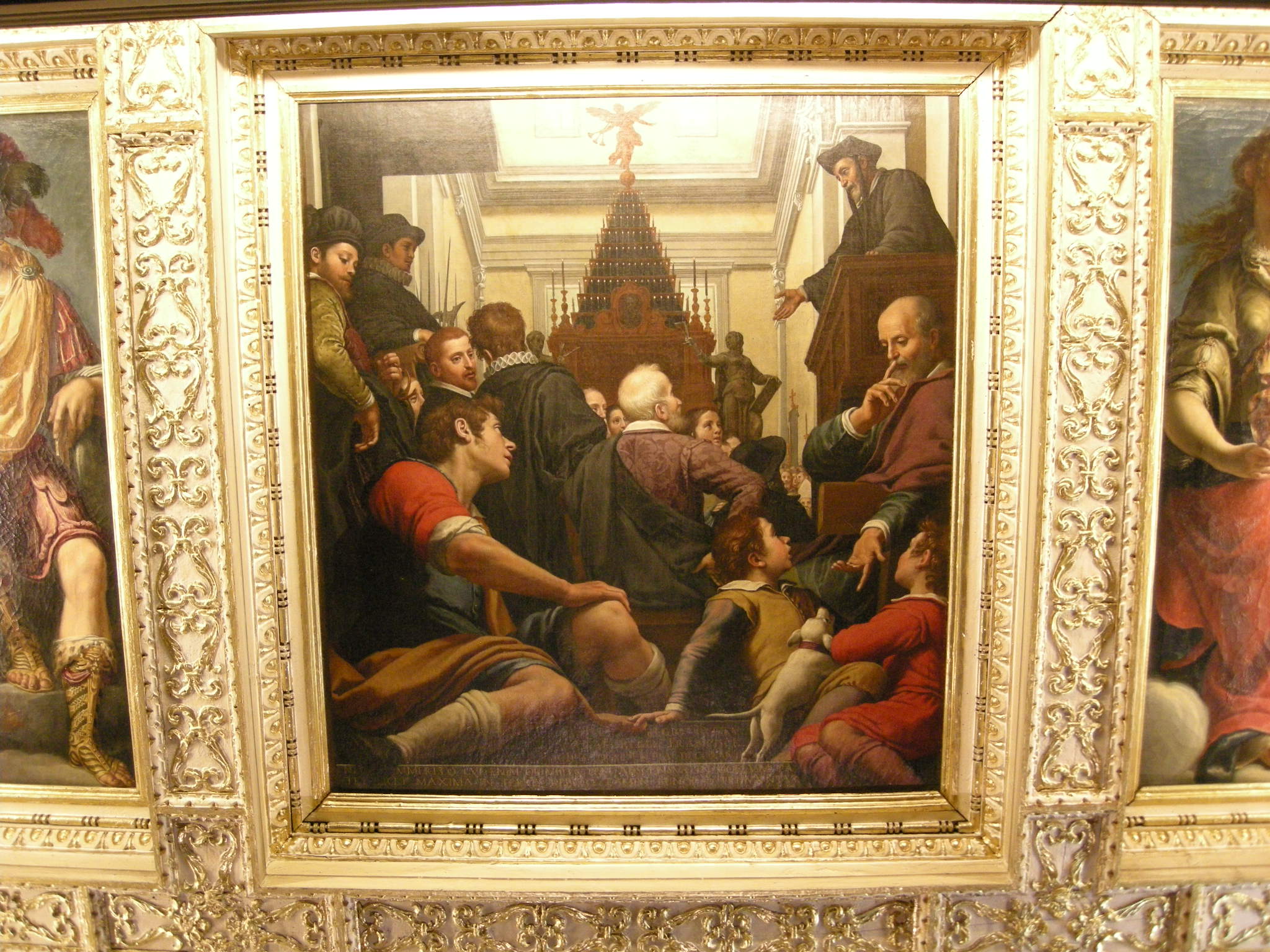
La lunghissima orazione funebre del Varchi
A quel funerale accorse tutta Firenze e non solo. La città era piena di persone che desideravano prender parte alle esequie per rendermi omaggio ma anche per semplice curiosità.
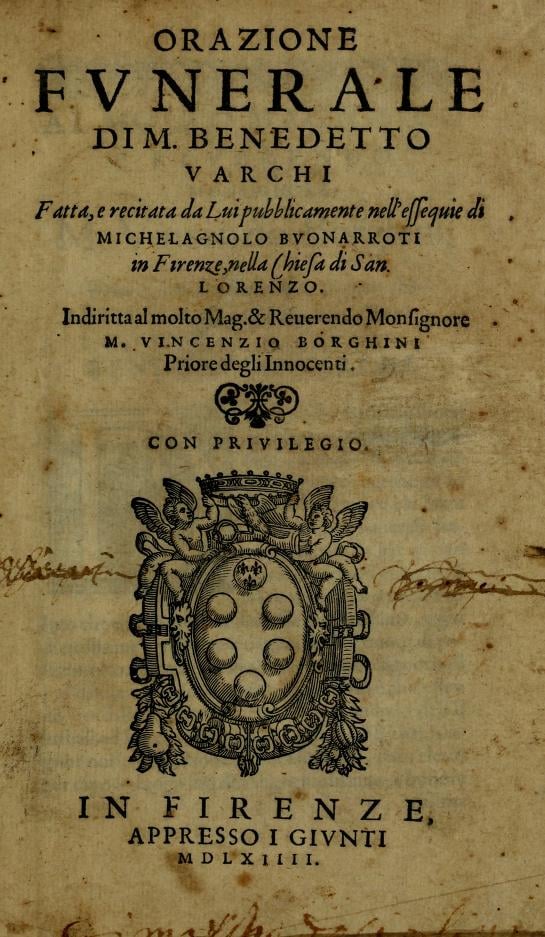
Dopo la liturgia dei morti, da uno dei pulpiti in bronzo realizzati dal grande Donatello, Benedetto Varchi iniziò a leggere l’orazione funebre scritta per l’occasione su richiesta di Cosimo I. Senza batter ciglio lesse una dopo l’altra tutte le 63 pagine, “declamando le lodi, i meriti e le opere del divino Michelagnolo Buonarroti”, come il Varchi stesso precisò.
Chissà in quanti ascoltarono davvero tutto quell’elogio senza perdersi nel guardare quel tetro allestimento così affascinante da far perdere il senso dell’orientamento.
L’impianto scenografico delle esequie
Fra una colonna e l’altra della Basilica erano stati posizionati drappi neri intervallati da scheletri che creavano una tetra scenografia. Per rendere più enfatica la situazione, furono posizionate un gran numero di torce con le loro luci tremolanti.
Era la prima volta che veniva allestita una cosa del genere, con tutta quella cura all’impatto emotivo che avrebbe avuto sui presenti.
Addossate al catafalco furono posizionate le allegorie della Pittura e della Scultura, dell’Arno e del Tevere a simboleggiare le due città che mi diedero la fama. Erano opere realizzate in materiali terracotta e poi dipinte in modo da farle sembrare di marmo.
Al di sopra di queste sculture furono posizionati altri quattro gruppi di opere effimere, posti a coppie e raffiguranti principi positivi e negativi: c’erano l’Ingegno con l’Ignoranza, la Pietà Cristiana con il Vizio, l’Arte con Invidia e lo Studio con la Pigrizia.
Quell’ingegnoso apparato funebre destò un grande interesse e per volere di Cosimo I rimase in loco per diverse settimane e richiamò un numero esagerato di persone incuriosite da quegli allestimenti mai visti prima.
Di quel funerale si continuò a parlare per anni in tutta Europa e fece da modello ad altre esequie pompose, ma mai tanto imponenti quanto quelle allestite per salutarmi.
Per il momento il vostro Michelangelo Buonarroti vi saluta. In questa giornata delle mie esequie, rivolgetemi un pensiero.
July 14, 1564: My Majestic Funeral in Florence
It was a day like today, July 14, 1564, when my solemn funeral was celebrated in Florence, five months after my death.
It was Cosimo I de’ Medici who had strongly desired to stage a spectacle unworthy of even a sovereign. He had the greatest artists of the time create an incredible stage set, whose majesty is still spoken of today.
He, who had failed to bring me back to Florence alive, had worked so hard to at least bring my mortal remains back to my native land. He didn’t physically steal my body, but he provided great support by backing the enterprise completed by my nephew Lionardo.
I told you about it in detail HERE.
The great funeral catafalque in the central nave of the Basilica of San Lorenzo
The funeral catafalque set up for the occasion was something never seen before, with a setting somewhere between solemn and Baroque sumptuous.
This spectacular machine was placed in the central nave of the Basilica of San Lorenzo, the Medici family church. It had a pyramidal shape, with incense burning around it amidst the billowing flames of torches.
At the top of the structure was placed a terracotta sculpture painted to resemble marble, depicting Fame. The figure, standing on a sphere, spread its wings while blowing a trumpet with three bells at the ends.
Varchi’s lengthy funeral oration
All of Florence and beyond flocked to that funeral. The city was filled with people who wanted to attend the funeral to pay their respects, but also out of simple curiosity.
After the liturgy of the dead, from one of the bronze pulpits crafted by the great Donatello, Benedetto Varchi began reading the funeral oration written for the occasion at the request of Cosimo I. Without batting an eyelid, he read all 63 pages, one after the other, “declaiming the praises, merits, and works of the divine Michelangelo Buonarroti,” as Varchi himself specified.
Who knows how many actually listened to that entire eulogy without becoming lost in the gloomy setting, so captivating it made one lose one’s sense of direction.
The scenographic setting of the funeral
Between the columns of the Basilica, black drapes interspersed with skeletons created a somber yet evocative setting. To heighten the atmosphere, a large number of torches with their flickering lights were positioned.
It was the first time anything like this had been arranged, with such attention to the emotional impact it would have on those present.
Alongside the catafalque were placed the allegories of Painting and Sculpture, of the Arno and the Tiber, symbolizing the two cities that brought me fame. They were made of terracotta and then painted to look like marble.
Above these sculptures were placed four other groups of ephemeral works, arranged in pairs and depicting positive and negative principles: there were Ingenuity with Ignorance, Christian Piety with Vice, Art with Envy, and Study with Laziness.
This ingenious funerary apparatus aroused great interest and, at the behest of Cosimo I, remained in place for several weeks, attracting an enormous number of people intrigued by these never-before-seen displays.
That funeral continued to be talked about for years throughout Europe, and it served as a model for other pompous funerals, but none as grand as the one held to bid me farewell.
For now, your Michelangelo Buonarroti bids you farewell. On this day of my funeral, spare a thought for me.

Sostienici – Support Us
Se questo blog ti piace e ti appassiona, puoi aiutarci a farlo crescere sempre più sostenendoci in modo concreto condividendo i post, seguendo le pagine social e con un contributo che ci aiuta ad andare avanti con il nostro lavoro di divulgazione. . ENGLISH: If you like and are passionate about this blog, you can help us make it grow more and more by supporting us in a concrete way by sharing posts, following social pages and with a contribution that helps us to move forward with our dissemination work.
10,00 €
Articoli
Condividi:


Questo sono io





sostienici

Sostienici – Support Us
Se questo blog ti piace e ti appassiona, puoi aiutarci a farlo crescere sempre più sostenendoci in modo concreto condividendo i post, seguendo le pagine social e con un contributo che ci aiuta ad andare avanti con il nostro lavoro di divulgazione. . ENGLISH: If you like and are passionate about this blog, you can help us make it grow more and more by supporting us in a concrete way by sharing posts, following social pages and with a contribution that helps us to move forward with our dissemination work.
€10,00


