
La Scultura del giorno: Venere delle colombe di Falconet
La scultura del giorno che vi propongo oggi è la Venere delle Colombe scolpita dall’artista parigino Etienne Maurice Falconet nel Settecento.
La scultura ritrae Venere in un momento di riposo, adagiata nell’incavo una conchiglia, attributo simbolico per eccellenza della dea.

Il suo corpo morbido e sinuoso è avvolto in un drappo che le scivola dalle spalle, scoprendo parzialmente il seno.
Dettaglio particolarmente suggestivo è la presenza di due colombe ai piedi della dea, simbolo della pace e dell’amore ma non solo. Anch’esse sono un attributo di Venere, la dea bellezza.
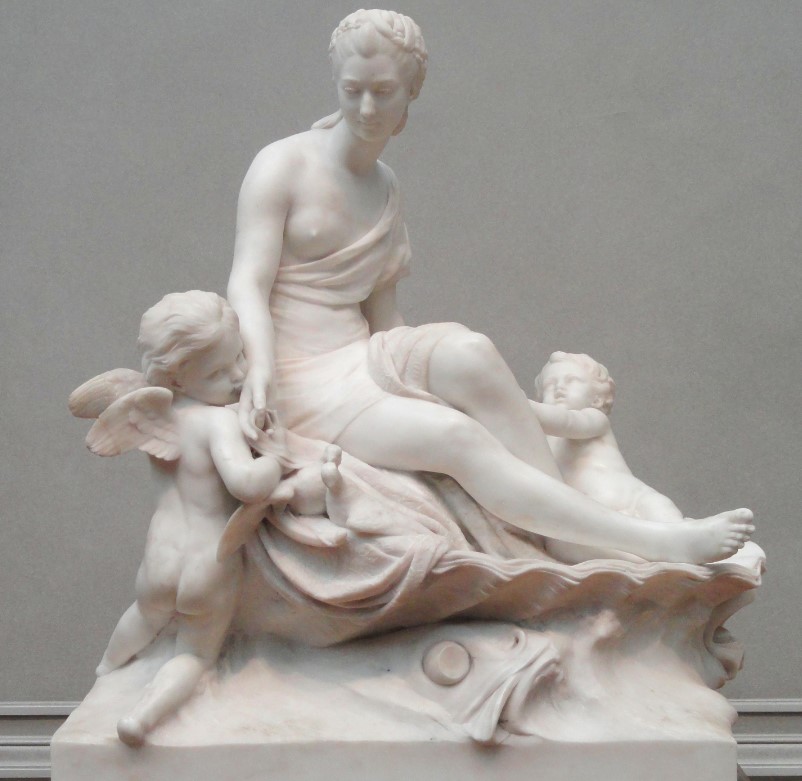
La Venere delle Colombe è un esempio del gusto neoclassico, che mirava a recuperare i canoni estetici dell’arte antica.
Falconet però riuscì a dare alla propria scultura una sensualità più morbida e personale rispetto alle rigide proporzioni delle sculture classiche.
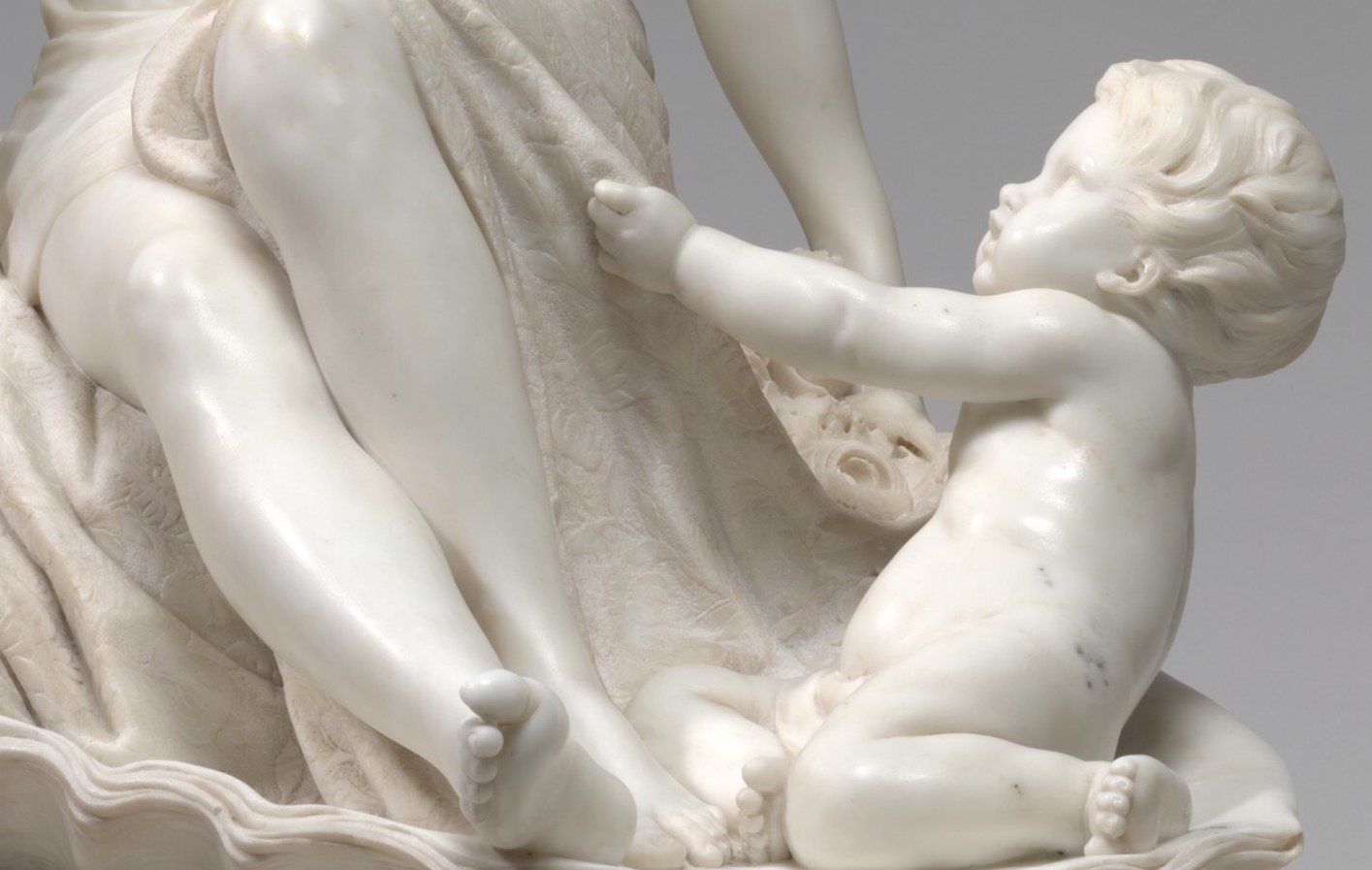
La Venere delle Colombe ha avuto un’influenza significativa sulla scultura successiva, ispirando numerosi artisti a rappresentare il corpo femminile in modo più naturale e sensuale.
“Ma poiché la Scultura non si fa solamente per quelli che la esercitano, o per quelli ch’hanno in essa acquistati de’ lumi, è ancora di mestieri, che lo Scultore per meritare tutti i suffragj accoppj agli studj che gli sono necessari una grande, ed eccellente dote. Questa dote tanto essenziale, e tanto rara, benché esser possa comune a tutti gli Artefici, è il sentimento. Dev’esser questo inseparabile da tutte le loro produzioni. Egli è quello, che le avviva; e se le altre ne sono la base, il sentimento n’è l’anima. Le cognizioni acquistate non sono che particolari; ma il sentimento è comune a tutti gli uomini; è per questo aspetto universale; e tutti gli uomini sono giudici delle Opere, dove esso regna“.
Étienne-Maurice Falconet
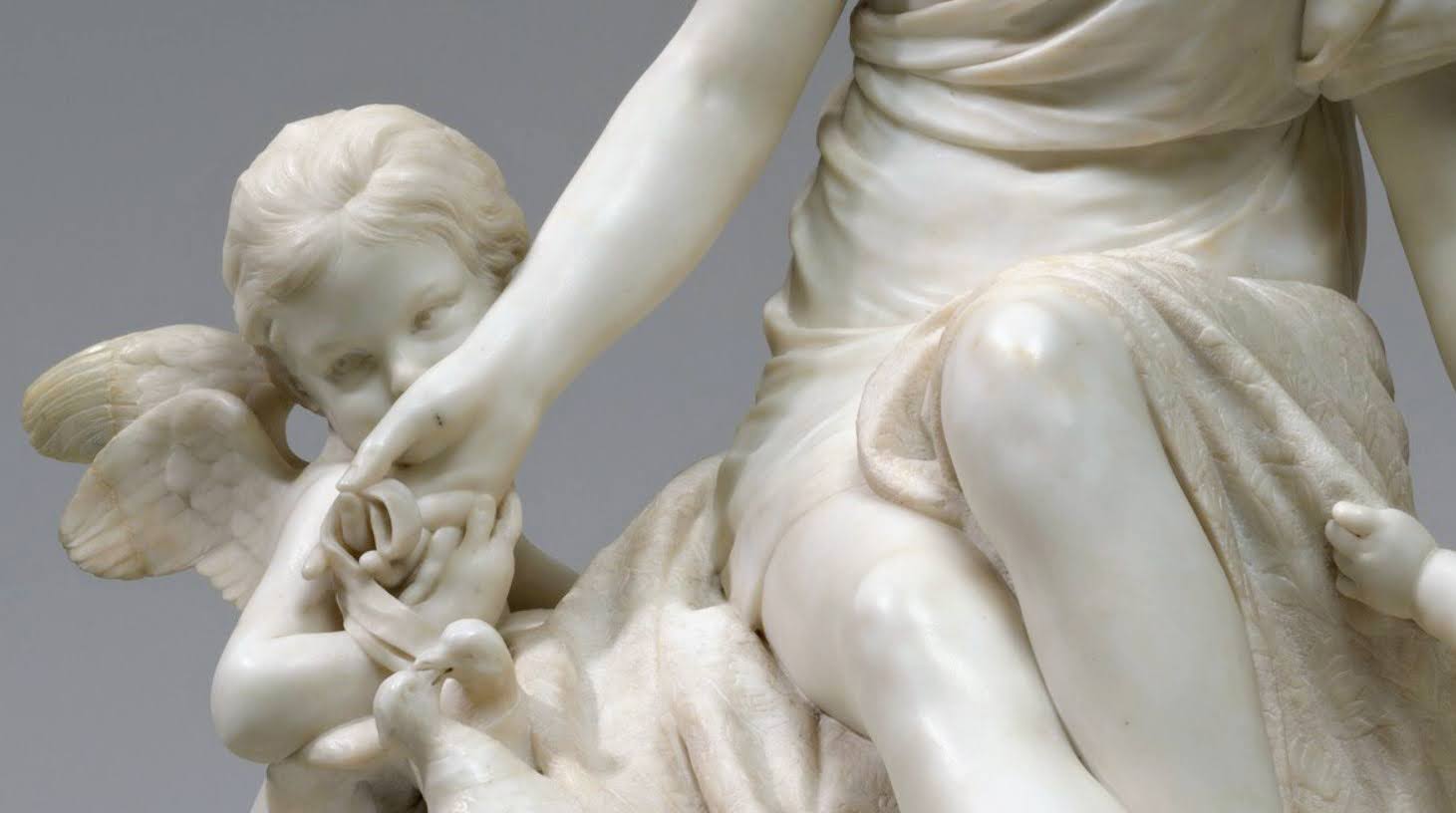
La scultura in questione appartiene alla National Gallery of Art di Washington.
Per il momento il sempre vostro Michelangelo Buonarroti vi saluta dandovi appuntamento ai prossimi post e sui social.
© Riproduzione riservata

Sculpture of the day: Venus of the Doves by Falconet
The sculpture of the day that I propose to you today is the Venus of the Doves sculpted by the Parisian artist Etienne Maurice Falconet in the eighteenth century.
The sculpture portrays Venus in a moment of rest, a shell lying in the hollow, the symbolic attribute par excellence of the goddess.
Her soft and sinuous body is wrapped in a drape that slips from her shoulders, partially uncovering her breast.
A particularly suggestive detail is the presence of two doves at the feet of the goddess, which symbolize peace and love but not only. They too are an attribute of Venus, the goddess of beauty.
The Venus of the Doves is an example of neoclassical taste, which aimed to recover the aesthetic canons of ancient art.
Falconet, however, managed to give his sculpture a softer and more personal sensuality compared to the rigid proportions of classical sculptures.
The Venus of the Doves had a significant influence on subsequent sculpture, inspiring many artists to represent the female body in a more natural and sensual way.
“But since Sculpture is not made only for those who practice it, or for those who have acquired knowledge in it, it is still necessary that the Sculptor, in order to deserve all the votes, joins to the studies that are necessary for him a great and excellent gift. This gift so essential, and so rare, although it can be common to all Artisans, is the feeling. This must be inseparable from all their productions. It is that which animates them; and if the others are the basis, the feeling is the soul. The knowledge acquired is only particular; but the feeling is common to all men; it is for this aspect universal; and all men are judges of the Works, where it reigns“. Étienne-Maurice Falconet
The sculpture in question belongs to the National Gallery of Art in Washington.
For the moment, yours ever Michelangelo Buonarroti bids you farewell, making an appointment with you in the next posts and on social media.
© Reproduction reserved

Sostienici – Support Us
Se questo blog ti piace e ti appassiona, puoi aiutarci a farlo crescere sempre più sostenendoci in modo concreto condividendo i post, seguendo le pagine social e con un contributo che ci aiuta ad andare avanti con il nostro lavoro di divulgazione. . ENGLISH: If you like and are passionate about this blog, you can help us make it grow more and more by supporting us in a concrete way by sharing posts, following social pages and with a contribution that helps us to move forward with our dissemination work.
10,00 €
-
Festival La Versiliana 2026: tra musica, teatro e grandi narrazioni
Dal 17 luglio al 23 agosto 2026, la pineta di Marina di Pietrasanta ospiterà la 47ª edizione del Festival La Versiliana. Una kermesse aperta a tutti nella quale linguaggi diversi dialogano tra loro in un equilibrio tra tradizione e contemporaneità.
-
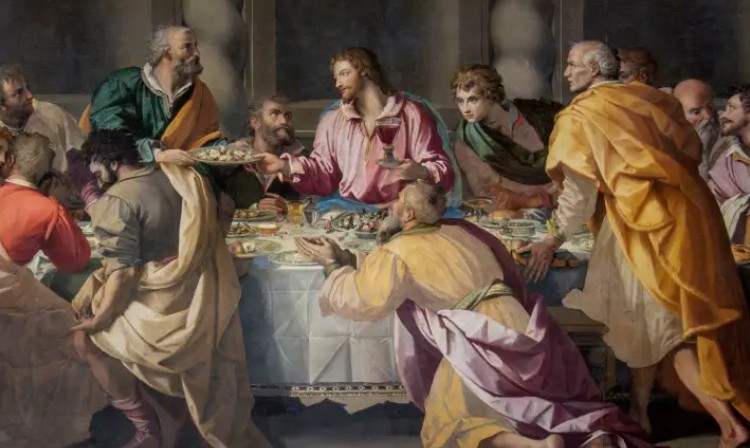
Giovedì Santo: l’Ultima Cena di Allori che pochi conoscono a Firenze
🇮🇹Nel cuore di Museo di Santa Maria Novella, a Firenze, si conserva una delle interpretazioni più affascinanti e meno note dell’Ultima Cena: quella realizzata da Alessandro Allori nel 1584… 🇬🇧In the heart of the Santa Maria Novella Museum in Florence, one of the most fascinating and least-known interpretations of the Last Supper is preserved: the…
-
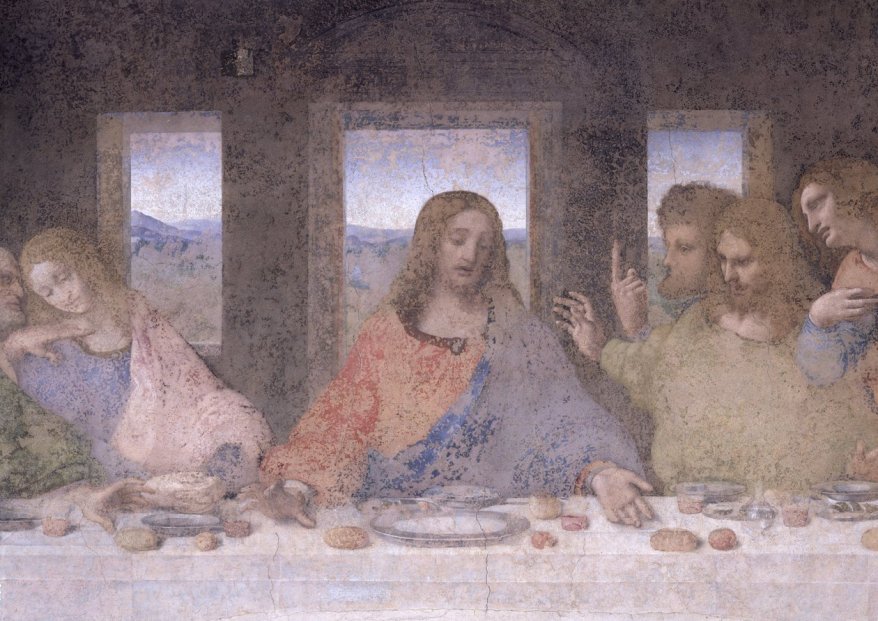
Cenacolo di Leonardo: i dettagli che raccontano il tradimento
🇮🇹Nel Cenacolo di Leonardo da Vinci, custodito a Santa Maria delle Grazie, Cristo annuncia il tradimento e il tempo si ferma… 🇬🇧In Leonardo da Vinci’s Last Supper, housed in Santa Maria delle Grazie, Christ announces the betrayal and time stands still…
Condividi:


Questo sono io





sostienici

Sostienici – Support Us
Se questo blog ti piace e ti appassiona, puoi aiutarci a farlo crescere sempre più sostenendoci in modo concreto condividendo i post, seguendo le pagine social e con un contributo che ci aiuta ad andare avanti con il nostro lavoro di divulgazione. . ENGLISH: If you like and are passionate about this blog, you can help us make it grow more and more by supporting us in a concrete way by sharing posts, following social pages and with a contribution that helps us to move forward with our dissemination work.
€10,00


1 commento »