

Un disegno per Halloween: l’allegoria dell’Avarizia di Ligozzi
Halloween non è una ricorrenza che festeggio né che sento appartenermi ma, nell’intento di mostrarvi qualcosa di artistico che un legame simbolico con le celebrazioni di oggi, mi sono messo a scartabellare fra il mucchio di disegni non miei che ho.
Ne ho trovato proprio uno perfetto per questa giornata con tanto di scheletri e mostro alato visto di scorcio, con la bocca aperta.
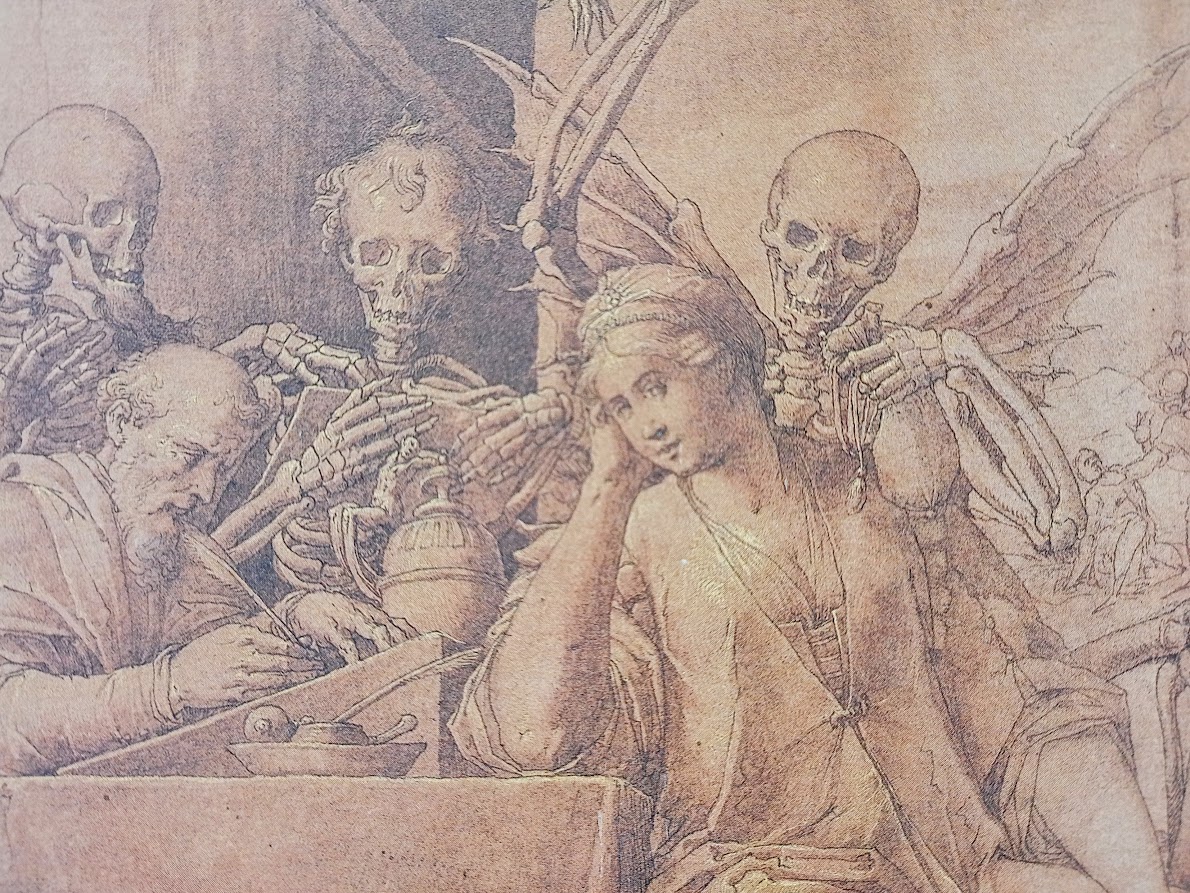
Si tratta dello studio preparatorio dell’Allegoria dell’Avarizia del pittore veronese Jacopo Ligozzi, realizzato dall’artista nel 1590.
Tracciato a penna e inchiostro bruno, con acquerello sempre bruno e lumeggiature d’oro su carta, appartiene oggi alla National Gallery di Washington.
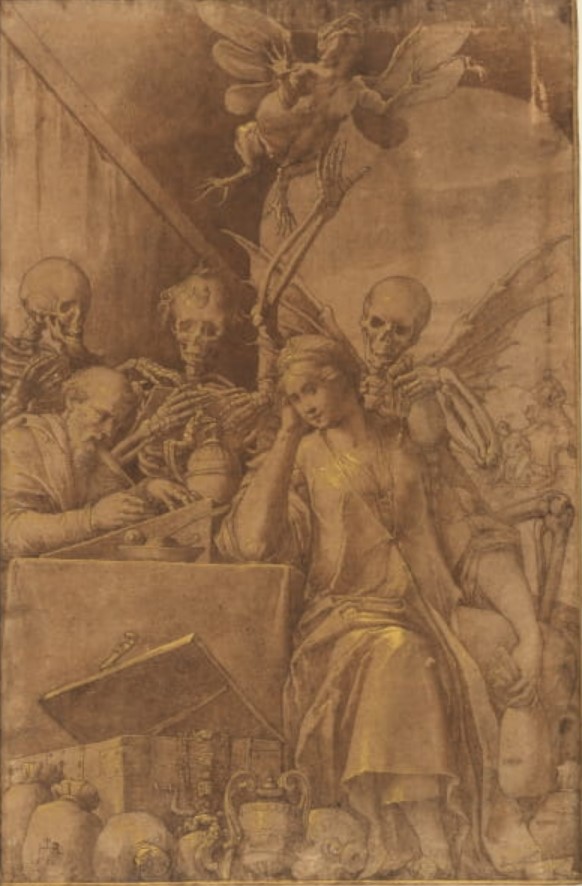
Il disegno fa parte di una serie raffigurante i sette vizi capitali, datati e firmati dall’artista in calce a sinistra. Nella firma le sue iniziali J e L sono unite su un’asta su cui poi disegna la croce.
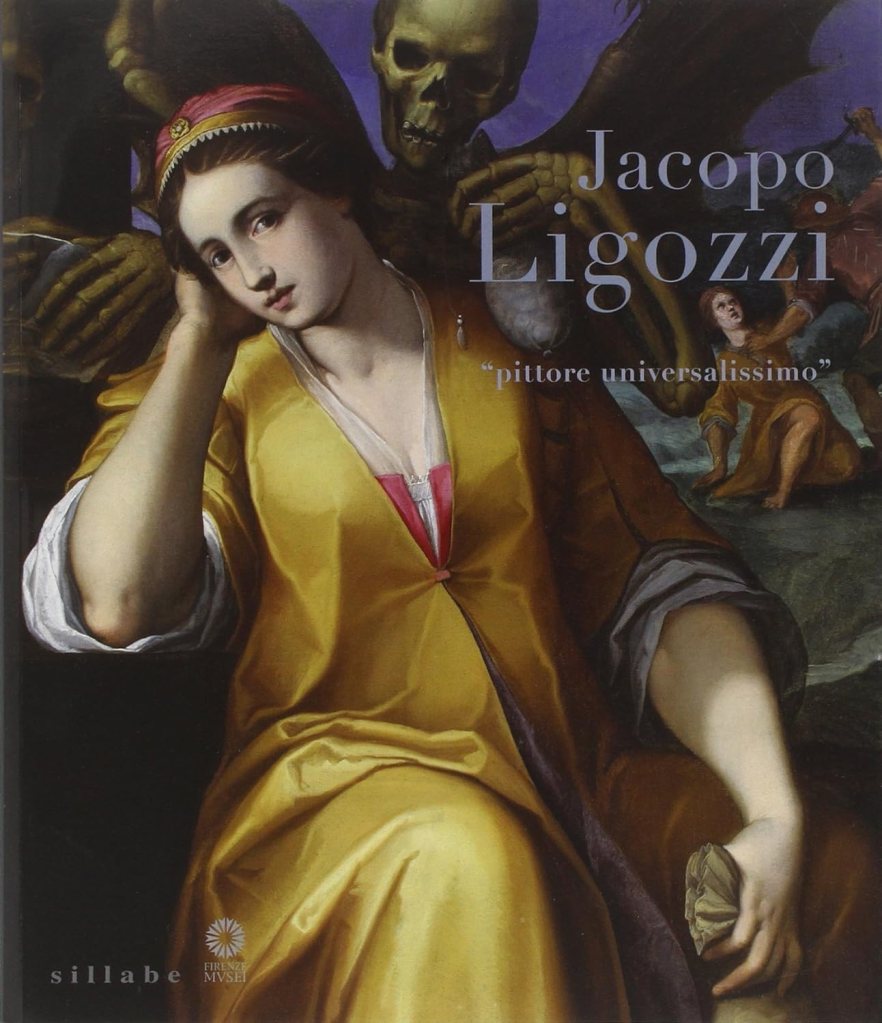
Questo disegno fu poi trasposto in un dipinto ma l’inquadratura scelta nella pittura taglia fuori dalla scena uno scheletro per intero, un altro parzialmente e il mostro volante.
Probabilmente la tela nel corso dei secoli è stata tagliata altrimenti non si spiega lo spuntare dall’alto della zampa del mostro e l’inquadratura così strana.
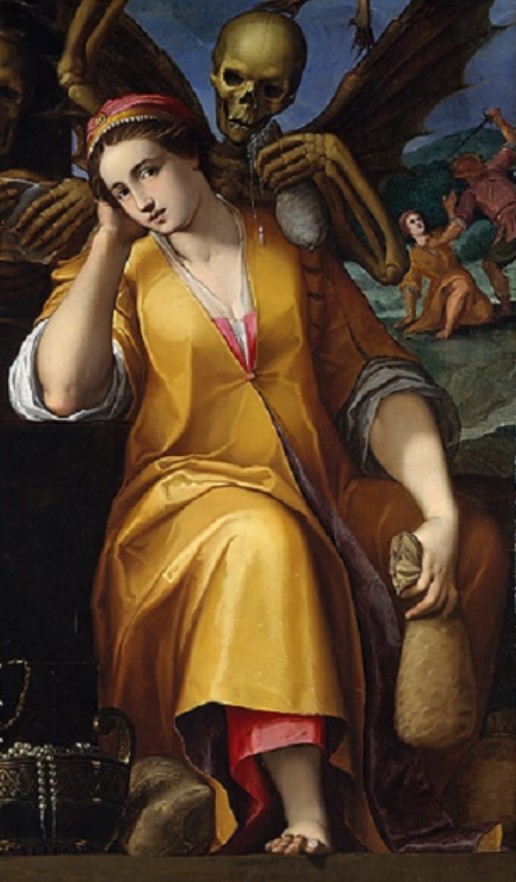
La raffinatezza del disegno è nettamente superiore a quella del dipinto. In primo piano si vede l’allegoria dell’Avarizia personificata da una giovane che con una mano sorregge un sacco presumibilmente pieno di denari.
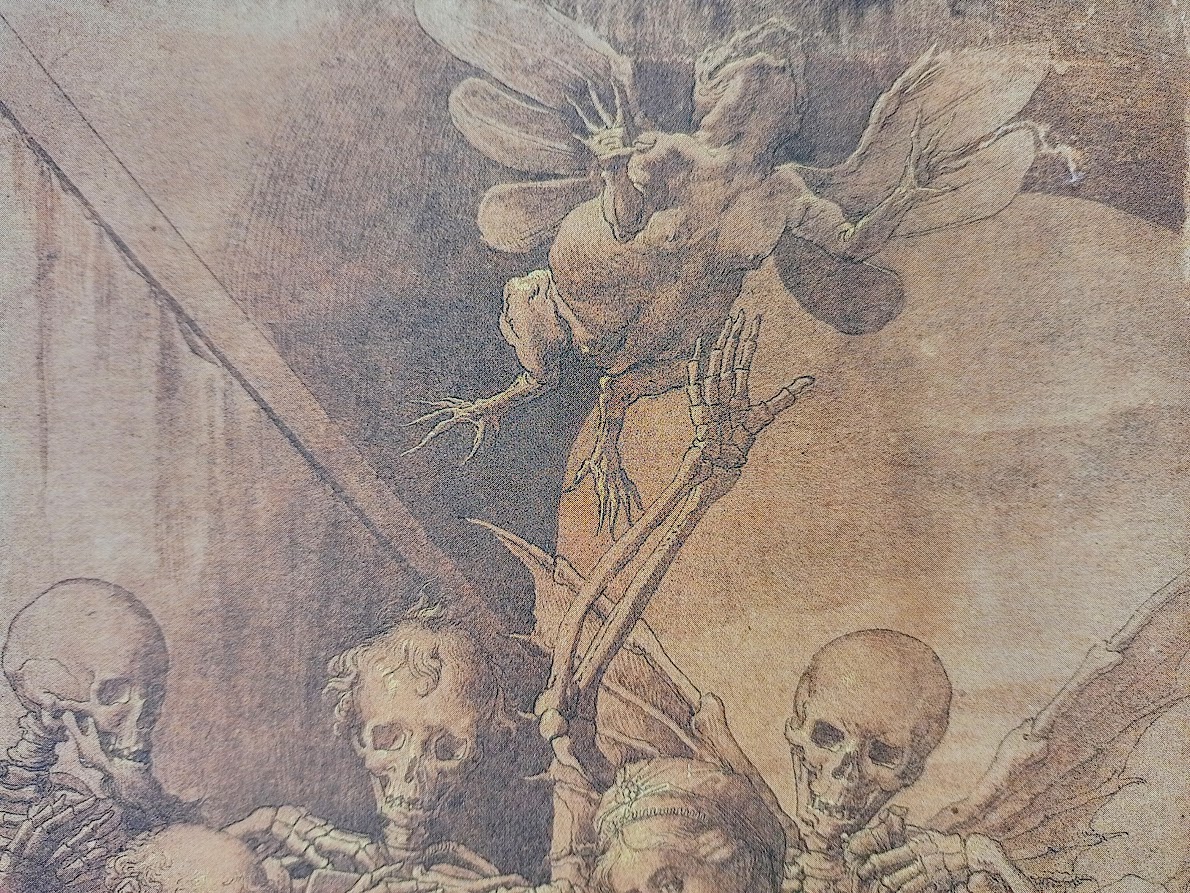
Alle sue spalle si nota la presenza di uno scheletro dotato di ali che le protende un altro sacchetto pieno e una collana mentre altri gli due scheletri pare disquisiscono fra di loro. Più un alto si vede una sorta di lucertolone in mirabile scorcio che sta sorvolando la scena.
In basso ci sono diversi tipi di monile, un forziere, delle coppe e altri sacchi pieni di soldi.
L’uomo intento a scrivere alla sinistra del disegno, simboleggia la sottoscrizione del contratto che fa la donna per acquistare beni e simbolicamente allude alla vendita della sua anima in cambio di cose materiali effimere.
Per il momento il vostro Michelangelo Buonarroti vi saluta dandovi appuntamento ai prossimi post e sui social.
A drawing for Halloween: Ligozzi’s Allegory of Avarice
Halloween is not an occasion that I celebrate nor that I feel belongs to me but, with the aim of showing you something artistic and a symbolic link with today’s celebrations, I started browsing through the pile of non-mine drawings that I have.
I found a perfect one for this day complete with skeletons and a winged monster seen foreshortened, with its mouth open.
This is the preparatory study of the Allegory of Avarice by the Veronese painter Jacopo Ligozzi, created by the artist in 1590.
Drawn in pen and brown ink, with brown watercolor and gold highlights on paper, it now belongs to the National Gallery in Washington.
The drawing is part of a series depicting the seven deadly sins, dated and signed by the artist at the bottom left. In his signature his initials J and L are joined on a rod on which he then draws the cross. This drawing was then transposed into a painting but the framing chosen in the painting cuts out one skeleton entirely and another partially and the flying monster from the scene. probably the canvas has been cut over the centuries otherwise the monster’s paw sticking out from above and the strange framing cannot be explained.
The refinement of the drawing is clearly superior to that of the painting. In the foreground we see the allegory of Avarice personified by a young woman holding up a sack presumably full of money with one hand.
Behind her we see a skeleton with wings holding out another full bag and a necklace to her while two other skeletons appear to be arguing with each other. Higher up you can see a sort of lizard in admirable glimpse that is flying over the scene.
Below you can see the presence of all types of jewellery, a chest, cups and other bags full of money.
The man intent on writing on the left of the drawing symbolizes the signing of the contract that the woman makes to purchase goods and symbolically alludes to the sale of her soul in exchange for ephemeral material things.
For the moment, your Michelangelo Buonarroti greets you and will meet you in future posts and on social media.

Sostienici – Support Us
Se questo blog ti piace e ti appassiona, puoi aiutarci a farlo crescere sempre più sostenendoci in modo concreto condividendo i post, seguendo le pagine social e con un contributo che ci aiuta ad andare avanti con il nostro lavoro di divulgazione. . ENGLISH: If you like and are passionate about this blog, you can help us make it grow more and more by supporting us in a concrete way by sharing posts, following social pages and with a contribution that helps us to move forward with our dissemination work.
8,00 €
-
“Nuovo Apollo e nuovo Apelle”: le parole che celebrarono la mia arte
🇮🇹Mi chiamò ‘Nuovo Apollo e nuovo Apelle’ e non fu certo un complimento da poco. A scrivere queste parole fu Francesco Benni, che arrivò a dire della mia arte: “E’ dice cose e voi dite parole.”… 🇬🇧He called me a “new Apollo and new Apelles,” and that was certainly no small compliment. It was Francesco…
-
Bologna, sei grandi mostre dal 2027: ecco il nuovo programma dei Musei nazionali
🇮🇹Musei nazionali di Bologna: ecco il programma 2027-2030 di Luigi Gallo, con sei mostre, restauri, riallestimenti e nuovi progetti in Emilia-Romagna… 🇬🇧Bologna’s national museums: here is Luigi Gallo’s 2027–2030 program, featuring six exhibitions, restoration work, redisplays, and new projects in Emilia-Romagna…
-
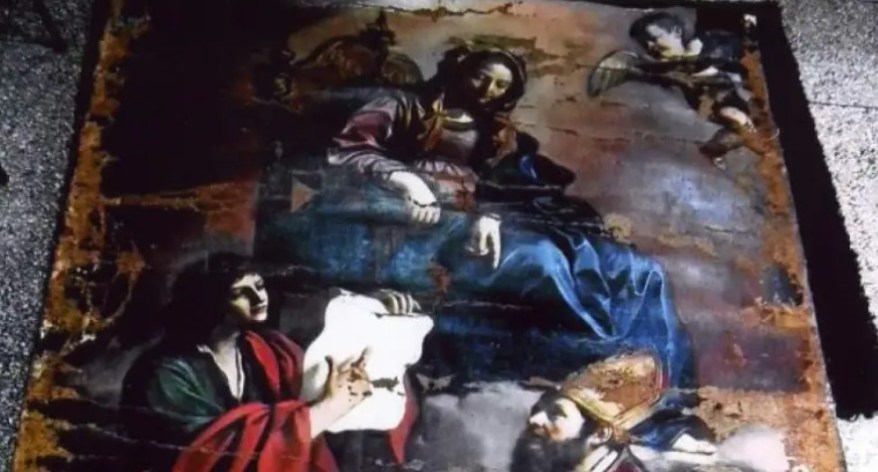
Il Guercino rubato nella notte: la Madonna scomparve da Modena e ricomparve devastata in Marocco
🇮🇹La storia del clamoroso furto del Guercino dalla chiesa di San Vincenzo a Modena nel 2014: il ritrovamento a Casablanca nel 2017 e il difficile restauro della tela… 🇬🇧The story of the sensational theft of the Guercino painting from the Church of San Vincenzo in Modena in 2014: its recovery in Casablanca in 2017 and…
Condividi:


Questo sono io




sostienici

Sostienici – Support Us
Se questo blog ti piace e ti appassiona, puoi aiutarci a farlo crescere sempre più sostenendoci in modo concreto condividendo i post, seguendo le pagine social e con un contributo che ci aiuta ad andare avanti con il nostro lavoro di divulgazione. . ENGLISH: If you like and are passionate about this blog, you can help us make it grow more and more by supporting us in a concrete way by sharing posts, following social pages and with a contribution that helps us to move forward with our dissemination work.
€10,00


non so perchè ma a volte mi piace più il disegno del dipinto finito, come in questo caso. Grazie come sempre!
"Mi piace"Piace a 1 persona