
Stanza Segreta: il disegno con il San Matteo e l’angelo
A novembre aprirà al pubblico l’ambiente stretto e lungo noto come la Stanza Segreta al quale si accede mediante una botola, oggi dotata di apertura meccanizzata, presente all’interno della Sagrestia Nuova.
Per non arrivare impreparati al grande evento senza sapere quali disegni potete trovare al suo interno, ve ne racconterò alcuni nel dettaglio. Tempo fa vi ho parlato del piede (lo trovate QUA) mentre oggi vi propongo il disegno con il San Matteo e l’angelo.

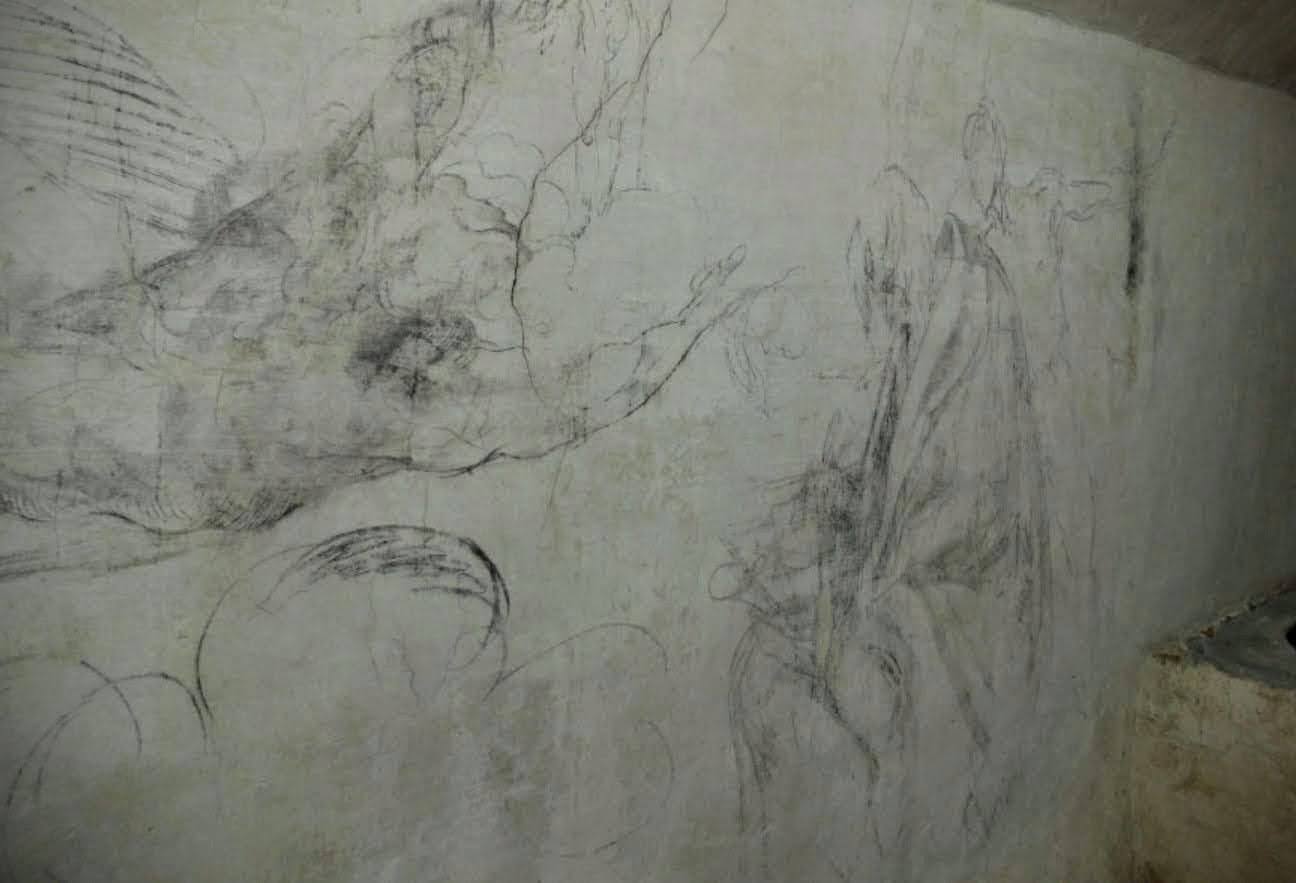
E’ uno dei disegni più suggestivi ed emozionanti che tracciai a carbone quando nella stanza fui costretto a rifugiarmi per evitare di essere fatto letteralmente fuori.
Si trova sulla parete destra, in prossimità del pozzo ed è il disegno di una figura anziana barbuta che, con un mantello sulle spalle, appare intento a scrivere sul libro appoggiato sulle ginocchia.
Alle sue spalle, disegnato in modo più sommario, si intravede un’altra figura interpretabile come l’angelo mandato da Dio per aiutare e ispirare il Santo a mettere nero su bianco il proprio Vangelo.

A stupire in modo particolare è il volto di San Matteo con quell’intensità resa tale con pochi tratti ma che riesce a penetrare sottopelle a chi ci si trova dinnanzi.
Scapigliato e con la barba lunga, ha lo sguardo rivolto verso il basso. Concentrato all’inverosimile sembra non rendersi conto di ciò che ha attorno. Lui vuole solo scrivere il Vangelo mentre l’angelo dietro privo di vesti da fa ispiratore.
Ma perchè lì sotto, nella Stanza Segreta, c’è questo disegno del San Matteo con l’angelo?
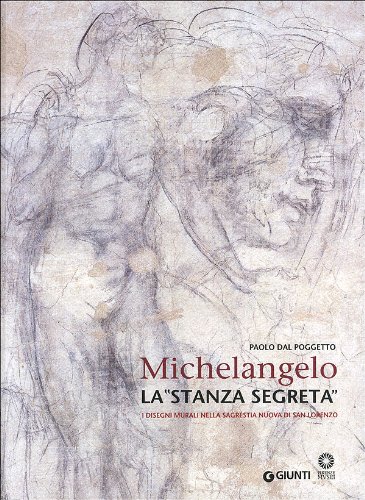
Paolo dal Poggetto al quale si deve la riscoperta della Stanza Segreta, ha fatto diverse ipotesi in merito e una in particolare la ritengo assai calzante quanto calzante la riteneva lui: “e se Michelangeo avesse studiato la decorazione pittorica della Cappella Medicea includendovi l’inserimento classico dei quattro Evangelisti nello spazio tondo dei pennacchi?”
Per il momento il vostro Michelangelo Buonarroti vi saluta dandovi appuntamento ai prossimi post e sui social.
Secret Room: the drawing with Saint Matthew and the angel
In November, the long, narrow room known as the Secret Room will open to the public, which is accessed via a trap door, now equipped with a mechanized opening, inside the New Sacristy.
So as not to arrive unprepared for the big event without knowing which drawings you can find inside, I will tell you about some of them in detail. Some time ago I talked to you about the foot (you can find it HERE) while today I propose the drawing with Saint Matthew and the angel.
It is one of the most evocative and emotional drawings that I drew in charcoal when I was forced to take refuge in the room to avoid being literally killed.
It is located on the right wall, near the well and is the drawing of an elderly bearded figure who, with a cloak over his shoulders, appears intent on writing in the book resting on his knees.
Behind him, drawn in a more summary way, we can glimpse another figure that can be interpreted as the angel sent by God to help and inspire the Saint to put his Gospel down on paper.
What is particularly surprising is the face of Saint Matthew with that intensity made so with few strokes but which manages to penetrate under the skin of those who find themselves in front of it.
Disheveled and with a long beard, he is looking downwards. Concentrated beyond belief, he doesn’t seem to realize what’s around him. He just wants to write the Gospel while the angel behind without clothes acts as an inspiration.
But why down there, in the Secret Room, is there this drawing of Saint Matthew with the angel?
Paolo dal Poggetto, to whom we owe the rediscovery of the Secret Room, has made several hypotheses on the matter and I consider one in particular to be as fitting as he thought it to be: “and if Michelangeo had studied the pictorial decoration of the Medici Chapel including the classical insertion of the four Evangelists in the round space of the spandrels?”
For the moment, your Michelangelo Buonarroti greets you and will meet you in future posts and on social media.

Sostienici – Support Us
Se questo blog ti piace e ti appassiona, puoi aiutarci a farlo crescere sempre più sostenendoci in modo concreto condividendo i post, seguendo le pagine social e con un contributo che ci aiuta ad andare avanti con il nostro lavoro di divulgazione. . ENGLISH: If you like and are passionate about this blog, you can help us make it grow more and more by supporting us in a concrete way by sharing posts, following social pages and with a contribution that helps us to move forward with our dissemination work.
10,00 €
-
Il Compianto sul Cristo morto di Correggio: pathos e devozione
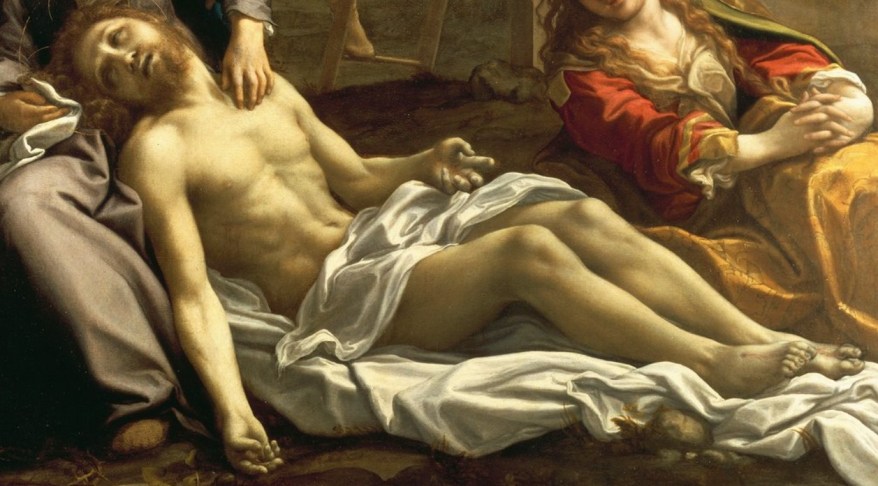
🇮🇹Con l’inizio della Settimana Santa, vi propongo il Compianto sul Cristo morto di Antonio Allegri, più noto come il Correggio: uno dei vertici assoluti della pittura emiliana del Cinquecento… 🇬🇧With the beginning of Holy Week, I propose the Lamentation over the Dead Christ by Antonio Allegri, better known as Correggio: one of the absolute peaks…
-
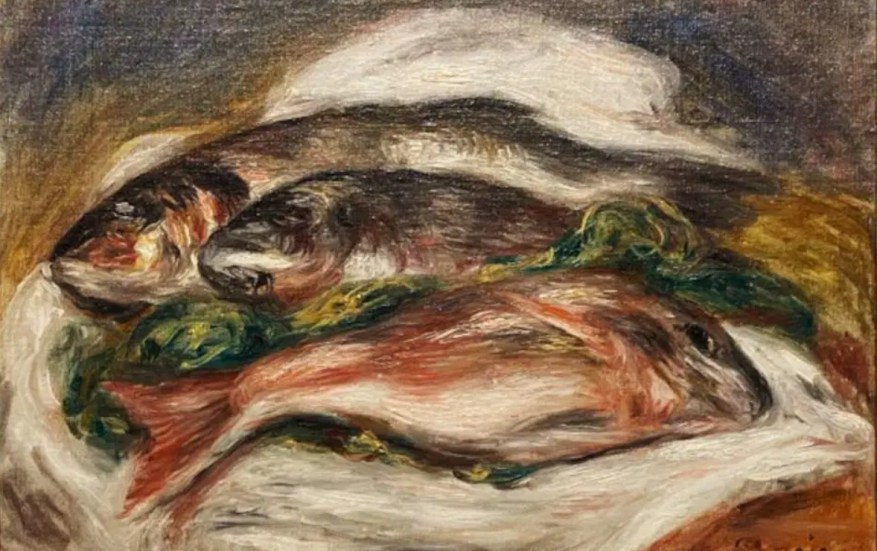
Furto milionario alla Magnani Rocca: rubati Renoir, Cézanne e Matisse
🇮🇹‼Tre capolavori storici spariti in meno di tre minuti: Les Poissons di Renoir, Tasse et plat de cerises di Cézanne e Odalisque sur la terrasse di Matisse sono stati rubati nella dalla Fondazione Magnani Rocca a Mamiano di Traversetolo, nel Parmense… 🇬🇧‼Three historic masterpieces disappeared in less than three minutes: Renoir’s Les Poissons, Cézanne’s Tasse…
-
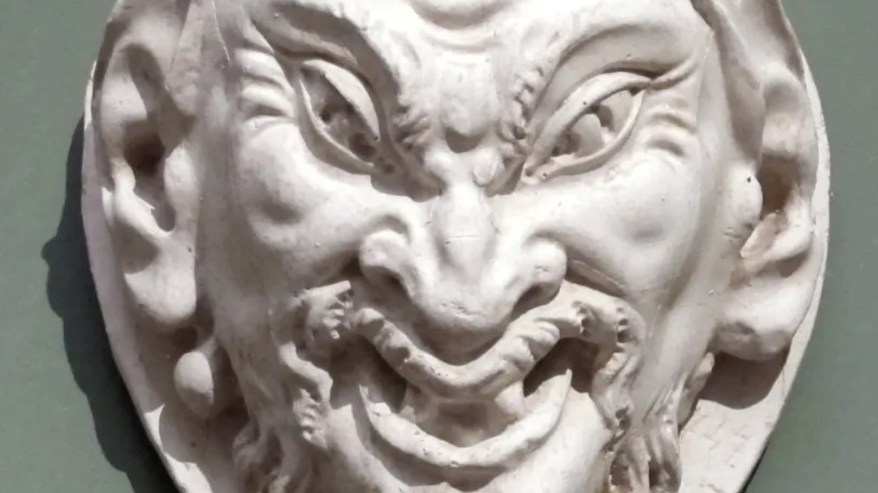
Fauno rubato: 15.000$ per ritrovarlo dopo 80 anni
🇮🇹Ero un ragazzino quando scolpii il Mascherone del Fauno sdentato. Oggi quel volto è perduto, rubato nella notte della guerra e da oltre 80 anni nessuno sa dove sia. Ora una ricompensa di 15.000$ riaccende la ricerca… 🇬🇧I was a boy when I sculpted the Toothless Faun Mask. Today that face is lost, stolen on…
Condividi:


Questo sono io





sostienici

Sostienici – Support Us
Se questo blog ti piace e ti appassiona, puoi aiutarci a farlo crescere sempre più sostenendoci in modo concreto condividendo i post, seguendo le pagine social e con un contributo che ci aiuta ad andare avanti con il nostro lavoro di divulgazione. . ENGLISH: If you like and are passionate about this blog, you can help us make it grow more and more by supporting us in a concrete way by sharing posts, following social pages and with a contribution that helps us to move forward with our dissemination work.
€10,00


