

I conti di un remoto restauro della Sistina
Il foglio che vi propongo fu scritto niente meno che da Annibale Mazzuoli.
Vi dice niente questo nome?
Ebbene, il Mazzuoli fu incaricato di restaurare gli affreschi della Cappella Sistina e le due facciate del libro propongono una serie di conti relativi proprio alla pulitura degli affreschi che iniziò il 9 ottobre 1710 fino al 12 dicembre del 1712.
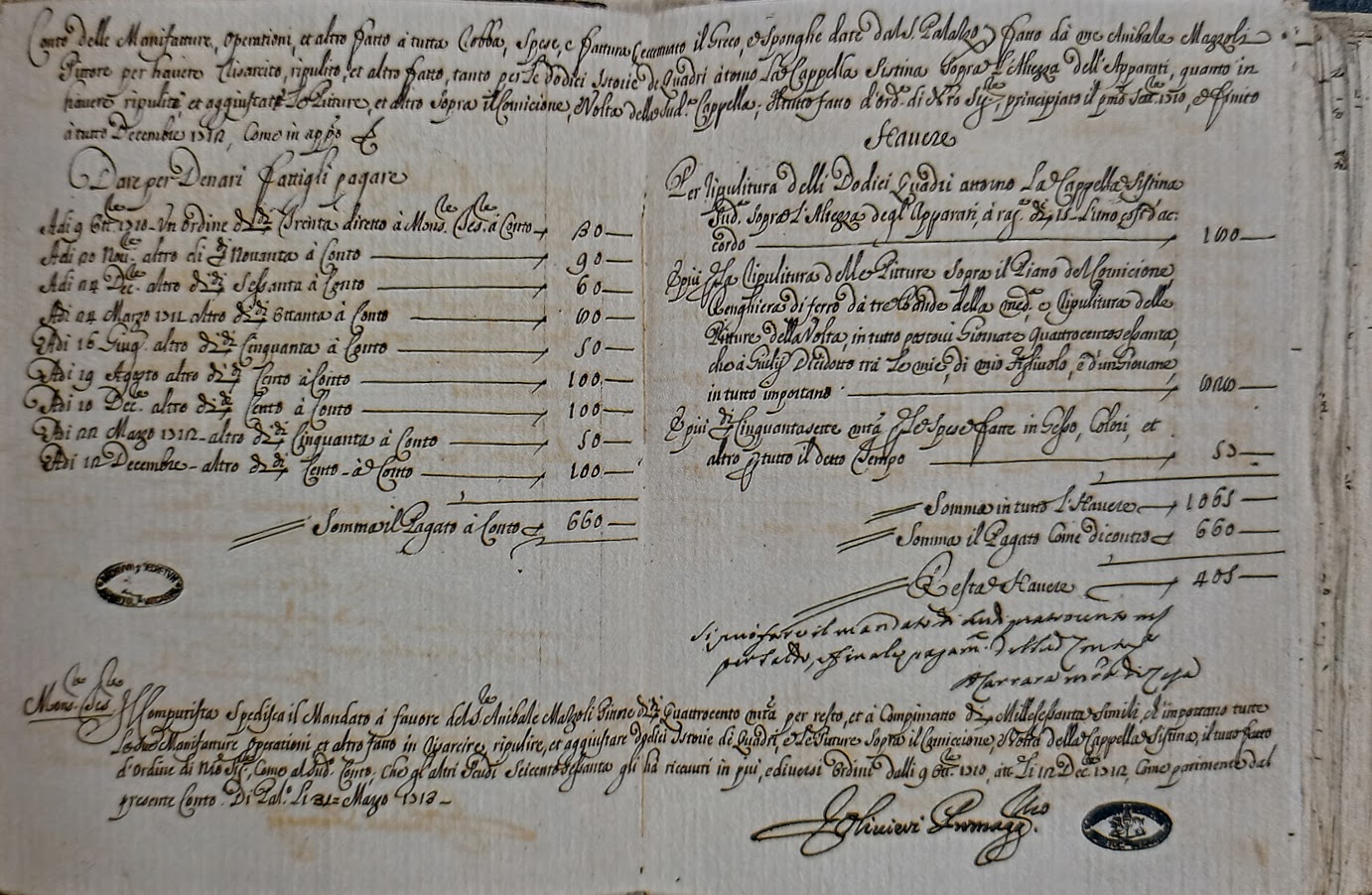
“Conto delle Manifatture, operationi, ed altro fatto à tutta robba, spese, e fattura ( eccetto il Greco, e sponghe date dal Sacro Palazzo) fatto dà me Anibale Mazzoli Pittore per havere risarcito, ripulito, ed altro fatto, tanto per le dodici historie de Quadri attorno a la Cappella Sistina sopra l’Altezza dell’Apparati, quanto in havere a ripulite, et aggiustate le Pitture, et altro opra il Cornicione, e Volta della suddetta Cappella…”
Annibale Mazzuoli

Fin dall’inizio del pontificato di Clemente XI Albani, iniziato nel 1700, il papa in persona si rese conto che la Cappella Sistina aveva bisogno di un intervento di restauro importante e soprattutto urgente.
Lo stato di conservazione era terribile e preoccupante.
L’abate Taja al tempo scrisse che il nitro, la polvere e l’umidità in pochi anni, se non si fosse posto rimedio, avrebbero degradato talmente tanto gli affreschi che poi sarebbe stato impossibile ripararli. Il peggioramento era visibile a occhio nudo di anno in anno e riportò la presenza di squarciature della superficie pittorica.
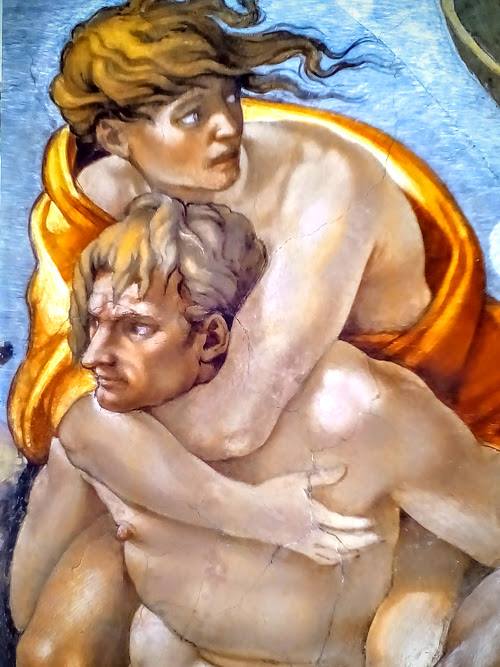
La prima fase del restauro è poco documentata. Fu coordinata da Carlo Maratta ed eseguita dai suoi allievi fino a quando, nel 1710 subentrò Annibale Mazzuoli.
Del restauro del Mazzzoli invece sappiamo molte cose come per esempio le spese sostenute e i materiali adoperati. Quell’intervento interessò tutta la superficie dipinta della Sistina, ad eccezion fatta delle finte tappezzerie che furono restaurate sì in quel periodo ma da altri collaboratori.
Per il momento il vostro Michelangelo Buonarroti vi saluta dandovi appuntamento ai prossimi post e sui social.
The accounts of a remote restoration of the Sistine Chapel
The sheet that I propose to you was written by none other than Annibale Mazzuoli.
Does this name mean anything to you?
Well, Mazzuoli was commissioned to restore the frescoes in the Sistine Chapel and the two pages of the book offer a series of accounts relating precisely to the cleaning of the frescoes which began on 9 October 1710 until 12 December 1712.
From the beginning of Clement XI Albani’s pontificate, which began in 1700, the pope himself realized that the Sistine Chapel needed major and above all urgent restoration work.
The state of conservation was terrible and worrying. Abbot Taja at the time wrote that the nitrous, dust and humidity in a few years, if not remedied, would have degraded the frescoes so much that it would then have been impossible to repair them. The deterioration was visible to the naked eye from year to year and spoke of tearing of the pictorial surface.
The first phase of the restoration is poorly documented. It was coordinated by Carlo Maratta and carried out by his pupils until, in 1710, Annibale Mazzuoli took over.
On the other hand, we know many things about the restoration of Mazzoli, such as the costs incurred and the materials used. That intervention affected the entire painted surface of the Sistine Chapel, with the exception of the fake tapestries which were restored in that period but by other collaborators.
For the moment, your Michelangelo Buonarroti greets you by making an appointment for the next posts and on social media.

Sostienici – Support Us
Se questo blog ti piace e ti appassiona, puoi aiutarci a farlo crescere sempre più sostenendoci in modo concreto condividendo i post, seguendo le pagine social e con un contributo che ci aiuta ad andare avanti con il nostro lavoro di divulgazione. . ENGLISH: If you like and are passionate about this blog, you can help us make it grow more and more by supporting us in a concrete way by sharing posts, following social pages and with a contribution that helps us to move forward with our dissemination work.
8,00 €
-
Artemisia Gentileschi, Giuditta e l’ancella con la testa di Oloferne: il dramma biblico
🇮🇹Giuditta e l’ancella con la testa di Oloferne di Artemisia Gentileschi è in mostra al Museo degli Innocenti di Firenze: storia, dettagli e confronti con Orazio Gentileschi… 🇬🇧Judith and Her Maidservant with the Head of Holofernes* by Artemisia Gentileschi is on display at the Museo degli Innocenti in Florence: history, details, and comparisons with Orazio…
-
Il Cavallo colossale di Canova torna a casa in 10 casse: ecco quando si potrà ammirare
🇮🇹Il Cavallo colossale di Antonio Canova torna a Bassano il 27 ottobre 2026. Dopo il restauro, sarà visibile al Museo Civico dal 12 dicembre… 🇬🇧Antonio Canova’s colossal horse returns to Bassano on October 27, 2026. Following its restoration, it will be on display at the Civic Museum starting December 12…
-
La mano che disegna la mano: il disegno del Louvre che ha fatto discutere gli studiosi
🇮🇹Il disegno di una mano che ne disegna un’altra: il curioso foglio del Louvre, la storia delle attribuzioni e il mistero della sua paternità… 🇬🇧A drawing of a hand drawing another hand: the intriguing sheet at the Louvre, the history of its attributions, and the mystery of its authorship…
Condividi:


Questo sono io




sostienici

Sostienici – Support Us
Se questo blog ti piace e ti appassiona, puoi aiutarci a farlo crescere sempre più sostenendoci in modo concreto condividendo i post, seguendo le pagine social e con un contributo che ci aiuta ad andare avanti con il nostro lavoro di divulgazione. . ENGLISH: If you like and are passionate about this blog, you can help us make it grow more and more by supporting us in a concrete way by sharing posts, following social pages and with a contribution that helps us to move forward with our dissemination work.
€10,00


