
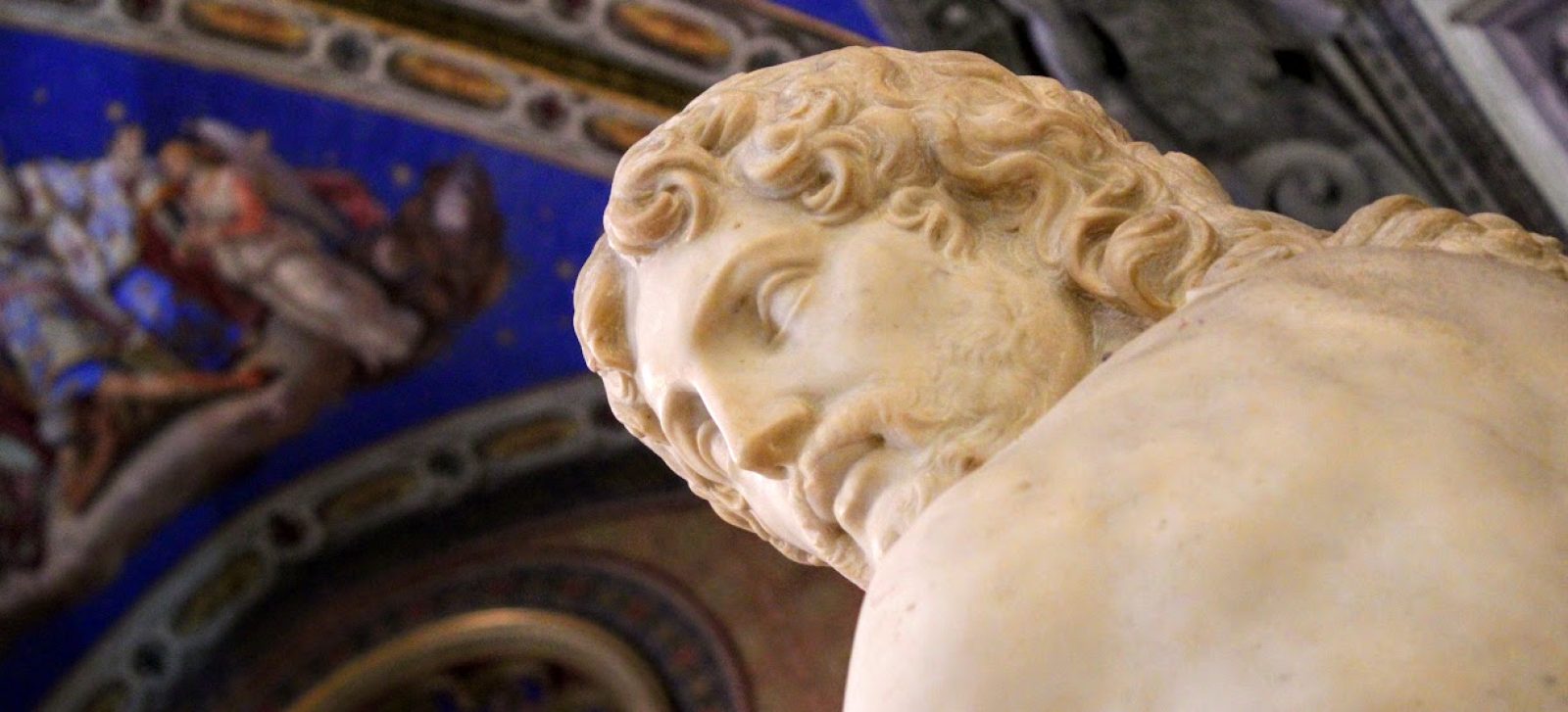
Giudizio Universale: i tre serpenti
Il serpente più celebre del Giudizio Universale è quello che affrescai mentre addenta i genitali a Biagio da Cesena, cerimoniere di papa Paolo III, ma non è l’unico presente in tutta l’opera.
Se ne possono apprezzare altri due: uno lo affrescai mentre addenta la coscia del disperato che oramai non può più salvarsi e l’altro si trova più in basso, nella parte sinistra dell’opera.
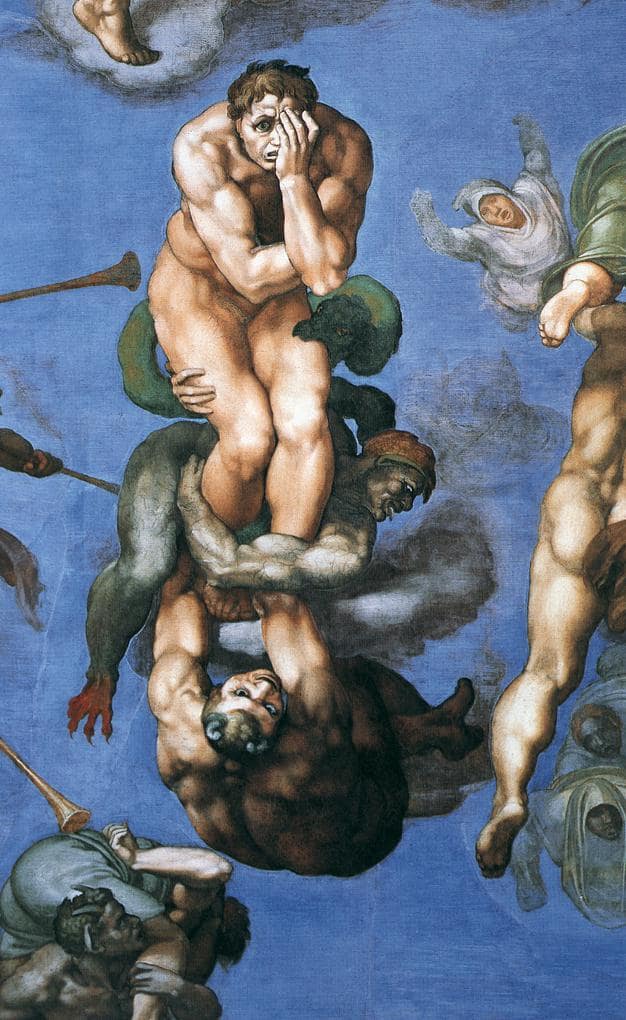
Allorché un angelo aptero sostiene un uomo che sta risorgendo sotto le braccia impiegando tutta la forza di cui è capace per farlo ascendere al cielo, un demone tenta di tirarlo verso gli inferi in modo inusuale.
A chi sarebbe potuta venire in mente una scena simile se non a me?

Per riuscire nel suo intento, il malvagio adopera un serpe quasi fosse una corda. Le spire dell’animale avvolgono le caviglie e le gambe dell’eletto prima di essere afferrato e tirato con forza.
Il serpente guarda dritto negli occhi lo spettatore e pare intimare a tutti di non intervenire in questa animata contesa di anime.

L’anima si salverà perché il suo nome è stato scritto nel piccolo libro dei giusti ma intanto lotta per la sua redenzione contro le forze oscure che vogliono trascinarlo via per mezzo del serpente, da sempre simbolo del peccato.
Chissà quali peccati avrà commesso per essere così conteso il giorno della fine dei tempi!
Per il momento il vostro Michelangelo Buonarroti vi saluta dandovi appuntamento ai prossimi post e sui social.

Last Judgment: the three serpents
The most famous snake of the Last Judgment is the one I frescoed biting into the genitals of Biagio da Cesena, master of ceremonies for Pope Paul III, but it is not the only one present in the whole work.
Two others can be appreciated: one I frescoed while biting into the thigh of the desperate man who can no longer save himself and the other is located further down, on the left side of the work.
When an apterous angel supports a man who is resurrecting under his arms using all the strength he is capable of to make him ascend to heaven, a demon tries to pull him towards the underworld in an unusual way.
Who could have thought of such a scene if not me?
To succeed in his intent, the villain uses a snake as if it were a rope. The coils of the animal wrap around the ankles and legs of the chosen one before being grabbed and pulled with force.
The snake looks the viewer straight in the eye and seems to warn everyone not to intervene in this animated contest of souls.
The soul will be saved because his name has been written in the little book of the righteous but in the meantime he fights for his redemption against the dark forces that want to drag him away by means of the snake, which has always been a symbol of sin.
Who knows what sins he will have committed to be so disputed on the day of the end of time!
For the moment, your Michelangelo Buonarroti greets you by making an appointment for the next posts and on social media.

Sostienici – Support Us
Se questo blog ti piace e ti appassiona, puoi aiutarci a farlo crescere sempre più sostenendoci in modo concreto condividendo i post, seguendo le pagine social e con un contributo che ci aiuta ad andare avanti con il nostro lavoro di divulgazione. . ENGLISH: If you like and are passionate about this blog, you can help us make it grow more and more by supporting us in a concrete way by sharing posts, following social pages and with a contribution that helps us to move forward with our dissemination work.
5,00 €
-
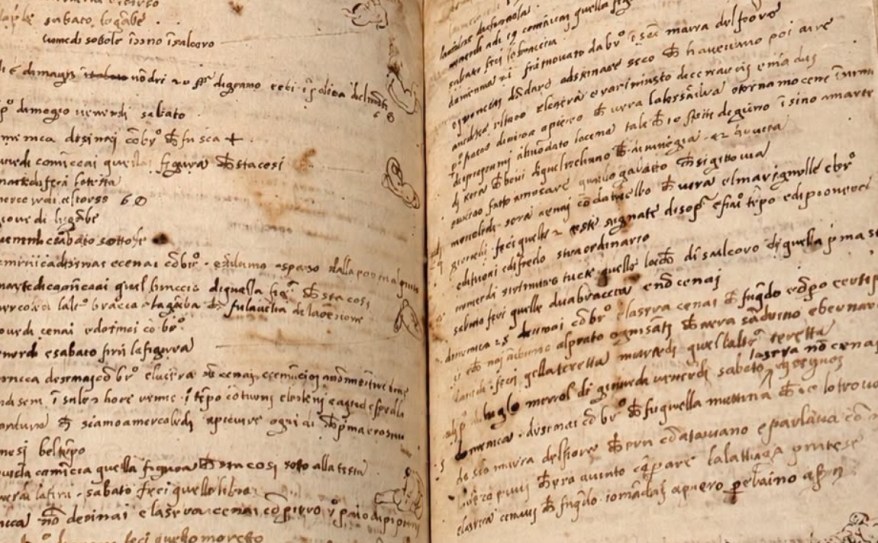
Pontormo, il diario segreto del pittore: malattie, pasti e piccoli disegni che raccontano la sua vita
🇮🇹Il diario di Pontormo: malattie, pasti, amicizie e piccoli disegni raccontano la vita privata del pittore e il lavoro perduto a San Lorenzo… 🇬🇧Pontormo’s diary—with its accounts of illnesses, meals, friendships, and small sketches—reveals the painter’s private life and his lost work at San Lorenzo…
-
25 ottobre 1815: le opere rubate da Napoleone tornarono in Italia, ma 248 rimasero in Francia
🇮🇹Il 25 ottobre 1815 partì da Parigi un convoglio di 41 carri trainati da circa 200 cavalli, con 249 opere d’arte destinate a tornare in Italia… 🇬🇧On October 25, 1815, a convoy of 41 wagons, pulled by approximately 200 horses, departed from Paris, carrying 249 works of art destined to return to Italy…
-

Più forte della morte
🇮🇹Può l’amore superare la morte? In un madrigale sorprendente, il desiderio di chi amo arriva fino all’Inferno e al Paradiso… 🇬🇧Can love transcend death? In a striking madrigal, the longing for the one I love reaches as far as Hell and Paradise…
Condividi:


Questo sono io




sostienici

Sostienici – Support Us
Se questo blog ti piace e ti appassiona, puoi aiutarci a farlo crescere sempre più sostenendoci in modo concreto condividendo i post, seguendo le pagine social e con un contributo che ci aiuta ad andare avanti con il nostro lavoro di divulgazione. . ENGLISH: If you like and are passionate about this blog, you can help us make it grow more and more by supporting us in a concrete way by sharing posts, following social pages and with a contribution that helps us to move forward with our dissemination work.
€10,00


