
Il mio ritratto nell’incisione di Bonasone
Quella che vi propongo oggi è l’incisione a bulino realizzata da Giulio Bonasone, un mio coetaneo o quasi: era nato tredici anni dopo di me e volle omaggiarmi con questo ritratto.
Volle raffigurarmi di profilo, girato verso destra, con la barba come ero solito portare. Se guardate bene, all’altezza della fronte, vedrete un insolito dettaglio: una goccia di sudore che scende verso il basso, molto probabilmente per simboleggiare la fatica e i travagli che affrontai in vita.
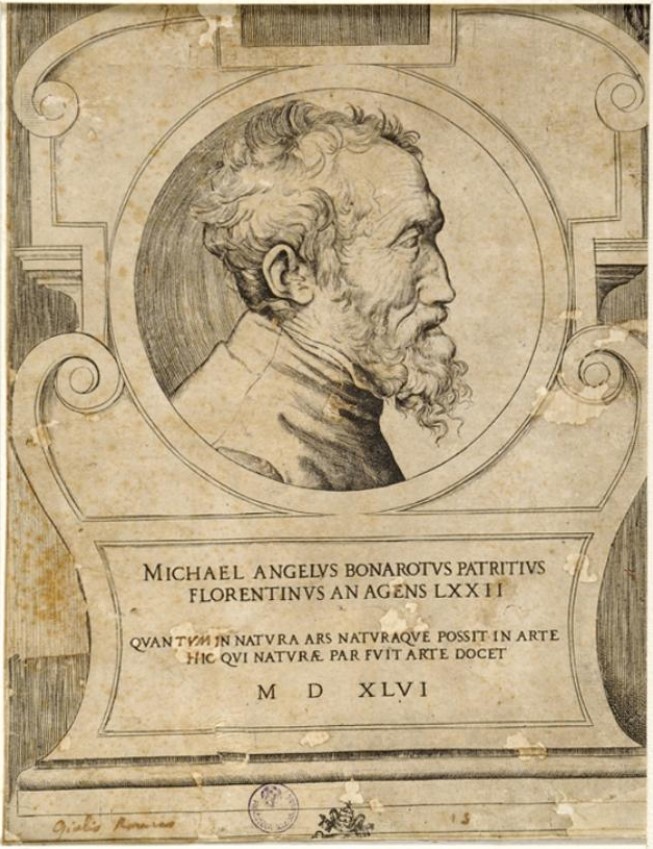
Al di sotto del tondo che incornicia il volto Bonasone riporta questa scritta in latino: MICHEAL AGNELVUS BONAROTVS PATRITIVS/ FLORENTINVS AN AGNENS LXXII/ QVANTVM IN NATVRAARS NATVRAQVE POSSIT IN ARTE/HIC QVI NATVRAE PAR FIVIT ARTE DOCET/ MDXLVI.
Questa incisione appartiene al Gabinetto dei Disegni e delle Stampe della Pinacoteca Nazionale di Bologna. Per il momento il vostro Michelangelo Buonarroti vi saluta dandovi appuntamento ai prossimi post e sui social.
My portrait in Bonasone’s engraving
What I am proposing to you today is the burin engraving made by Giulio Bonasone, almost a contemporary of mine: he was born thirteen years after me and wanted to pay homage to me with this portrait.
He wanted to picture me in profile, turned to the right, with the beard as I used to wear. If you look closely, at the level of the forehead, you will see an unusual detail: a drop of sweat that goes down, most likely to symbolize the fatigue and travails I faced in life.
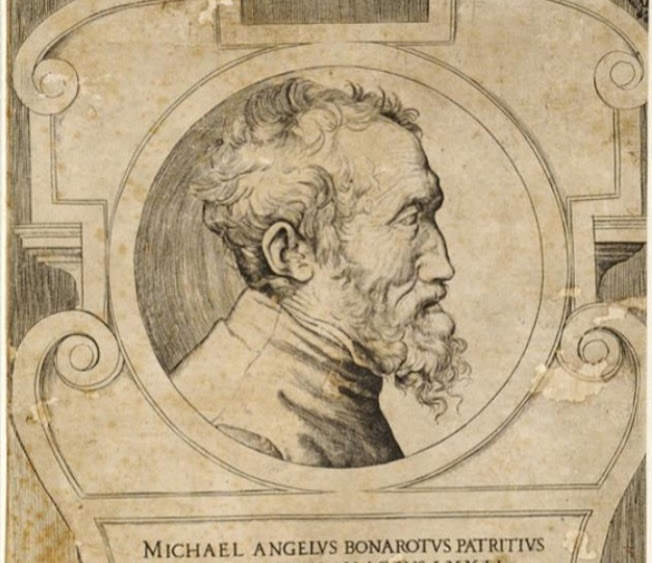
Below the tondo that frames the face Bonasone reports this inscription in Latin: ICHEAL AGNELVUS BONAROTVS PATRITIVS/ FLORENTINVS AN AGNENS LXXII/ QVANTVM IN NATVRAARS NATVRAQVE POSSIT IN ARTE/HIC QVI NATVRAE PAR FIVIT ARTE DOCET/ MDXLVI.
This engraving belongs to the Thomas Ashby Collection. For the moment, your Michelangelo Buonarroti greets you by giving you an appointment at the next posts and on social networks.

Sostienici – Support Us
Se questo blog ti piace e ti appassiona, puoi aiutarci a farlo crescere sempre più sostenendoci in modo concreto condividendo i post, seguendo le pagine social e con un contributo che ci aiuta ad andare avanti con il nostro lavoro di divulgazione. . ENGLISH: If you like and are passionate about this blog, you can help us make it grow more and more by supporting us in a concrete way by sharing posts, following social pages and with a contribution that helps us to move forward with our dissemination work.
10,00 €
-
L’insolito volto: il piccolo capolavoro dell’Ashmolean Museum
🇮🇹Un volto fuori dagli ideali di bellezza, con lineamenti irregolari, labbra pronunciate e uno sguardo quasi assente… 🇬🇧A face that falls outside conventional ideals of beauty, with irregular features, prominent lips, and an almost vacant gaze…
-
Le 10 città d’arte europee più belle da visitare a Natale: musei e luoghi da non perdere
🇮🇹Quali città d’arte europee visitare a Natale? Da Vienna a Parigi, da Praga a Bruges, 10 mete tra mercatini, musei, capolavori e atmosfere da fiaba… 🇬🇧Which European cities of art should you visit at Christmas? From Vienna to Paris, from Prague to Bruges—10 destinations featuring Christmas markets, museums, masterpieces, and a fairytale atmosphere…
-
Artemisia Gentileschi a Firenze: la storia, le opere e la mostra agli Innocenti fino al 2027
🇮🇹Artemisia Gentileschi a Firenze: dalle commissioni dei Medici all’Allegoria dell’Inclinazione di Casa Buonarroti. La storia e la mostra agli Innocenti… 🇬🇧Artemisia Gentileschi in Florence: from commissions by the Medici to the *Allegory of Inclination* at Casa Buonarroti. The story and the exhibition at the Ospedale degli Innocenti…
Condividi:


Questo sono io




sostienici

Sostienici – Support Us
Se questo blog ti piace e ti appassiona, puoi aiutarci a farlo crescere sempre più sostenendoci in modo concreto condividendo i post, seguendo le pagine social e con un contributo che ci aiuta ad andare avanti con il nostro lavoro di divulgazione. . ENGLISH: If you like and are passionate about this blog, you can help us make it grow more and more by supporting us in a concrete way by sharing posts, following social pages and with a contribution that helps us to move forward with our dissemination work.
€10,00


