
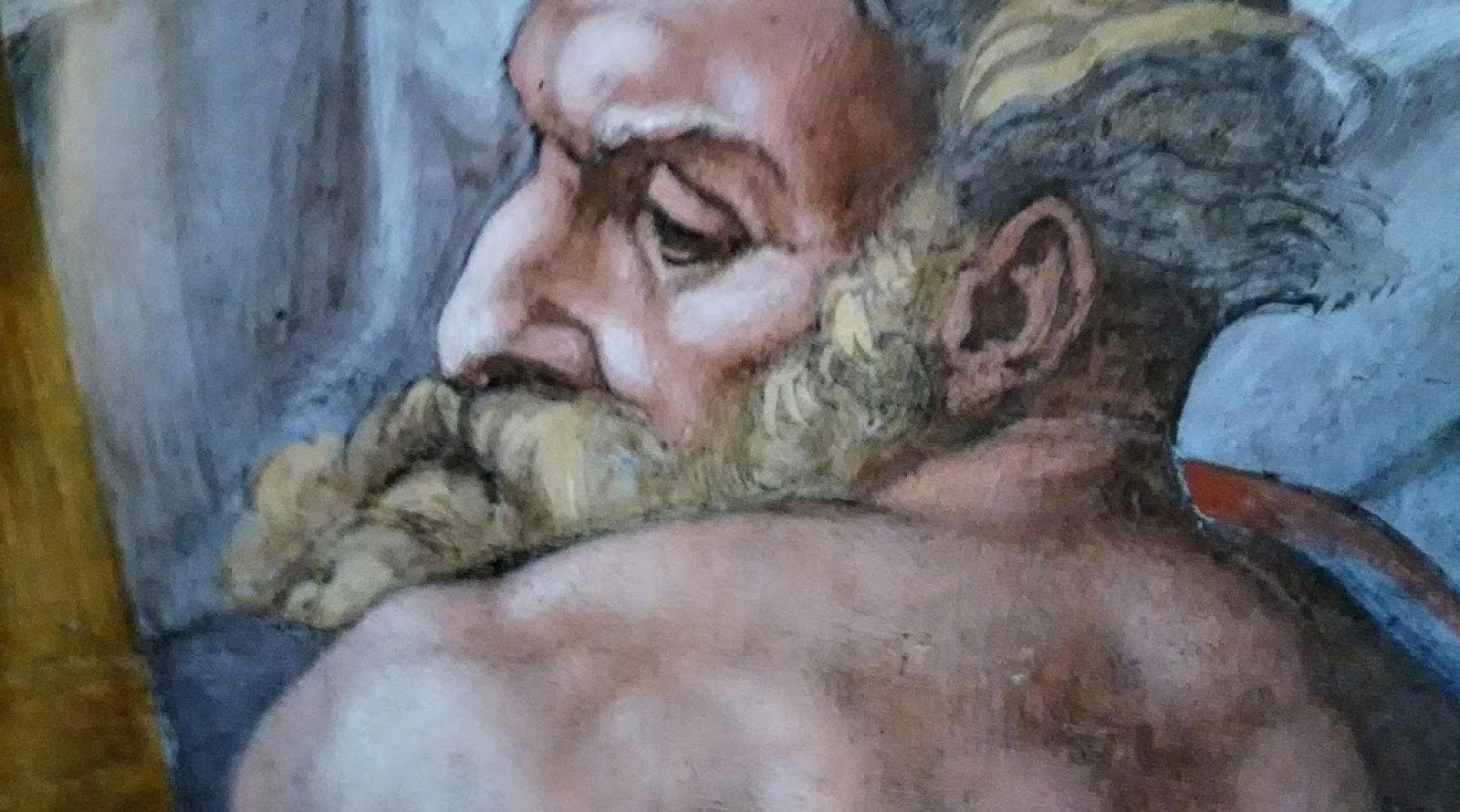
Artemisia Gentileschi a Firenze: la storia, le opere e la mostra agli Innocenti fino al 2027
Artemisia Gentileschi arrivò a Firenze tra la fine del 1612 e i primi mesi del 1613, dopo il processo contro Agostino Tassi. Nella città dei Medici trovò nuove opportunità, importanti committenti e un ambiente culturale che contribuì alla sua affermazione. Tra le opere più significative del suo periodo fiorentino c’è anche l’Allegoria dell’Inclinazione, realizzata per la Galleria di Casa Buonarroti.
Firenze per Artemisia Gentileschi fu una città nella quale la giovane pittrice riuscì a costruire una propria identità professionale, a entrare in contatto con la corte medicea e a confrontarsi con alcuni dei protagonisti della cultura del Seicento.
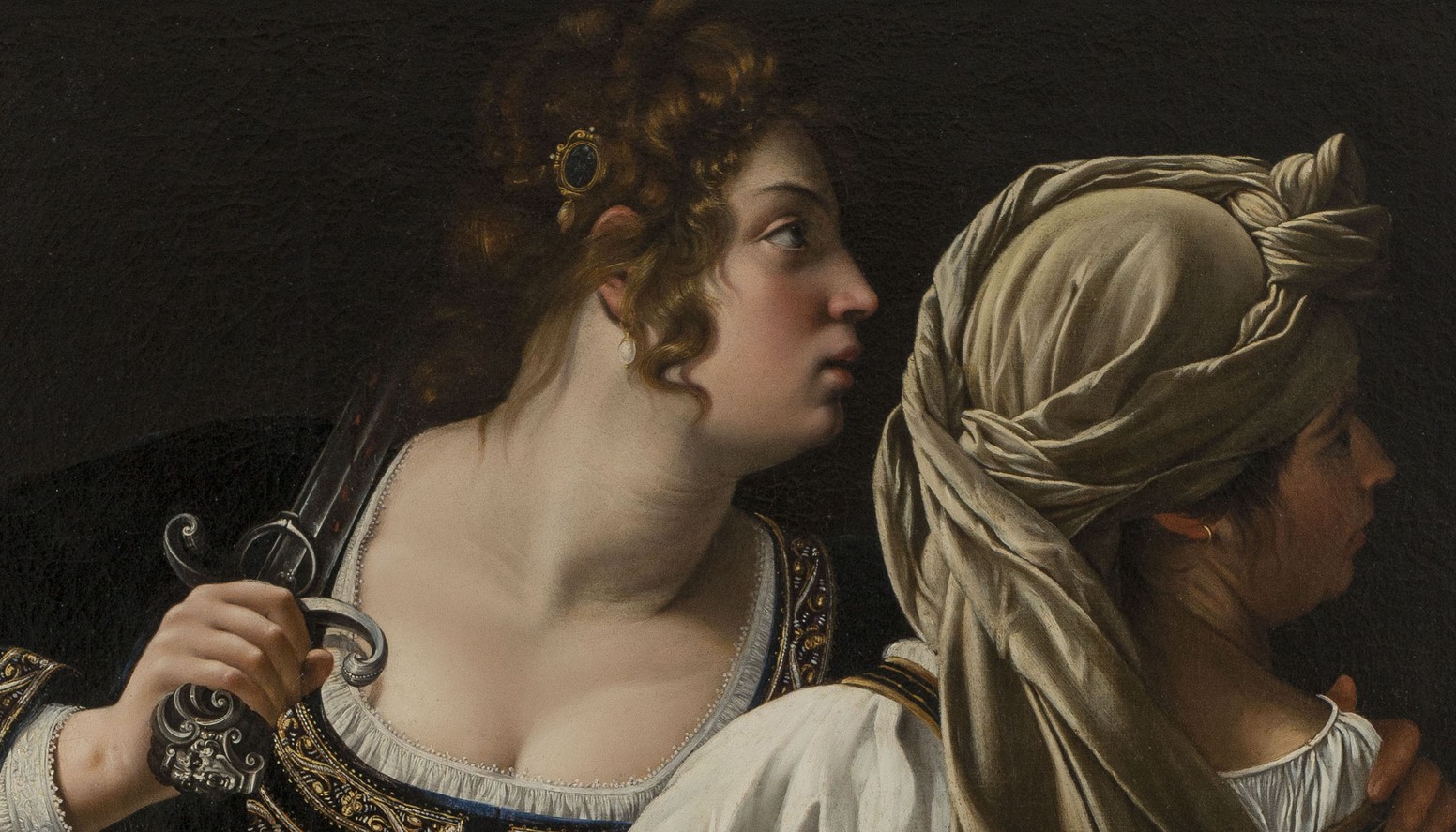
Quando arrivò in Toscana, aveva circa diciannove anni e alle spalle una vicenda dolorosa che aveva attirato l’attenzione di tutta Roma: il processo contro Agostino Tassi, il pittore accusato di averla violentata. A Firenze si presentò come una pittrice capace, consapevole del proprio talento e pronta a misurarsi con un ambiente nel quale la competizione tra artisti era particolarmente intensa.
La città le offrì l’occasione di lavorare per committenti prestigiosi, dipingere soggetti religiosi e figure femminili di straordinaria intensità, ma anche di partecipare a un progetto artistico legato alla mia memoria.
Oggi il suo nome torna al centro dell’attenzione anche grazie alla mostra Artemisia Gentileschi a Firenze, in corso al Museo degli Innocenti fino al 4 aprile 2027. Un’occasione per riscoprire la vicenda di un’artista che seppe trasformare il proprio talento in uno strumento di affermazione, in un’epoca in cui per una donna era tutt’altro che semplice costruirsi una carriera nella pittura.
L’arrivo a Firenze dopo il processo contro Agostino Tassi
Per comprendere il significato del soggiorno fiorentino di Artemisia bisogna tornare al 1612. Il processo contro Agostino Tassi, iniziato in primavera e conclusosi in autunno, aveva portato alla luce una vicenda complessa, segnata dalla violenza subita dalla giovane e dalle pressioni sociali che ne condizionarono la vita privata.
Il 29 novembre 1612 Artemisia sposò Pierantonio Stiattesi, un fiorentino di professione speziale, con una cerimonia celebrata in segreto. Il matrimonio aprì la strada al trasferimento in Toscana, dove la pittrice avrebbe potuto contare anche su una rete di conoscenze familiari e artistiche.
Il padre Orazio Gentileschi, pittore già affermato, si era mosso per tempo. Mentre il processo era ancora in corso, aveva scritto alla granduchessa Cristina di Lorena, madre del granduca Cosimo II de’ Medici, presentando la figlia come un talento fuori dal comune e chiedendo che la corte non intervenisse in favore di Tassi.
Nella sua supplica Orazio insisteva sulla rapidità con cui Artemisia aveva imparato il mestiere e sulla qualità delle sue opere per accreditarla come un’artista meritevole di attenzione e di protezione.
Non sappiamo con certezza se il trasferimento a Firenze fosse stato pianificato fin dall’inizio. È però evidente che i contatti avviati dal padre contribuirono a preparare il terreno per il suo ingresso nell’ambiente mediceo.

La corte dei Medici e le prime commissioni importanti
Firenze era uno dei centri artistici più vivaci d’Italia. La presenza della corte, le raccolte granducali e la competizione fra pittori offrivano opportunità considerevoli, ma richiedevano anche capacità di relazione e una reputazione solida.
A Firenze viveva infatti lo zio di Artemisia Aurelio Lomi, anch’egli pittore, che poteva rappresentare un punto di riferimento nel mondo artistico locale.
La giovane artista riuscì a farsi apprezzare rapidamente. Nelle sue opere si riconosceva una personalità pittorica già ben definita, capace di combinare il naturalismo di matrice caravaggesca con un uso raffinato della luce e una particolare attenzione alle espressioni dei personaggi.
I documenti relativi alle commissioni fiorentine permettono di ricostruire una parte importante di questa fase, anche se la cronologia di diversi dipinti rimane discussa dagli studiosi. È una difficoltà frequente nello studio di Artemisia: documenti d’archivio, provenienze e analisi stilistiche non sempre consentono di stabilire con assoluta sicurezza quando e dove ogni opera sia stata realizzata.
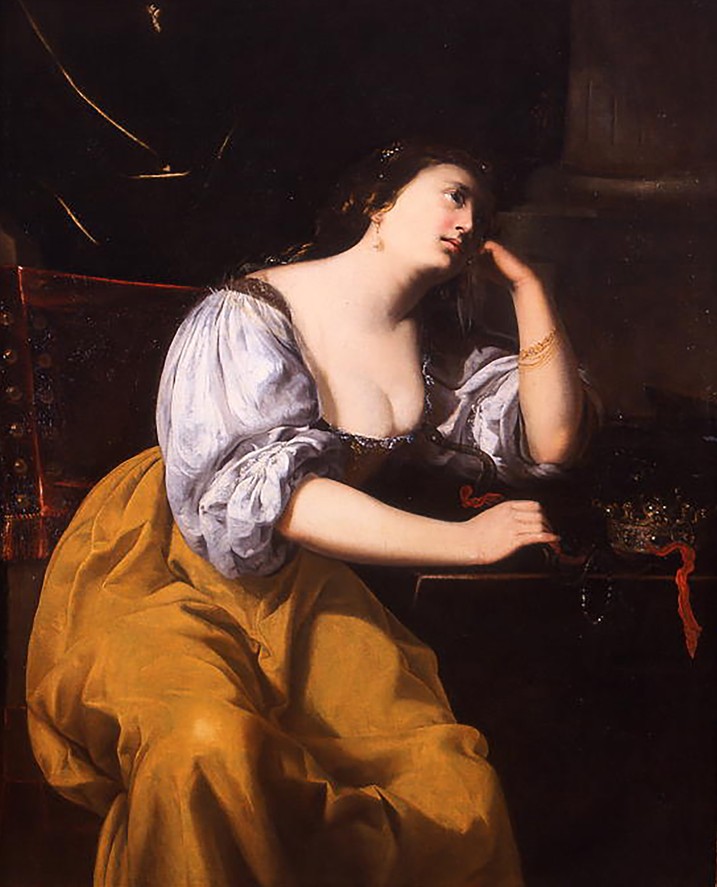
Un dato particolarmente significativo riguarda quattro dipinti destinati alla villa medicea La Ferdinanda di Artimino, il cui invio è documentato l’8 luglio 1615. Tra le opere identificate figurano la Santa Caterina d’Alessandria, la Conversione della Maddalena e l’Autoritratto come suonatrice di liuto. Un quarto dipinto, un Autoritratto come Bradamante, è noto attraverso le descrizioni documentarie, ma non è stato identificato con certezza.
La scoperta di nuovi documenti archivistici ha permesso di anticipare la datazione di queste opere, mostrando quanto fosse già matura la pittura di Artemisia nei suoi primi anni toscani.
Le donne dipinte da Artemisia: Caterina, Maddalena e la suonatrice di liuto
Uno degli aspetti più affascinanti della produzione fiorentina è la presenza di figure femminili che non si lasciano ridurre a un unico modello.
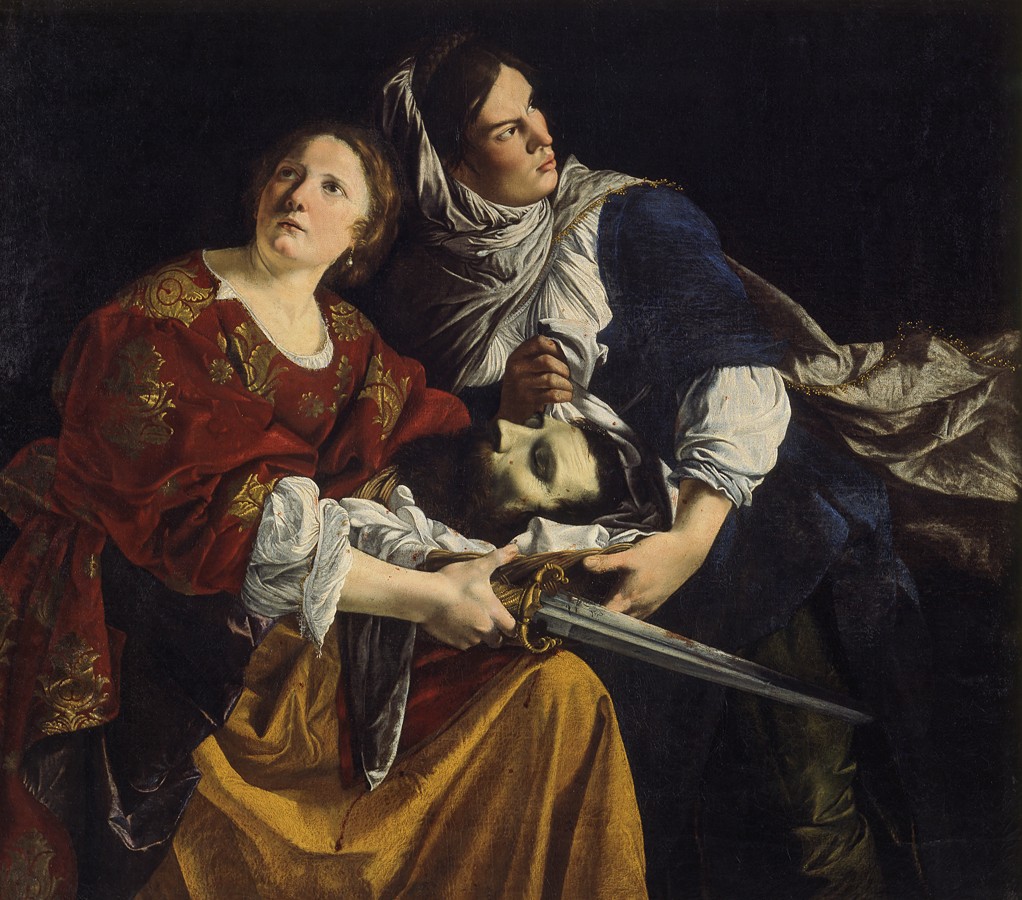
Nella Santa Caterina d’Alessandria, oggi alle Gallerie degli Uffizi, la santa appare assorta nella propria dimensione spirituale. La Conversione della Maddalena, conservata nelle raccolte fiorentine, affronta invece il tema del pentimento e della trasformazione interiore. Nell‘Autoritratto come suonatrice di liuto, Artemisia si presenta attraverso il linguaggio della musica, con un’immagine di sé elegante e consapevole.
Queste figure sono diverse per storia e significato, ma condividono una presenza fisica forte e una notevole intensità espressiva. I volti emergono dalla penombra, i tessuti acquistano volume grazie ai contrasti luminosi e i gesti contribuiscono a costruire il carattere dei personaggi.
La pittrice conosceva bene la lezione del naturalismo caravaggesco, ma la rielaborava attraverso una sensibilità personale.
Anche gli autoritratti hanno un significato particolare. In un mondo artistico dominato dagli uomini, Artemisia poteva presentarsi come musicista, eroina o figura colta, dimostrando di saper utilizzare generi e convenzioni figurative per costruire la propria immagine pubblica.
Artemisia Gentileschi e mio pronipote Michelangelo Buonarroti il Giovane
Il soggiorno fiorentino mise Artemisia in contatto con il mio pronipote Michelangelo Buonarroti il Giovane, figura di primo piano nella vita culturale della città.
Scrittore, poeta e uomo vicino alla corte medicea, Buonarroti stava trasformando la casa di famiglia in via Ghibellina in un luogo destinato a celebrare e perpetrare la mia memoria. Il progetto prevedeva una galleria decorata con dipinti e apparati figurativi dedicati alla vita, alle virtù e alla mia grandezza artistica.
Per realizzare un’impresa di tale portata furono coinvolti diversi pittori attivi a Firenze. La decorazione era concepita come un’opera collettiva, nella quale ogni artista contribuiva con soggetti specifici a un programma iconografico unitario.
Artemisia fu chiamata a partecipare al progetto nel 1615. La sua presenza è significativa anche perché si trovò a lavorare accanto a una compagine composta prevalentemente da uomini, in un ambiente nel quale la reputazione professionale e le relazioni con i committenti avevano un peso decisivo.

L’Allegoria dell’Inclinazione a Casa Buonarroti
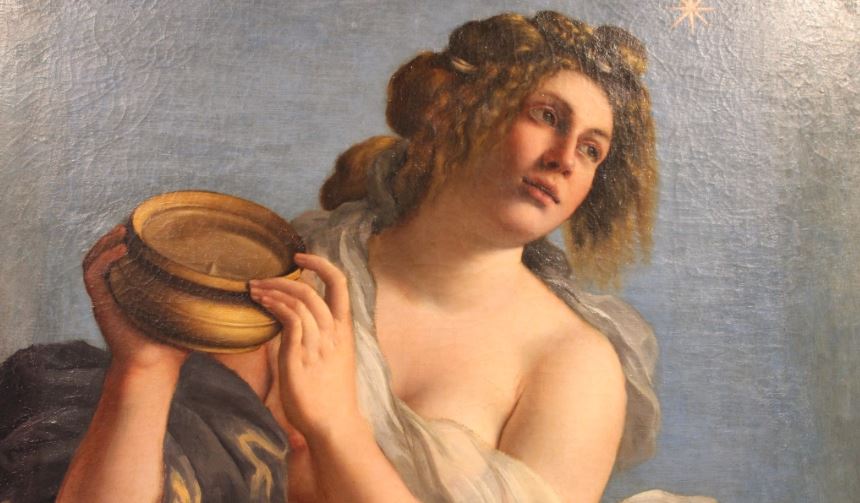
L’Allegoria dell’Inclinazione è una delle opere più interessanti del periodo fiorentino di Artemisia Gentileschi.
Realizzata per la Galleria di Casa Buonarroti, la composizione appartiene a una serie di personificazioni allegoriche destinate a rappresentare qualità e virtù attribuite a me. Il soggetto assegnato ad Artemisia era l’Inclinazione, intesa come predisposizione naturale, talento e attitudine verso un’attività.
La pittrice lavorò alla tela nell’agosto del 1615 e ricevette un pagamento di dieci fiorini da Michelangelo Buonarroti il Giovane. Il dato documentario permette di collocare con precisione questa commissione all’interno della sua esperienza fiorentina.
La partecipazione di Artemisia a questo progetto racconta anche qualcosa del suo ruolo nella Firenze del tempo. La sua pittura era ormai riconosciuta come parte di una cultura artistica capace di dialogare con le grandi famiglie cittadine e con la memoria dei protagonisti del Rinascimento.
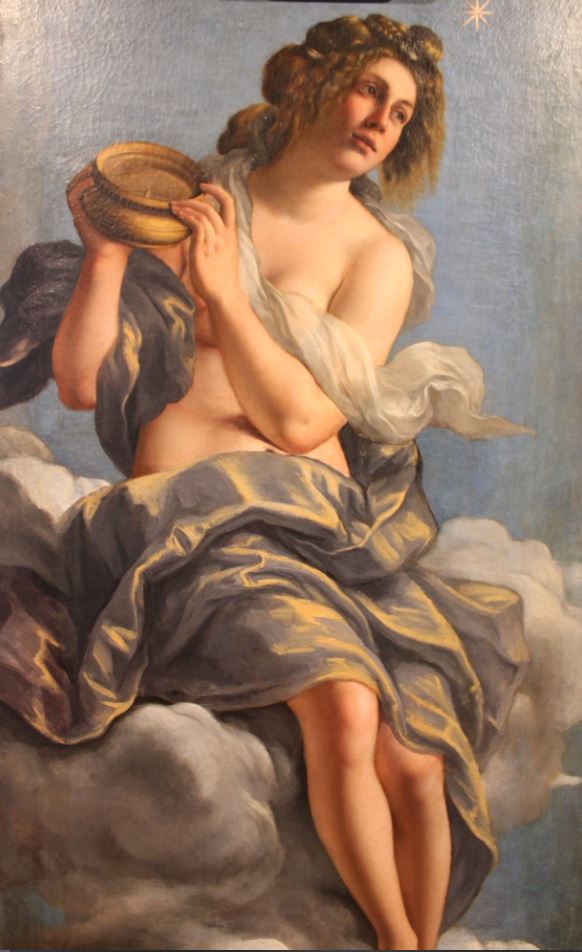
Allegoria dell’Inclinazione
1615-1616
Olio su tela, 158×85 cm
Firenze, Casa Buonarroti
Una carriera costruita in una città competitiva
Il successo di Artemisia a Firenze non fu il risultato di un percorso semplice. La corte medicea riuniva artisti di talento, ciascuno con le proprie ambizioni, e ottenere commissioni prestigiose richiedeva capacità tecniche, relazioni e una reputazione riconosciuta.
Artemisia seppe sfruttare le opportunità disponibili, senza che questo debba essere interpretato come una semplice strategia personale. La qualità delle sue opere rimane il dato centrale: il modo in cui costruiva le figure, la forza dei gesti, l’attenzione alla luce e la capacità di dare spessore psicologico ai personaggi la distinguevano nel panorama artistico del tempo.
La sua esperienza fiorentina mostra anche quanto sia riduttivo raccontarla esclusivamente attraverso il processo contro Agostino Tassi. Quella vicenda segnò profondamente la sua vita, ma non esaurisce la storia di una donna che seppe lavorare per committenti importanti, confrontarsi con soggetti complessi e affermare la propria professionalità.
Firenze rappresentò una fase fondamentale di questa crescita. Qui Artemisia entrò in contatto con una rete di intellettuali e artisti, partecipò a un importante progetto legato alla memoria di Michelangelo e realizzò dipinti che ancora oggi permettono di seguire da vicino l’evoluzione del suo linguaggio.

Artemisia Gentileschi al Museo degli Innocenti fino al 4 aprile 2027
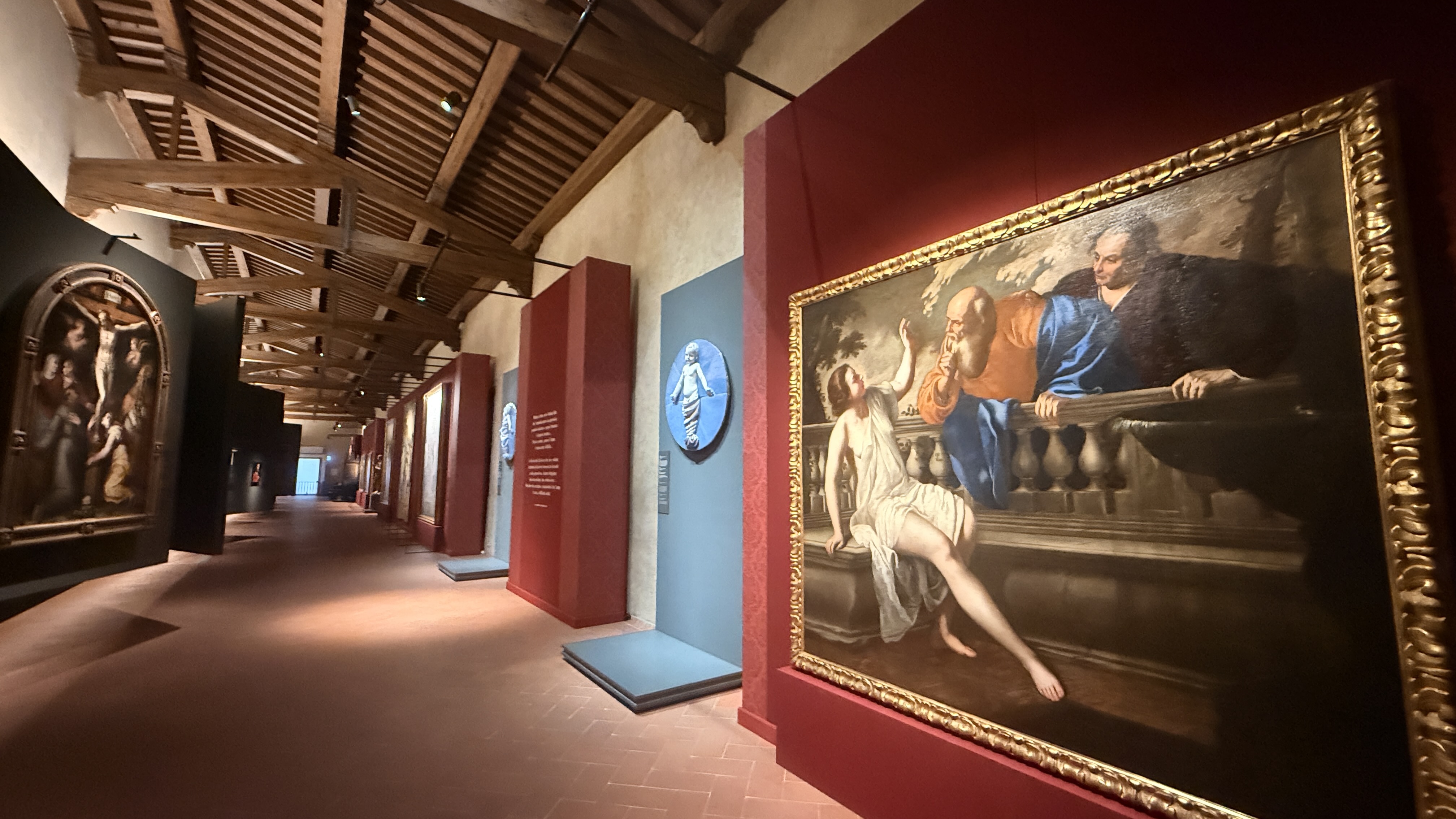
Il legame tra Artemisia e Firenze torna di grande attualità con la mostra Artemisia Gentileschi a Firenze, attualmente in corso al Museo degli Innocenti e visitabile fino al 4 aprile 2027.
L’esposizione offre l’occasione di approfondire la vicenda di una pittrice che nella città toscana trovò un contesto decisivo per la propria carriera. Il suo percorso si intreccia con la storia della corte medicea, con le raccolte artistiche fiorentine e con luoghi come Casa Buonarroti, che conservano testimonianze preziose della cultura del Seicento.
Per il momento il sempre vostro Michelangelo Buonarroti vi saluta dandovi appuntamento ai prossimi post e sui social.

Creo post, reel, testi e articoli SEO e ti aiuto a promuovere i tuoi servizi online.
Lavoro con aziende, negozi, professionisti, strutture ricettive, musei, associazioni e privati, con soluzioni adatte alle tue esigenze.
✍️ Oltre 12 anni di esperienza nella creazione di contenuti e nella comunicazione online.
💬 Scrivimi in privato: raccontami cosa fai e troviamo il servizio più adatto a te.


Artemisia Gentileschi in Florence: Her Story, Her Works, and the Exhibition at the Museo degli Innocenti (on view until 2027)
Artemisia Gentileschi arrived in Florence between late 1612 and early 1613, following the trial of Agostino Tassi. In the city of the Medici, she found new opportunities, significant patrons, and a cultural environment that fostered her rise to prominence. Among the most notable works from her Florentine period is the Allegory of Inclination (Allegoria dell’Inclinazione), created for the gallery of Casa Buonarroti.
For Artemisia Gentileschi, Florence was a city where the young painter was able to forge her own professional identity, connect with the Medici court, and engage with some of the leading cultural figures of the 17th century.
When she arrived in Tuscany, she was about nineteen years old, carrying the weight of a traumatic experience that had captured the attention of all of Rome: the trial of Agostino Tassi, the painter accused of raping her. She arrived in Florence as a skilled artist, fully aware of her own talent and prepared to hold her own in an environment where competition among artists was particularly fierce.
The city offered her the chance to work for prestigious patrons, paint religious subjects and female figures of extraordinary intensity, and even participate in an artistic project tied to the legacy of Michelangelo.
Today, her name is once again in the spotlight, thanks in part to the exhibition Artemisia Gentileschi in Florence, currently on display at the Museo degli Innocenti until April 4, 2027. It is an opportunity to rediscover the story of an artist who transformed her talent into a means of self-assertion—at a time when it was anything but easy for a woman to build a career in painting. Arrival in Florence after the trial of Agostino Tassi
To understand the significance of Artemisia’s time in Florence, one must look back to 1612. The trial of Agostino Tassi—which began in the spring and concluded in the autumn—had brought to light a complex ordeal, marked by the violence the young woman suffered and the social pressures that shaped her private life.
On November 29, 1612, Artemisia married Pierantonio Stiattesi, a Florentine apothecary, in a secret ceremony. This marriage paved the way for her move to Tuscany, where the painter could also rely on a network of family and artistic connections.
Her father, Orazio Gentileschi—already an established painter—had taken proactive steps. While the trial was still underway, he wrote to Grand Duchess Christina of Lorraine, mother of Grand Duke Cosimo II de’ Medici, presenting his daughter as an extraordinary talent and requesting that the court not intervene on Tassi’s behalf.
In his plea, Orazio emphasized the speed with which Artemisia had mastered her craft, as well as the quality of her work, in order to establish her as an artist worthy of both attention and patronage.
It is not known for certain whether the move to Florence had been planned from the very beginning. It is clear, however, that the contacts initiated by her father helped lay the groundwork for her entry into the Medici circle.
The Medici court and the first major commissions
Florence was one of the most vibrant artistic hubs in Italy. The presence of the court, the grand-ducal collections, and the intense competition among painters offered significant opportunities—though they also demanded strong interpersonal skills and a solid reputation.
Indeed, Artemisia’s uncle, Aurelio Lomi—himself a painter—lived in Florence and could serve as a key point of reference within the local artistic community. The young artist quickly gained recognition. Her works revealed a well-defined artistic personality, capable of blending a Caravaggesque naturalism with a sophisticated use of light and a keen focus on the expressions of her subjects.
Documents concerning her Florentine commissions allow for the reconstruction of a significant portion of this period, though the chronology of several paintings remains a subject of scholarly debate. This is a common challenge in the study of Artemisia: archival records, provenance, and stylistic analysis do not always make it possible to determine with absolute certainty when and where each work was created.
A particularly notable detail concerns four paintings intended for the Medici villa, La Ferdinanda, in Artimino; their delivery is documented on July 8, 1615. The identified works include Saint Catherine of Alexandria, The Conversion of the Magdalene, and Self-Portrait as a Lute Player. A fourth painting, a Self-Portrait as Bradamante, is known through documentary descriptions but has not been definitively identified.
The discovery of new archival documents has made it possible to assign an earlier date to these works, demonstrating just how mature Artemisia’s painting style already was during her early years in Tuscany.
The women depicted by Artemisia: Catherine, Magdalene, and the Lute Player
One of the most fascinating aspects of the work produced during her time in Florence is the presence of female figures who cannot be reduced to a single, uniform archetype.
In her Saint Catherine of Alexandria—now held at the Uffizi Galleries—the saint appears absorbed in her own spiritual realm. The Conversion of the Magdalene, also part of the Florentine collections, explores the themes of repentance and inner transformation. In her Self-Portrait as a Lute Player, Artemisia presents herself through the language of music, projecting an image that is both elegant and self-assured.
While these figures differ in their backstories and symbolic meanings, they all share a powerful physical presence and remarkable expressive intensity. Their faces emerge from the shadows, the fabrics gain volume through sharp contrasts of light and dark, and their gestures help define the character of each figure.
The painter was well-versed in the lessons of Caravaggesque naturalism, yet she reinterpreted them through her own unique sensibility.
Her self-portraits, in particular, carry a special significance. In an art world dominated by men, Artemisia was able to portray herself as a musician, a heroine, or an intellectual—demonstrating a masterful command of artistic genres and conventions to shape her own public persona.
Artemisia Gentileschi and My Great-Grand-Nephew, Michelangelo Buonarroti the Younger
During her stay in Florence, Artemisia came into contact with my great-grand-nephew, Michelangelo Buonarroti the Younger—a prominent figure in the city’s cultural life.
A writer, poet, and man with close ties to the Medici court, Buonarroti was in the process of transforming the family home on Via Ghibellina into a space dedicated to celebrating and preserving my memory. The project included a gallery adorned with paintings and visual elements centered on my life, my virtues, and my artistic greatness.
To carry out an undertaking of such magnitude, several painters active in Florence were brought on board. The decoration was conceived as a collective undertaking, in which each artist contributed specific subjects to a unified iconographic program.
Artemisia was invited to participate in the project in 1615. Her involvement is particularly significant, as she found herself working alongside a group composed primarily of men—in an environment where professional reputation and relationships with patrons carried decisive weight.
The Allegory of Inclination at Casa Buonarroti
The Allegory of Inclination is one of the most compelling works from Artemisia Gentileschi’s Florentine period.
Created for the gallery at Casa Buonarroti, the composition is part of a series of allegorical personifications intended to represent various qualities and virtues. The subject assigned to Artemisia was “Inclination”—understood as a natural predisposition, talent, and aptitude for a particular pursuit.
The artist worked on the canvas in August 1615 and received a payment of ten florins from Michelangelo Buonarroti the Younger. This documentary evidence allows us to precisely situate the commission within her time in Florence.
Artemisia’s participation in this project also sheds light on her role in the Florence of that era. By this time, her painting was recognized as part of an artistic culture capable of engaging with the city’s prominent families and the legacy of the great figures of the Renaissance.
A Career Built in a Competitive City
Artemisia’s success in Florence was not the result of an easy path. The Medici court brought together talented artists, each with their own ambitions; securing prestigious commissions required technical skill, strong connections, and an established reputation.
Artemisia knew how to seize the opportunities that arose—though this should not be interpreted merely as a calculated personal strategy. The quality of her work remains the central element: the way she constructed her figures, the power of their gestures, her attention to light, and her ability to imbue her characters with psychological depth set her apart within the artistic landscape of her time.
Her time in Florence also demonstrates how reductive it is to define her solely through the trial against Agostino Tassi. While that episode left a profound mark on her life, it does not encompass the full story of a woman who secured commissions from prominent patrons, tackled complex subject matter, and firmly established her own professional standing.
Florence represented a crucial phase in this development. Here, Artemisia engaged with a network of intellectuals and artists, took part in a significant project honoring the legacy of Michelangelo, and created paintings that still allow us today to trace the evolution of her artistic language.
Artemisia Gentileschi at the Museo degli Innocenti, on view until April 4, 2027
The connection between Artemisia and Florence is brought into sharp focus by the exhibition Artemisia Gentileschi in Florence, currently on display at the Museo degli Innocenti and can be visited until April 4, 2027.
The exhibition offers an opportunity to delve into the story of a female painter who found a pivotal environment for her career in this Tuscan city. Her journey is intertwined with the history of the Medici court, the art collections of Florence, and places such as Casa Buonarroti, which preserve precious evidence of 17th-century culture.
For now, yours truly, Michelangelo Buonarroti, bids you farewell—see you in future posts and on social media.

Sostienici – Support Us
Se questo blog ti piace e ti appassiona, puoi aiutarci a farlo crescere sempre più sostenendoci in modo concreto condividendo i post, seguendo le pagine social e con un contributo che ci aiuta ad andare avanti con il nostro lavoro di divulgazione. . ENGLISH: If you like and are passionate about this blog, you can help us make it grow more and more by supporting us in a concrete way by sharing posts, following social pages and with a contribution that helps us to move forward with our dissemination work.
10,00 €
Condividi:


Questo sono io





sostienici

Sostienici - Support Us
Se questo blog ti piace e ti appassiona, puoi aiutarci a farlo crescere sempre più sostenendoci in modo concreto condividendo i post, seguendo le pagine social e con un contributo che ci aiuta ad andare avanti con il nostro lavoro di divulgazione. . ENGLISH: If you like and are passionate about this blog, you can help us make it grow more and more by supporting us in a concrete way by sharing posts, following social pages and with a contribution that helps us to move forward with our dissemination work.
€10,00


