
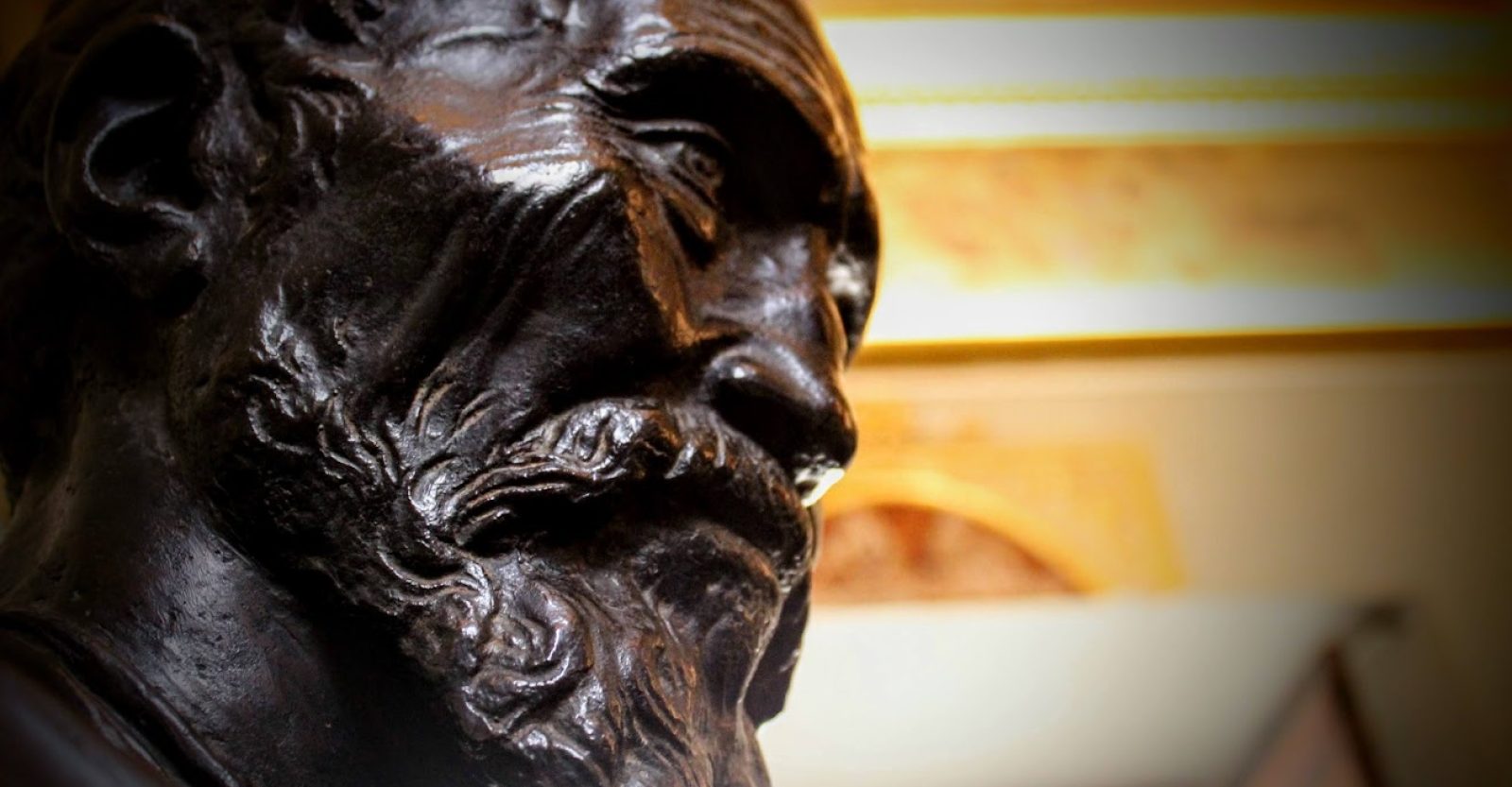
Pontormo a Roma: apre oggi la grande mostra alle Scuderie del Quirinale
Alle Scuderie del Quirinale, da oggi 9 ottobre al 7 febbraio 2027, oltre 130 opere raccontano Jacopo da Pontormo, pittore inquieto e originale che trasformò il linguaggio della pittura del Cinquecento.
Per la prima volta Pontormo è protagonista di una grande esposizione monografica che riunisce i principali capolavori del pittore toscano, affiancati da una selezione di disegni e opere provenienti da importanti musei e collezioni internazionali.
Fino al 7 febbraio 2027, il pubblico potrà attraversare le diverse stagioni della sua attività e seguire da vicino il percorso di un artista che, nel pieno del Cinquecento, scelse di non accontentarsi dei modelli ricevuti dalla tradizione.
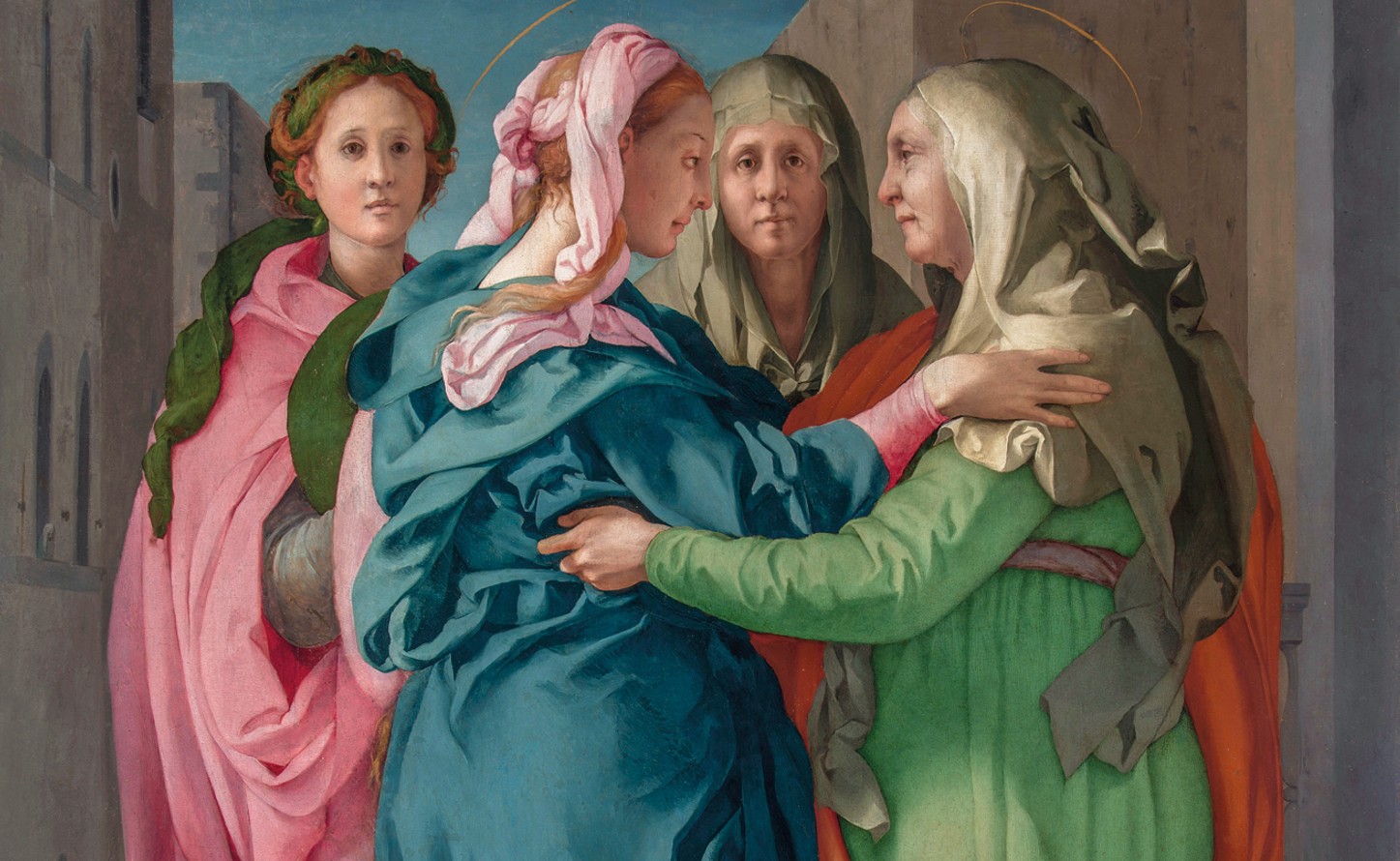
Pontormo, l’artista che non dipingeva come gli altri
Jacopo Carucci, conosciuto come Pontormo dal nome della località vicino a Empoli in cui nacque nel 1494, visse in uno dei periodi più straordinari della storia dell’arte italiana. Firenze era ancora segnata dalla grande stagione di Leonardo, io e Raffaello, ma il linguaggio del Rinascimento stava cambiando.
Pontormo partecipò a questa trasformazione con una pittura che non cercava sempre la naturalezza e l’equilibrio delle generazioni precedenti. Le sue figure hanno spesso proporzioni allungate, le pose sono studiate e talvolta insolite, mentre i colori si accostano in combinazioni che sembrano appartenere più a un sogno che alla realtà.
Dietro queste scelte c’è la sperimentazione di nuove possibilità espressive e a mettere in discussione ciò che gli spettatori erano abituati a vedere.
Pontormo è considerato uno dei protagonisti del Manierismo, la stagione che rielaborò in modo personale i modelli del Rinascimento maturo. La sua pittura non si lascia rinchiudere facilmente in una definizione: accanto alla raffinatezza formale si incontrano inquietudine, delicatezza e una sensibilità capace di rendere insoliti anche i soggetti più tradizionali.
La Visitazione, il dipinto che accoglie i visitatori
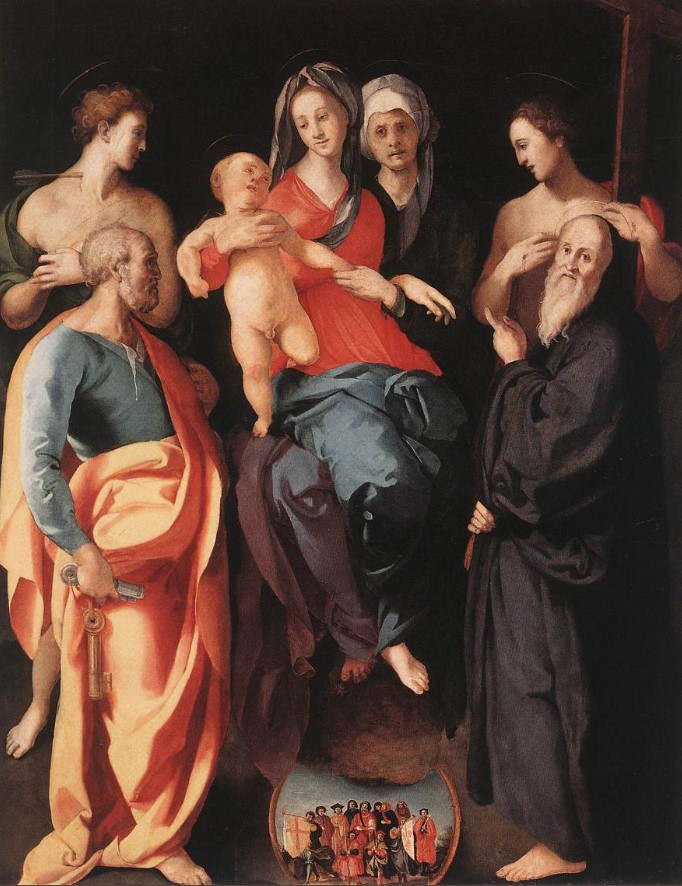
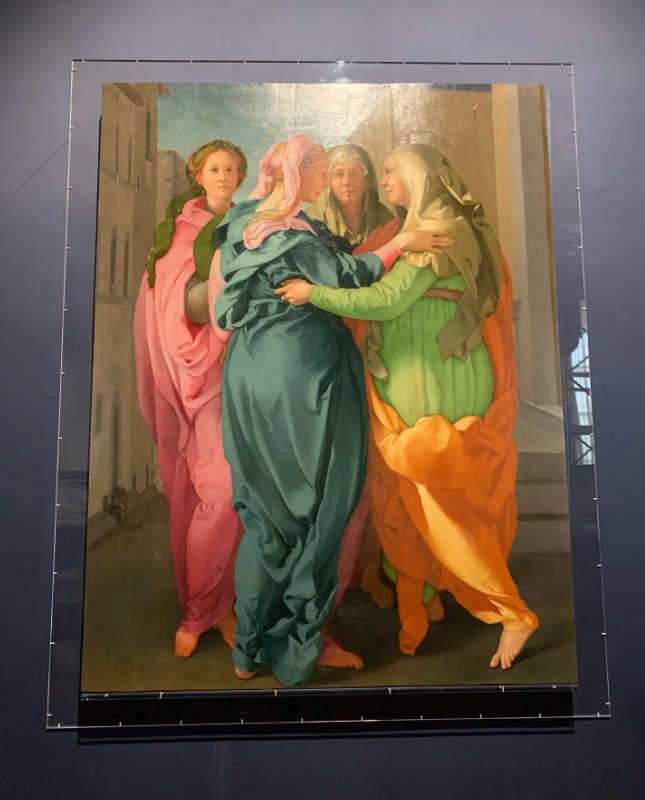
Al centro della mostra c’è uno dei dipinti più amati di Pontormo: la Visitazione, proveniente dalla chiesa di San Michele Arcangelo a Carmignano, in provincia di Prato.
L’opera racconta l’incontro tra Maria ed Elisabetta, entrambe in attesa di un figlio. Un episodio evangelico che molti artisti avevano rappresentato, ma che Pontormo interpreta con una sensibilità del tutto personale.
Le due donne si incontrano al centro della composizione, accompagnate da altre due figure femminili. I loro abiti, con colori intensi e accostamenti inconsueti, attirano lo sguardo; le pose e le espressioni, invece, sembrano sottrarre la scena alla quotidianità. Lo spazio è essenziale, quasi privo di elementi capaci di ancorare le figure a un luogo preciso.
La storia sacra diventa un incontro silenzioso, carico di significati, nel quale ogni gesto sembra avere un peso particolare.
Oltre 130 opere per seguire il percorso di Pontormo
La mostra si sviluppa attraverso dieci sezioni e riunisce 130 opere, tra cui 84 lavori riconducibili direttamente all’artista, comprendenti dipinti e affreschi, insieme a una selezione di disegni e al manoscritto del suo Libro mio.
Il progetto, curato da Cristina Acidini con il contributo di Elena Capretti, Philippe Costamagna, Bruce Edelstein e Carlo Falciani, è promosso da ALES – Scuderie del Quirinale in collaborazione con le Gallerie degli Uffizi e prodotto insieme a Electa.
Accanto alle opere provenienti dagli Uffizi, arrivano a Roma prestiti dalla Galleria dell’Accademia e dai Musei del Bargello, dal Louvre, dalla National Gallery e dal British Museum di Londra, dal Metropolitan Museum of Art di New York, dalla National Gallery of Art di Washington, dall’Art Institute di Chicago e dal Getty Museum di Los Angeles.
Il percorso segue soprattutto l’evoluzione cronologica della produzione di Pontormo, con approfondimenti dedicati ad alcuni momenti della sua attività. Un’occasione per osservare come cambiano le sue figure, come si trasformano le composizioni e quanto il suo linguaggio si allontani progressivamente dalle convenzioni più consolidate.

Dalla Cena in Emmaus agli affreschi della Certosa: le opere da osservare
Tra i dipinti che aiutano a comprendere la varietà della ricerca di Pontormo c’è la Cena in Emmaus, realizzata nel 1525 e conservata agli Uffizi. La scena evangelica diventa un’occasione per sperimentare il rapporto tra le figure, la luce e lo spazio, con una composizione che invita a soffermarsi sui dettagli.
Un altro capitolo importante è quello degli affreschi eseguiti per la Certosa del Galluzzo, nei pressi di Firenze. Realizzati tra il 1523 e il 1525, testimoniano il confronto dell’artista con modelli nordici, in particolare con le stampe di Albrecht Dürer. È un aspetto significativo della sua formazione: Pontormo non guardava soltanto alla tradizione fiorentina, ma sapeva assimilare suggestioni diverse e trasformarle in qualcosa di personale.
La mostra consente inoltre di avvicinarsi alla sua attività di disegnatore, fondamentale per comprendere il processo creativo che precedeva la realizzazione delle opere. Nei fogli preparatori si possono seguire lo studio dei corpi, la ricerca delle pose e l’elaborazione delle composizioni.

Il Libro mio: uno sguardo sulla vita privata del pittore
Tra le presenze più interessanti dell’esposizione c’è anche il Libro mio, il diario personale di Pontormo. Accanto ai dipinti, il manoscritto offre un accesso diverso alla sua personalità, lontano dalle immagini solenni con cui siamo abituati a ricordare i grandi maestri.
Le annotazioni quotidiane restituiscono frammenti della vita dell’artista e permettono di avvicinarsi alle sue abitudini, alle sue preoccupazioni e alla sua dimensione più privata. È un documento prezioso anche perché ci ricorda che dietro le opere che oggi ammiriamo nei musei c’erano persone reali, con giornate, pensieri e difficoltà.
Il diario offre la possibilità di intravedere l’uomo dietro l’artista.
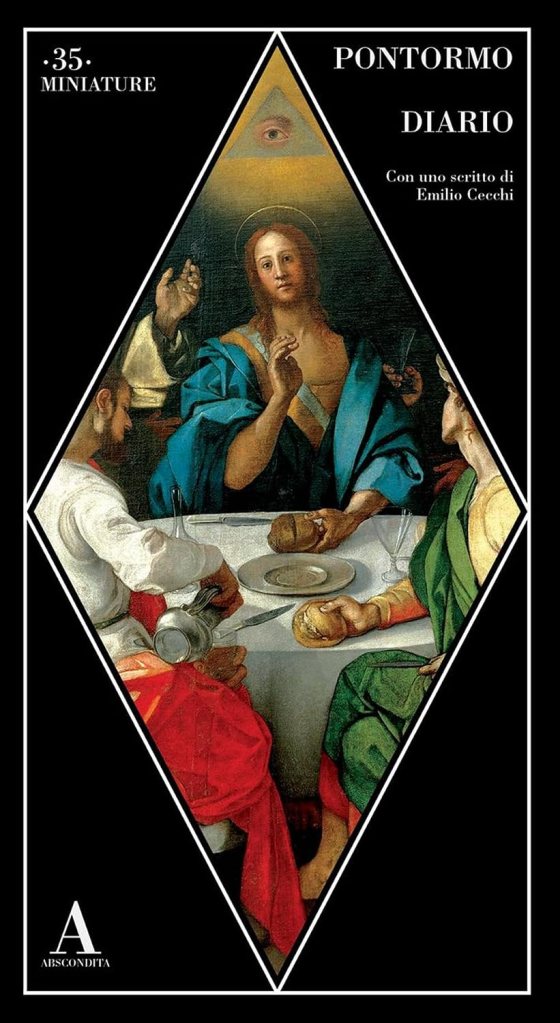
La mostra delle Scuderie del Quirinale è un percorso che permette di conoscere meglio un protagonista del Cinquecento fiorentino e, allo stesso tempo, di riscoprire quanto il Rinascimento fosse più inquieto e sperimentale di quanto spesso immaginiamo.
Per chi ama la pittura italiana, è un appuntamento da segnare in agenda per vedere riunite opere difficilmente accessibili nello stesso luogo e per incontrare da vicino un artista che non smette di mettere in discussione il nostro modo di guardare.
Per il momento il sempre vostro Michelangelo Buonarroti vi saluta dandovi appuntamento ai prossimi post e sui social.
Pontormo in Rome: Major Exhibition Opens Today at the Scuderie del Quirinale
From today, October 9, through February 7, 2027, the Scuderie del Quirinale hosts an exhibition featuring over 130 works that tell the story of Jacopo da Pontormo—a restless, original painter who transformed the language of 16th-century painting.
For the first time, Pontormo is the subject of a major monographic exhibition bringing together the Tuscan painter’s key masterpieces, alongside a selection of drawings and works from prominent international museums and collections.
Until February 7, 2027, visitors can explore the various phases of his career and trace the journey of an artist who, in the heart of the 16th century, chose not to settle for the models handed down by tradition.
Pontormo: The Artist Who Didn’t Paint Like the Others
Jacopo Carucci—known as Pontormo after the village near Empoli where he was born in 1494—lived during one of the most extraordinary periods in the history of Italian art. Florence still bore the mark of the great era of Leonardo, Michelangelo, and Raphael, yet the language of the Renaissance was shifting.
Pontormo played a part in this transformation with a style of painting that did not always seek the naturalism and balance of previous generations. His figures often feature elongated proportions and poses that are studied—and sometimes unusual—while his colors are paired in combinations that seem to belong more to a dream than to reality.
Behind these choices lay a drive to experiment with new expressive possibilities and to challenge what viewers were accustomed to seeing.
Pontormo is considered a leading figure of Mannerism, the movement that offered a personal reinterpretation of High Renaissance models. His painting defies easy definition: alongside formal refinement, one finds a sense of unease, delicacy, and a sensibility capable of rendering even the most traditional subjects unusual.
The Visitation: the painting that welcomes visitors
At the heart of the exhibition lies one of Pontormo’s most beloved paintings: The Visitation, on loan from the church of San Michele Arcangelo in Carmignano, in the province of Prato.
The work depicts the meeting between Mary and Elizabeth, both of whom are expecting a child. It is a Gospel episode that many artists had portrayed before, yet Pontormo interprets it with a deeply personal sensibility.
The two women meet at the center of the composition, accompanied by two other female figures. Their garments—featuring intense colors and unusual color combinations—draw the eye, while their poses and expressions seem to lift the scene out of the realm of the everyday. The setting is minimalist, almost entirely devoid of elements that might anchor the figures to a specific location.
The sacred narrative becomes a silent encounter, rich in meaning, in which every gesture seems to carry special weight.
Over 130 works tracing Pontormo’s artistic journey
The exhibition unfolds across ten sections and brings together 130 works—including 84 pieces directly attributable to the artist, such as paintings and frescoes, alongside a selection of drawings and the manuscript of his Libro mio (My Book).
The project, curated by Cristina Acidini with contributions from Elena Capretti, Philippe Costamagna, Bruce Edelstein, and Carlo Falciani, is promoted by ALES – Scuderie del Quirinale in collaboration with the Uffizi Galleries and produced in partnership with Electa. Alongside works from the Uffizi, loans are arriving in Rome from the Galleria dell’Accademia and the Bargello Museums, the Louvre, the National Gallery and the British Museum in London, the Metropolitan Museum of Art in New York, the National Gallery of Art in Washington, the Art Institute of Chicago, and the Getty Museum in Los Angeles.
The exhibition follows the chronological evolution of Pontormo’s work, with in-depth looks at specific phases of his career. It offers an opportunity to observe how his figures change, how his compositions transform, and the extent to which his artistic language progressively breaks away from established conventions.
From the Supper at Emmaus to the Certosa frescoes: key works to view
Among the paintings that help illustrate the diversity of Pontormo’s artistic exploration is the Supper at Emmaus, created in 1525 and housed at the Uffizi. The Gospel scene becomes an opportunity to experiment with the interplay of figures, light, and space, featuring a composition that invites the viewer to linger on the details.
Another significant chapter involves the frescoes executed for the Certosa del Galluzzo, near Florence. Created between 1523 and 1525, they demonstrate the artist’s engagement with Northern European models—specifically the prints of Albrecht Dürer. This highlights a crucial aspect of his artistic development: Pontormo did not look solely to the Florentine tradition but was able to assimilate diverse influences and transform them into something uniquely his own.
The exhibition also allows gain insight into his work as a draftsman—essential for understanding the creative process that preceded the execution of his finished works. Through these preparatory sheets, one can trace his study of the human form, his exploration of poses, and the development of his compositions.
Il Libro mio: a glimpse into the painter’s private life
One of the exhibition’s most fascinating features is Il Libro mio (My Book), Pontormo’s personal diary. Alongside the paintings, the manuscript offers a different perspective on his personality—far removed from the solemn images through which we usually remember the great masters.
His daily entries reveal fragments of the artist’s life, allowing us to gain insight into his habits, his worries, and his private world. It is a precious document, reminding us that the works we admire in museums today were created by real people—individuals with their own daily routines, thoughts, and struggles.
The diary offers a chance to glimpse the man behind the artist.
The exhibition at the Scuderie del Quirinale offers a journey that allows us to better understand a key figure of the Florentine Cinquecento while simultaneously rediscovering just how restless and experimental the Renaissance truly was—far more so than we often imagine.
For lovers of Italian painting, this is an event not to be missed; it brings together works that are rarely seen in a single location and offers a close encounter with an artist who continues to challenge the way we look at the world.
For now, your ever-faithful Michelangelo Buonarroti bids you farewell, looking forward to seeing you in future posts and on social media.

Sostienici – Support Us
Se questo blog ti piace e ti appassiona, puoi aiutarci a farlo crescere sempre più sostenendoci in modo concreto condividendo i post, seguendo le pagine social e con un contributo che ci aiuta ad andare avanti con il nostro lavoro di divulgazione. . ENGLISH: If you like and are passionate about this blog, you can help us make it grow more and more by supporting us in a concrete way by sharing posts, following social pages and with a contribution that helps us to move forward with our dissemination work.
10,00 €
Condividi:


Questo sono io




sostienici

Sostienici - Support Us
Se questo blog ti piace e ti appassiona, puoi aiutarci a farlo crescere sempre più sostenendoci in modo concreto condividendo i post, seguendo le pagine social e con un contributo che ci aiuta ad andare avanti con il nostro lavoro di divulgazione. . ENGLISH: If you like and are passionate about this blog, you can help us make it grow more and more by supporting us in a concrete way by sharing posts, following social pages and with a contribution that helps us to move forward with our dissemination work.
€10,00


