

Le lacrime più belle della storia dell’arte: quando un artista riesce a far piangere anche il marmo
Scendono dagli occhi della Madonna, rigano il volto di una Santa, attraversano la guancia di un eroe sconfitto. Alcune sono dipinte con un pennello, altre scolpite nel marmo ma tutte raccontano il dolore.
Cosa sono? Le lacrime dipinte o scolpite con grande maestra nelle opere d’arte di tutti i tempi, o quasi. Sono minuscoli riflessi sulla guancia di un personaggio dipinto secoli fa. L’artista ha dovuto trasformare acqua, luce e trasparenza in materia pittorica. Oppure a uno scultore che ha dovuto suggerire nel marmo qualcosa di ancora più difficile: una lacrima che non può scendere.
Alcune di queste lacrime sono così belle che si trasformano in emozione pura al primo sguardo e si imprimono per sempre nella memoria.
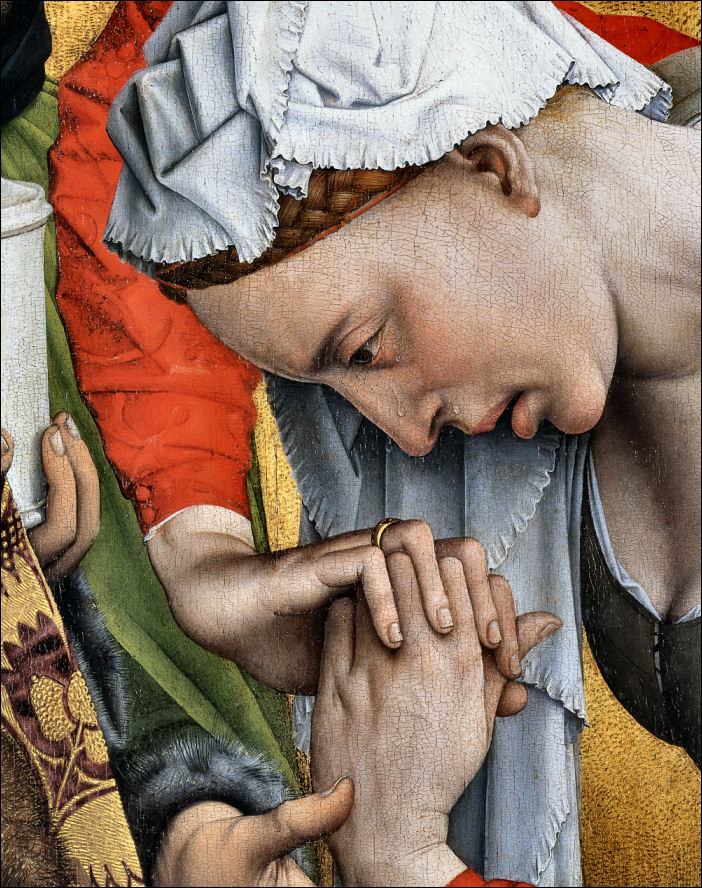
Rogier van der Weyden, lacrime che sembrano sul punto di cadere
Cominciamo da una delle lacrime più celebri e sconvolgenti della pittura occidentale: quella dipinta da Rogier van der Weyden nella Deposizione dalla croce, realizzata intorno al 1435 e oggi conservata al Museo del Prado.
Avvicinandosi al volto dei personaggi, il dolore diventa quasi fisico. Una lacrima trasparente scivola lungo la guancia. È piccolissima, ma sembra avere un peso enorme.
Il pittore fiammingo riesce a trasformare un dettaglio minuscolo in un potentissimo dispositivo emotivo. La luce si riflette sulla superficie della lacrima e, per un istante, la pittura sembra smettere di essere pittura.
Guardandola viene quasi spontaneo pensare: sta davvero piangendo. L’artista ripete questo esperimento con diverse figure presenti della Deposizione raccontando attraverso il pianto la Passione e riesce a farlo vivere davanti agli occhi dello spettatore.

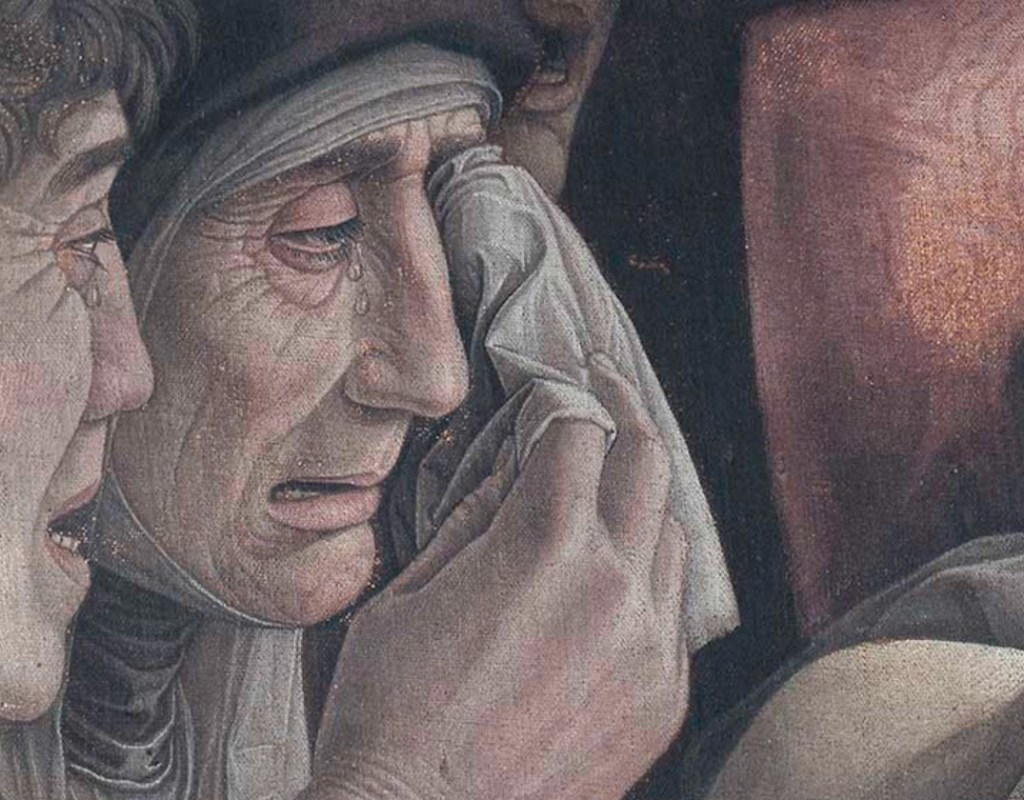
Andrea Mantegna e la Madonna che piange sul Cristo morto
Se esiste un dipinto capace di trasformare il dolore in qualcosa di quasi insopportabilmente umano, è il Compianto sul Cristo morto di Andrea Mantegna.
Il corpo di Cristo è già senza vita e accanto a lui viene descritto il dolore straziante dei suoi cari. Nel volto della Madonna non c’è bisogno di un gesto teatrale. Basta lo sguardo, basta quella disperazione trattenuta.
Mantegna porta lo spettatore vicinissimo al corpo di Cristo attraverso una prospettiva vertiginosa e potentissima. Non siamo più semplicemente davanti a un dipinto: sembra quasi di essere entrati nella stanza del dolore.
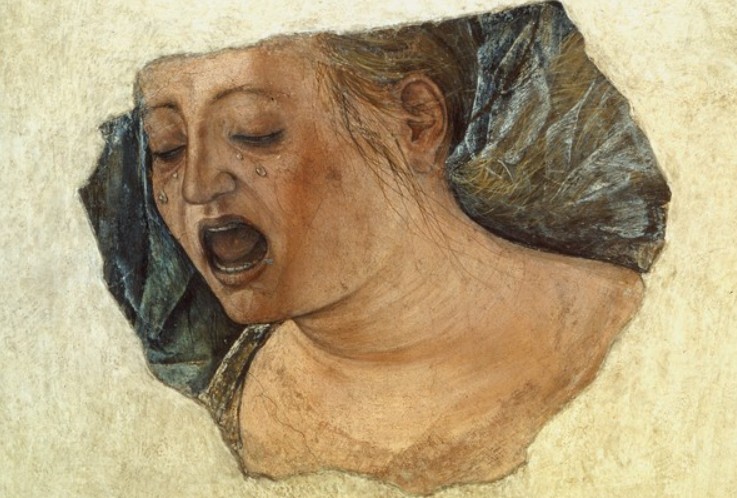
Ercole de’ Roberti, Maddalena: il dolore nel volto piangente
Ercole de’ Roberti è stato in grado di trasformare il volto della Maddalena in un’esplosione emotiva.
La Maddalena piangente porta sul viso tutto il peso del dolore. Gli occhi sono lucidi, la bocca sembra cercare una parola che non arriva e il volto è completamente dominato dalla sofferenza.
È una pittura che non cerca di rendere il pianto elegante. La Maddalena piange davvero e lo spettatore quasi si sente in colpa a guardarla.
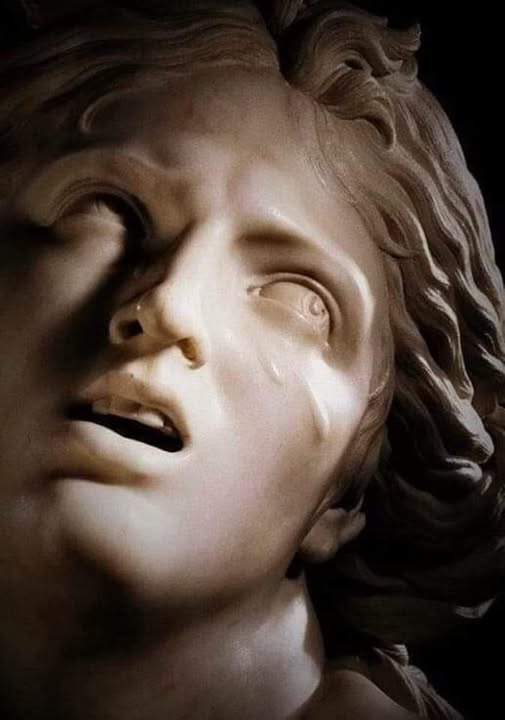
Bernini e Proserpina: quando il marmo riesce a farci vedere il dolore
Gian Lorenzo Bernini prende un blocco di marmo e lo trasforma in carne, pelle, capelli, dita e persino lacrime.
Nella celeberrima Ratto di Proserpina, Proserpina è raffigurata nel momento della disperazione mentre viene trascinata via da Plutone.
Il volto della giovane donna è sconvolto. Il marmo, materiale freddo e immobile per eccellenza, diventa carne viva. Bernini scolpisce le lacrime, rese ancora più vivide dall’espressione del volto di lei.
La bocca aperta, gli occhi, la tensione dei muscoli e quella sensazione di impotenza: Bernini dimostra che anche una pietra può urlare.
La lacrima che non appartiene a un santo: Ugo Foscolo di Odoardo Tabacchi
La storia dell’arte però non ha pianto soltanto attraverso Madonne, Sante e personaggi mitologici: c’è anche il pianto della patria perduta.
È quello evocato dalla scultura di Odoardo Tabacchi dedicata a Ugo Foscolo, poeta segnato profondamente dall’esilio e dalla delusione politica. Dopo il trattato di Campoformio, Foscolo vede crollare l’illusione di una libertà che aveva affidato a Napoleone.
Venezia viene ceduta all’Austria e la patria ideale si trasforma in una ferita.
Tabacchi restituisce proprio questa dimensione del poeta: un uomo davanti alla perdita, con lo sguardo carico di malinconia e Teresa che si stringe a lui con il volto rigato di pianto.
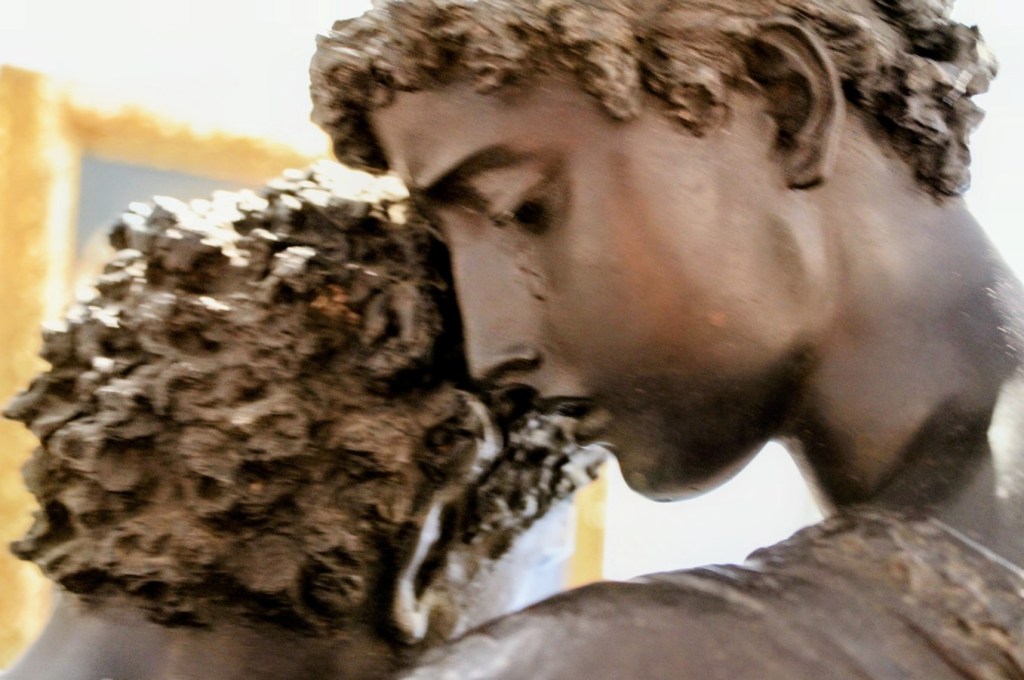
Perché ci emozionano così tanto le lacrime nell’arte?
La lacrima è una delle cose più democratiche che esistano. Non importa se sei un re, una Madonna, una santa, un eroe o una persona qualunque. Quando piangi, sei umano.
Per questo in molti artisti hanno dedicato una quantità enorme di attenzione agli occhi, alle palpebre, alla luce sulla pelle, alla bocca e a quel minuscolo filo trasparente che attraversa una guancia.
La lacrima è piccola ma il sentimento che contiene può essere gigantesco.
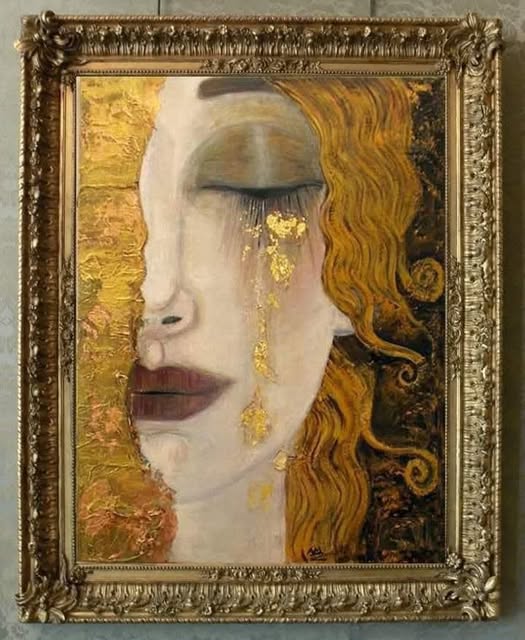
Per il momento il sempre vostro Michelangelo Buonarroti vi saluta dandovi appuntamento ai prossimi post e sui social.

The most beautiful tears in art history: when an artist makes even marble weep
They fall from the Madonna’s eyes, streak a saint’s face, and trace a path down the cheek of a defeated hero. Some are painted with a brush, others carved in marble, yet all of them tell a story of sorrow.
What are they? Tears rendered with masterful skill in artworks spanning the ages. They appear as tiny reflections on the cheek of a figure painted centuries ago—the result of an artist transforming water, light, and transparency into paint. Or, in the case of a sculptor, they represent an even greater challenge: capturing in marble a tear that cannot actually fall.
Some of these tears are so exquisite that they instantly evoke pure emotion and remain forever etched in one’s memory.
Rogier van der Weyden: tears poised to fall
Let us begin with one of the most famous and deeply moving tears in Western painting: the one depicted by Rogier van der Weyden in The Descent from the Cross, created around 1435 and now housed in the Prado Museum.
As you draw closer to the figures’ faces, the sorrow becomes almost palpable. A transparent tear slides down a cheek; though tiny, it seems to carry immense weight.
The Flemish painter succeeds in turning a minute detail into a powerful emotional device. Light reflects off the surface of the tear, and for a fleeting moment, the painting seems to transcend the medium itself.
Looking at it, one’s immediate thought is: they are truly weeping. The artist repeats this experiment with various figures in the Descent, using their tears to recount the Passion and bringing the scene vividly to life before the viewer’s eyes. Andrea Mantegna and the Madonna Weeping over the Dead Christ
If there is a painting capable of transforming grief into something almost unbearably human, it is Andrea Mantegna’s Lamentation over the Dead Christ.
Christ’s body is already lifeless, and beside him, the heart-wrenching grief of his loved ones is depicted. No theatrical gesture is needed on the Madonna’s face; her gaze—that restrained despair—speaks volumes.
Mantegna brings the viewer incredibly close to Christ’s body through a dizzying, powerful perspective. We are no longer merely standing before a painting; it feels almost as if we have stepped into the very room where this sorrow unfolds.
Ercole de’ Roberti, The Magdalene: Grief in a Weeping Face
Ercole de’ Roberti succeeded in transforming the Magdalene’s face into an emotional explosion.
The weeping Magdalene bears the full weight of grief on her face. Her eyes are glistening, her mouth seems to be searching for a word that never comes, and her countenance is entirely consumed by suffering.
This is a painting that makes no attempt to render weeping elegant. The Magdalene is truly weeping, and the viewer feels almost guilty for looking at her.
Bernini and Proserpina: When Marble Reveals Grief
Gian Lorenzo Bernini takes a block of marble and transforms it into flesh, skin, hair, fingers, and even tears.
In the celebrated Rape of Proserpina, Proserpina is depicted in a moment of despair as she is dragged away by Pluto.
The young woman’s face is contorted with anguish. The marble—a material that is the very definition of cold and motionless—becomes living flesh. Bernini sculpts the tears, rendered all the more vivid by the expression on her face. The open mouth, the eyes, the tense muscles, and that sense of helplessness: Bernini proves that even stone can scream.
A tear that does not belong to a saint: Odoardo Tabacchi’s Ugo Foscolo
Yet, the history of art has not wept solely through Madonnas, female saints, and mythological figures; there is also the weeping for a lost homeland.
This is the emotion evoked by Odoardo Tabacchi’s sculpture of Ugo Foscolo, a poet deeply scarred by exile and political disillusionment. After the Treaty of Campo Formio, Foscolo saw the collapse of the illusion of freedom he had entrusted to Napoleon.
Venice was ceded to Austria, and his ideal homeland turned into a wound.
Tabacchi captures precisely this side of the poet: a man facing loss, his gaze heavy with melancholy, while Teresa clings to him, her face streaked with tears.
Why do tears in art move us so deeply?
A tear is one of the most democratic things in existence. It makes no difference whether you are a king, a Madonna, a saint, a hero, or an ordinary person. When you weep, you are human.
That is why so many artists have devoted immense attention to eyes, eyelids, the play of light on the skin, the mouth, and that tiny, transparent thread tracing its way down a cheek.
A tear is small, yet the emotion it holds can be immense.
For now, your ever-faithful Michelangelo Buonarroti bids you farewell, looking forward to seeing you in future posts and on social media.

Sostienici – Support Us
Se questo blog ti piace e ti appassiona, puoi aiutarci a farlo crescere sempre più sostenendoci in modo concreto condividendo i post, seguendo le pagine social e con un contributo che ci aiuta ad andare avanti con il nostro lavoro di divulgazione. . ENGLISH: If you like and are passionate about this blog, you can help us make it grow more and more by supporting us in a concrete way by sharing posts, following social pages and with a contribution that helps us to move forward with our dissemination work.
10,00 €
Condividi:


Questo sono io




sostienici

Sostienici – Support Us
Se questo blog ti piace e ti appassiona, puoi aiutarci a farlo crescere sempre più sostenendoci in modo concreto condividendo i post, seguendo le pagine social e con un contributo che ci aiuta ad andare avanti con il nostro lavoro di divulgazione. . ENGLISH: If you like and are passionate about this blog, you can help us make it grow more and more by supporting us in a concrete way by sharing posts, following social pages and with a contribution that helps us to move forward with our dissemination work.
€10,00


Lavori davvero incredibili, quasi non ci si crede tanto sono perfetti e meravigliosi allo stesso tempo 👏👏👏👏👏👏👏👏👏👏👏👏👏👏👏👏👏
"Mi piace"Piace a 1 persona
molto belli, davvero
"Mi piace"Piace a 1 persona