

Due ragazzi, una candela e una vescica di maiale: il curioso dipinto di Joseph Wright of Derby
Due ragazzini, una stanza immersa nell’oscurità e una candela nascosta che illumina improvvisamente i loro volti. Al centro della scena c’è una vescica di maiale che si gonfia lentamente.
Quello che sembra un semplice gioco infantile diventa, nel dipinto di Joseph Wright of Derby, una riflessione sulla luce, sul tempo e sulla fragilità della vita.
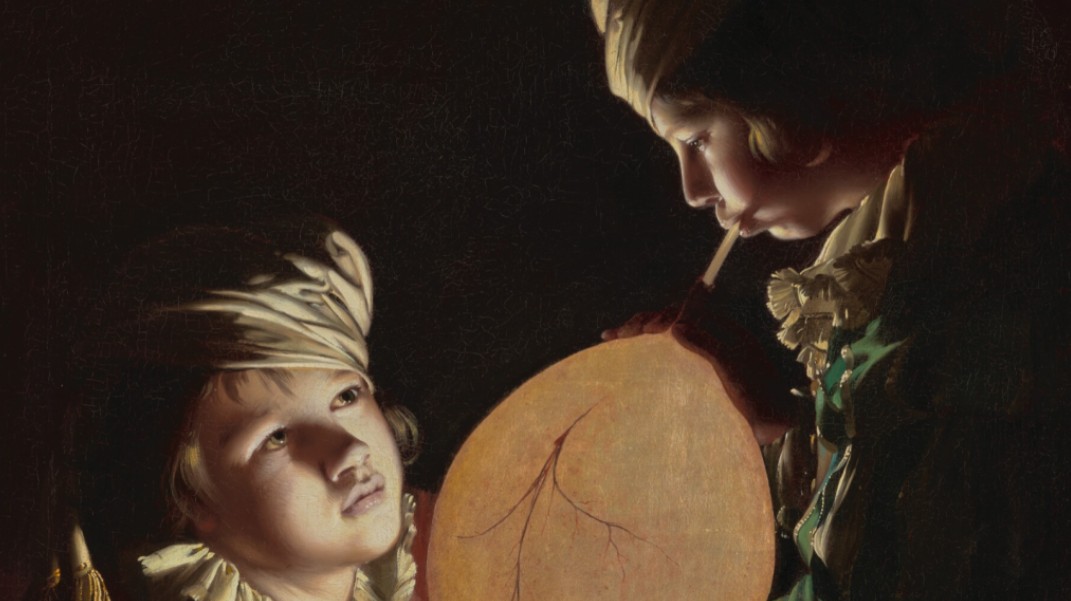
“Two Boys with a Bladder” è il dipinto realizzato da Joseph Wright of Derby intorno al 1769-1770. L’opera, realizzata a olio su tela e oggi conservata al J. Paul Getty Museum di Los Angeles, raffigura due ragazzi impegnati in un gioco che oggi potrebbe sembrare quasi incomprensibile: stanno gonfiando una vescica di maiale.
Ma basta osservare meglio la scena per capire che Wright non è interessato soltanto al gioco dei due bambini.
Il vero protagonista del dipinto è la luce.
Una candela nascosta trasforma il gioco in una scena teatrale
La stanza è quasi completamente avvolta nell’oscurità. Non vediamo immediatamente la fonte luminosa.
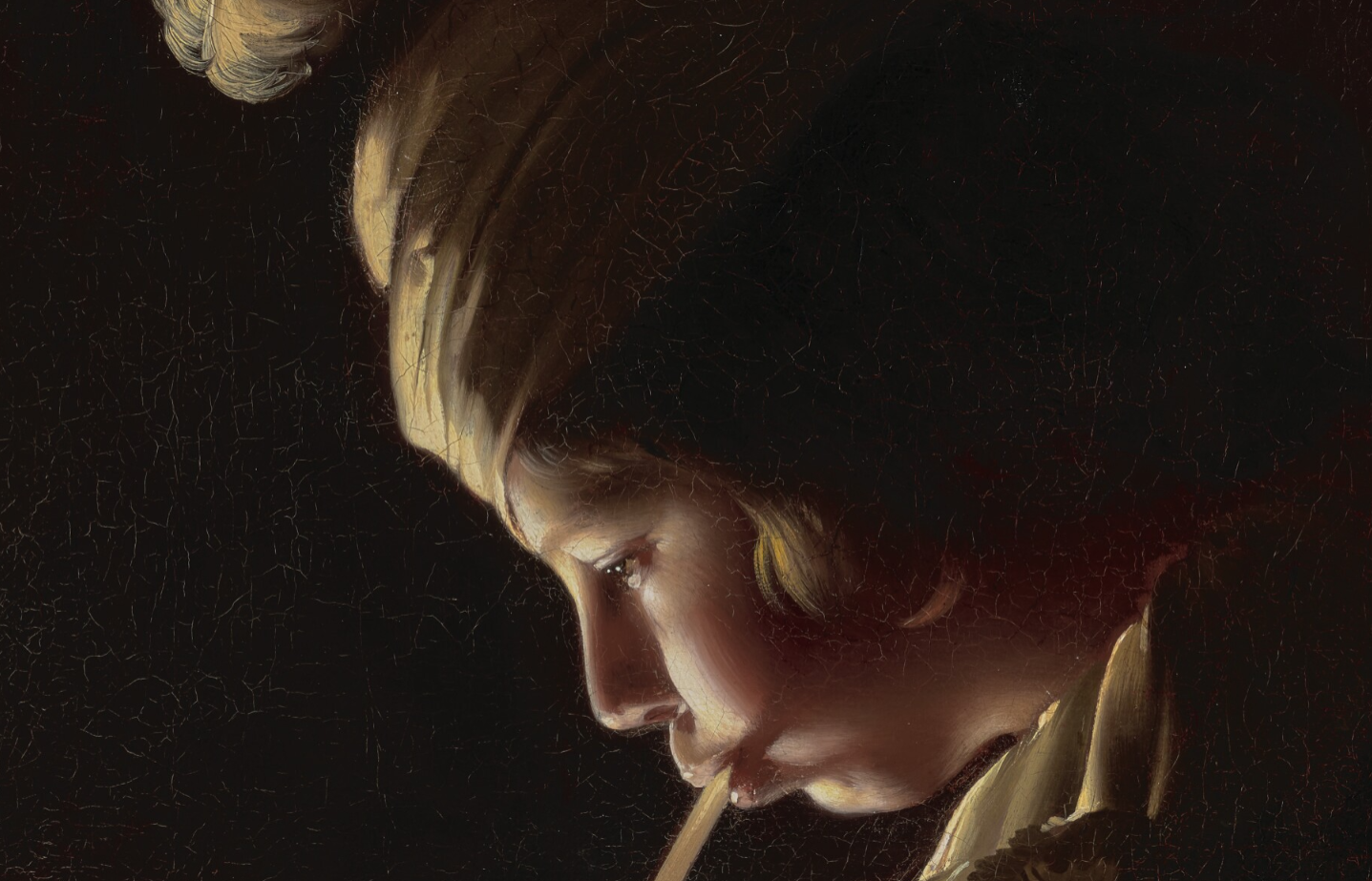
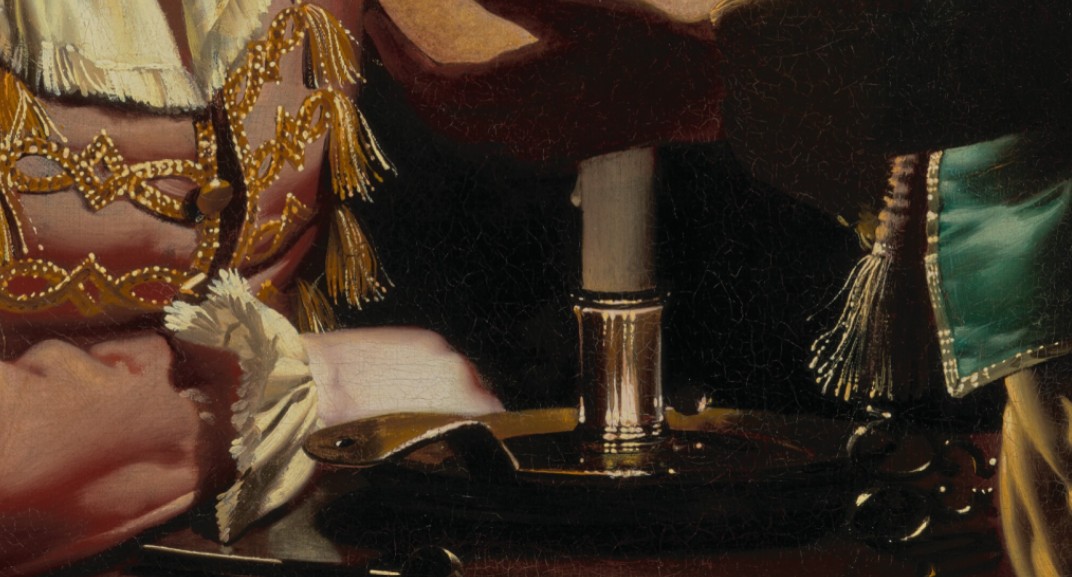
Una candela, nascosta dietro la mano del ragazzo, proietta la sua luce calda sulla scena. Il volto del giovane che sta gonfiando la vescica emerge dall’ombra, mentre il bagliore raggiunge l’altro ragazzo, il tavolo, il candeliere metallico e soprattutto la superficie della vescica, che diventa quasi luminosa.
Il contrasto fra buio e luce concentra tutta la nostra attenzione sul piccolo avvenimento che si sta svolgendo davanti ai nostri occhi.
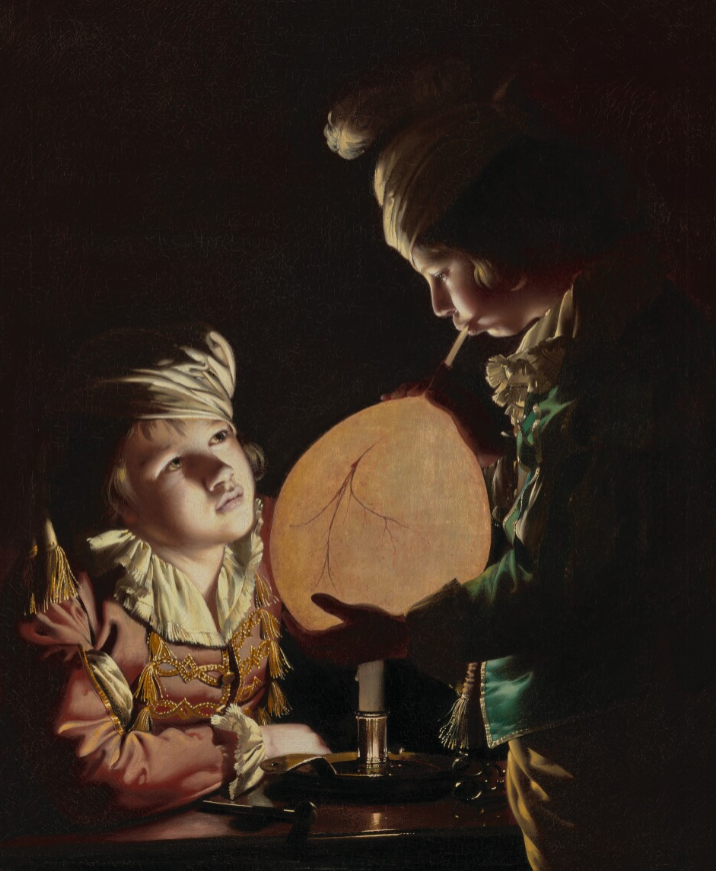
È una delle caratteristiche più riconoscibili della pittura di Wright of Derby, artista britannico del Settecento celebre proprio per i suoi straordinari effetti di luce artificiale e per le sue scene notturne.
La candela non serve dunque semplicemente a permettere ai ragazzi di vedere: è il fulcro del dipinto.
Senza quella luce, la scena scomparirebbe quasi completamente nel buio.
Ma perché proprio una vescica di maiale?
Nel Settecento le vesciche degli animali potevano essere utilizzate dai bambini come giocattoli. Una volta gonfiate, potevano essere lanciate e utilizzate in modo simile a un palloncino; in alternativa potevano essere riempite con piselli secchi e agitate, trasformandosi in una sorta di sonaglio.
Per i due ragazzi di Wright, dunque, quella vescica non è un oggetto bizzarro ma un vero giocattolo.
Eppure, nella storia dell’arte, una vescica poteva significare molto più di questo.
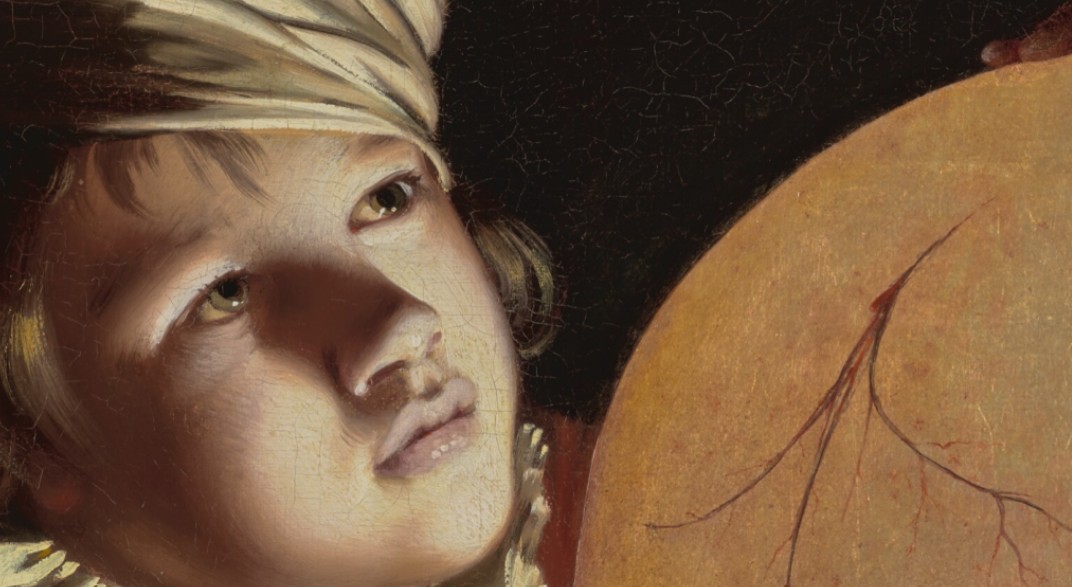
Un gioco infantile che nasconde un significato sulla fragilità della vita
La presenza della vescica si collega a una lunga tradizione figurativa europea.
Nei dipinti olandesi del Seicento, vesciche e bolle di sapone potevano assumere un significato simbolico legato alla vanità delle cose terrene, alla fragilità dell’esistenza e alla transitorietà delle conquiste umane. Sono oggetti destinati a durare pochissimo: una bolla scoppia, una vescica si sgonfia, un gioco finisce.
Proprio per questo potevano diventare immagini della precarietà della vita.
Il tema era particolarmente presente nella pittura olandese del XVII secolo, mentre risultava molto meno comune nella pittura britannica del Settecento. Wright riprende quindi un motivo già carico di significati e lo inserisce in una scena completamente diversa, costruita intorno alla curiosità, al gioco infantile e alla sua straordinaria ricerca luministica.
I ragazzi stanno giocando, ma noi sappiamo che ciò che stanno gonfiando è destinato inevitabilmente a sgonfiarsi.
Il gioco è momentaneo così come è momentanea la luce della candela. Anche la vita, suggerisce la tradizione simbolica alla quale Wright si richiama, lo è.
Quei costumi eleganti probabilmente non sono davvero settecenteschi
C’è poi un altro particolare che potrebbe sfuggire a una prima occhiata.
I due ragazzi non sono vestiti come bambini qualsiasi. Indossano abiti elaborati, con grandi colletti e polsini a balze, quasi fossero personaggi usciti da un altro tempo.
Secondo la documentazione relativa all’opera, questi costumi sembrano essere in larga parte un’invenzione dell’artista e si collegano alla moda delle cosiddette “fancy pictures”, dipinti molto diffusi nella Gran Bretagna del Settecento nei quali bambini, giovani e personaggi comuni venivano trasformati in figure di fantasia attraverso costumi e ambientazioni volutamente teatrali.
Wright non vuole quindi necessariamente mostrarci due bambini colti durante un momento reale della loro quotidianità. Sta costruendo una piccola scena teatrale: è come su un palcoscenico, ogni elemento è al servizio della luce.
Joseph Wright of Derby, il pittore che fece della luce una protagonista
Joseph Wright of Derby nacque nel 1734 e morì nel 1797. È ricordato soprattutto per le sue celebri scene illuminate artificialmente, nelle quali la luce diventa spesso il vero elemento narrativo.
Negli anni Sessanta del Settecento Wright sperimentò intensamente questo genere di composizioni, mettendo insieme il gusto per il chiaroscuro con l’interesse per la scienza, l’esperimento e la cultura dell’Illuminismo.
La sua pittura avrebbe raggiunto risultati ancora più celebri in opere come “An Experiment on a Bird in the Air Pump”, del 1768, dove un esperimento scientifico diventa una drammatica scena illuminata artificialmente.
Anche in “Two Boys with a Bladder” il rapporto fra luce, osservazione e curiosità è fondamentale.
Due ragazzi stanno giocando. Noi, più di due secoli dopo, continuiamo a guardarli mentre quella piccola luce resiste nell’oscurità.
Per il momento il sempre vostro Michelangelo Buonarroti vi saluta dandovi appuntamento ai prossimi post e sui social.
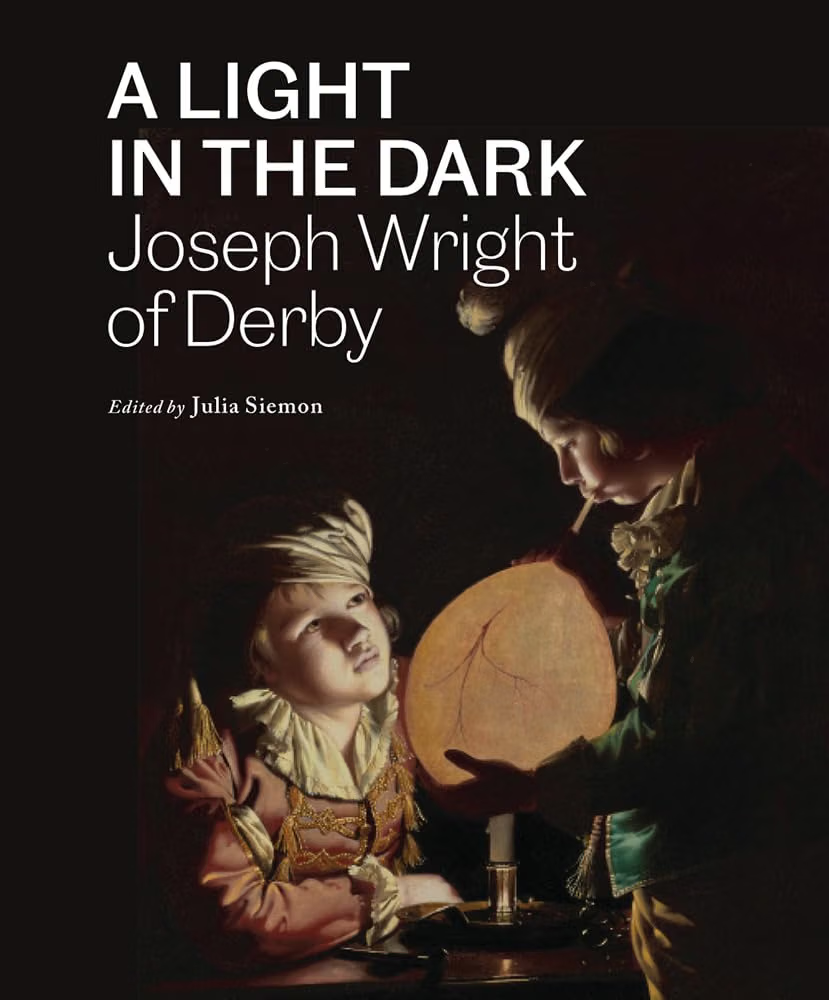
Two boys, a candle, and a pig’s bladder: the intriguing painting by Joseph Wright of Derby
Two young boys, a room shrouded in darkness, and a hidden candle suddenly illuminating their faces. At the center of the scene lies a pig’s bladder, slowly inflating.
What appears to be a simple childhood game becomes, in Joseph Wright of Derby’s painting, a reflection on light, time, and the fragility of life.
Two Boys with a Bladder is a painting created by Joseph Wright of Derby around 1769–1770. Executed in oil on canvas and now housed at the J. Paul Getty Museum in Los Angeles, the work depicts two boys engaged in a game that might seem almost incomprehensible today: inflating a pig’s bladder.
Yet, a closer look at the scene reveals that Wright is interested in more than just the children’s game.
The true protagonist of the painting is light.
A hidden candle transforms the game into a theatrical scene
The room is almost entirely enveloped in darkness. The light source is not immediately visible.
A candle, concealed behind one boy’s hand, casts its warm light across the scene. The face of the boy inflating the bladder emerges from the shadows, while the glow reaches the other boy, the table, the metal candlestick, and—above all—the surface of the bladder, which takes on a luminous quality. The contrast between light and dark focuses our entire attention on the small event unfolding before our eyes.
This is one of the most recognizable characteristics of the work of Wright of Derby, an 18th-century British artist renowned precisely for his extraordinary artificial light effects and nocturnal scenes.
The candle, therefore, does not merely serve to let the boys see; it is the focal point of the painting. Without that light, the scene would vanish almost entirely into the darkness.
But why a pig’s bladder, specifically?
In the eighteenth century, animal bladders could serve as toys for children. Once inflated, they could be tossed about and used much like a balloon; alternatively, they could be filled with dried peas and shaken, turning them into a sort of rattle.
For the two boys in Wright’s painting, then, the bladder is not a bizarre object, but a genuine toy.
Yet, in the history of art, a bladder could signify far more than that.
A childhood game concealing a meaning about the fragility of life
The presence of the bladder connects to a long-standing European pictorial tradition.
In seventeenth-century Dutch paintings, bladders and soap bubbles could take on symbolic meaning, representing the vanity of earthly things, the fragility of existence, and the transience of human achievements. These are objects destined to last only a short time: a bubble bursts, a bladder deflates, a game comes to an end.
For this very reason, they could serve as images of life’s precariousness.
This theme was particularly prevalent in seventeenth-century Dutch painting, whereas it was far less common in eighteenth-century British art. Wright thus adopts a motif already rich in meaning and places it within a completely different scene—one built around curiosity, childhood play, and his own extraordinary exploration of light.
The boys are playing, yet we know that what they are inflating is inevitably destined to deflate.
The game is fleeting, just as the candlelight is fleeting. Life, too—as suggested by the symbolic tradition Wright draws upon—is fleeting. Those elegant costumes are likely not authentic to the eighteenth century.
There is another detail, too, that might escape a casual glance.
The two boys are not dressed like ordinary children. They wear elaborate outfits featuring large collars and ruffled cuffs, looking almost like characters from another era.
According to documentation regarding the work, these costumes appear to be largely the artist’s own invention; they relate to the fashion for so-called “fancy pictures”—paintings popular in eighteenth-century Britain in which children, young people, and ordinary folk were transformed into fanciful figures through deliberately theatrical costumes and settings.
Wright is not, therefore, necessarily trying to show us two children caught in a real moment of their daily lives. He is constructing a small theatrical scene: it is like a stage, where every element serves the light.
Joseph Wright of Derby: The Painter Who Made Light a Protagonist
Joseph Wright of Derby was born in 1734 and died in 1797. He is best remembered for his famous artificially lit scenes, in which light often becomes the true narrative element.
During the 1760s, Wright experimented extensively with this type of composition, combining a taste for chiaroscuro with an interest and for the science, experimentation, and culture of the Enlightenment.
His painting would achieve even greater renown with works such as An Experiment on a Bird in the Air Pump (1768), in which a scientific experiment becomes a dramatic, artificially lit scene.
The interplay of light, observation, and curiosity is also central to Two Boys with a Bladder.
Two boys are at play. More than two centuries later, we continue to watch them as that small light holds its own against the darkness.
For now, yours truly, Michelangelo Buonarroti, bids you farewell and looks forward to seeing you in future posts and on social media.

Sostienici – Support Us
Se questo blog ti piace e ti appassiona, puoi aiutarci a farlo crescere sempre più sostenendoci in modo concreto condividendo i post, seguendo le pagine social e con un contributo che ci aiuta ad andare avanti con il nostro lavoro di divulgazione. . ENGLISH: If you like and are passionate about this blog, you can help us make it grow more and more by supporting us in a concrete way by sharing posts, following social pages and with a contribution that helps us to move forward with our dissemination work.
10,00 €
-

Kekova, Turchia: trovato un relitto di quasi 5.000 anni fa
🇮🇹Al largo di Kekova, in Turchia, un relitto che potrebbe risalire a 4.700 anni fa riporta l’attenzione sugli antichi commerci del Mediterraneo… 🇬🇧Off the coast of Kekova, in Türkiye, a shipwreck that may date back 4,700 years is drawing renewed attention to ancient Mediterranean trade…
-
Se l’inferno fosse con te, sarebbe dolce
🇮🇹Vi racconto un mio madrigale sull’amore impossibile, la bellezza crudele e il desiderio di condividere con chi amo persino l’Inferno… 🇬🇧Let me share with you a madrigal of mine about impossible love, cruel beauty, and the desire to share even Hell with the one I love…
-
Tiepolo, 62 opere svelano il mondo segreto di padre e figlio: la mostra ai Musei Reali di Torino
🇮🇹Giambattista e Giandomenico Tiepolo in mostra a Torino: 62 disegni e incisioni, Pulcinella, opere inedite e visioni misteriose da oggi 15 ottobre 2026… 🇬🇧Giambattista and Giandomenico Tiepolo on display in Turin: 62 drawings and engravings, Pulcinella, previously unseen works, and mysterious visions—starting today, October 15, 2026…
Condividi:


Questo sono io




sostienici

Sostienici – Support Us
Se questo blog ti piace e ti appassiona, puoi aiutarci a farlo crescere sempre più sostenendoci in modo concreto condividendo i post, seguendo le pagine social e con un contributo che ci aiuta ad andare avanti con il nostro lavoro di divulgazione. . ENGLISH: If you like and are passionate about this blog, you can help us make it grow more and more by supporting us in a concrete way by sharing posts, following social pages and with a contribution that helps us to move forward with our dissemination work.
€10,00


Bello mi piace
"Mi piace""Mi piace"