
Asclepio e Telesforo, ritrovato dopo 1.800 anni il simbolo antico della guarigione
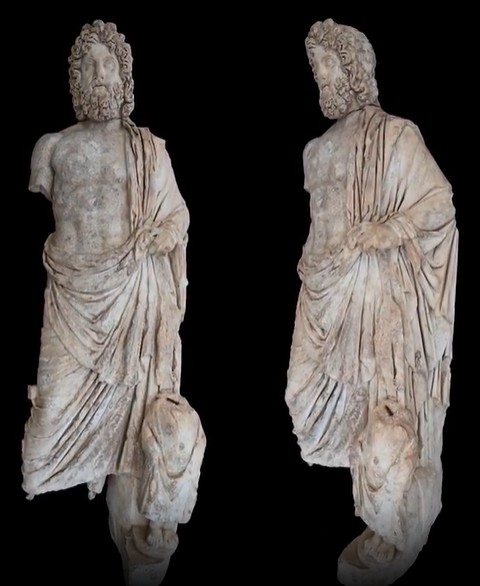
Un gruppo scultoreo in marmo alto 2,20 metri, raffigurante Asclepio e Telesforo, è stato scoperto ad Aspendos, in Turchia.
L’opera, risalente all’ultimo quarto del II secolo d.C., è particolarmente preziosa perché le due figure sono riemerse insieme e in gran parte integre.
Dopo quasi 1.800 anni, Asclepio e Telesforo sono tornati alla luce ad Aspendos. Il ritrovamento è stato annunciato dal ministro turco della Cultura e del Turismo della Turchia, Mehmet Nuri Ersoy, nell’ambito del progetto archeologico “Patrimonio per il Futuro”.
La scoperta restituisce alla storia un’imponente scultura romana in marmo, alta 2,20 metri, rinvenuta tra le rovine dell’ala settentrionale della Porta Monumentale, sulla facciata occidentale della Piazza Est, lungo la Via del Teatro.

Asclepio, il dio della medicina, insieme a Telesforo
La figura principale è Asclepio, il dio greco-romano della medicina e della guarigione. Ai suoi piedi compare Telesforo, molto più piccolo e dall’aspetto infantile, avvolto in una lunga veste con cappuccio.
È proprio questo particolare abbigliamento a renderlo immediatamente riconoscibile.
Telesforo nell’antichità: rappresentava la conclusione della guarigione e il periodo della convalescenza, quando il malato recuperava progressivamente le proprie forze.
Il gruppo scultoreo racconta quindi un intero percorso: la cura della malattia, la guarigione e il ritorno alla salute.
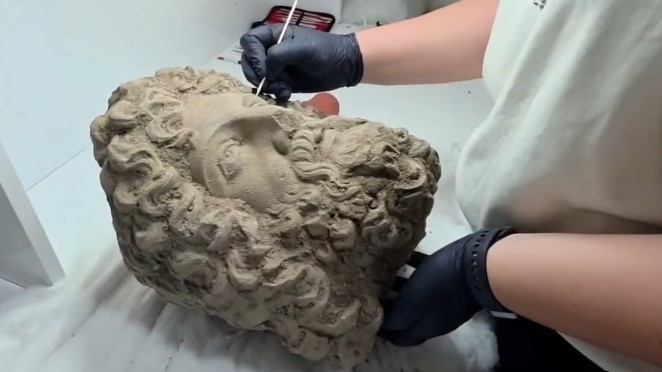
Una scoperta archeologica davvero rara
L’elemento che rende il ritrovamento di Aspendos ancora più importante è lo stato di conservazione.
Asclepio e Telesforo sono stati trovati insieme e in gran parte integri. Non è un dettaglio secondario: le raffigurazioni dei due personaggi vengono spesso rinvenute separatamente, frammentarie oppure completamente prive di una delle due figure.
Gli archeologi sono così costretti a ricostruire la relazione tra Asclepio e Telesforo attraverso frammenti, confronti con altre opere e fonti antiche.
Ad Aspendos, invece, la coppia è sopravvissuta quasi nella sua interezza, offrendo una rara possibilità di comprendere la composizione originale.
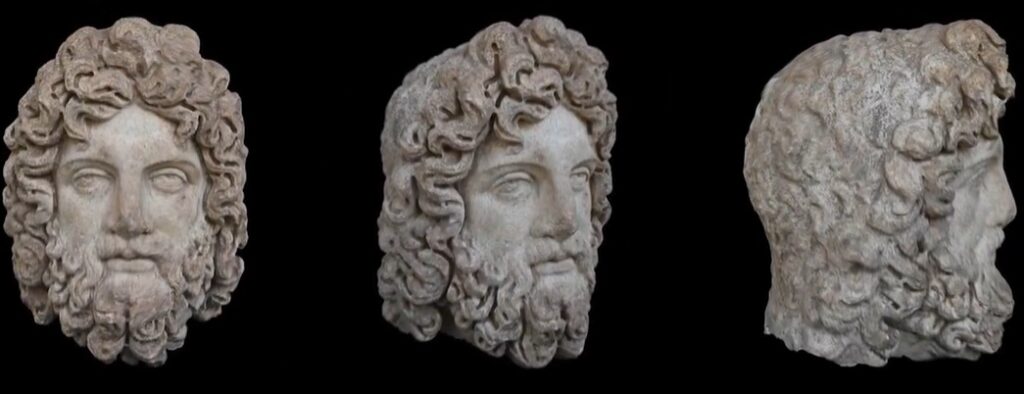
Il raffinato volto di Asclepio
La scultura è datata all’ultimo quarto del II secolo d.C., durante l’età imperiale romana.
La qualità dell’opera emerge dalla postura di Asclepio, dalla curvatura dell’himation e soprattutto dalla cura riservata ai dettagli del volto, dei capelli e della barba.
Il dio appare solenne e monumentale, mentre la piccola figura di Telesforo, ai suoi piedi, introduce nella composizione una dimensione più intima e quasi protettiva.
Aspendos restituisce un nuovo capolavoro dell’antichità
La scoperta aggiunge un importante tassello alla conoscenza dell’antica Aspendos, celebre soprattutto per il suo straordinario teatro romano.
Il gruppo di Asclepio e Telesforo racconta però qualcosa di diverso: non soltanto la monumentalità della città, ma anche il rapporto tra religione, medicina e vita quotidiana nel mondo antico.
Asclepio rappresenta la cura, Telesforo il tempo necessario per tornare alla vita.
Per il momento il sempre vostro Michelangelo Buonarroti vi saluta dandovi appuntamento ai prossimi post e sui social.
Asclepius and Telesphorus: Ancient Symbol of Healing Rediscovered After 1,800 Years
A 2.20-meter-tall marble sculpture group depicting Asclepius and Telesphorus has been discovered in Aspendos, Turkey.
The work, dating to the last quarter of the 2nd century AD, is particularly valuable because the two figures were discovered together and largely intact.
After nearly 1,800 years, Asclepius and Telesphorus have been rediscovered in Aspendos. The discovery was announced by the Turkish Minister of Culture and Tourism, Mehmet Nuri Ersoy, as part of the “Heritage for the Future” archaeological project.
The discovery restores to history an imposing 2.20-meter-tall Roman marble sculpture, found among the ruins of the northern wing of the Monumental Gate, on the western façade of the East Square, along Theatre Street.
Asclepius, the god of medicine, along with Telesphorus
The main figure is Asclepius, the Greco-Roman god of medicine and healing. At his feet stands Telesphorus, much smaller and childlike, wrapped in a long, hooded robe.
It is precisely this distinctive attire that makes him instantly recognizable.
Telesphorus in antiquity: it represented the conclusion of healing and the period of convalescence, when the patient gradually regained his strength.
The sculptural group thus recounts an entire journey: the treatment of illness, recovery, and the return to health.
A truly rare archaeological discovery
What makes the Aspendos find even more significant is its state of preservation.
Asclepius and Telesphorus were found together and largely intact. This is no minor detail: depictions of the two figures are often found separately, fragmented, or completely missing one of the two figures.
Archaeologists are thus forced to reconstruct the relationship between Asclepius and Telesphorus through fragments, comparisons with other works, and ancient sources.
At Aspendos, however, the pair has survived almost entirely, offering a rare opportunity to understand the original composition.
The refined face of Asclepius
The sculpture dates to the last quarter of the 2nd century AD, during the Roman imperial period.
The quality of the work emerges from Asclepius’s posture, the curvature of the himation, and above all, the attention to detail in the face, hair, and beard.
The god appears solemn and monumental, while the small figure of Telesphorus at his feet introduces a more intimate, almost protective dimension to the composition.
Aspendos yields a new masterpiece of antiquity
The discovery adds an important piece to our knowledge of ancient Aspendos, famous above all for its extraordinary Roman theater.
The group of Asclepius and Telesphorus, however, tells a different story: not only the monumentality of the city, but also the relationship between religion, medicine, and daily life in the ancient world.
Asclepius represents healing, Telesphorus represents the time needed to return to life.
For now, yours truly, Michelangelo Buonarroti, bids farewell and invites you to join him in future posts and on social media.

Sostienici – Support Us
Se questo blog ti piace e ti appassiona, puoi aiutarci a farlo crescere sempre più sostenendoci in modo concreto condividendo i post, seguendo le pagine social e con un contributo che ci aiuta ad andare avanti con il nostro lavoro di divulgazione. . ENGLISH: If you like and are passionate about this blog, you can help us make it grow more and more by supporting us in a concrete way by sharing posts, following social pages and with a contribution that helps us to move forward with our dissemination work.
10,00 €
-
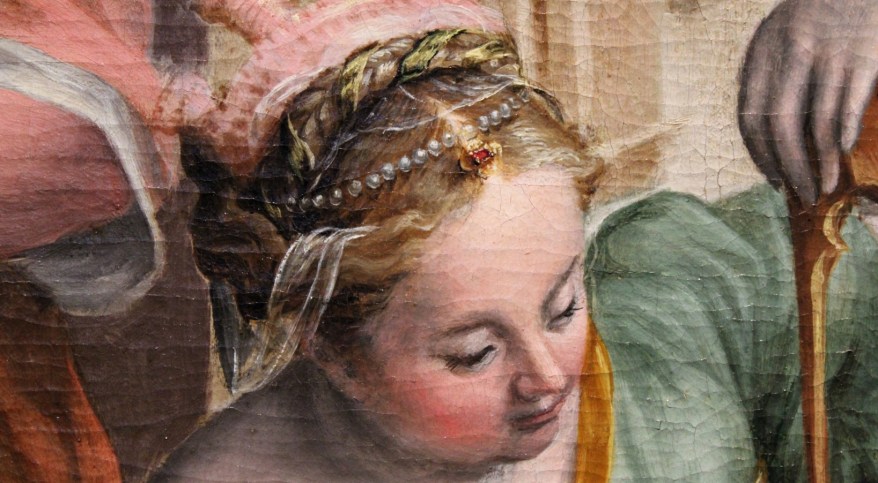
L’Allegoria della Geometria di Prospero Fontana: il dipinto attribuito per errore a Jacopo Coppi
🇮🇹L’Allegoria della Geometria, attribuita un tempo a Jacopo Coppi, è stata restituita a Prospero Fontana: storia, significato e segreti del dipinto… 🇬🇧The Allegory of Geometry, once attributed to Jacopo Coppi, has been reattributed to Prospero Fontana: the history, meaning, and secrets of the painting…
-
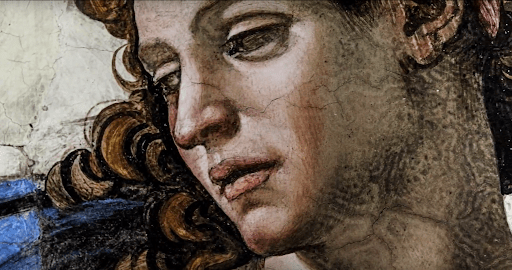
Il mio cuore prigioniero
🇮🇹Nei miei versi l’amore diventa tormento, prigionia e vita… 🇬🇧In my verses, love becomes torment, imprisonment, and life…
-
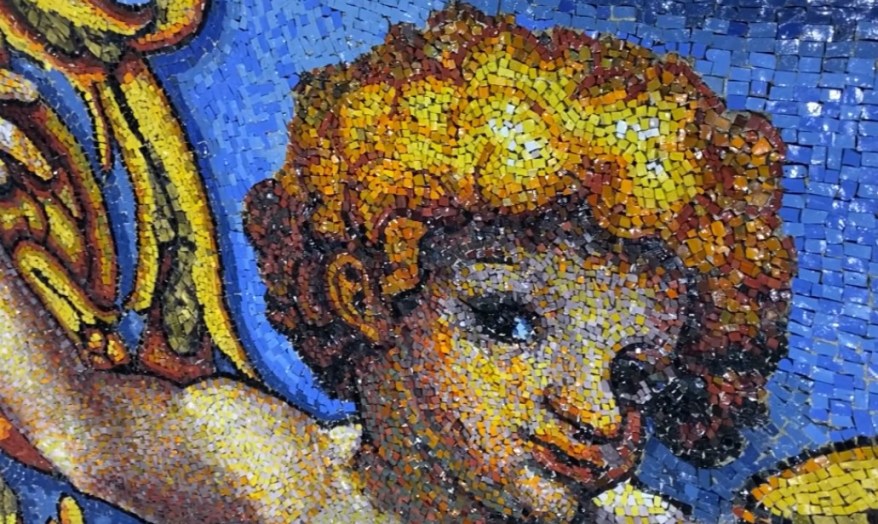
San Pietro: nella cupola ritrovate tessere minuscole e scritte nascoste da secoli
🇮🇹Tessere grandi pochi millimetri, volti forse realizzati in laboratorio e appunti lasciati dai restauratori di secoli fa: il restauro di una cupola poco conosciuta di San Pietro porta alla luce dettagli sorprendenti… 🇬🇧Tiles measuring just a few millimeters, faces perhaps created in a workshop, and notes left by restorers centuries ago: the restoration of a…
Condividi:


Questo sono io




sostienici

Sostienici – Support Us
Se questo blog ti piace e ti appassiona, puoi aiutarci a farlo crescere sempre più sostenendoci in modo concreto condividendo i post, seguendo le pagine social e con un contributo che ci aiuta ad andare avanti con il nostro lavoro di divulgazione. . ENGLISH: If you like and are passionate about this blog, you can help us make it grow more and more by supporting us in a concrete way by sharing posts, following social pages and with a contribution that helps us to move forward with our dissemination work.
€10,00


Da te
"Mi piace""Mi piace"
HELP! Che debo fare? 🤔
"Mi piace""Mi piace"