

Partenone come non si vedeva da 220 anni: via i ponteggi
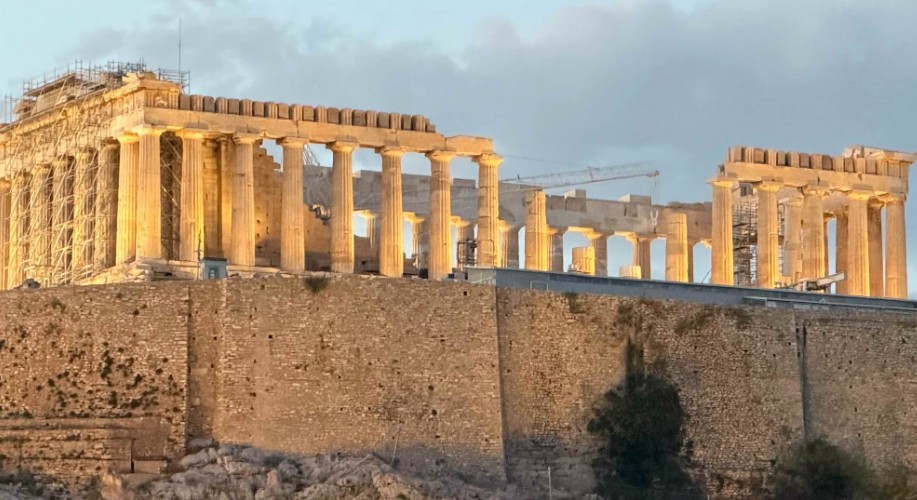
Dopo otto anni di lavori, il Partenone si mostra finalmente al mondo senza i ponteggi che ne hanno avvolto la facciata occidentale. Il Ministero della Cultura greco ha annunciato il completamento del restauro del frontone ovest, uno degli interventi più complessi e simbolici mai realizzati sull’Acropoli di Atene.
La rimozione definitiva delle impalcature restituisce ai visitatori una visione straordinaria del celebre tempio dedicato ad Atena, offrendo l’immagine più completa del monumento degli ultimi 220 anni. Un risultato che le autorità greche definiscono storico per il patrimonio culturale mondiale.
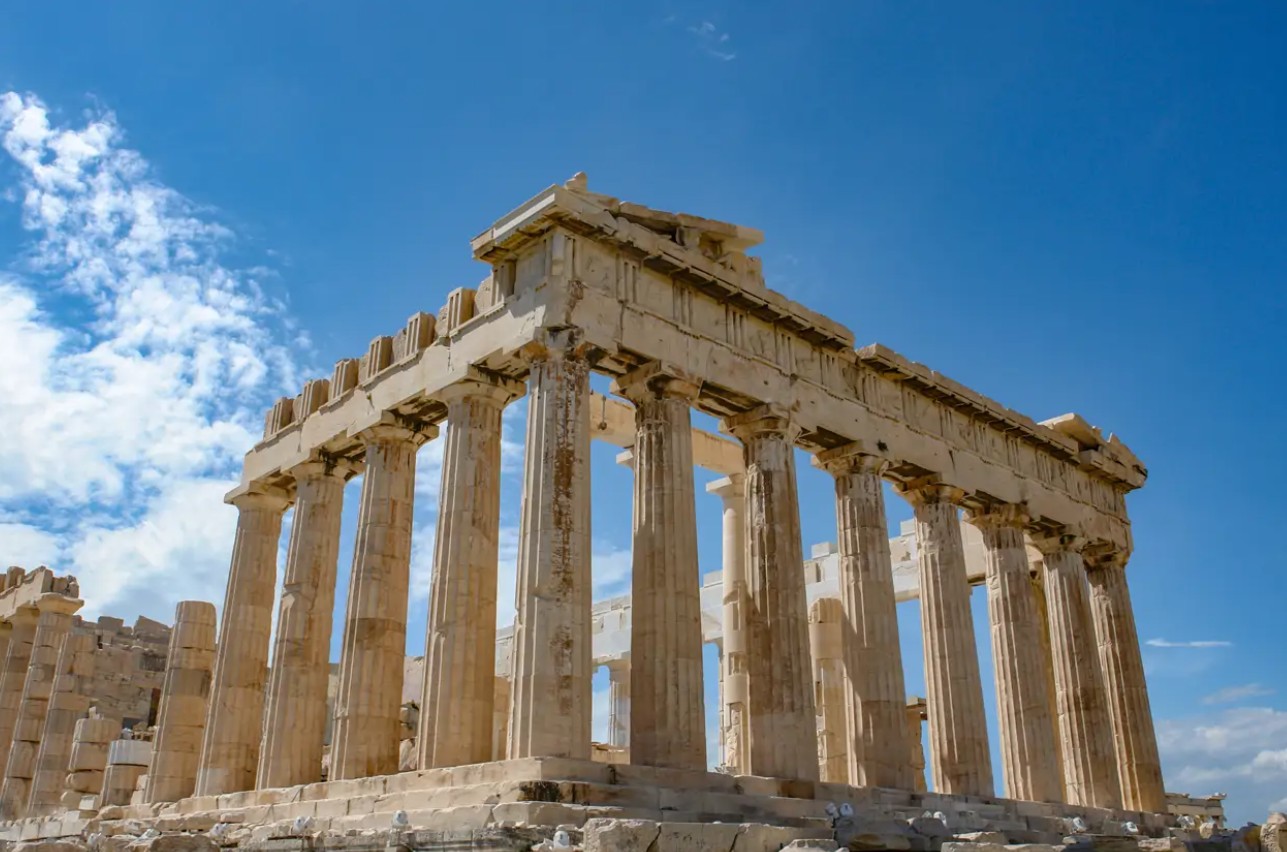
Il restauro del Partenone entra nella storia
L’annuncio ufficiale è arrivato il 15 giugno dall’Ufficio per il Restauro dell’Acropoli, organismo del Ministero della Cultura greco che coordina i lavori conservativi sul sito archeologico.
«Si tratta del completamento di un intervento di restauro estremamente impegnativo, grazie al quale il frontone occidentale del Partenone si presenta nella sua forma più completa da circa 220 anni», ha dichiarato la ministra della Cultura Lina Mendoni. «Lo spettacolo è davvero mozzafiato».
L’intervento ha consentito di ripristinare la continuità geometrica del timpano che sovrasta la facciata occidentale, migliorando la lettura architettonica dell’intero edificio e avvicinandolo alla configurazione originaria concepita oltre 2.400 anni fa.
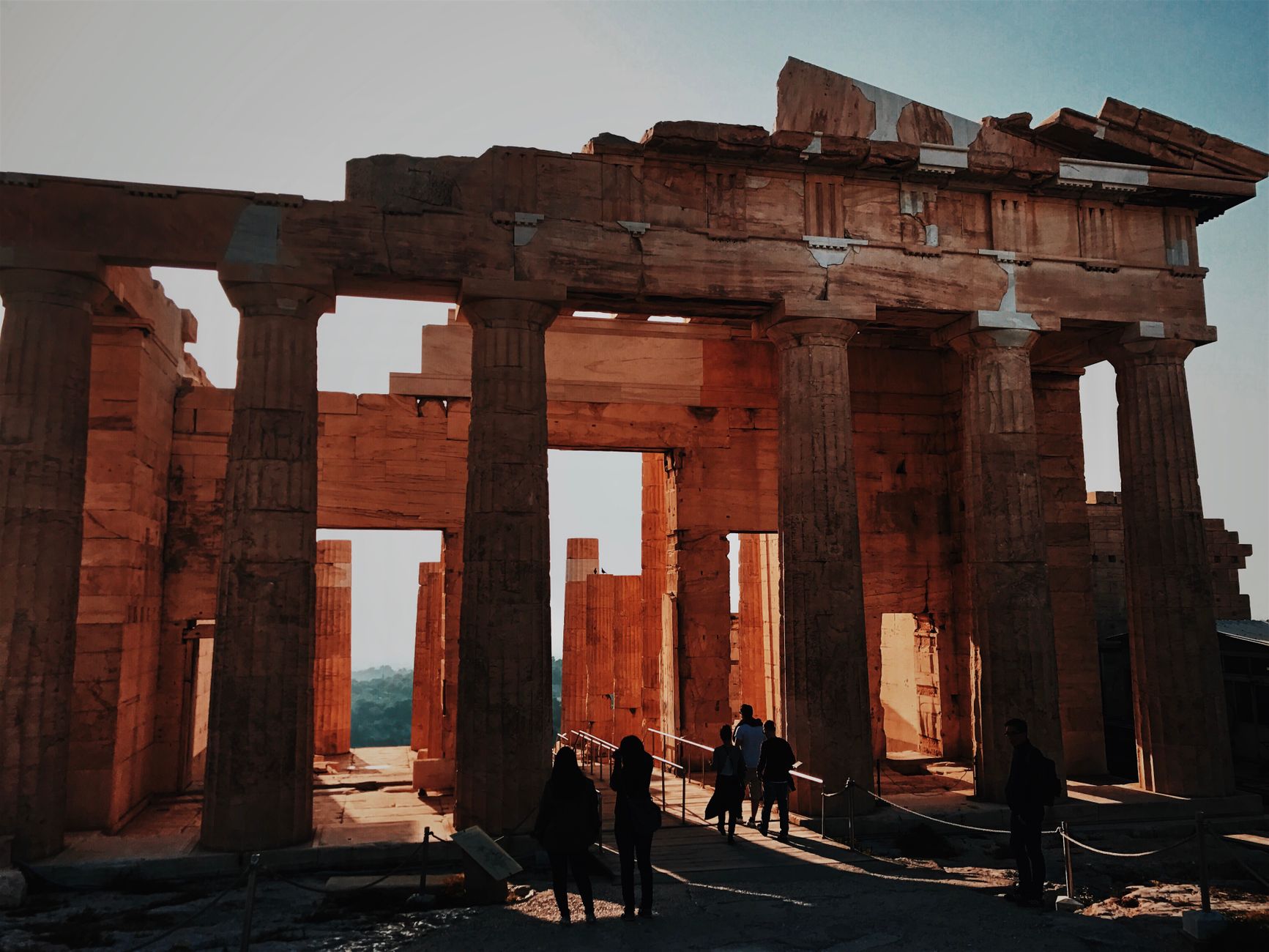
Un monumento sopravvissuto a guerre, trasformazioni e restauri controversi
Costruito nel V secolo a.C. durante l’età di Pericle, il Partenone rappresenta uno dei simboli più riconoscibili della civiltà occidentale. Nato come tempio dedicato ad Atena, nel corso dei secoli ha assunto funzioni diverse, diventando tesoreria, chiesa cristiana, moschea e persino caserma militare.
La sua lunga storia è stata segnata da invasioni, esplosioni, terremoti e interventi di restauro non sempre adeguati. Tra i più controversi figurano quelli diretti dall’architetto greco Nikolaos Balanos tra il 1894 e il 1938. Molte delle tecniche utilizzate all’epoca si sono rivelate dannose per la conservazione del monumento, rendendo necessari successivi interventi correttivi.
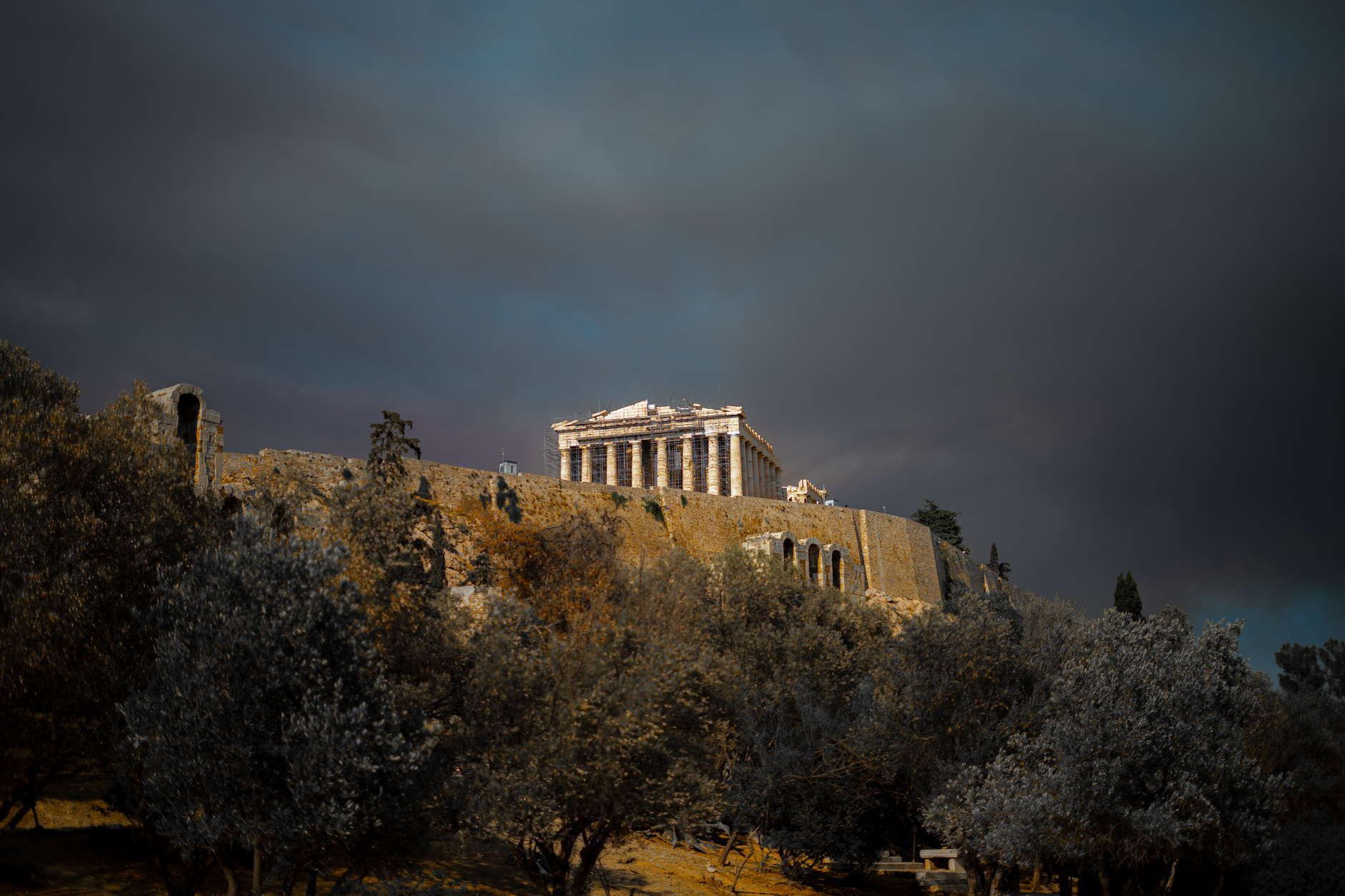
La svolta del 1975: nasce il grande progetto di recupero dell’Acropoli
Per affrontare i problemi accumulati nel tempo, il governo greco istituì nel 1975 il Servizio per il Restauro dell’Acropoli, incaricato di coordinare un vasto programma di conservazione dell’intero complesso archeologico.
Nel 2017 gli specialisti hanno avviato il delicato restauro del frontone occidentale del Partenone, una delle aree più complesse dell’edificio. Il progetto ha richiesto anni di studi, rilievi e interventi di alta precisione.
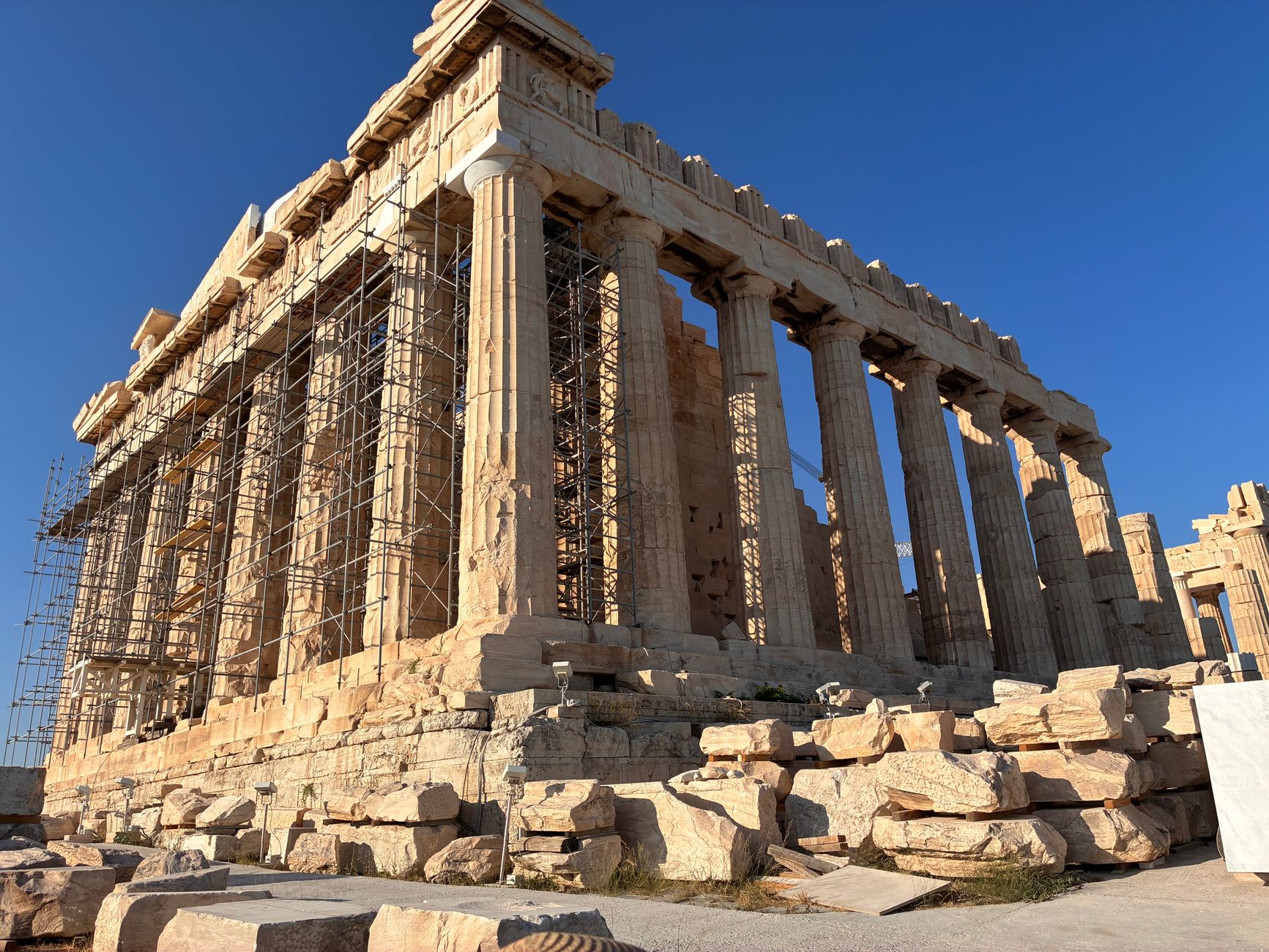
Il marmo del Monte Pentelico torna protagonista
Una delle principali sfide del restauro è stata il recupero del celebre marmo pentelico, lo stesso utilizzato dagli antichi costruttori ateniesi.
I restauratori hanno estratto nuovi blocchi dal versante nord-orientale del Monte Pentelico, la cava storica che conferisce al Partenone il suo caratteristico colore dorato e la particolare luminosità che cambia con la luce del sole.
I materiali sono stati successivamente scolpiti e sollevati fino alla sommità del monumento per completare le parti mancanti del frontone.
Le nuove integrazioni restituiscono integrità alla facciata occidentale
Secondo il progetto approvato nel 2008 e confermato nel 2020 dalle autorità greche, il completamento del frontone è stato ottenuto attraverso l’inserimento di due grandi lastre ortostatiche.
La prima è composta da frammenti antichi recuperati e integrati con nuovo marmo pentelico. La seconda è stata realizzata interamente con materiale appena estratto dalla cava storica. Le due strutture sono state collocate tra il 3 e il 5 marzo, segnando la fase conclusiva del restauro.
Grazie a questi interventi, il frontone occidentale recupera oggi una maggiore coerenza architettonica e una leggibilità più vicina all’aspetto originario.
Un momento storico per il patrimonio mondiale
La conclusione dei lavori rappresenta molto più di un semplice traguardo tecnico. Per la Grecia si tratta di un passaggio simbolico che rafforza il ruolo del Partenone come patrimonio universale e testimonianza della cultura classica.
«È un momento di importanza storica per il monumento, per l’Acropoli e per la cultura mondiale», ha sottolineato Lina Mendoni. «Un momento che ci riempie di orgoglio, ma anche di responsabilità nel proseguire con la stessa costanza l’opera di tutela e valorizzazione del simbolo per eccellenza della civiltà occidentale».
Con la scomparsa definitiva dei ponteggi dalla facciata occidentale, il Partenone offre oggi una delle immagini più suggestive degli ultimi due secoli, restituendo al pubblico internazionale una visione più autentica di uno dei monumenti più celebri della storia dell’umanità.
Per il momento il sempre vostro Michelangelo Buonarroti vi saluta dandovi appuntamento ai prossimi post e sui social.
Parthenon as it hasn’t been seen in 220 years: scaffolding removed
After eight years of work, the Parthenon finally reveals itself to the world without the scaffolding that enveloped its western façade. The Greek Ministry of Culture has announced the completion of the restoration of the west pediment, one of the most complex and symbolic projects ever undertaken on the Acropolis of Athens.
The definitive removal of the scaffolding restores visitors to an extraordinary view of the famous temple dedicated to Athena, offering the most complete image of the monument in the last 220 years. This achievement, Greek authorities call historic for its global cultural heritage.
The Parthenon’s restoration makes history
The official announcement came on June 15 from the Acropolis Restoration Office, the body of the Greek Ministry of Culture that coordinates conservation work on the archaeological site.
“This marks the completion of an extremely demanding restoration project, thanks to which the Parthenon’s western pediment is presented in its most complete form in approximately 220 years,” said Culture Minister Lina Mendoni. “The spectacle is truly breathtaking.”
The project restored the geometric continuity of the tympanum that tops the western façade, improving the architectural interpretation of the entire building and bringing it closer to the original configuration conceived over 2,400 years ago.
A monument that has survived wars, transformations, and controversial restorations
Built in the 5th century BC during the age of Pericles, the Parthenon
is one of the most recognizable symbols of Western civilization. Originally a temple dedicated to Athena, over the centuries it has served a variety of purposes, including a treasury, a Christian church, a mosque, and even a military barracks.
Its long history has been marked by invasions, explosions, earthquakes, and incomplete restorations. Among the most controversial were those directed by Greek architect Nikolaos Balanos between 1894 and 1938. Many of the techniques used at the time proved detrimental to the monument’s conservation, necessitating subsequent corrective interventions.
The turning point of 1975: the great Acropolis restoration project begins
To address the problems that had accumulated over time, the Greek government established the Acropolis Restoration Service in 1975, charged with coordinating a vast conservation program for the entire archaeological complex.
In 2017, specialists began the delicate restoration of the Parthenon’s west pediment, one of the most complex areas of the building. The project required years of study, surveys, and high-precision interventions.
Mount Pentelicus marble takes center stage
One of the main challenges of the restoration was the recovery of the famous Pentelic marble, the same marble used by the ancient Athenian builders.
Restorers extracted new blocks from the northeastern slope of Mount Pentelicus, the historic quarry that gives the Parthenon its characteristic golden hue and distinctive luminosity that changes with the sunlight.
The materials were then sculpted and lifted to the top of the monument to complete the missing sections of the pediment.
New additions restore integrity to the west façade
According to the project approved in 2008 and confirmed in 2020 by the Greek authorities, the completion of the pediment was achieved through the insertion of two large orthostatic slabs.
The first is composed of recovered ancient fragments and integrated with new Pentelic marble. The second was made entirely from material freshly extracted from the historic quarry. The two structures were installed between March 3rd and 5th, marking the final phase of the restoration.
Thanks to these interventions, the west pediment now regains greater architectural coherence and a readability closer to its original appearance.
A historic moment for world heritage
The completion of the work represents much more than a simple technical achievement. For Greece, it is a symbolic step that reinforces the role of the Parthenon as a universal heritage site and a testament to classical culture.
“This is a moment of historic importance for the monument, for the Acropolis, and for world culture,” emphasized Lina Mendoni. “A moment that fills us with pride, but also with a sense of responsibility to continue with the same perseverance the work of protecting and enhancing the symbol par excellence of Western civilization.”
With the scaffolding finally removed from the western façade, the Parthenon today offers one of the most evocative images of the last two centuries, giving the international public a more authentic vision of one of the most famous monuments in human history.
For now, yours truly, Michelangelo Buonarroti bids you farewell and invites you to join him in future posts and on social media.

Sostienici – Support Us
Se questo blog ti piace e ti appassiona, puoi aiutarci a farlo crescere sempre più sostenendoci in modo concreto condividendo i post, seguendo le pagine social e con un contributo che ci aiuta ad andare avanti con il nostro lavoro di divulgazione. . ENGLISH: If you like and are passionate about this blog, you can help us make it grow more and more by supporting us in a concrete way by sharing posts, following social pages and with a contribution that helps us to move forward with our dissemination work.
10,00 €
Articoli

Condividi:


Questo sono io




sostienici

Sostienici – Support Us
Se questo blog ti piace e ti appassiona, puoi aiutarci a farlo crescere sempre più sostenendoci in modo concreto condividendo i post, seguendo le pagine social e con un contributo che ci aiuta ad andare avanti con il nostro lavoro di divulgazione. . ENGLISH: If you like and are passionate about this blog, you can help us make it grow more and more by supporting us in a concrete way by sharing posts, following social pages and with a contribution that helps us to move forward with our dissemination work.
€10,00


Trovo sempre molto interessanti i tuoi articoli 👍👍👍👍👍👍👍👌👌👌👌👌👏👏👏👏👏👏😉🤗
"Mi piace""Mi piace"