
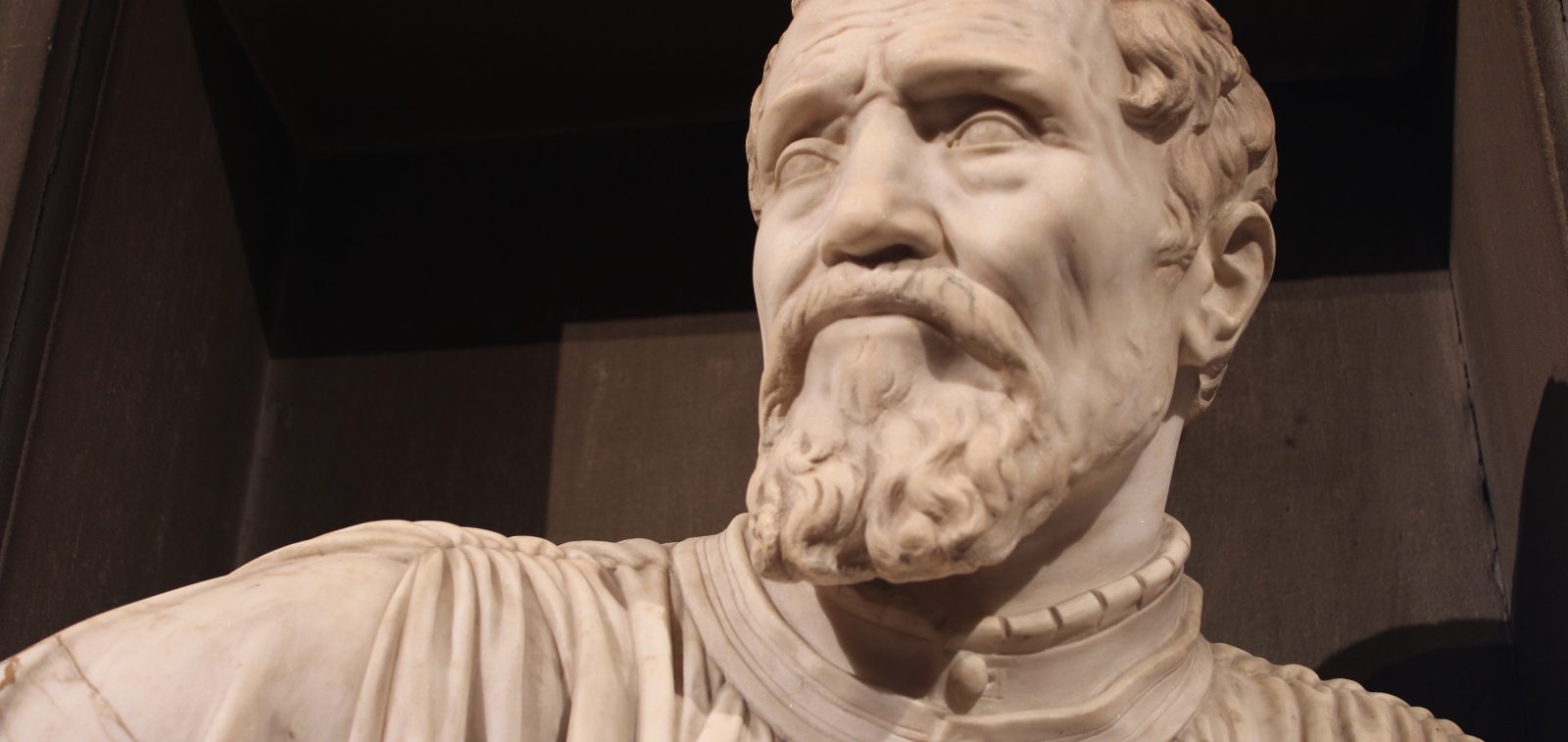
Mi deridono gli anni, ma l’amore rende eterna la bellezza
Vi racconto della ferita che non lascia sangue visibile, eppure svuota l’uomo più di qualunque colpo di scalpello. È la ferita dell’amore non corrisposto, tema del madrigale che scrissi non per ottenere un dono o un favore, ma, come annotai di mio pugno, «per un sognio».
Un componimento nato da una visione interiore, da un tormento che solo il verso poteva contenere.

Una donna «indomita e selvaggia»
Fin dall’inizio descrivo la donna amata come una creatura irremovibile:
«Costei pur si delibra, indomit’ e selvaggia»
Ella decide ostinatamente di lasciarmi consumare nel desiderio. L’espressione «indomita e selvaggia» richiama la tradizione poetica più alta, fino a Dante, e sottolinea una natura che non può essere piegata né dalla compassione né dall’amore.
La sua scelta è crudele: vuole che io arda, muoia e cada sotto il peso della passione.
Soffrire per ciò che non vale nulla
La mia amarezza cresce quando affermo:
«ch’i’ arda, mora e caggia a quel c’a peso non sie pure un’oncia»
Parlo di qualcosa che, se posto sulla bilancia, non raggiungerebbe nemmeno il peso di un’oncia. È l’immagine della vanità delle cose terrene e dell’inconsistenza della speranza amorosa che mi tiene prigioniero.
Sto sacrificando la mia vita per un bene che, materialmente, non vale nulla; eppure per il cuore vale tutto.
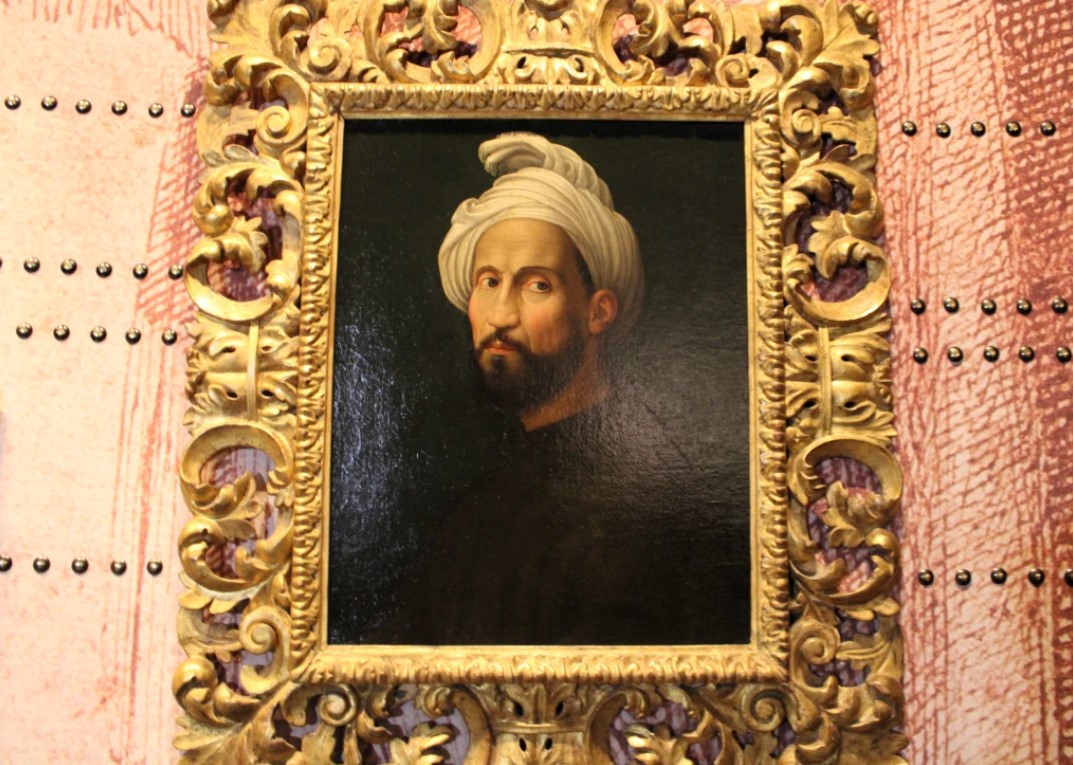
Il sangue che si consuma lentamente
La sofferenza diventa fisica:
«e ’l sangue a libra a libra mi svena, e sfibra»
Non è un dolore astratto. Lo sento come una perdita concreta di energie vitali. Goccia dopo goccia, libra dopo libra, l’amore mi svuota e mi indebolisce.
La ripetizione sonora tra «libra», «svena» e «sfibra» rende quasi percepibile questo lento dissanguamento dell’anima e del corpo.
L’effetto è devastante: il corpo si deforma, non è più degno dell’anima che lo abita.
Lo specchio e la vanità della bellezza
Mentre io soffro, lei si contempla:
«La si gode e racconcia nel suo fidato specchio»
Davanti allo specchio la donna si compiace della propria immagine. Si ammira fino a vedersi «equale al paradiso», perfetta e sublime.
Lo specchio diventa il simbolo dell’autocompiacimento. La bellezza si contempla e si celebra da sola, senza accorgersi del dolore che provoca.
Io invecchio, lei diventa più bella
Il passaggio più amaro arriva quando la donna rivolge lo sguardo verso di me:
«po’, volta a me, mi concia sì, c’oltr’all’esser vecchio»
La sua presenza mi trasforma in peggio. Non soltanto sono vecchio, ma appaio ancora più misero accanto alla sua giovinezza e perfezione.
Eppure accade un paradosso: il contrasto tra la mia bruttezza e la sua bellezza rende il suo volto ancora più splendente. Più io sembro consumato dagli anni e dall’amore, più lei appare luminosa.
La vera vittoria dell’amante
Il madrigale si chiude con un pensiero sorprendente:
«e pur m’è gran ventura, s’i’ vinco, a farla bella, la natura»
Nonostante il dolore, considero una fortuna poter contribuire alla sua bellezza. Se la mia presenza riesce a renderla più bella di quanto la natura stessa abbia fatto, allora ho ottenuto una vittoria.
È il destino dell’amante: perdere sé stesso per esaltare l’essere amato.
In questi versi convivono sofferenza e ammirazione, umiliazione e orgoglio. Vengo deriso perché brutto e vecchio, ma trovo consolazione nell’aver partecipato, anche solo attraverso il mio amore, alla perfezione di una bellezza che sembra trascendere il mondo terreno.
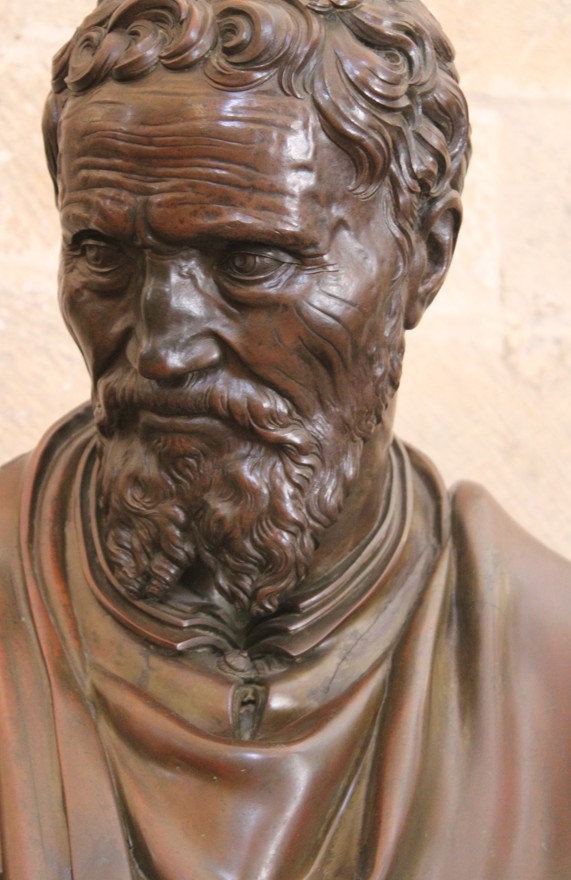
Post Scriptum
Sotto il testo annotai che il madrigale «Questo non lo metto per polizino, ma per un sognio». La parola ‘Polzino’ ricorre spesso nei miei autografi e indica solitamente i versi che scrivevo per Luigi del Riccio in cambio di doni, soprattutto cibo secondo una pratica allora molto più comune di quanto si possa pensare.
In questo caso specifico però volli indicare che il madrigale non l’avevo scritto in cambio di qualcosa ma per altre ragioni, non identificabili però attraverso quella nota. Forse per un sogno, una visione, un moto profondo dell’animo che non cercava ricompense, ma soltanto espressione. Chissà.
Costei pur si delibra,
indomit’ e selvaggia,
ch’i’ arda, mora e caggia
a quel c’a peso non sie pure un’oncia;
e ’l sangue a libra a libra
mi svena, e sfibra e ’l corpo all’alma sconcia.
La si gode e racconcia
nel suo fidato specchio,
ove sé vede equale al paradiso;
po’, volta a me, mi concia
sì, c’oltr’all’esser vecchio,
in quel col mie fo più bello il suo viso,
ond’io vie più deriso
son d’esser brutto; e pur m’è gran ventura,
s’i’ vinco, a farla bella, la natura.
Per il momento il sempre vostro Michelangelo Buonarroti vi saluta dandovi appuntamento ai prossimi post o suo social.
The years mock me, but love makes beauty eternal
I tell you of the wound that leaves no visible blood, yet empties a man more than any chisel stroke. It is the wound of unrequited love, the theme of the madrigal I wrote not to obtain a gift or a favor, but, as I wrote in my own hand, “for a dream.” A poem born of an inner vision, from a torment that only verse could contain.
An “untamed and wild” woman
From the beginning, I describe the woman I love as an unshakeable creature:
“She, too, is untamed and wild.”
She stubbornly decides to let me be consumed by desire. The expression “untamed and wild” harks back to the highest poetic tradition, all the way back to Dante, and emphasizes a nature that cannot be broken by either compassion or love.
Her choice is cruel: she wants me to burn, die, and fall under the weight of passion.
Suffering for what is worthless
My bitterness grows when I say:
“I burn, die, and fall for what is not even an ounce of weight.”
I speak of something that, if placed on a scale, would not even weigh an ounce. It is the image of the vanity of earthly things and the insubstantiality of the loving hope that holds me prisoner.
I am sacrificing my life for a good that, materially, is worth nothing; yet to the heart, it is worth everything.
The blood that slowly consumes
The suffering becomes physical:
“and the blood drains me pound by pound, and weakens me.”
It is not an abstract pain. I feel it as a concrete loss of vital energy. Drop by drop, pound by pound, love empties me and weakens me.
The repetitive sound of “libra,” “svena,” and “sfibra” makes this slow bleeding of soul and body almost audible.
The effect is devastating: the body deforms, no longer worthy of the soul that inhabits it.
The Mirror and the Vanity of Beauty
While I suffer, she contemplates herself:
“She enjoys and tidies herself in her trusty mirror.”
Before the mirror, the woman delights in her own image. She admires herself until she sees herself “equal to heaven,” perfect and sublime.
The mirror becomes the symbol of self-satisfaction. Beauty contemplates and celebrates itself, unaware of the pain it causes.
I grow older, she grows more beautiful.
The bitterest moment comes when the woman turns her gaze on me:
“Then, turning to me, she tans me, yes, besides being old.”
Her presence changes me for the worse. Not only am I old, but I appear even more wretched next to her youth and perfection.
And yet a paradox occurs: the contrast between my ugliness and her beauty makes her face even more resplendent. The more I seem worn by age and love, the more radiant she appears.
The Lover’s True Victory
The madrigal ends with a surprising thought:
“And yet I am truly fortunate if I conquer nature in making her beautiful.”
Despite the pain, I consider it a blessing to be able to contribute to her beauty. If my presence succeeds in making her more beautiful than nature itself has ever made her, then I have achieved a victory.
It is the lover’s destiny: to lose oneself to exalt the beloved.
In these verses, suffering and admiration, humiliation and pride coexist. I am mocked for being ugly and old, but I find consolation in having participated, even if only through my love, in the perfection of a beauty that seems to transcend the earthly world.
Postscript
Below the text, I noted that the madrigal “I don’t write this for a policeman, but for a dream.” The word “Polzino” appears often in my autographs and usually refers to the verses I wrote for Luigi del Riccio in exchange for gifts, especially food, a practice that was much more common at the time than one might think.
In this specific case, however, I wanted to point out that I hadn’t written the madrigal in exchange for anything, but for other reasons, not identifiable from that note. Perhaps for a dream, a vision, a profound stirring of the soul that sought not rewards, but only expression. Who knows.
Costei pur si delibra,
indomit’ e selvaggia,
ch’i’ arda, mora e caggia
a quel c’a peso non sie pure un’oncia;
e ’l sangue a libra a libra
mi svena, e sfibra e ’l corpo all’alma sconcia.
La si gode e racconcia
nel suo fidato specchio,
ove sé vede equale al paradiso;
po’, volta a me, mi concia
sì, c’oltr’all’esser vecchio,
in quel col mie fo più bello il suo viso,
ond’io vie più deriso
son d’esser brutto; e pur m’è gran ventura,
s’i’ vinco, a farla bella, la natura.
For now, yours truly, Michelangelo Buonarroti, bids farewell and invites you to his next posts or social media.

Sostienici – Support Us
Se questo blog ti piace e ti appassiona, puoi aiutarci a farlo crescere sempre più sostenendoci in modo concreto condividendo i post, seguendo le pagine social e con un contributo che ci aiuta ad andare avanti con il nostro lavoro di divulgazione. . ENGLISH: If you like and are passionate about this blog, you can help us make it grow more and more by supporting us in a concrete way by sharing posts, following social pages and with a contribution that helps us to move forward with our dissemination work.
10,00 €
Articoli

Condividi:


Questo sono io




sostienici

Sostienici – Support Us
Se questo blog ti piace e ti appassiona, puoi aiutarci a farlo crescere sempre più sostenendoci in modo concreto condividendo i post, seguendo le pagine social e con un contributo che ci aiuta ad andare avanti con il nostro lavoro di divulgazione. . ENGLISH: If you like and are passionate about this blog, you can help us make it grow more and more by supporting us in a concrete way by sharing posts, following social pages and with a contribution that helps us to move forward with our dissemination work.
€10,00


