
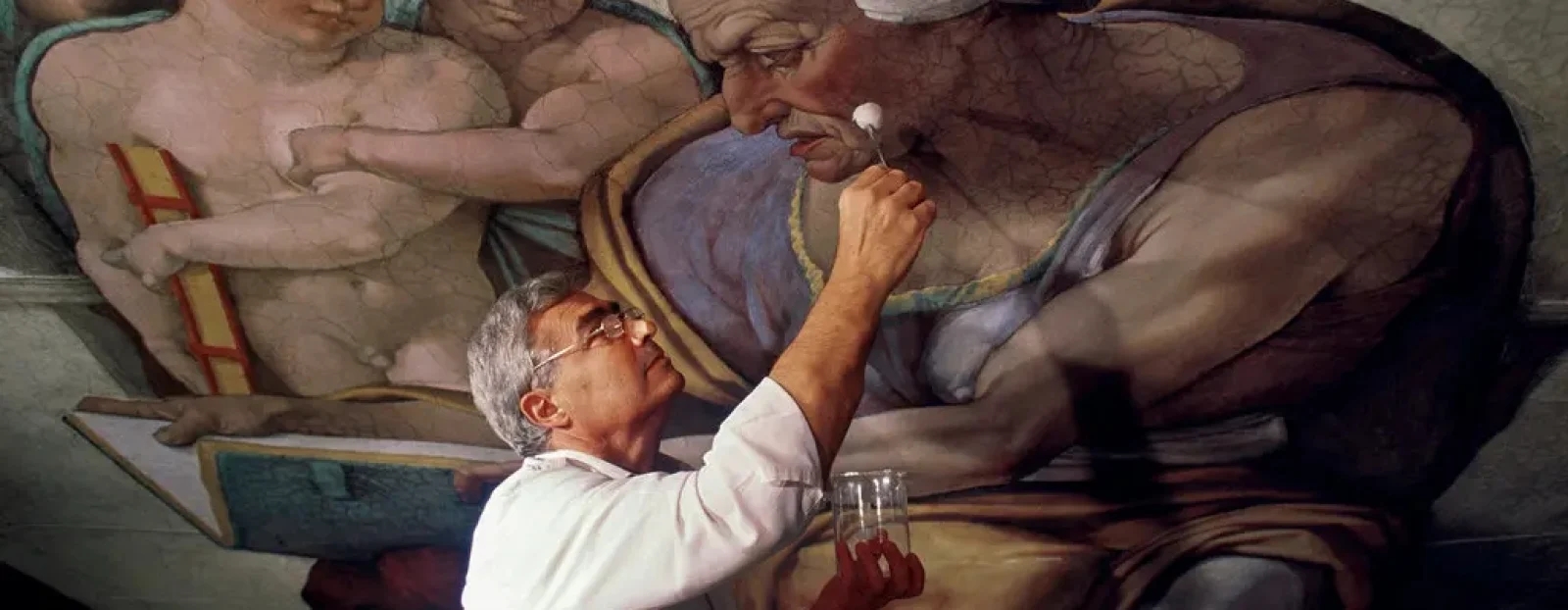
Capolavoro barocco: l’altare di San Luigi Gonzaga nella chiesa di Sant’Ignazio di Loyola a Roma
Entrando nella chiesa di Sant’Ignazio di Loyola, si trova spesso una lunga coda di visitatori che attendono di vedere la volta affrescata da Andrea del Pozzo. Mirabile capolavoro di illusione prospettica, non v’è dubbio ma basta alzare gli occhi al cielo per apprezzarlo appieno, senza dover per forza pagare l’obolo per far accendere la luce attorno allo specchio e guardare un riflesso dell’opera invece che apprezzarne le forme direttamente con i propri occhi.
Che un riflesso sia più interessante che la verità del proprio sguardo? Dubito.
La fila è per gli smartphone, per i video oramai visti e rivisti sui social nei quali viene inquadrato prima lo specchio e poi la volta. Originalità portami via mi verrebbe da pensare imprecando a denti stretti. Non imprecai mai in vita ma da morto, qualche volta sì.

Altare monumentale nel cuore della chiesa gesuitica
Premessa a parte, oltre i mirabili virtuosismi prospettici architetto e pittore Andrea del Pozzo, c’è molto altro da vedere come per esempio lo straordinario altare di San Luigi Gonzaga, situato nel transetto destro della chiesa.
Venne realizzato tra il 1697 e il 1699 sempre su suo progetto.
La costruzione dell’altare venne promossa dal marchese Scipione Lancellotti per onorare san Luigi Gonzaga, giovane gesuita morto nel 1591 a soli 23 anni dopo aver contratto la peste mentre assisteva i malati durante una terribile epidemia che a Roma causò oltre 60.000 vittime.
L’architettura di Andrea Pozzo e i simboli dei Lancellotti
L’altare si presenta come una grandiosa architettura monumentale, caratterizzata da due coppie di colonne tortili che sorreggono un timpano in marmo verde. Nel basamento del timpano compaiono gli stemmi della famiglia Lancellotti, i committenti dell’opera.
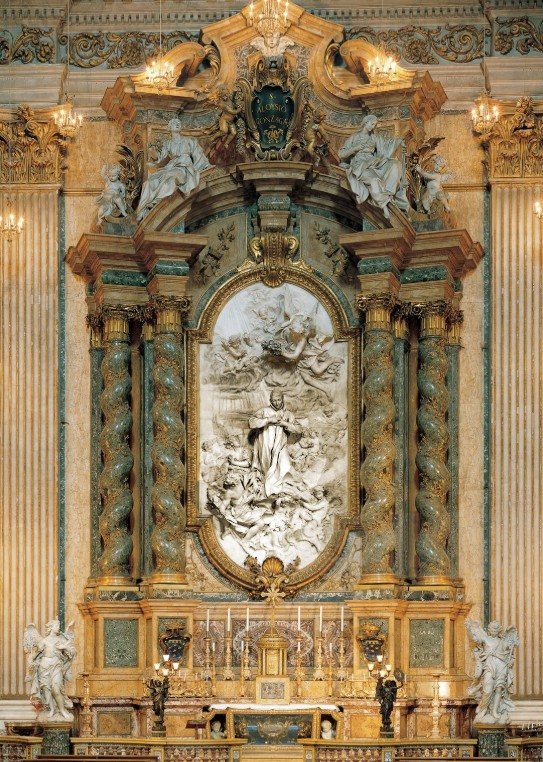
Al centro spicca la grande pala in marmo con la Gloria di san Luigi Gonzaga, scolpita tra il 1697 e il 1699 dal celebre artista francese Pierre Legros. La scena celebra l’ascesa celeste del santo, ricordato liturgicamente il 21 giugno.
Le reliquie del santo e la preziosa urna in lapislazzuli
Sotto la pala marmorea si trova la preziosa urna in lapislazzuli che custodisce le reliquie di san Luigi Gonzaga. L’urna è impreziosita da un bassorilievo d’argento realizzato dallo scultore genovese Angelo de Rossi, elemento che contribuisce a rendere l’altare uno dei più ricchi e raffinati esempi di arte sacra barocca a Roma.
Ai lati dell’urna, due angeli scolpiti da Pierre Legros rafforzano il messaggio simbolico dell’opera. L’angelo di destra tiene una corona di fiori e allontana con il piede un globo in lapislazzuli, simbolo delle glorie terrene, mentre quello di sinistra ha ai piedi una corona, allusione al principato a cui san Luigi rinunciò per seguire Cristo nella povertà evangelica.
Le allegorie della Purezza e della Penitenza
Alla sommità del timpano, sempre scolpite da Pierre Legros, si trovano le allegorie della Purezza e della Penitenza. Queste figure simboleggiano le virtù fondamentali della vita del santo e riflettono i valori spirituali promossi dall’ordine dei Gesuiti.
Gli angeli con gigli di Bernardino Ludovisi
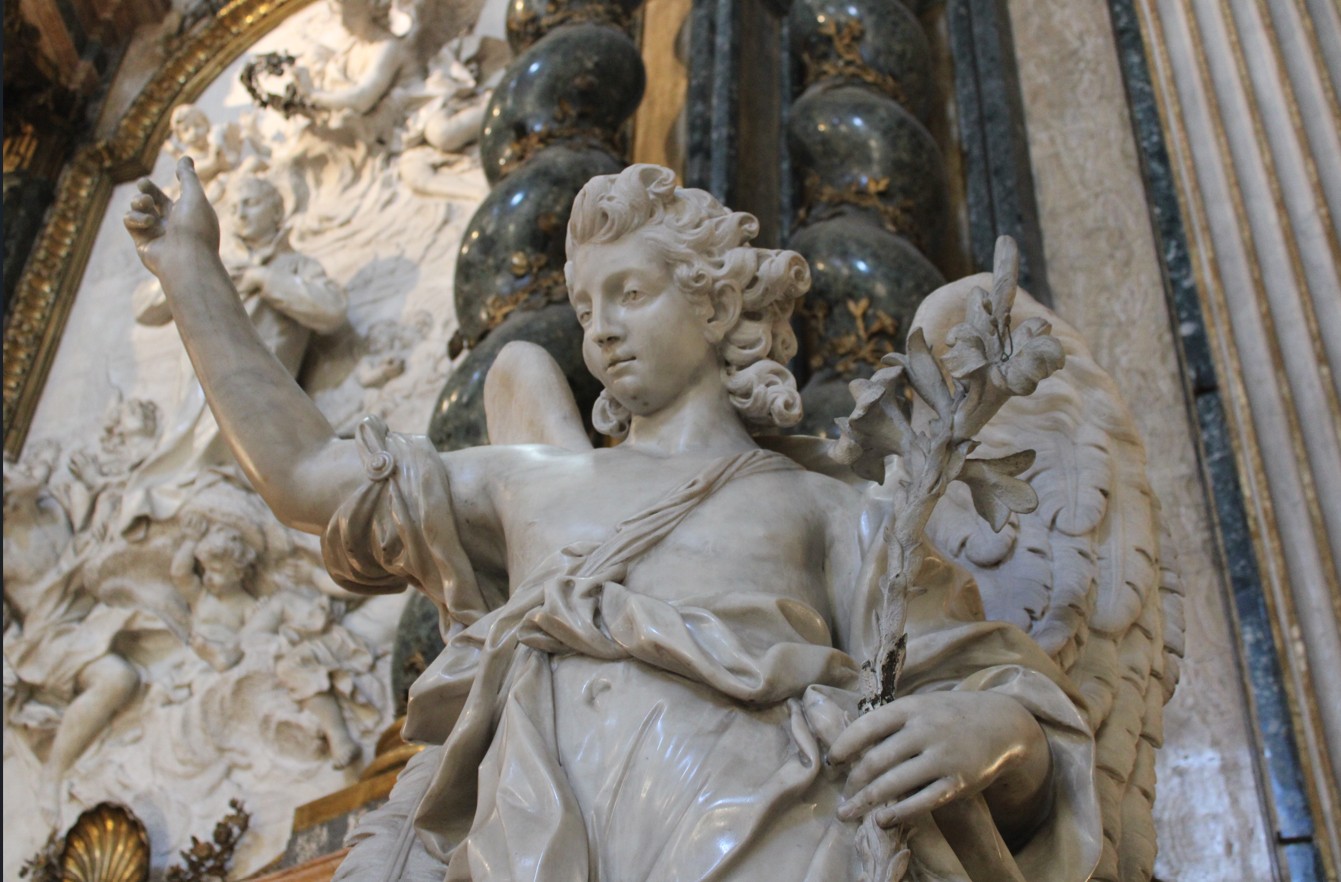
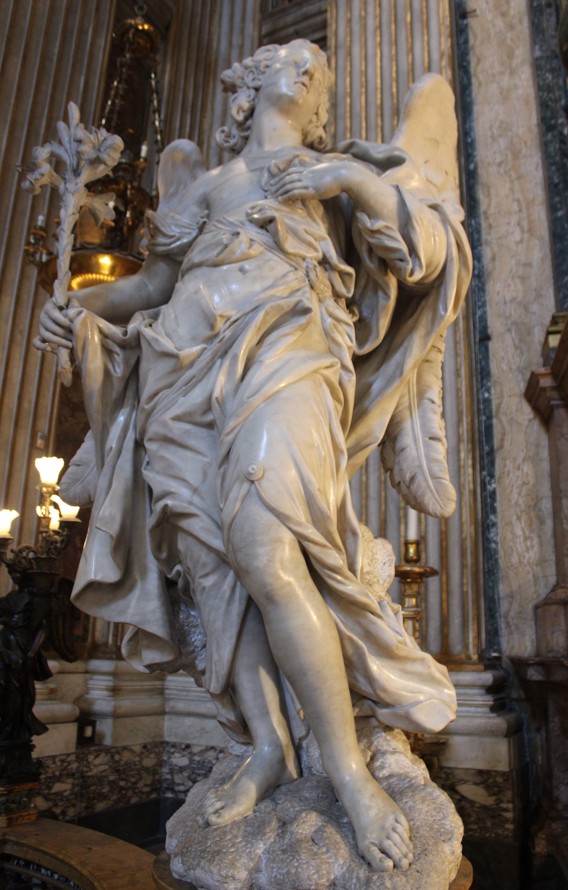
A completare la decorazione dell’altare, lungo la balaustra, si trovano gli angeli con gigli realizzati in marmo intorno al 1748 dallo scultore Bernardino Ludovisi. Le statue, caratterizzate da linee morbide e movimenti sinuosi tipicamente barocchi, mostrano una forte influenza berniniana.
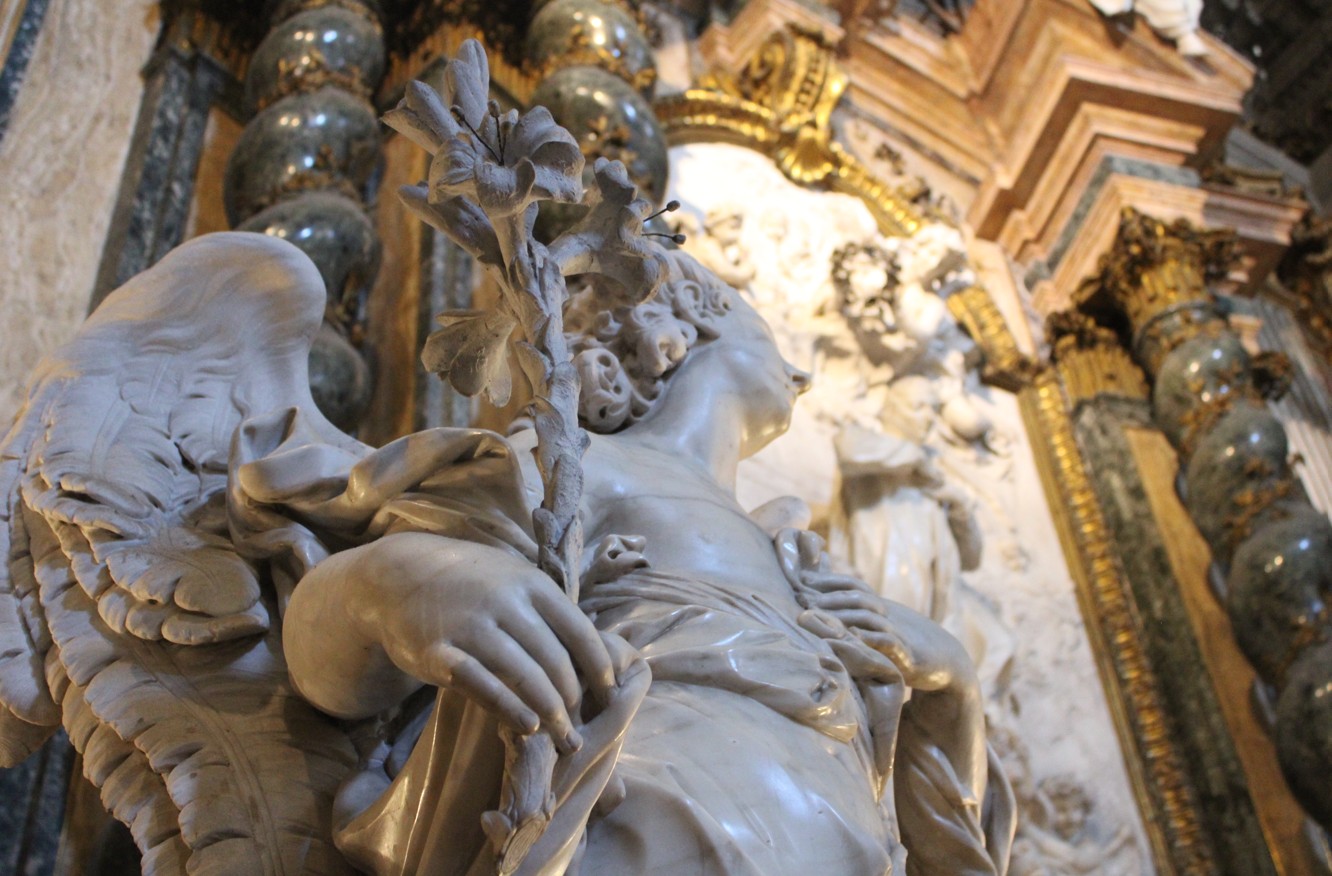
I gigli che gli angeli tengono in mano sono simbolo tradizionale di purezza e della Vergine Maria. In questo contesto assumono un significato ancora più profondo, rappresentando la purezza dell’anima e la devozione religiosa, valori centrali nella spiritualità gesuitica e nella vita di san Luigi Gonzaga.
Chi era lo scultore Bernardino Ludovisi
Di Bernardino Ludovisi si conoscono poche informazioni. Nato probabilmente a Bologna nel 1693, visse gran parte della sua vita a Roma, dove lavorò a importanti progetti scultorei del periodo barocco.
Partecipò alla realizzazione delle sculture della Fontana di Trevi, alle statue in travertino dei santi che coronano Piazza San Pietro e collaborò alla decorazione scultorea della facciata di San Giovanni in Laterano. Negli ultimi anni della sua carriera lavorò per la potente famiglia Colonna, realizzando monumenti funebri e un busto di papa Benedetto XIV. Morì a Roma nel 1749.
Tra le opere più celebri che ha lasciato spiccano proprio i due angeli con gigli destinati all’altare di San Luigi Gonzaga, figure eleganti e dinamiche che sintetizzano lo spirito del barocco romano.
Per il momento il sempre vostro Michelangelo Buonarroti vi saluta dandovi appuntamento ai prossimi post e sui social.
A Baroque masterpiece: the altar of Saint Aloysius Gonzaga in the Church of Sant’Ignazio di Loyola in Rome
Entering the Church of Sant’Ignazio di Loyola, there’s often a long line of visitors waiting to see the vault frescoed by Andrea del Pozzo. A marvelous masterpiece of perspective illusion, there’s no doubt about it, but you just have to raise your eyes to the sky to fully appreciate it, without having to pay the fee to turn on the light around the mirror and see a reflection of the work instead of appreciating its forms directly with your own eyes.
Is a reflection more interesting than the truth of your own gaze? I doubt it. The line is for smartphones, for the videos now seen over and over on social media in which the mirror is framed first, then the vault. “Take me away, originality,” I’d think, cursing through gritted teeth. I never swore in life, but in death, I sometimes did.
Monumental altar in the heart of the Jesuit church
Beyond this premise, beyond the admirable perspective virtuosity of architect and painter Andrea del Pozzo, there is much more to see, such as the extraordinary altar of Saint Aloysius Gonzaga, located in the church’s right transept.
It was built between 1697 and 1699, also to his design.
The altar’s construction was sponsored by Marquis Scipione Lancellotti to honor Saint Aloysius Gonzaga, a young Jesuit who died in 1591 at just 23 years old after contracting the plague while caring for the sick during a terrible epidemic that claimed over 60,000 lives in Rome.
The architecture of Andrea Pozzo and the symbols of the Lancellotti family
The altar presents itself as a grandiose monumental architecture, characterized by two pairs of twisted columns supporting a green marble tympanum. The coats of arms of the Lancellotti family, who commissioned the work, appear on the base of the tympanum.
At the center stands the large marble altarpiece depicting the Glory of Saint Aloysius Gonzaga, sculpted between 1697 and 1699 by the renowned French artist Pierre Legros. The scene celebrates the heavenly ascension of the saint, who is liturgically remembered on June 21st.
The Saint’s Relics and the Precious Lapis Lazuli Urn
Beneath the marble altarpiece lies the precious lapis lazuli urn containing the relics of Saint Aloysius Gonzaga. The urn is embellished with a silver bas-relief by the Genoese sculptor Angelo de Rossi, an element that contributes to making the altar one of the richest and most refined examples of Baroque sacred art in Rome.
On either side of the urn, two angels sculpted by Pierre Legros reinforce the work’s symbolic message. The angel on the right holds a crown of flowers and pushes away a lapis lazuli globe, a symbol of earthly glories, while the angel on the left has a crown at his feet, a reference to the principality that Saint Louis renounced to follow Christ in evangelical poverty.
The Allegories of Purity and Penance
At the top of the tympanum, also sculpted by Pierre Legros, are the allegories of Purity and Penance. These figures symbolize the fundamental virtues of the saint’s life and reflect the spiritual values promoted by the Jesuit order.
The Angels with Lilies by Bernardino Ludovisi
Completing the altar’s decoration, along the balustrade, are the angels with lilies, sculpted in marble around 1748 by the sculptor Bernardino Ludovisi. The statues, characterized by soft lines and sinuous movements typical of the Baroque, show a strong Bernini influence.
The lilies held by the angels are a traditional symbol of purity and the Virgin Mary. In this context, they take on an even deeper meaning, representing the purity of the soul and religious devotion, central values in Jesuit spirituality and in the life of Saint Aloysius Gonzaga.
Who was the sculptor Bernardino Ludovisi?
Little is known about Bernardino Ludovisi. Probably born in Bologna in 1693, he lived most of his life in Rome, where he worked on important sculptural projects of the Baroque period.
He participated in the creation of the sculptures for the Trevi Fountain, the travertine statues of the saints that crown St. Peter’s Square, and collaborated on the sculptural decoration of the façade of St. John Lateran. In the final years of his career, he worked for the powerful Colonna family, creating funerary monuments and a bust of Pope Benedict XIV. He died in Rome in 1749.
Among his most famous works are the two angels with lilies, intended for the altar of San Luigi Gonzaga. These elegant and dynamic figures epitomize the spirit of Roman Baroque.
For now, Michelangelo Buonarroti bids you farewell and invites you to join him in future posts and on social media.

Sostienici – Support Us
Se questo blog ti piace e ti appassiona, puoi aiutarci a farlo crescere sempre più sostenendoci in modo concreto condividendo i post, seguendo le pagine social e con un contributo che ci aiuta ad andare avanti con il nostro lavoro di divulgazione. . ENGLISH: If you like and are passionate about this blog, you can help us make it grow more and more by supporting us in a concrete way by sharing posts, following social pages and with a contribution that helps us to move forward with our dissemination work.
10,00 €
Articoli
Condividi:


Questo sono io





sostienici

Sostienici – Support Us
Se questo blog ti piace e ti appassiona, puoi aiutarci a farlo crescere sempre più sostenendoci in modo concreto condividendo i post, seguendo le pagine social e con un contributo che ci aiuta ad andare avanti con il nostro lavoro di divulgazione. . ENGLISH: If you like and are passionate about this blog, you can help us make it grow more and more by supporting us in a concrete way by sharing posts, following social pages and with a contribution that helps us to move forward with our dissemination work.
€10,00


