

2 febbraio: la Candelora nell’arte
Il giorno della Candelora, celebrato il 2 febbraio, ha ispirato nei secoli alcuni dei più intensi capolavori della storia dell’arte. Conosciuta liturgicamente come Presentazione di Gesù al Tempio, questa festa unisce simbolismo teologico, luce, attesa e rivelazione: elementi che hanno affascinato pittori, mosaicisti e iconografi dall’arte paleocristiana al Barocco.
La Candelora è il momento in cui Cristo viene riconosciuto come “luce che illumina le genti”, e proprio la luce diventa il vero soggetto visivo delle opere che la rappresentano.
Il significato della Candelora e il suo valore iconografico
Secondo la tradizione ebraica, quaranta giorni dopo la nascita di un primogenito, madre e figlio si recavano al Tempio di Gerusalemme per la presentazione del bambino e la purificazione della madre. Il Vangelo di Luca racconta l’incontro con Simeone, che riconosce nel Bambino il Messia.
Dal punto di vista iconografico, questo episodio offre agli artisti una scena ricca di simboli: il Tempio, l’incontro tra vecchio e nuovo, l’attesa che si compie, e soprattutto la luce, resa attraverso l’oro, il chiaroscuro o la centralità del corpo di Cristo.
La Candelora nell’arte paleocristiana e bizantina
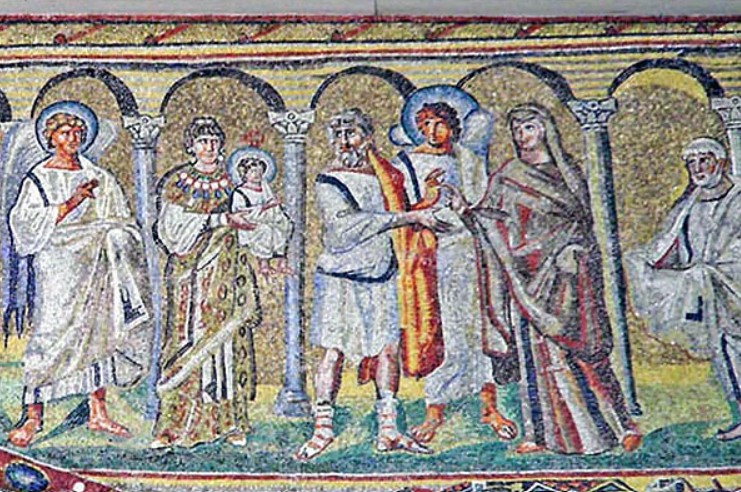
Le prime raffigurazioni della Presentazione al Tempio compaiono nei mosaici paleocristiani e bizantini. Un esempio fondamentale è il ciclo musivo della Basilica di Santa Maria Maggiore a Roma (V secolo), dove la scena è solenne e astratta. I personaggi sono immobili, lo sfondo dorato annulla il tempo storico e la luce non è naturale, ma divina.
Nelle icone bizantine, Simeone riceve il Bambino con mani velate, gesto che sottolinea la sacralità dell’evento. Maria è composta, quasi già consapevole del destino del figlio, mentre la luce è simbolica e totalizzante.
Dal Medioevo al Rinascimento: l’umanizzazione della luce
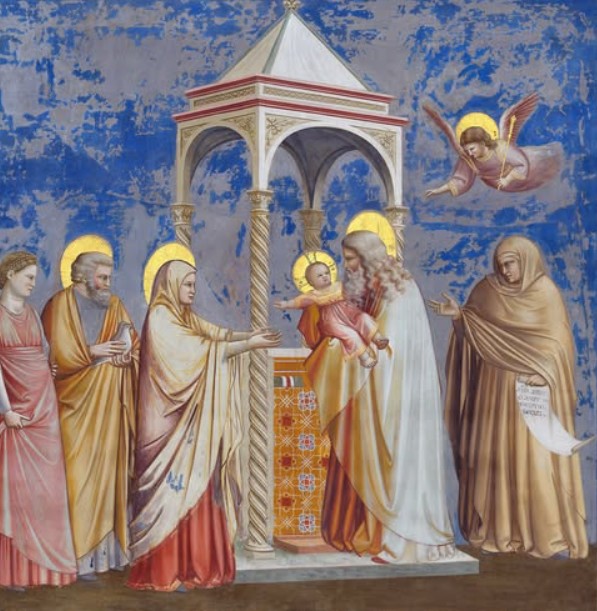
Con il Medioevo, la rappresentazione della Candelora si fa più narrativa. Giotto, nella Cappella degli Scrovegni, introduce emozione e profondità psicologica: il gesto di Simeone diventa affettuoso, lo spazio architettonico del Tempio è riconoscibile e la luce accompagna lo sguardo dello spettatore verso il Bambino.
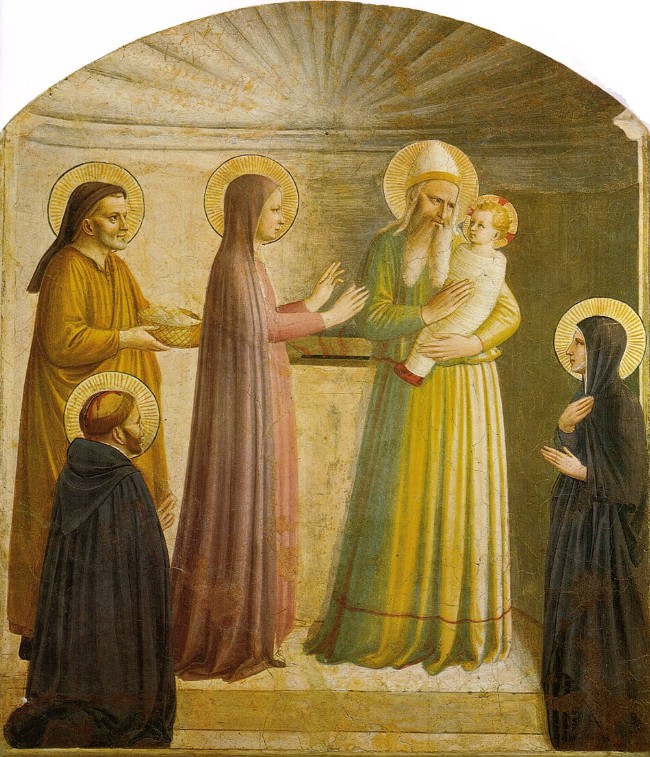
Nel Rinascimento la scena si carica di equilibrio e armonia. Fra Angelico, nel convento di San Marco a Firenze, dipinge una Presentazione intima e contemplativa, dove la luce è morbida, spirituale, quasi silenziosa.
Andrea Mantegna, nella celebre Presentazione al Tempio oggi a Berlino, concentra l’attenzione sui volti serrati e sulle mani, trasformando l’episodio in un incontro carico di tensione emotiva.
La Candelora nel Rinascimento maturo e nel Manierismo
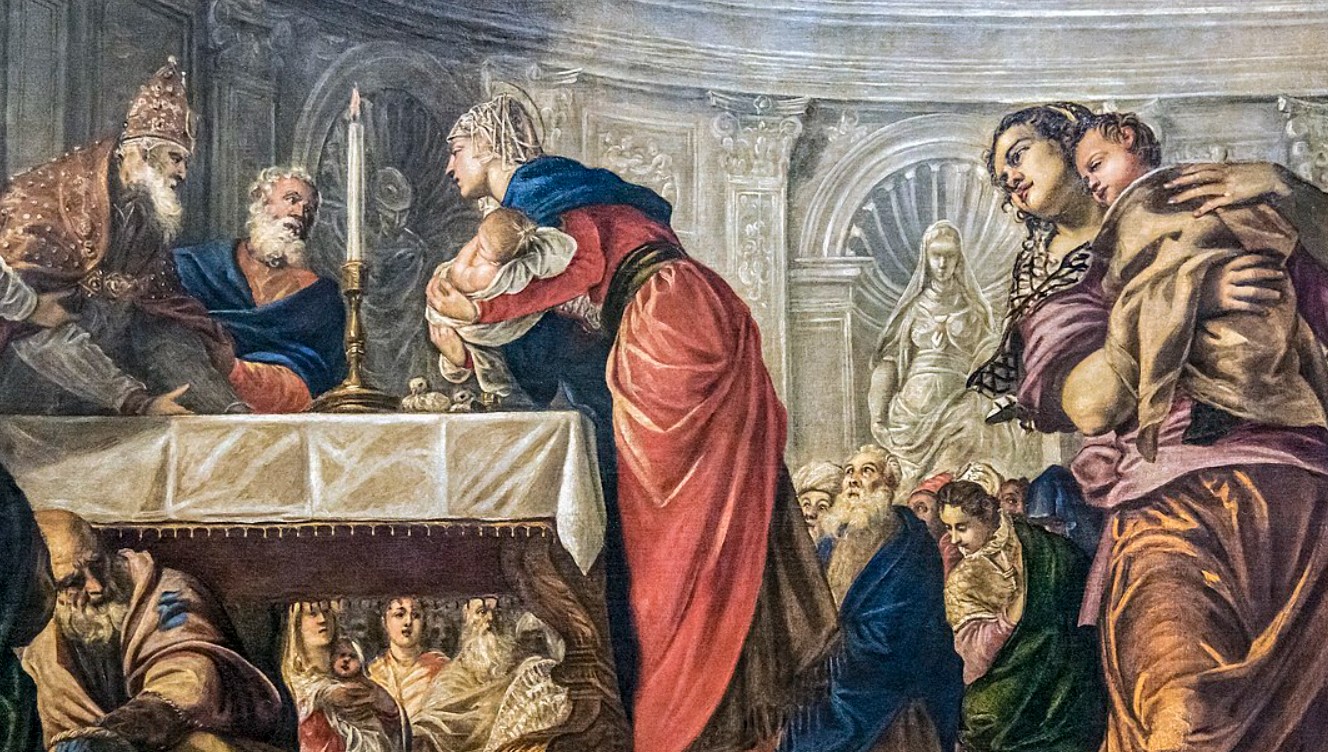
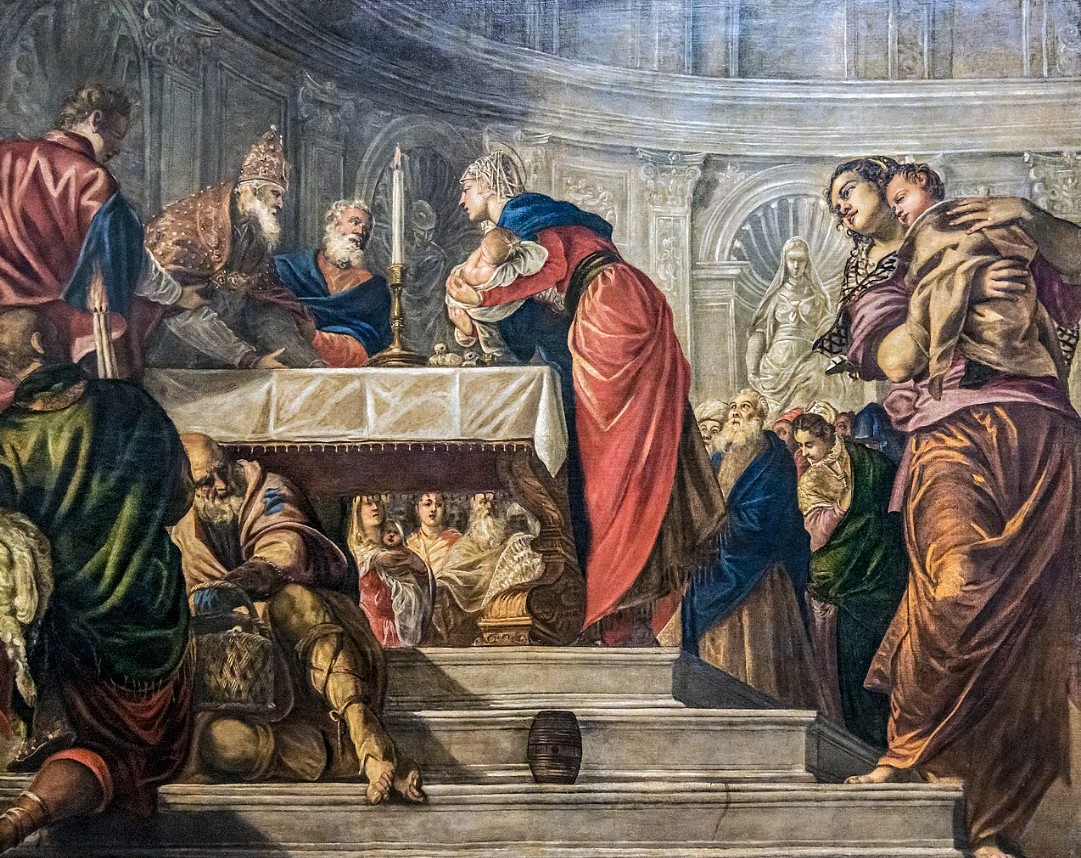
Nel Cinquecento, artisti come Lorenzo Lotto e Tintoretto amplificano il dinamismo della scena. Le architetture diventano complesse, i gesti più teatrali, la luce più drammatica. La Presentazione al Tempio non è più solo un rito, ma un evento che coinvolge lo spazio e lo spettatore.
In queste opere, la luce guida la composizione, isolando il Bambino come fulcro visivo e spirituale, mentre il resto della scena sembra ruotargli attorno.
Il Barocco e la luce della rivelazione
Nel Seicento la Candelora trova una delle sue interpretazioni più potenti. Rembrandt, nella Presentazione al Tempio conservata al Mauritshuis dell’Aia, utilizza il chiaroscuro per trasformare la scena in un’esperienza mistica. Il Tempio è immerso nell’ombra, mentre la luce si concentra sul Bambino, vero centro spirituale e visivo dell’opera.
Qui la Candelora diventa metafora universale: la luce che nasce nel buio, la speranza che si manifesta nel silenzio.
Per il momento il sempre vostro Michelangelo Buonarroti vi saluta dandovi appuntamento ai prossimi post e sui social.
February 2: Candlemas in Art
Candlemas Day, celebrated on February 2, has inspired some of the most powerful masterpieces in the history of art over the centuries. Known liturgically as the Presentation of Jesus at the Temple, this feast combines theological symbolism, light, anticipation, and revelation: elements that have fascinated painters, mosaicists, and iconographers from early Christian art to the Baroque period.
Candlemas is the moment when Christ is recognized as the “light that enlightens the people,” and light itself becomes the true visual subject of the works that depict it.
The Meaning of Candlemas and Its Iconographic Value
According to Jewish tradition, forty days after the birth of a firstborn, mother and son went to the Temple in Jerusalem for the presentation of the child and the purification of the mother. The Gospel of Luke recounts the encounter with Simeon, who recognizes the Child as the Messiah.
Iconographically, this episode offers artists a scene rich in symbols: the Temple, the encounter between old and new, the fulfillment of expectation, and above all, light, rendered through gold, chiaroscuro, and the centrality of Christ’s body.
Candlemas in Early Christian and Byzantine Art
The first depictions of the Presentation at the Temple appear in Early Christian and Byzantine mosaics. A key example is the mosaic cycle in the Basilica of Santa Maria Maggiore in Rome (5th century), where the scene is solemn and abstract. The figures are immobile, the golden background obliterates historical time, and the light is not natural, but divine.
In Byzantine icons, Simeon receives the Child with veiled hands, a gesture that emphasizes the sacredness of the event. Mary is composed, almost already aware of her son’s destiny, while the light is symbolic and all-encompassing.
From the Middle Ages to the Renaissance: The Humanization of Light
During the Middle Ages, the representation of Candlemas becomes more narrative. Giotto, in the Scrovegni Chapel, introduces emotion and psychological depth: Simeon’s gesture becomes affectionate, the architectural space of the Temple is recognizable, and the light guides the viewer’s gaze toward the Child.
During the Renaissance, the scene takes on balance and harmony. Fra Angelico, in the Convent of San Marco in Florence, painted an intimate and contemplative Presentation, where the light is soft, spiritual, almost silent.
Andrea Mantegna, in his famous Presentation at the Temple, now in Berlin, focuses attention on the clenched faces and hands, transforming the episode into an encounter charged with emotional tension.
Candlemas in the High Renaissance and Mannerism
In the 16th century, artists such as Lorenzo Lotto and Tintoretto amplified the dynamism of the scene. The architecture became complex, the gestures more theatrical, the lighting more dramatic. The Presentation at the Temple was no longer simply a ritual, but an event that engaged the space and the viewer.
In these works, light guides the composition, isolating the Child as the visual and spiritual fulcrum, while the rest of the scene seems to revolve around him.
The Baroque and the Light of Revelation
In the 17th century, Candlemas found one of its most powerful interpretations. Rembrandt, in the Presentation in the Temple, now at the Mauritshuis in The Hague, uses chiaroscuro to transform the scene into a mystical experience. The Temple is immersed in shadow, while the light focuses on the Child, the true spiritual and visual center of the work.
Here, Candlemas becomes a universal metaphor: light born in darkness, hope manifested in silence.
For now, Michelangelo Buonarroti bids you farewell and invites you to join him in future posts and on social media.

Sostienici – Support Us
Se questo blog ti piace e ti appassiona, puoi aiutarci a farlo crescere sempre più sostenendoci in modo concreto condividendo i post, seguendo le pagine social e con un contributo che ci aiuta ad andare avanti con il nostro lavoro di divulgazione. . ENGLISH: If you like and are passionate about this blog, you can help us make it grow more and more by supporting us in a concrete way by sharing posts, following social pages and with a contribution that helps us to move forward with our dissemination work.
10,00 €
Articoli

Condividi:


Questo sono io




sostienici

Sostienici – Support Us
Se questo blog ti piace e ti appassiona, puoi aiutarci a farlo crescere sempre più sostenendoci in modo concreto condividendo i post, seguendo le pagine social e con un contributo che ci aiuta ad andare avanti con il nostro lavoro di divulgazione. . ENGLISH: If you like and are passionate about this blog, you can help us make it grow more and more by supporting us in a concrete way by sharing posts, following social pages and with a contribution that helps us to move forward with our dissemination work.
€10,00


