

Giudizio Universale, al via il nuovo restauro: impalcature in Cappella Sistina
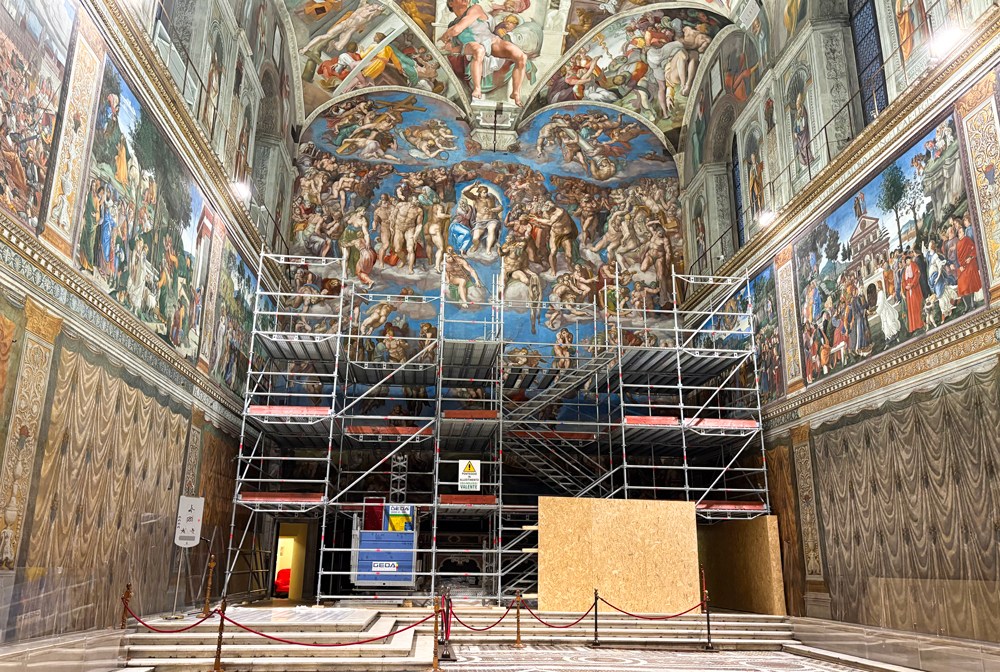
Sono iniziate in Cappella Sistina le operazioni di montaggio delle impalcature per la manutenzione straordinaria del Giudizio Universale che affrescai secoli or sono, capolavoro assoluto della storia dell’arte.
L’intervento, annunciato la scorsa estate dai Musei Vaticani, durerà circa tre mesi e si svolgerà senza chiudere al pubblico la Cappella Sistina.
Perché si interviene, 30 anni dopo il “restauro del secolo”
A poco più di trent’anni dal celebre restauro concluso nel 1994, che riportò alla luce la straordinaria brillantezza cromatica dell’affresco, si è resa necessaria una nuova pulitura.
Secondo il capo restauratore Paolo Violini, sulla superficie si è formata nel tempo una velatura biancastra, causata dal deposito di microparticelle trasportate dai movimenti d’aria. Un fenomeno che ha attenuato i contrasti chiaroscurali e uniformato le cromie originarie.
Cappella Sistina aperta durante i lavori
Durante l’intervento, fedeli e visitatori potranno continuare ad accedere alla Cappella Sistina. I restauratori lavoreranno dietro un telo stampato ad alta definizione che riproduce l’immagine del Giudizio Universale, permettendo di ammirare ai visitatori una sorta di grande stampa fotografica.
Il ponteggio coprirà l’intera parete per consentire un intervento puntuale e sicuro su tutta la superficie dipinta.
Un lavoro di squadra tra scienza e conservazione
Il restauro è affidato al Laboratorio di restauro dei Musei Vaticani, con il supporto del Gabinetto di Ricerche Scientifiche, dell’Ufficio del Conservatore e del Laboratorio fotografico. L’intervento è sostenuto dal Capitolo della Florida dei Patrons of the Arts in the Vatican Museums.

Monitoraggio costante e manutenzione preventiva
Negli anni, gli affreschi della Cappella Sistina sono stati oggetto di un continuo monitoraggio per valutare l’impatto dell’elevato flusso di visitatori. Un programma di manutenzione preventiva ha già interessato lunette michelangiolesche, Pontefici e scene quattrocentesche, con interventi notturni e cadenza annuale.
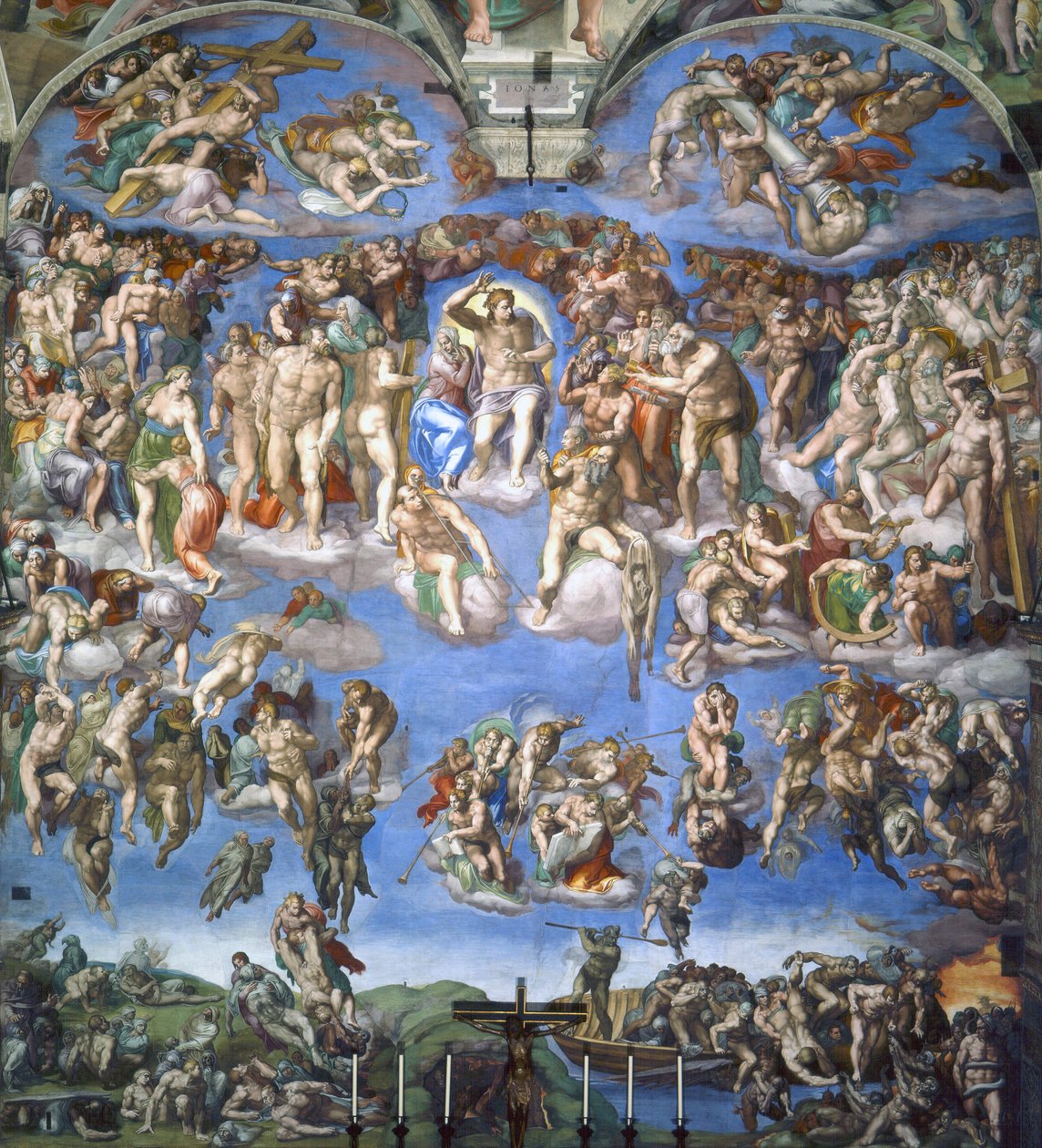
Il Giudizio Universale, come sapete, mi venne commissionato nel 1533 da Clemente VII de’ Medici ma lo iniziai a realizzare sotto il papato di Paolo III farnese, ultimandolo nel 1541 sotto Paolo III.

Occupa una superficie di 180 metri quadrati e conta 391 figure.
Un’opera che, come scrisse Giorgio Vasari, fu capace di “riempire di stupore e meraviglia” già i contemporanei e che oggi torna in restauro per essere restituita, ancora una volta, alla sua piena luminosità.
Per il momento il sempre vostro Michelangelo Buonarroti vi saluta dandovi appuntamento ai prossimi post e sui social.

Last Judgement, New Restoration Begins: Scaffolding in the Sistine Chapel
Scaffolding has begun in the Sistine Chapel for the extraordinary maintenance of the Last Judgement, frescoed centuries ago, an absolute masterpiece in the history of art.
The work, announced last summer by the Vatican Museums, will last approximately three months and will take place without closing the Sistine Chapel to the public.
Why the Work Is Underway: 30 Years After the “Restoration of the Century”
A little over thirty years after the celebrated restoration completed in 1994, which brought to light the fresco’s extraordinary chromatic brilliance, a new cleaning was necessary.
According to lead restorer Paolo Violini, a whitish haze has formed on the surface over time, caused by the deposit of microparticles carried by air movements. This phenomenon has attenuated the chiaroscuro contrasts and evened out the original colors.
Sistine Chapel Open During Restoration
During the restoration, worshippers and visitors will continue to be able to access the Sistine Chapel. Restorers will work behind a high-definition printed canvas reproducing the image of the Last Judgement, allowing visitors to admire a sort of large photographic print.
Scaffolding will cover the entire wall to allow for timely and safe intervention across the entire painted surface.
Teamwork between science and conservation
The restoration is being carried out by the Vatican Museums Restoration Laboratory, with the support of the Scientific Research Cabinet, the Conservator’s Office, and the Photographic Laboratory. The project is supported by the Florida Chapter of the Patrons of the Arts in the Vatican Museums.
Continuous Monitoring and Preventive Maintenance
Over the years, the Sistine Chapel frescoes have been continuously monitored to assess the impact of the high visitor flow. A preventative maintenance program has already covered Michelangelo’s lunettes, the Pontiffs, and 15th-century scenes, with nighttime interventions performed annually.
The Last Judgment, as you know, was commissioned in 1533 by Clement VII de’ Medici, but I began painting it under the papacy of Paul III Farnese, completing it in 1541 under Paul III.
It covers a surface area of 180 square meters and features 391 figures.
A work that, as Giorgio Vasari wrote, “filled its contemporaries with amazement and wonder,” and which is now undergoing restoration to be restored, once again, to its full brilliance.
For now, yours truly, Michelangelo Buonarroti bids you farewell and invites you to join him in future posts and on social media.

Sostienici – Support Us
Se questo blog ti piace e ti appassiona, puoi aiutarci a farlo crescere sempre più sostenendoci in modo concreto condividendo i post, seguendo le pagine social e con un contributo che ci aiuta ad andare avanti con il nostro lavoro di divulgazione. . ENGLISH: If you like and are passionate about this blog, you can help us make it grow more and more by supporting us in a concrete way by sharing posts, following social pages and with a contribution that helps us to move forward with our dissemination work.
10,00 €
Condividi:


Questo sono io




sostienici

Sostienici – Support Us
Se questo blog ti piace e ti appassiona, puoi aiutarci a farlo crescere sempre più sostenendoci in modo concreto condividendo i post, seguendo le pagine social e con un contributo che ci aiuta ad andare avanti con il nostro lavoro di divulgazione. . ENGLISH: If you like and are passionate about this blog, you can help us make it grow more and more by supporting us in a concrete way by sharing posts, following social pages and with a contribution that helps us to move forward with our dissemination work.
€10,00


