
25 giugno 1873: l’inaugurazione del David in bronzo del Papi di Piazzale Michelangelo
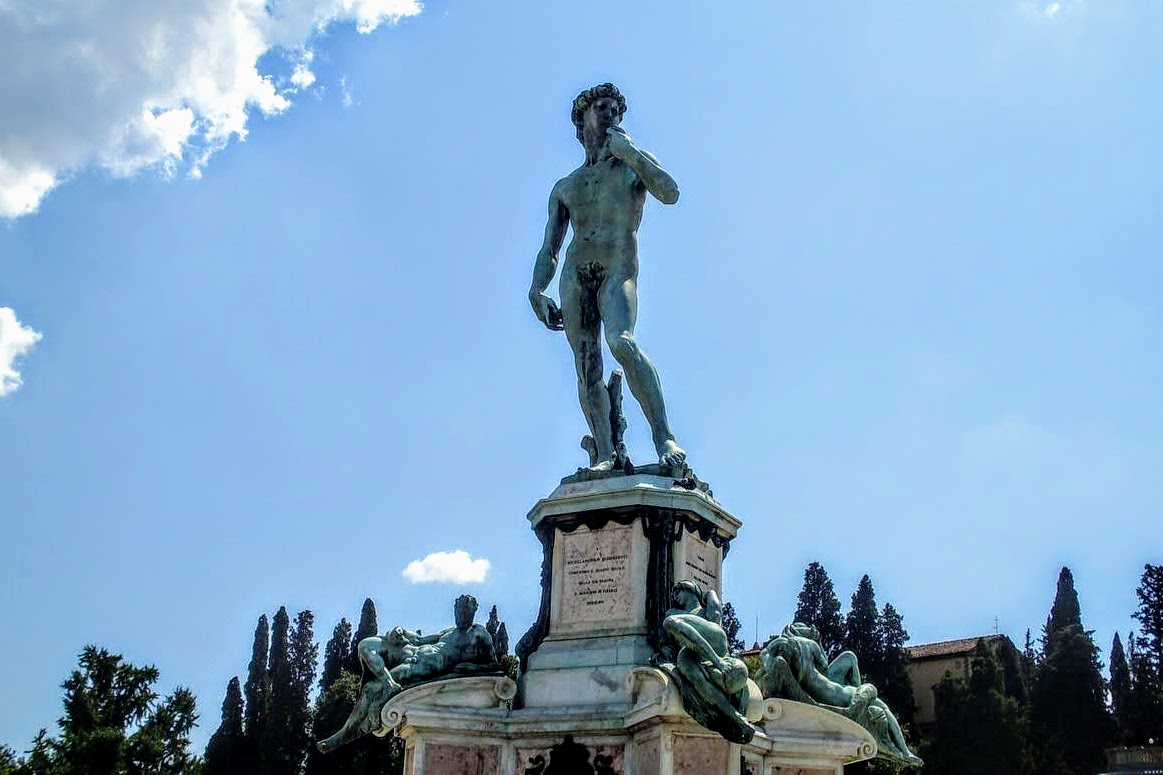
Era il 25 giugno del 1873 quando venne inaugurato il David di Piazzale Michelangelo. Le cronache dell’epoca riportano che servirono nove paia di buoi per trasportare l’opera fin lassù, percorrendo il Viale dei Colli.
Il David fu collocato al centro del piazzale, al di sopra del piedistallo mentre le copie delle quattro ore del giorno sempre realizzate in bronzo, furono sistemate ai suoi piedi.
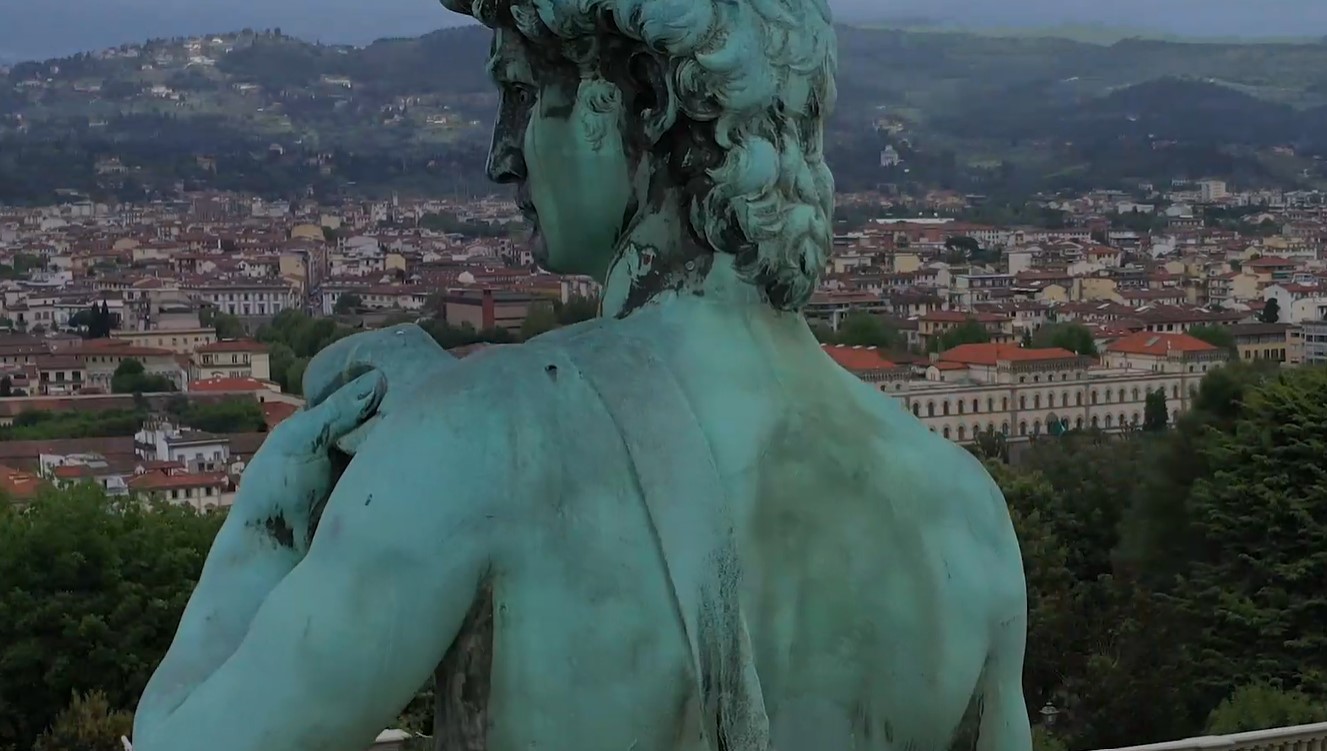
La realizzazione del David in bronzo ha alle spalle però una lunga e travagliata storia che ebbe inizio nel 1846. Infatti, in seguito al rescritto di Leopoldo II di quello stesso anno, Clemente Papi fu incaricato di realizzare un calco sul David. Detta così sembra una cosa molto rischiosa per l’opera originale ma non troppo complessa: nient’affatto. Era sia rischiosa che difficilissima.
Il calco venne fatto addirittura in 1500 pezzi e il Papi lavorò diversi mesi a quel progetto, coadiuvato da numerosi aiuti. Era necessario infatti calcolare minuziosamente il ritiro del gesso una volta essiccato e la dilatazione dei vari pezzi affinché non provocassero danni al marmo del David, di per sé già compromesso dalla corrosione degli agenti atmosferici e non solo.
Finalmente il 31 dicembre del 1847 la forma fu portata a termine e il Papi ricevette 100 zecchini per quell’operazione “di tanto rischio e tale difficoltà per essere il gigantesco David del Buonarroti, tutto isolato, con appena altri sostegni che le nude gambe, e per sovrappiù una di queste incrinate” .
Successivamente, nel 1866, Clemente Papi realizzò una fusione in bronzo sul calco originale del David. Quando l’opera originale già aveva preso la strada per la Galleria dell’Accademia, al suo posto venne fatta sistemare dall’amministrazione comunale di quel periodo, quella copia in bronzo ma i fiorentini però non ne vollero sapere.
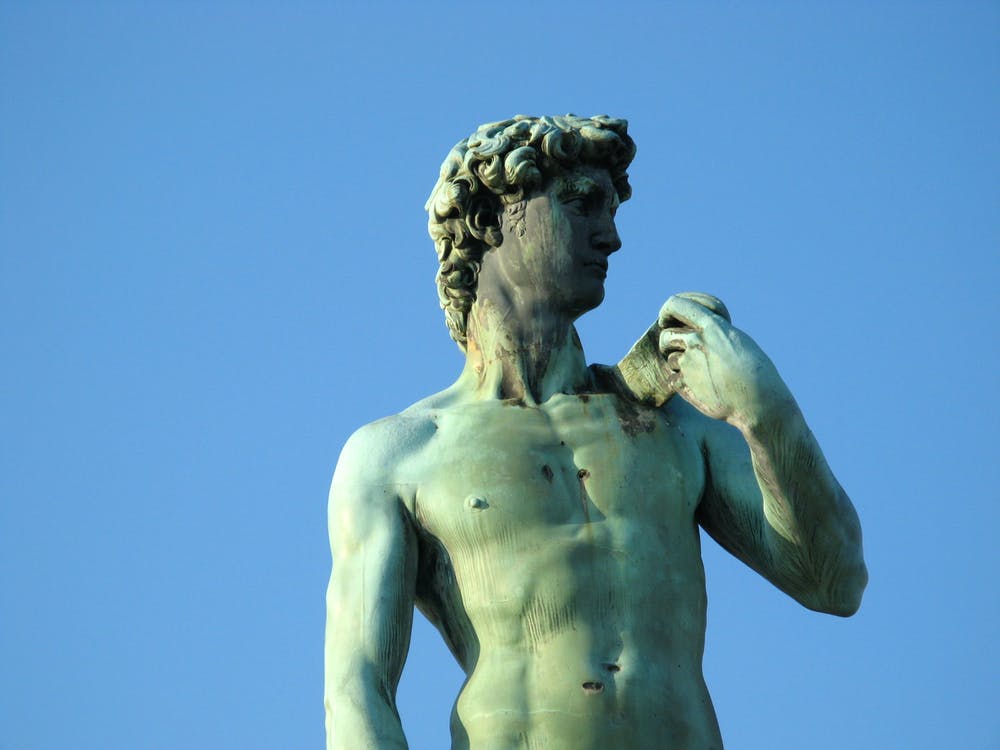
Il nuovo David doveva essere uguale in tutto e per tutto all’originale, materiale compreso. Il colore del bronzo era un cazzotto in un occhio per tutti coloro che erano avvezzi a guardare i riverberi del marmo.
Così all’amministrazione comunale non rimase altro che fare portare quella copia fino a Piazzale Michelangelo ancora in fase di realizzazione, su progetto di Giuseppe Poggi.
Per il momento il sempre vostro Michelangelo Buonarroti vi saluta dandovi appuntamento ai prossimi post e sui social.
June 25, 1873: the inauguration of Papi’s bronze David in Piazzale Michelangelo
It was June 25, 1873 when the David in Piazzale Michelangelo was inaugurated. The chronicles of the time report that nine pairs of oxen were needed to transport the work up there, along the Viale dei Colli.
The David was placed in the center of the square, above the pedestal while the copies of the four hours of the day, also made in bronze, were placed at its feet.
The creation of the bronze David, however, has a long and troubled history that began in 1846. In fact, following the rescript of Leopold II of that same year, Clemente Papi was commissioned to make a cast of the David. Put like that, it seems like a very risky thing for the original work but not too complex: not at all. It was both risky and very difficult.
The cast was made in 1500 pieces and Papi worked on that project for several months, aided by numerous assistants. It was in fact necessary to meticulously calculate the shrinkage of the plaster once dried and the expansion of the various pieces so that they would not cause damage to the marble of the David, which was already compromised by corrosion from atmospheric agents and more.
Finally, on December 31, 1847, the mold was completed and Papi received 100 zecchini for that operation “of such risk and such difficulty for being the gigantic David of Buonarroti, all isolated, with only other supports than the bare legs, and to top it all one of these cracked”.
Later, in 1866, Clemente Papi made a bronze casting on the original cast of the David. When the original work had already taken the road to the Galleria dell’Accademia, the municipal administration of that time had that bronze copy placed in its place, but the Florentines didn’t want to know about it.
The new David had to be identical in every way to the original, including the material. The color of the bronze was a punch in the eye for anyone who was accustomed to looking at the reflections of the marble.
So the municipal administration had no choice but to have that copy brought to Piazzale Michelangelo, still under construction, designed by Giuseppe Poggi.
For the moment, yours truly Michelangelo Buonarroti bids you farewell, making an appointment to see you in the next posts and on social media.

Sostienici – Support Us
Se questo blog ti piace e ti appassiona, puoi aiutarci a farlo crescere sempre più sostenendoci in modo concreto condividendo i post, seguendo le pagine social e con un contributo che ci aiuta ad andare avanti con il nostro lavoro di divulgazione. . ENGLISH: If you like and are passionate about this blog, you can help us make it grow more and more by supporting us in a concrete way by sharing posts, following social pages and with a contribution that helps us to move forward with our dissemination work.
10,00 €
Articoli
Condividi:


Questo sono io





sostienici

Sostienici – Support Us
Se questo blog ti piace e ti appassiona, puoi aiutarci a farlo crescere sempre più sostenendoci in modo concreto condividendo i post, seguendo le pagine social e con un contributo che ci aiuta ad andare avanti con il nostro lavoro di divulgazione. . ENGLISH: If you like and are passionate about this blog, you can help us make it grow more and more by supporting us in a concrete way by sharing posts, following social pages and with a contribution that helps us to move forward with our dissemination work.
€10,00


