
Michelangelo 550: Io al cospetto di Giulio II a Bologna, nel dipinto di Fanfani
In occasione dei 550 anni dalla mia nascita, oggi voglio proporvi il dipinto a olio su tela che raffigura me al cospetto di papa Giulio II a Bologna, realizzato da Enrico Fanfani nel 1875.
L’artista volle raccontare attraverso la sua opera, un momento assai singolare della mia vita. Quando papa Giulio II si negò nel ricevermi dopo che avevo condotto a Roma un gran numero di marmi bianchissimi da Carrara per il progetto della sua tomba, me ne andai a Firenze in fretta e furia.
“Voi direte al Papa, che se da qui inanzi mi vorà, mi cercherà altrove”.
Il papa, ricevuta la notizia della mia fuga, mi mandò alle calcagna i suoi corrieri ma mi raggiunsero solo a Poggibonsi, territorio sotto la giurisdizione fiorentina.
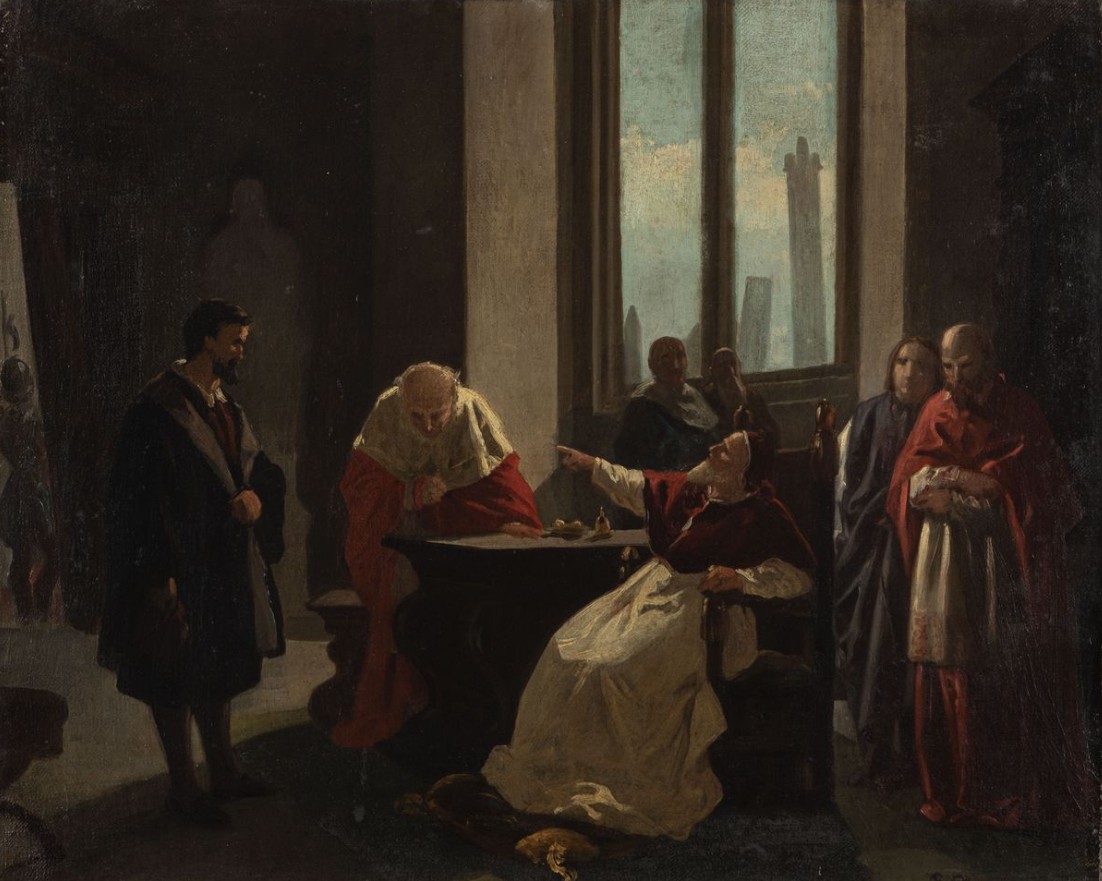
Per mesi rimasi a Firenze ma alla fine, per evitare lo scontro diplomatico tra Firenze e il papato, su esortazione del gonfaloniere della Repubblica Pier Soderini, mi toccò controvoglia ad andare a chiedere perdono al papa a Bologna. Giulio II si trovava lì perché da poco aveva conquistato la città sottraendola ai Bentivoglio.
Così il 27 novembre del 1506 mi presentai al suo cospetto. Nel dipinto, oltre la finestra, si vedono infatti le torri della città.
Il mio caro amico Giorgio Vasari riportò le parole che il papa pronunciò quando mi vide: “In cambio di venire tu a trovare noi, tu hai aspettato che venghiamo a trovar te?” facendo riferimento al fatto che avesse atteso il pontefice più vicino a Firenze.
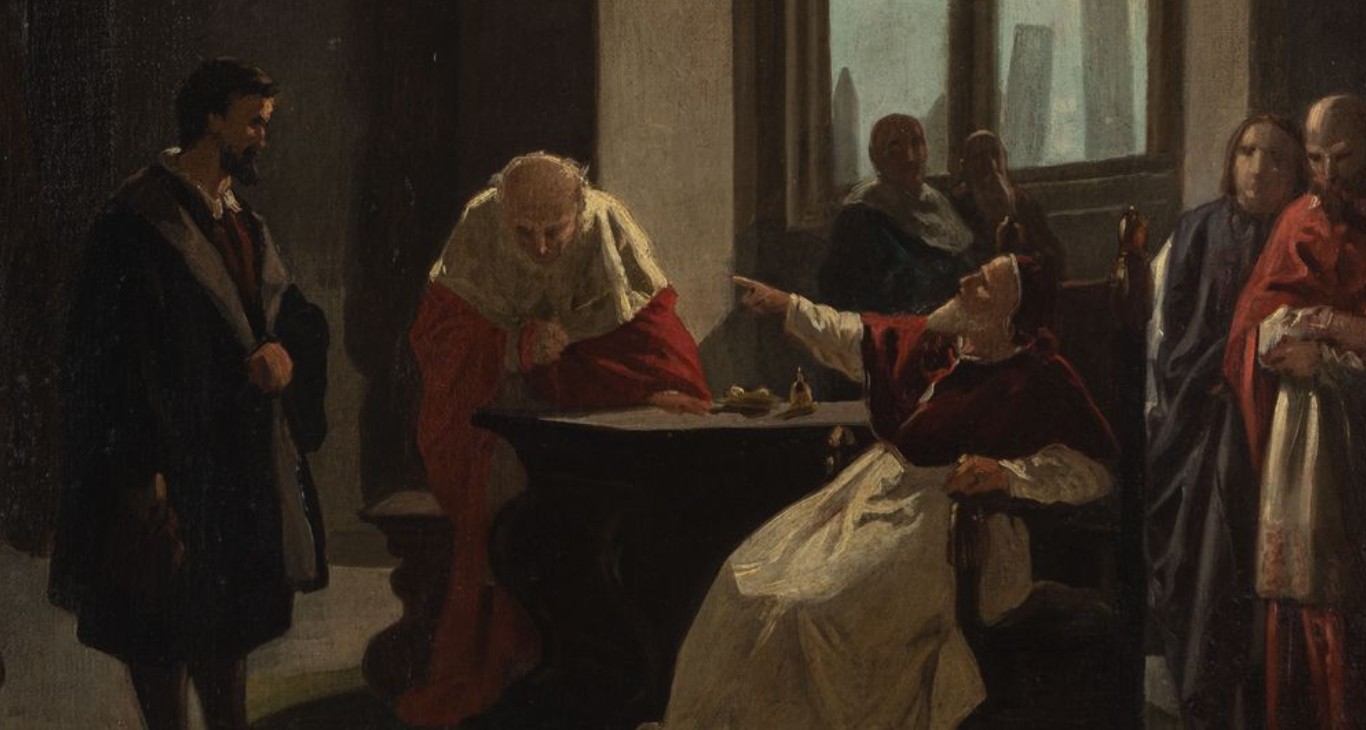
Osservate il braccio teso del pontefice e me in piedi, con il cappello levato dal capo ma non in ginocchio. Mentre Fanfani dipinse i due cardinali presenti col capo chinato per rispetto al Pontefice, mentre io rimango a testa alta.
Fanfani fu un esponete del romanticismo storico italiano e alcune sue opere sono custodite alla Galleria di Arte Moderna a Firenze. Il dipinto che però ritrae me appartiene a una collezione privata.
A partire dagli anni Quaranta dell’Ottocento, Fanfani si discostò dal purismo toscano avvicinandosi molto di più alle sperimentazioni degli artisti del Caffè Michelangelo.
E’ ben evidente infatti la stesura dei colori a macchie e la costruzione dei chiaroscuri nei volti e sul pavimento attraverso l’utilizzo del bianco.
In basso a destra l’artista volle lasciare la sua firma: E. Fanfani.
Per il momento il sempre vostro Michelangelo Buonarroti vi saluta dandovi appuntamento ai prossimi post e sui social.
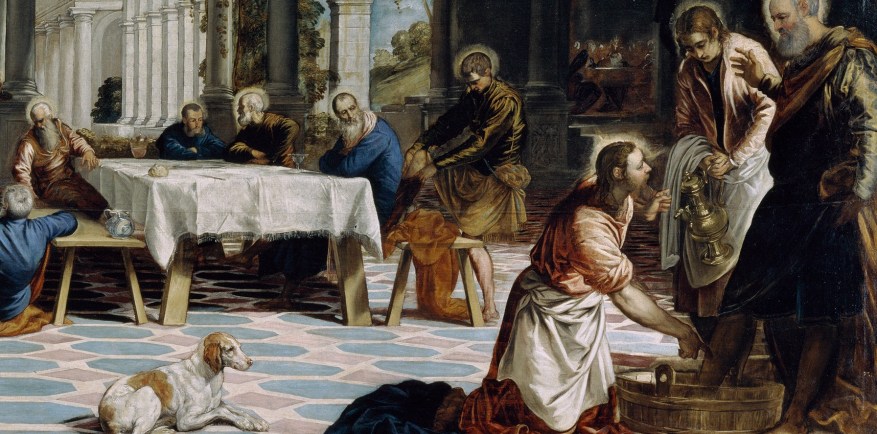
- La Lavanda dei Piedi di Tintoretto: Il Capolavoro Veneziano al Prado
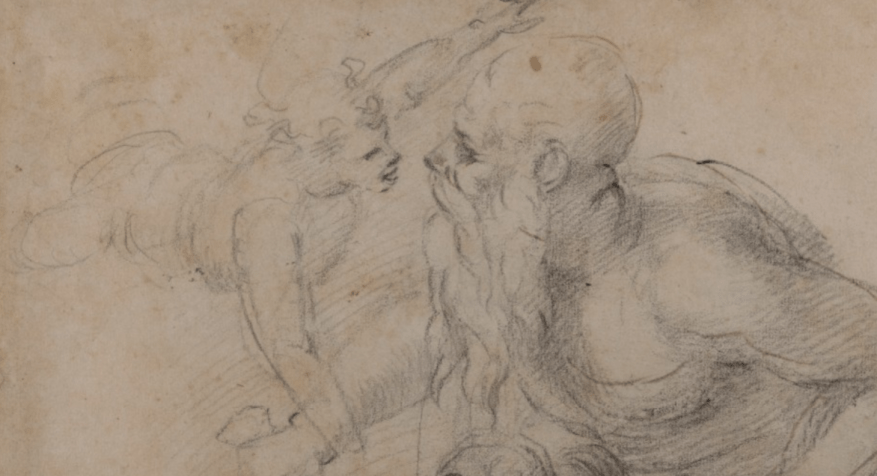
- Il Sacrificio di Isacco e quel momento tra la vita e la morte
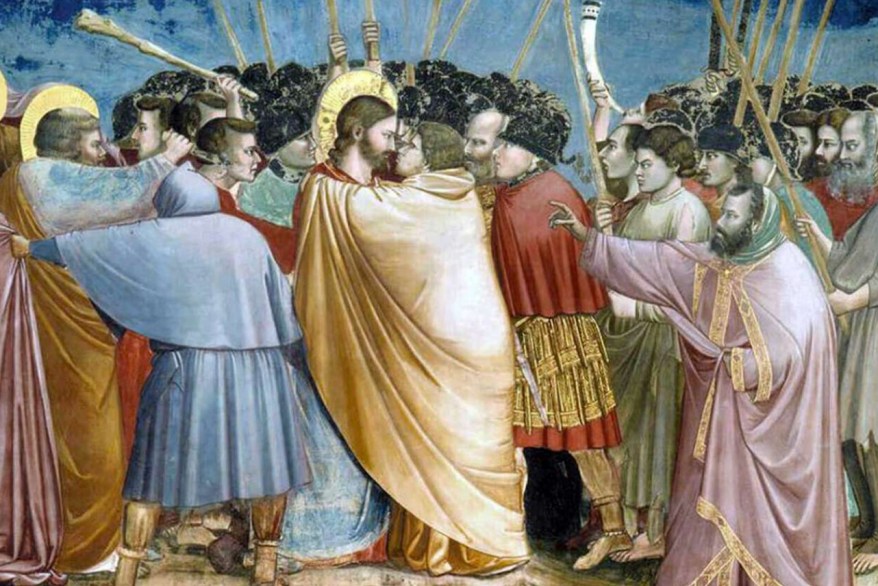
- Mercoledì Santo: il giorno del tradimento di Giuda affrescato da Giotto
- 31 marzo 1889: inaugurata la Torre Eiffel tra critiche feroci e un destino inaspettato
- Sodoma in mostra a Torino: il Rinascimento al Museo Accorsi-Ometto
Michelangelo 550: Me in the presence of Julius II in Bologna, in the painting by Fanfani
On the occasion of the 550th anniversary of my birth, today I want to propose to you the oil painting on canvas depicting me in the presence of Pope Julius II in Bologna, made by Enrico Fanfani in 1875.
The artist wanted to tell through his work, a very singular moment of my life. When Pope Julius II refused to receive me after I had brought to Rome a large number of very white marbles from Carrara for the project of his tomb, I left for Florence in a hurry.
“You will tell the Pope, that if he wants me from here on, he will look for me elsewhere”.
The Pope, having received the news of my escape, sent his couriers after me but they only reached me in Poggibonsi, an area under Florentine jurisdiction.
I stayed in Florence for months but in the end, to avoid a diplomatic clash between Florence and the papacy, at the urging of the Gonfaloniere of the Republic Pier Soderini, I reluctantly had to go and ask the Pope for forgiveness in Bologna. Julius II was there because he had recently conquered the city from the Bentivoglio family.
So on November 27, 1506, I presented myself before him. In the painting, beyond the window, you can see the towers of the city.
My dear friend Giorgio Vasari reported the words that the Pope said when he saw me: “In exchange for coming to visit us, did you wait for us to come to visit you?” referring to the fact that he had waited for the pontiff closest to Florence.
Look at the pontiff’s outstretched arm and me standing, with my hat off my head but not kneeling. While Fanfani painted the two cardinals present with their heads bowed out of respect for the Pontiff, he shows me with my head held high.
Fanfani was an exponent of Italian historical romanticism and some of his works are kept at the Galleria di Arte Moderna in Florence. However, the painting that portrays me belongs to a private collection.
Starting in the 1840s, Fanfani distanced himself from Tuscan purism, moving much closer to the experiments of the artists of Caffè Michelangelo.
The application of the colors in spots and the construction of the chiaroscuro in the faces and on the floor through the use of white are clearly evident.
At the bottom right, the artist wanted to leave his signature: E. Fanfani.
For the moment, the ever-your Michelangelo Buonarroti bids you farewell, making an appointment to see you in the next posts and on social media.

Sostienici – Support Us
Se questo blog ti piace e ti appassiona, puoi aiutarci a farlo crescere sempre più sostenendoci in modo concreto condividendo i post, seguendo le pagine social e con un contributo che ci aiuta ad andare avanti con il nostro lavoro di divulgazione. . ENGLISH: If you like and are passionate about this blog, you can help us make it grow more and more by supporting us in a concrete way by sharing posts, following social pages and with a contribution that helps us to move forward with our dissemination work.
10,00 €
Condividi:


Questo sono io





sostienici

Sostienici – Support Us
Se questo blog ti piace e ti appassiona, puoi aiutarci a farlo crescere sempre più sostenendoci in modo concreto condividendo i post, seguendo le pagine social e con un contributo che ci aiuta ad andare avanti con il nostro lavoro di divulgazione. . ENGLISH: If you like and are passionate about this blog, you can help us make it grow more and more by supporting us in a concrete way by sharing posts, following social pages and with a contribution that helps us to move forward with our dissemination work.
€10,00


