
Pietà Vaticana: nuovi vetri alti 6 metri. Maggiore visibilità e sicurezza
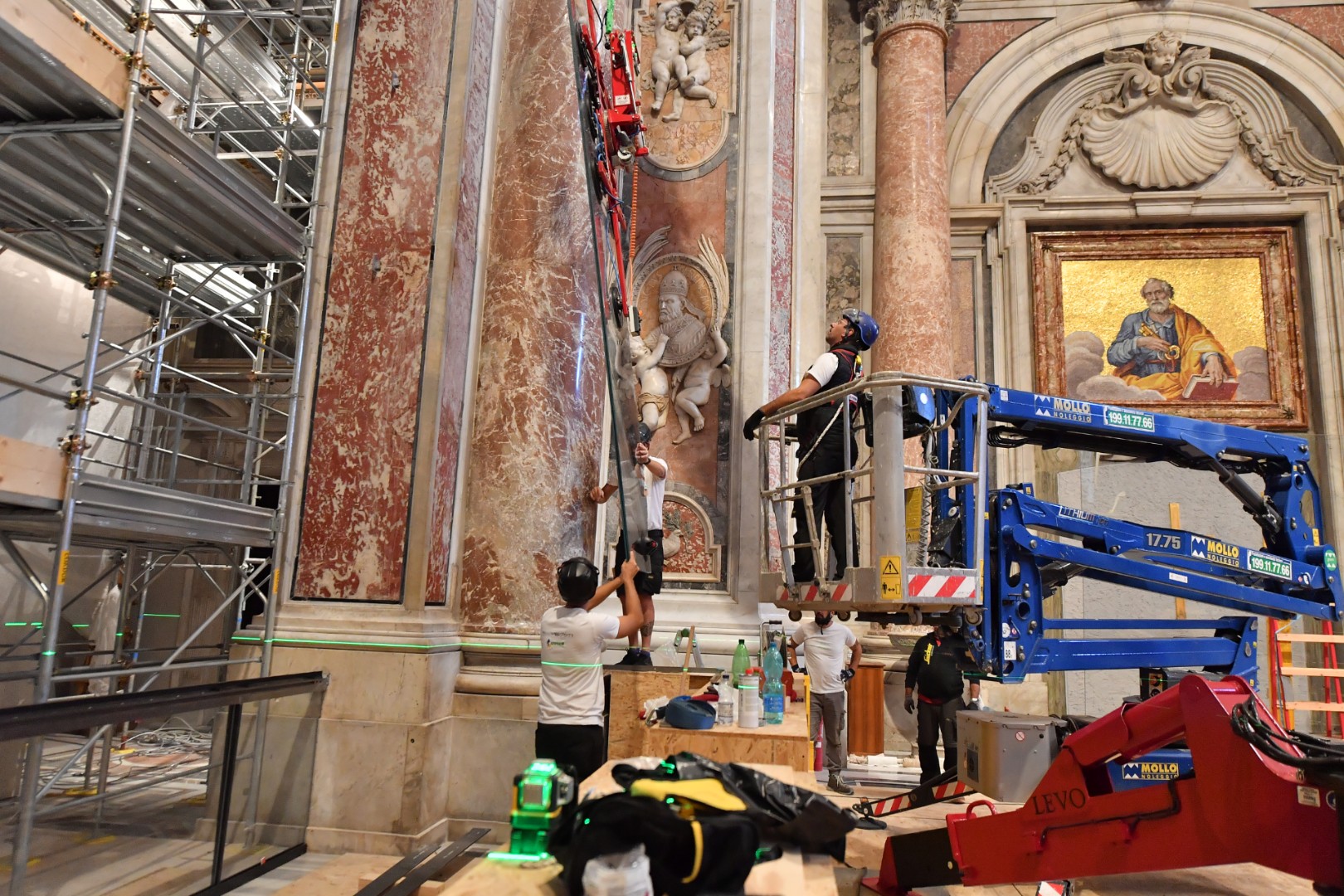
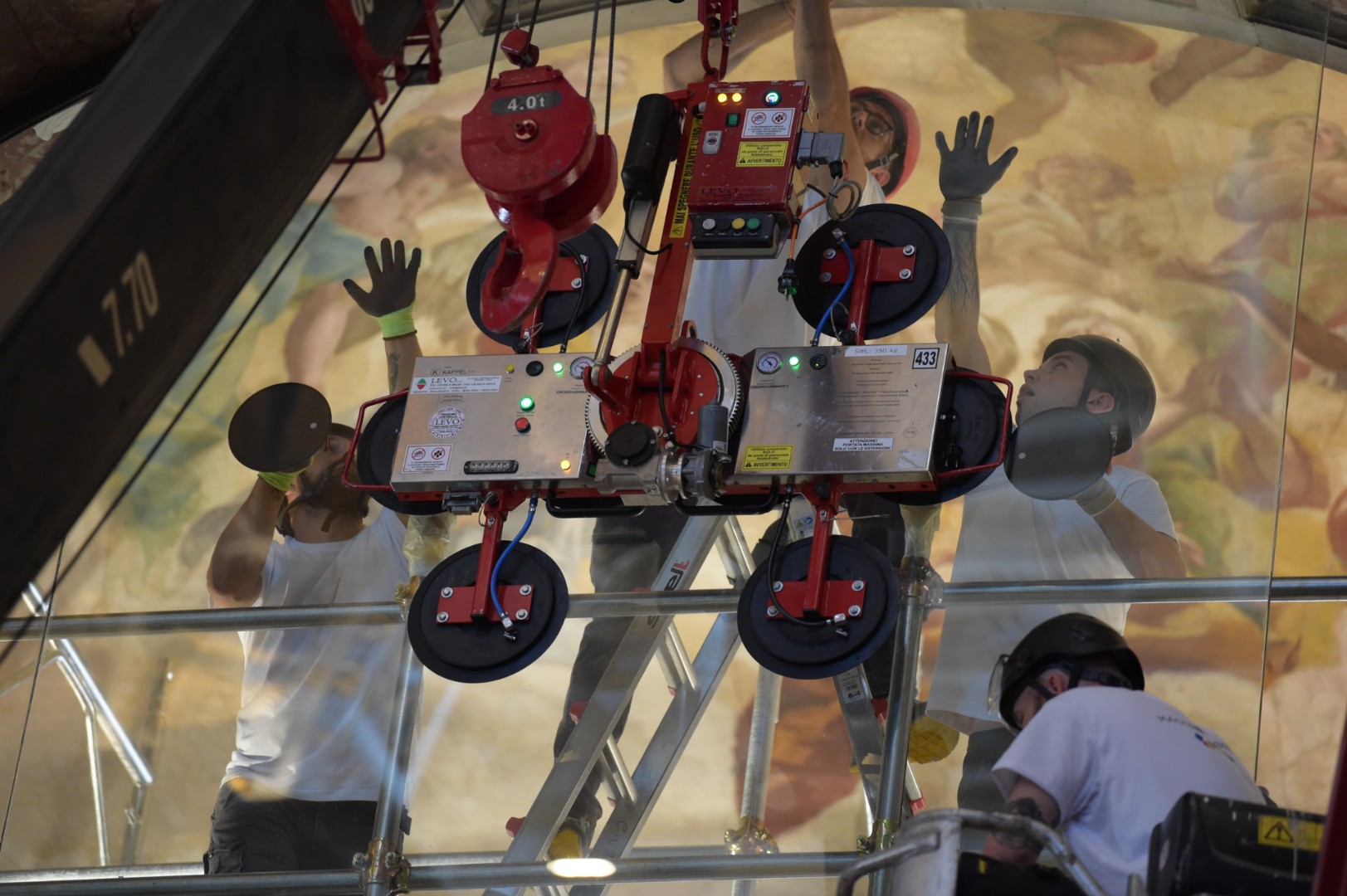
Sono giunti al termine i lavori che negli ultimi mesi hanno celato la Pietà Vaticana al pubblico. La nuova barriera protettiva che sostituisce la precedente, è formata da nove vetri antiproiettile e antisfondamento di alta qualità, caratterizzati da maggiore trasparenza.
L’intervento è stato eseguito nell’ambito dei lavori messi programmati all’interno della Fabbrica di San Pietro in occasione del sempre più prossimo Giubileo 2025.
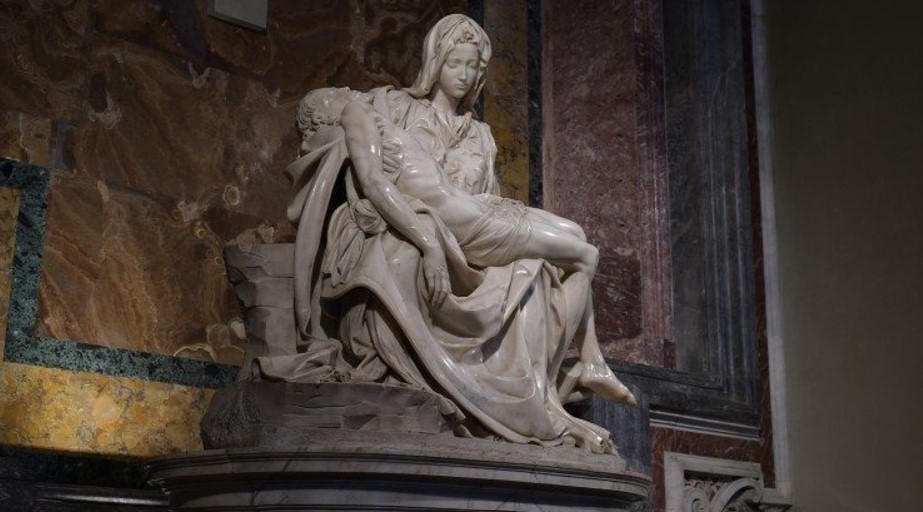
I vetri che proteggevano la Pietà fino a qualche mese fa, erano stati installati nel 1973, all’indomani dell’attentato perpetrato da Lazlo Toth alla mia opera, la domenica di Pentecoste del 21 maggio del 1972.
La nuova vetrata è stata creata mediante l’assemblaggio di nove vetri di altissima qualità e massima trasparenza, progettata da un team di esperti italiani dopo approfonditi studi.
Ci sono voluti poco meno di sei mesi per collocare i cristalli protettivi e per migliorare notevolmente il sistema di sicurezza. Il cantiere è stato smantellato e la mia Pietà può essere apprezzata ancora una volta dai fedeli.
“In un contesto geopolitico mondiale oggi estremamente delicato – ha dichiarato il cardinale Mauro Gambetti, arciprete della Basilica e presidente della Fabbrica di San Pietro – viene restituita ai fedeli la possibilità di contemplare la Madre che porge all’umanità il Figlio di Dio, deposto dalla Croce e vivo per la potenza della Risurrezione. L’offerta della Vergine apre la via per la riconciliazione dei cuori e la costruzione di percorsi di fraternità e di pace”.

Le caratteristiche dei nuovi vetri
Dopo cinquant’anni dalla loro messa in posa, i vetri precedenti avevano bisogno di essere sostituiti soprattutto per una questione estetica. Nel corso degli anni il materiale si era naturalmente opacizzato ed erano insorte problematiche di tipo statico.
L’ingegnere Alberto Capitanucci, responsabile dell’area tecnica della Fabbrica di San Pietro spiega che gli attuali vetri sono più trasparenti delle precedenti ma hanno anche un maggiore spessore.
Le vetrate sostituite. infatti, avevano uno spessore pari a 19 millimetri con una parte più alta di soli 11 millimetri mentre le attuali sono di 24,5 millimetri.
Oltre ad essere stratificate, le lastre attuali sono state anche indurite termicamente e possono reggere ad attacchi manuali pari a 26 colpi di martello o ascia avendo un valore prossimo a P6B secondo la norma EN 356 mentre la resistenza ai proiettili supera il livello BR2/S, ovvero, sono in grado di sostenere l’attacco di pistole calibro 9.
La vetrata, compresi gli elementi strutturali in acciaio che la integrano, ha superficie di circa 50 metri quadrati e un peso totale di 3400 chili.
La dimensione massima delle lastre impiegate passa dai circa 2,5 metri di larghezza per 3,5 di altezza dell’impianto precedente, ai 3,1 metri di larghezza per quasi 6 di altezza della nuova soluzione, con un incremento della superficie di vista libera di oltre il 100%. Le lastre precedenti erano 12 mentre adesso sono solo 9 ma più ampie.
La nuova vetrata è stata progettata per riuscire a sostenere senza difficoltà azioni ambientali importanti come le pressioni e le depressioni insistenti sull’intera superficie, sisma e spinta della folla sul parapetto con più che ampi margini di sicurezza.
I sostenitori del progetto
La sostituzione della vecchia vetrata con cristalli di nuova generazione è stato ideato e sostenuto grazie alle donazioni di un gruppo di imprenditori piemontesi e professionisti del settore come Banca Sella – Sanlorenzo Spa, Brenntag Spa e Inalpi Spa, Costruzioni Generali Gilardi Spa e MdM Srl – Studio Miroglio e Lupica architetti associati, Romoli Venturi & partners, in collaborazione con Oxlip, Sagep Editori, Magon Sistemi Spa, Mollo Noleggio e con il patrocinio di Confindustria Piemonte.
Nuova luce
Rinnovato totalmente anche il sistema di illuminazione.
La Pietà e la Cappella sono stati stata dotati di un moderno impianto, completamente rinnovato con tecnologie e componenti di ultima generazione forniti dall’azienda iGuzzini.
La stessa ditta già nel 2017 propose e realizzò l’impianto fino ad oggi esistente ma quello attuale risulta meno invasivo ed è stato installato solo dopo accurati studi dell’illuminazione di spazi ed ambienti.
Ulteriori interventi nella Cappella
Grazie ai ponteggi presenti nella Cappella, la Fabbrica di San Pietro ha eseguito anche altri interventi importanti come il restauro sulle superfici affrescate della Cappella della Pietà, fra l’altro tra le pochissime presenti in Basilica, realizzate tra il 1629 e il 1632 dal pittore Giovanni Lanfranco.
Gli affreschi si trovano sulla volta della cappella e raffigurano episodi della Passione di Cristo. Al centro l’artista dipinse l’esaltazione della Santa Croce fra un nugolo di angeli. La caratteristica principale di questo affresco è il realismo delle figure.
Si è inoltre provveduto a mettere in sicurezza la vetrata centinata posta sul fondo della medesima cappella.
Per il momento il sempre vostro Michelangelo Buonarroti vi saluta dandovi appuntamento ai prossimi post e sui social.

Vatican Pietà: new 6-meter-high glass. Greater visibility and safety
The work that in recent months has hidden the Vatican Pietà from the public has come to an end. The new protective barrier that replaces the previous one is made up of nine high-quality bulletproof and shatterproof glass panels, characterized by greater transparency.
The intervention was carried out as part of the work scheduled inside the Fabbrica di San Pietro for the ever-closer Jubilee 2025.
The glass panels that protected the Pietà until a few months ago were installed in 1973, in the aftermath of the attack perpetrated by Lazlo Toth on my work, on Pentecost Sunday, May 21, 1972.
The new glass panel was created by assembling nine very high-quality, highly transparent glass panels, designed by a team of Italian experts after in-depth studies.
It took just under six months to install the protective glass panels and significantly improve the security system.
The construction site has been dismantled and my Pietà can once again be appreciated by the faithful.
“In today’s extremely delicate global geopolitical context,” said Cardinal Mauro Gambetti, archpriest of the Basilica and president of the Fabbrica di San Pietro, “the faithful are given back the opportunity to contemplate the Mother who offers humanity the Son of God, taken down from the Cross and alive through the power of the Resurrection. The Virgin’s offering opens the way for the reconciliation of hearts and the construction of paths of brotherhood and peace.”
The characteristics of the new glass
Fifty years after they were installed, the previous glass needed to be replaced, mainly for aesthetic reasons. Over the years, the material had naturally become opaque and static problems had arisen.
Engineer Alberto Capitanucci, head of the technical area of the Fabbrica di San Pietro, explains that they are more transparent than the previous ones but are also thicker. The previous ones were in fact 19 millimetres with a higher part of only 11 millimetres while the current ones are 24.5 millimetres.
In addition to being stratified, the current sheets have also been thermally hardened and can withstand manual attacks equal to 26 hammer or axe blows having a value close to P6B according to the EN 356 standard while the resistance to bullets exceeds the BR2/S level, that is, they are able to withstand the attack of 9 calibre pistols.
The glass, including the structural steel elements that integrate it, has a surface area of approximately 50 square metres and a total weight of 3400 kilos.
The maximum size of the sheets used goes from approximately 2.5 metres wide by 3.5 metres high in the previous system, to 3.1 metres wide by almost 6 metres high in the new solution, with an increase in the free view surface of over 100%. The previous panes were 12 while now they are 12.
It was designed to be able to easily withstand significant environmental actions such as pressures and depressions acting on the entire surface, earthquakes and the push of the crowd on the parapet with more than ample safety margins.
The supporters of the project
The replacement of the old glass with new generation glass was conceived and supported thanks to the donations of a group of Piedmontese entrepreneurs and professionals in the sector such as Banca Sella – Sanlorenzo Spa, Brenntag Spa and Inalpi Spa, Costruzioni Generali Gilardi Spa and MdM Srl – Studio Miroglio e Lupica architetti associati, Romoli Venturi & partners, in collaboration with Oxlip, Sagep Editori, Magon Sistemi Spa, Mollo Noleggio and with the patronage of Confindustria Piemonte.
New light
The lighting system has also been completely renovated.
The Pietà and the Chapel have been equipped with a modern system, completely renovated with latest-generation technologies and components supplied by the iGuzzini company.
The same company already proposed and created the system that exists to date in 2017, but the current one is less invasive and was installed only after careful studies of the lighting of spaces and environments.
Further interventions in the Chapel
Thanks to the scaffolding in the Chapel, the Fabbrica di San Pietro also carried out other important interventions such as the restoration of the frescoed surfaces of the Cappella della Pietà, among other things one of the very few in the Basilica, created between 1629 and 1632 by the painter Giovanni Lanfranco.
The frescoes are found on the vault of the chapel and depict episodes of the Passion of Christ. In the center, the artist painted the exaltation of the Holy Cross among a cloud of angels. The main characteristic of this fresco is the realism of the figures.
The arched glass window located at the back of the same chapel was also made safe.

Sostienici – Support Us
Se questo blog ti piace e ti appassiona, puoi aiutarci a farlo crescere sempre più sostenendoci in modo concreto condividendo i post, seguendo le pagine social e con un contributo che ci aiuta ad andare avanti con il nostro lavoro di divulgazione. . ENGLISH: If you like and are passionate about this blog, you can help us make it grow more and more by supporting us in a concrete way by sharing posts, following social pages and with a contribution that helps us to move forward with our dissemination work.
10,00 €
-
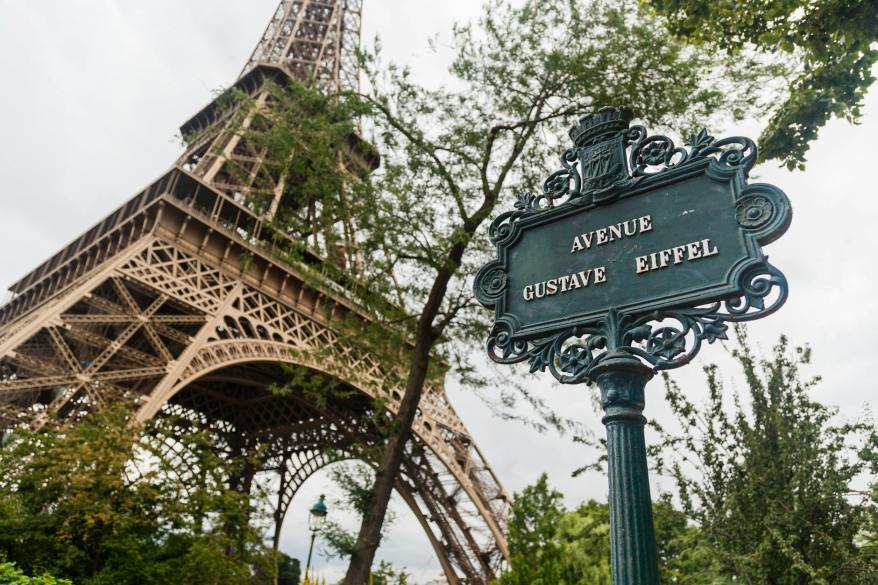
31 marzo 1889: inaugurata la Torre Eiffel tra critiche feroci e un destino inaspettato
🇮🇹Il 31 marzo 1889 segna una data destinata a cambiare per sempre il volto di Parigi e dell’immaginario collettivo globale: viene inaugurata la Torre Eiffel, l’opera più audace e discussa del suo tempo… 🇬🇧March 31, 1889 marks a date destined to change the face of Paris and the global collective imagination forever: the Eiffel Tower,…
-
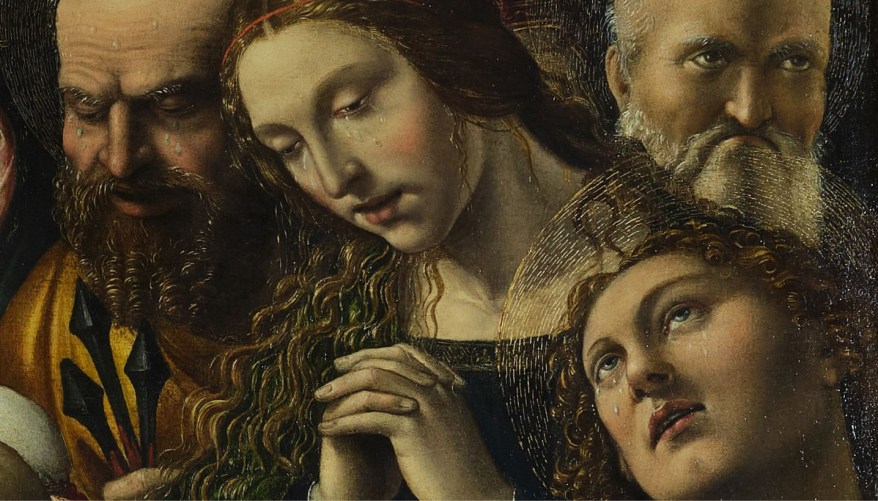
Sodoma in mostra a Torino: il Rinascimento al Museo Accorsi-Ometto
🇮🇹Al Museo di Arti Decorative Accorsi-Ometto arriva una mostra dedicata al Sodoma: oltre 50 opere, alcune mai viste prima, raccontano la formazione dell’artista e il suo dialogo con maestri come Pinturicchio… 🇬🇧An exhibition dedicated to Sodoma arrives at the Accorsi-Ometto Museum of Decorative Arts: over 50 works, some never before seen, recount the artist’s development…
-
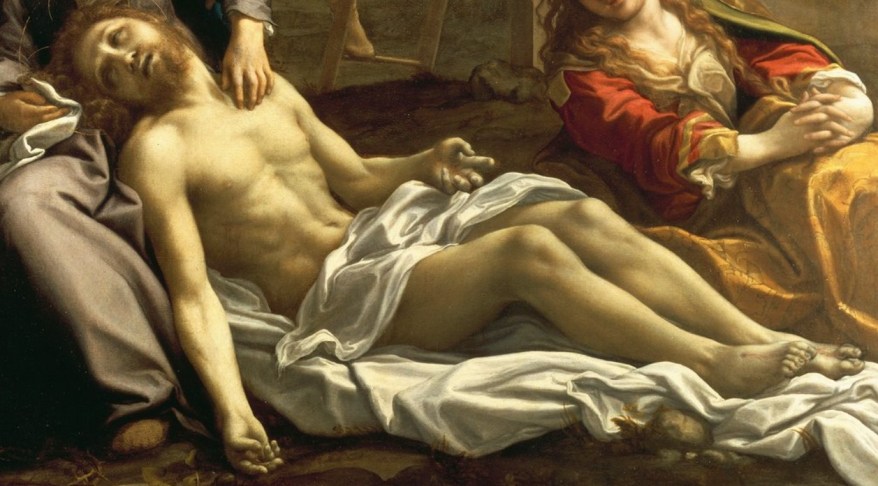
Il Compianto sul Cristo morto di Correggio: pathos e devozione
🇮🇹Con l’inizio della Settimana Santa, vi propongo il Compianto sul Cristo morto di Antonio Allegri, più noto come il Correggio: uno dei vertici assoluti della pittura emiliana del Cinquecento… 🇬🇧With the beginning of Holy Week, I propose the Lamentation over the Dead Christ by Antonio Allegri, better known as Correggio: one of the absolute peaks…
Condividi:


Questo sono io





sostienici

Sostienici – Support Us
Se questo blog ti piace e ti appassiona, puoi aiutarci a farlo crescere sempre più sostenendoci in modo concreto condividendo i post, seguendo le pagine social e con un contributo che ci aiuta ad andare avanti con il nostro lavoro di divulgazione. . ENGLISH: If you like and are passionate about this blog, you can help us make it grow more and more by supporting us in a concrete way by sharing posts, following social pages and with a contribution that helps us to move forward with our dissemination work.
€10,00


