

Monumento equestre al Gattamelata di Donatello: a breve inizierà il restauro
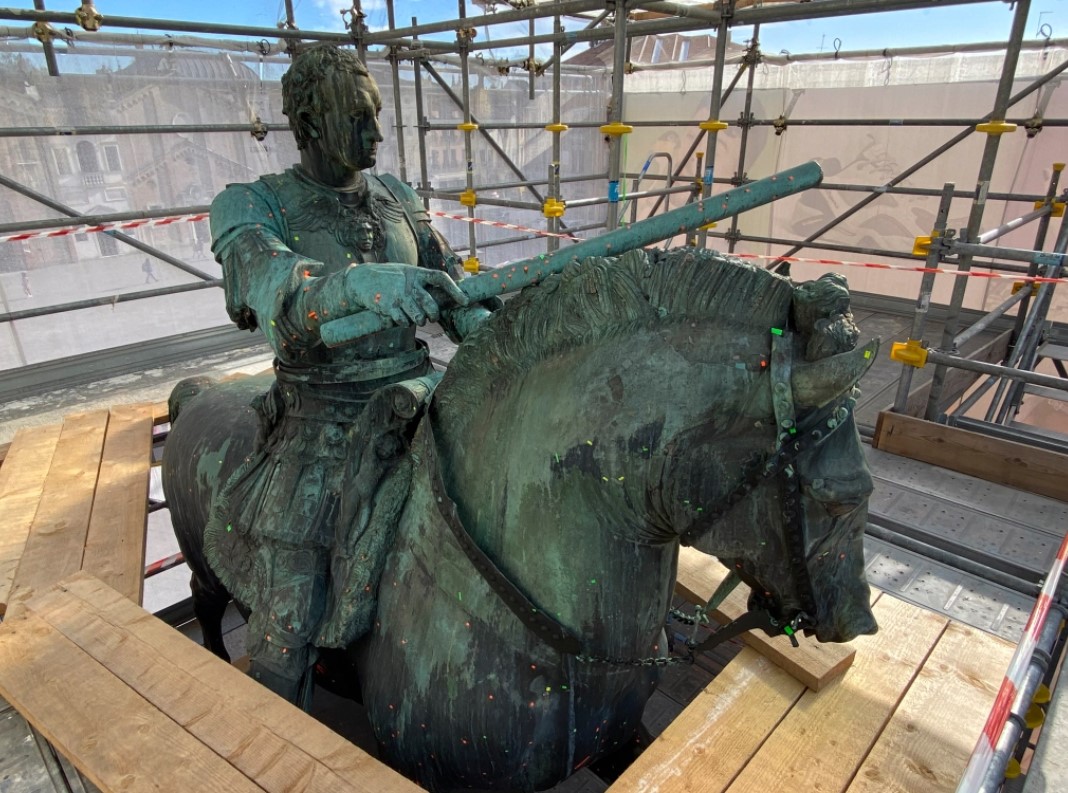
Il celebre monumento equestre al Gattamelata, realizzato in bronzo dal grande Donatello nella metà del Quattrocento, necessita di urgenti interventi di restauro.
Grazie a Save Venice, con il sostegno economico principale di Jon e Barbara Landau, e a Friends of Florence, con il supporto di Stacy Simon, nel 2025 inizierà il complesso e delicato intervento di restauro del monumento equestre, del piedistallo lapideo e dei rilievi originali.
La scultura al Gattamelata di Donatello
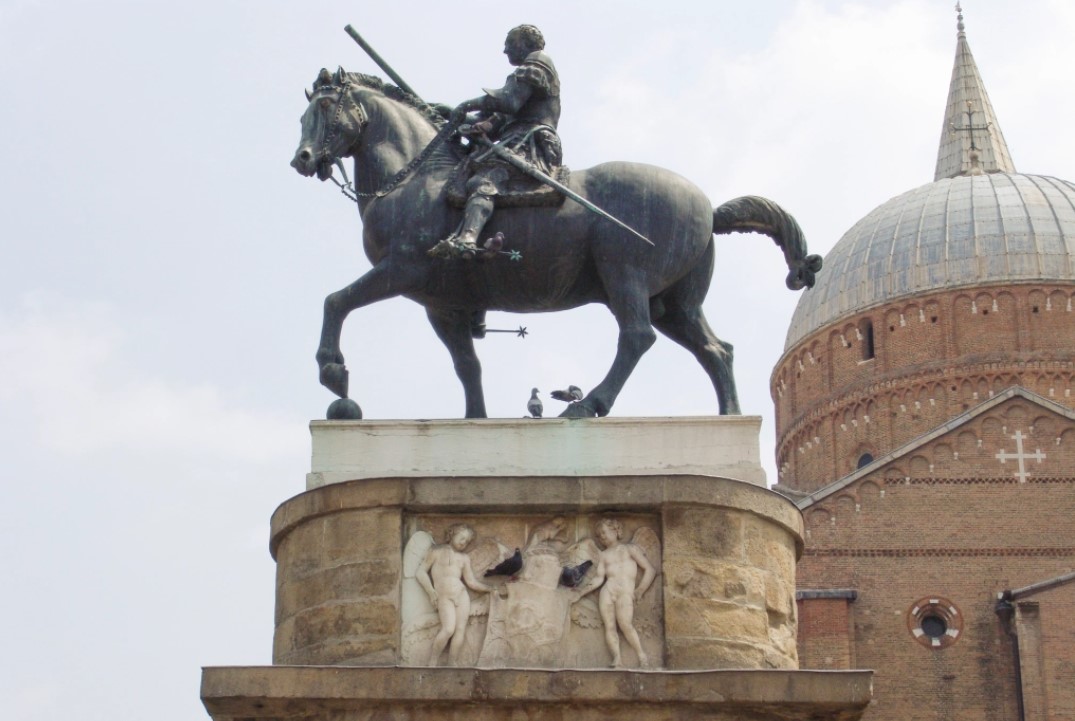
L’effigie del Gattamelata di Donatello è il primo monumento equestre in bronzo a grandezza naturale fuso dai tempi dell’antichità classica.
Realizzato tra il 1447 e il 1453, occupa una posizione di rilievo nella piazza antistante la Basilica del Santo di Padova dove nel 1458 fu sepolto il capitano generale dell’esercito veneziano.
La campagna diagnostica
Le superfici bronzee della statua del Gattamelata presentano forme di degrado comuni ai monumenti in lega di rame esposti all’aperto, come il cosiddetto “cancro del bronzo”, una forma di corrosione che colpisce le leghe di rame.
In questo processo, il cloruro rameoso reagisce con l’acqua formando acido cloridrico, che a sua volta attacca e corrode il bronzo, intensificando la degradazione del rame.
A causa della difficoltà nel fondere una statua equestre di queste dimensioni, Donatello suddivise il monumento in ben 36 pezzi, aumentando così l’instabilità strutturale del cavallo e del cavaliere.
Il basamento in trachite e pietra d’Istria è anch’esso deteriorato, complice l’esposizione continua alle intemperie e il degrado delle malte cementizie applicate durante un precedente intervento di restauro.
Per conto della Delegazione Pontificia, nella primavera del 2023, la ditta di restauro Nicola Salvioli ha eseguito una prima indagine conoscitiva del monumento.
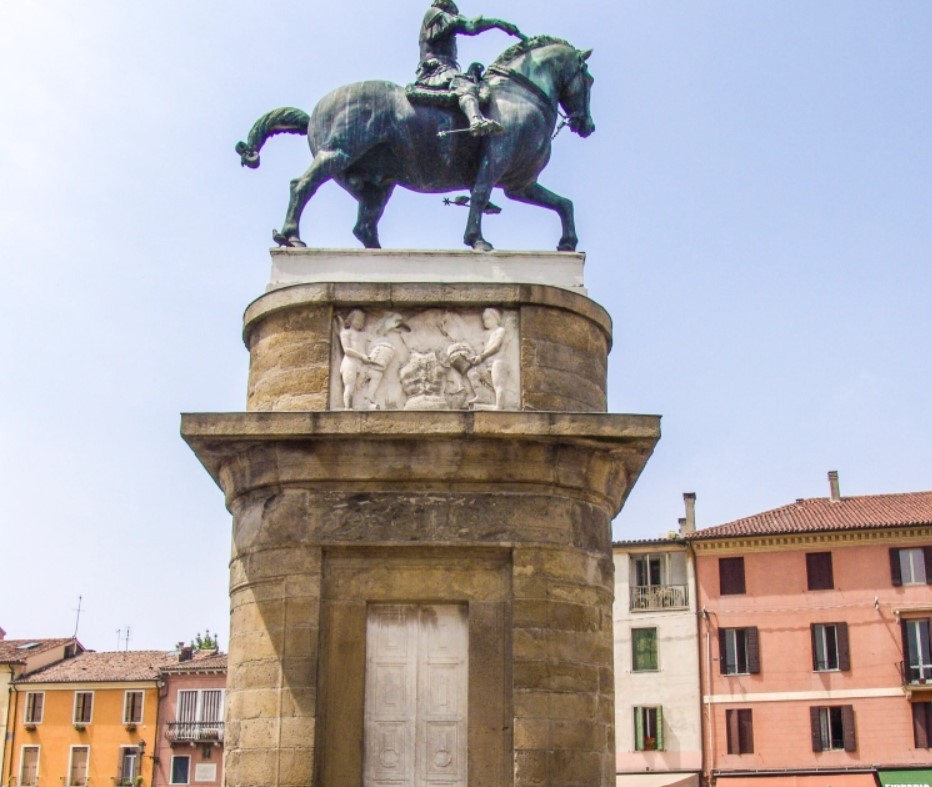
Nell’ambito degli studi attualmente in corso per sviluppare il progetto di restauro della statua, un aspetto senz’altro rilevante è la determinazione del comportamento strutturale del monumento per definirne lo stato attuale, sia in regime statico che in caso di evento sismico.
Sono emerse la fragilità e segni del tempo ben visibili in alcune porzioni dell‘opera, sia per modalità costruttive e degrado, che per possibili manipolazioni passate, come le rimozioni ed i riposizionamenti già avvenuti in periodo bellico.
Per il momento il sempre vostro Michelangelo Buonarroti vi saluta dandovi appuntamento ai prossimi post e sui social.
Equestrian monument to Gattamelata by Donatello: restoration to begin soon
The famous equestrian monument to Gattamelata made in bronze by the great Donatello in the mid-15th century, located in the churchyard of the Basilica of Sant’Antonio in Padua, requires urgent restoration work.
Thanks to Save Venice, with the main financial support of Jon and Barbara Landau, and Friends of Florence, with the support of Stacy Simon, the complex and delicate restoration of the equestrian monument, the stone pedestal and the original reliefs will begin in 2025.
The sculpture of Gattamelata by Donatello
The effigy of Gattamelata by Donatello is the first life-size equestrian monument in bronze cast since classical antiquity.
Made between 1447 and 1453, it occupies a prominent position in the square in front of the Basilica del Santo in Padua where the captain general of the Venetian army was buried in 1458.
The diagnostic campaign
The bronze surfaces of the Gattamelata statue show forms of degradation common to copper alloy monuments exposed outdoors, such as the so-called “bronze cancer”, a form of corrosion that affects copper alloys.
In this process, cuprous chloride reacts with water to form hydrochloric acid, which in turn attacks and corrodes the bronze, intensifying the degradation of the copper.
Due to the difficulty in casting an equestrian statue of this size, Donatello divided the monument into 36 pieces, thus increasing the structural instability of the horse and rider.
The base in trachyte and Istrian stone is also deteriorated, due to continuous exposure to the elements and the degradation of the cement mortars applied during a previous restoration intervention.
On behalf of the Pontifical Delegation, in the spring of 2023, the restoration company Nicola Salvioli carried out an initial investigation of the monument.
In the context of the studies currently underway to develop the restoration project of the statue, an aspect that is certainly relevant is the determination of the structural behavior of the monument to define its current state, both in static conditions and in the event of a seismic event.
The fragility and signs of time clearly visible in some portions of the work have emerged, both for construction methods and degradation, and for possible past manipulations, such as removals and repositionings that already occurred during the war.
For the moment, your ever Michelangelo Buonarroti bids you farewell, making an appointment with you in the next posts and on social media.

Sostienici – Support Us
Se questo blog ti piace e ti appassiona, puoi aiutarci a farlo crescere sempre più sostenendoci in modo concreto condividendo i post, seguendo le pagine social e con un contributo che ci aiuta ad andare avanti con il nostro lavoro di divulgazione. . ENGLISH: If you like and are passionate about this blog, you can help us make it grow more and more by supporting us in a concrete way by sharing posts, following social pages and with a contribution that helps us to move forward with our dissemination work.
10,00 €
-
La Pietà di Tincolini: a Pontedera l’arte torna a fare domande scomode
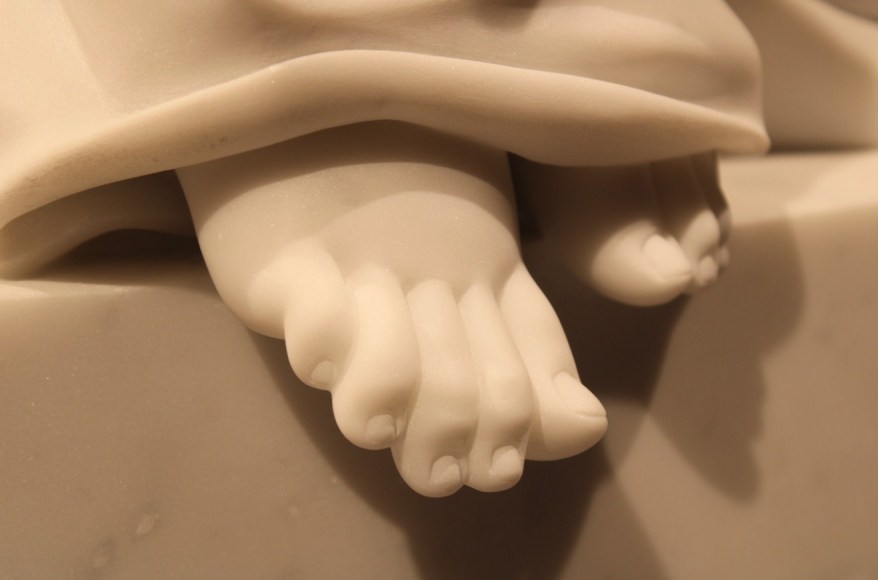
🇮🇹“Pietà”, la scultura di Filippo Tincolini, insieme alle parole di Federico Quaranta e Andrea Pezzi, non è stato solo uno spettacolo. È stata una domanda lanciata in faccia al pubblico, impossibile da evitare: siamo ancora capaci di provare pietà? 🇬🇧 “Pietà,” Filippo Tincolini’s sculpture, along with the words of Federico Quaranta and Andrea Pezzi, wasn’t…
-
Ai Musei Vaticani i fasti barocchi di Urbano VIII: in mostra gli arazzi della manifattura Barberini
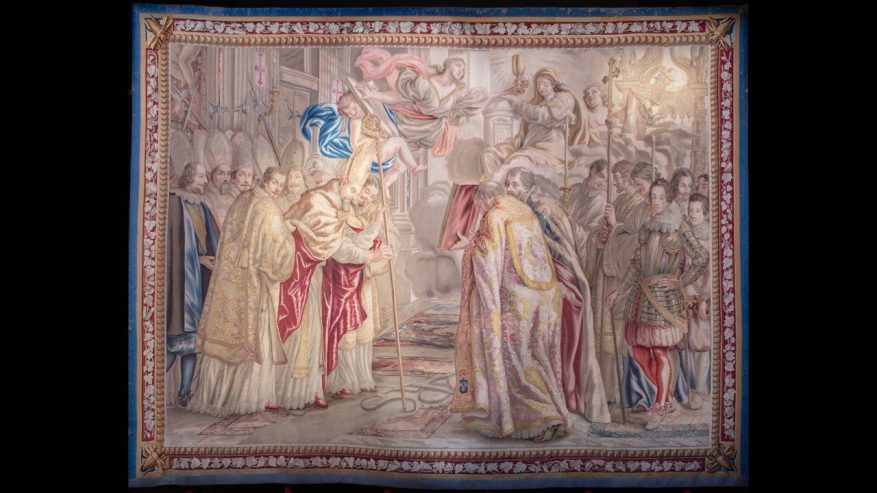
🇮🇹A quattro secoli dalla consacrazione della Basilica di San Pietro, i Musei Vaticani dedicano una mostra all’Arazzeria Barberini, simbolo di una cultura visiva capace di fondere magnificenza estetica e affermazione politica… 🇬🇧Four centuries after the consecration of St. Peter’s Basilica, the Vatican Museums are dedicating an exhibition to the Barberini Tapestry Factory, a symbol of…
-
Le Opere della Pasqua: come la Resurrezione ha ispirato Arte e Cultura
🇮🇹La Pasqua, oltre ad essere una ricorrenza religiosa è un momento in cui la storia, l’arte e la spiritualità si intrecciano per raccontare il fulcro della fede cristiana: la resurrezione di Cristo. .. 🇬🇧Easter, beyond being a religious holiday, is a moment when history, art, and spirituality intertwine to recount the core of the Christian…
Condividi:


Questo sono io





sostienici

Sostienici – Support Us
Se questo blog ti piace e ti appassiona, puoi aiutarci a farlo crescere sempre più sostenendoci in modo concreto condividendo i post, seguendo le pagine social e con un contributo che ci aiuta ad andare avanti con il nostro lavoro di divulgazione. . ENGLISH: If you like and are passionate about this blog, you can help us make it grow more and more by supporting us in a concrete way by sharing posts, following social pages and with a contribution that helps us to move forward with our dissemination work.
€10,00


