
La Scultura del giorno: il Bambino con la gabbia di Pigalle
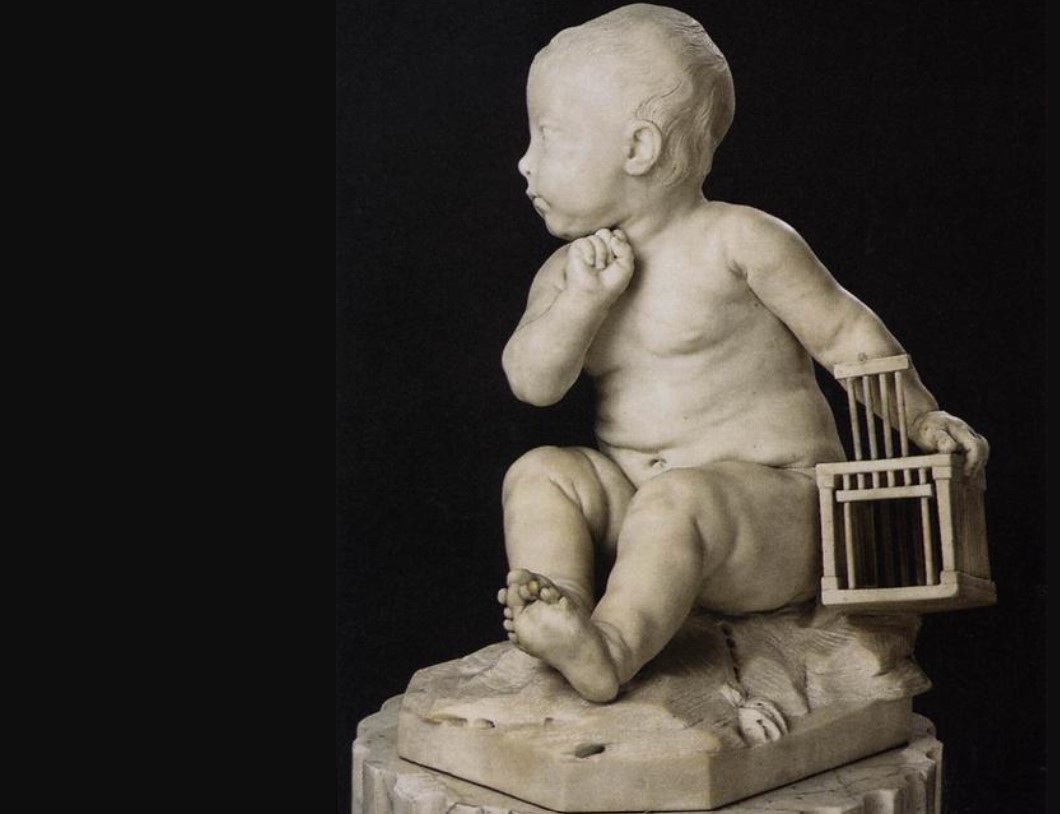
La scultura del giorno che vi propongo oggi è il Bambino con la gabbia scolpito nel 1749 da Jean Baptiste Pigalle, appartenente oggi al Museo del Louvre.
Pigalle, sebbene ancora non abbandonasse le influenze dell’arte barocca, sviluppò con il tempo uno stile eterogeneo caratterizzato da un naturalismo molto vicino alle opere classiche come nel suo Mercurio che si allaccia i sandali: opera che per prima gli diede la fama.
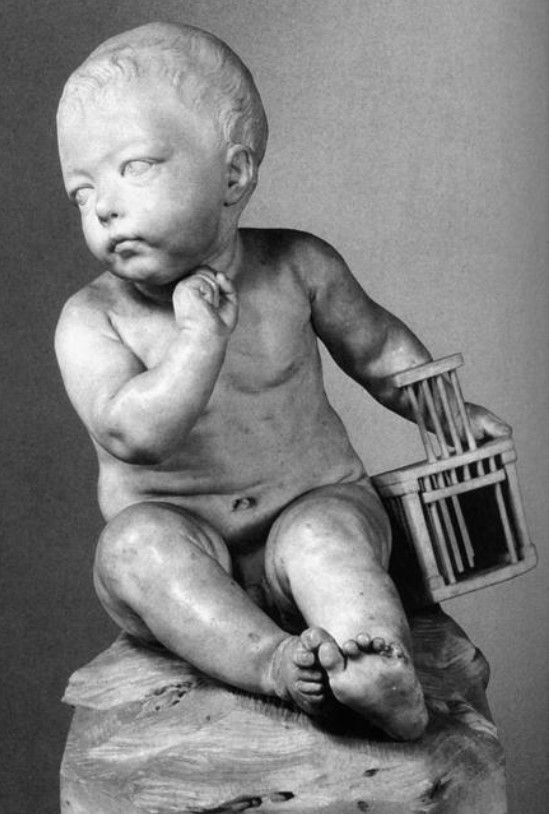
La scultura del Bambino con la gabbia fu presentata per la prima volta al pubblico da Pigalle in occasione del Salon del 1750 con un grande riscontro da parte del pubblico.
Il bambino raffigurato è il figliolo di Pâris de Montmartel, niente meno che il padrino di Madame de Pompadour. Il tema della gabbietta appartiene a una lunga tradizione iconografica di carattere moralistico.
Il fanciullo tiene con la mano sinistra la gabbietta aperta dalla quale si intuisce sia appena volato via un uccellino. L’uccellino è l’allegoria della fugacictà della giovinezza.
E’ un tema ricorrente nella pittura nordica e nella raffigurazione simbolica delle quattro età dell’uomo.
Lo sguardo perplesso del bambino mostra a chi lo osserva il dispiacere per aver perso l’uccellino ovvero l’amarezza per aver perduto per sempre la sua fanciullezza.
Pigalle fu uno scultore straordinario e in quest’opera diede prova di un eccezionale modellato con un effetto di morbidezza del marmo reso nelle carni del bambino così come alla sua capigliatura.
Eccellente anche la cura con la quale lo scultore francese rese la spontanea gestualità del fanciullo eseguendo uno studio dal vivo molto attento. La vivacità e l’immediatezza di questa scultura mettono in luce le grandi capacità di scultore di Pigalle.
Per il momento il vostro Michelangelo Buonarroti vi saluta dandovi appuntamento ai prossimi post e sui social.
Sculpture of the day: the Child with the Pigalle cage
The sculpture of the day that I propose to you today is the Child with the Cage sculpted in 1749 by Jean Baptiste Pigalle, now belonging to the Louvre Museum.
Pigalle, although he still did not abandon the influences of Baroque art, over time developed a heterogeneous style characterized by a naturalism very close to classical works as in his Mercury tying his sandals: a work that first gave him fame.
The sculpture of the Child with the Cage was presented to the public for the first time by Pigalle at the Salon of 1750 with great response from the public.
The child depicted is the son of Pâris de Montmartel, none other than Madame de Pompadour’s godfather. The theme of the cage belongs to a long iconographic tradition of a moralistic nature. The boy holds in his left hand the open cage from which it appears a little bird has just flown away.
The little bird is the allegory of the fleeting nature of youth.
It is a recurring theme in Nordic painting and in the symbolic representation of the four ages of man.
The perplexed look of the child shows to those who observe him the displeasure at having lost the bird or the bitterness at having lost his childhood forever.
Pigalle was an extraordinary sculptor and in this work he demonstrated exceptional modeling with an effect of marble softness given to the child’s flesh as well as to his hair.
Also excellent is the care with which the French sculptor rendered the child’s spontaneous gestures by carrying out a very careful live study. The liveliness and immediacy of this sculpture highlight Pigalle’s great skills as a sculptor.
For the moment, your Michelangelo Buonarroti greets you and will meet you in future posts and on social media.

Sostienici – Support Us
Se questo blog ti piace e ti appassiona, puoi aiutarci a farlo crescere sempre più sostenendoci in modo concreto condividendo i post, seguendo le pagine social e con un contributo che ci aiuta ad andare avanti con il nostro lavoro di divulgazione. . ENGLISH: If you like and are passionate about this blog, you can help us make it grow more and more by supporting us in a concrete way by sharing posts, following social pages and with a contribution that helps us to move forward with our dissemination work.
8,00 €
-
26 ottobre 1890: muore Carlo Collodi, lo scrittore toscano che inventò Pinocchio
Il 26 ottobre 1890 moriva a Firenze Carlo Collodi, autore di Pinocchio. Dalla prima pubblicazione nel 1881 al successo mondiale del burattino…
-
I musei meno conosciuti della Toscana che meritano una visita: 10 province, 10 luoghi da scoprire
🇮🇹Dalle statue stele della Lunigiana alle antiche botteghe artigiane, passando per case-museo, collezioni insolite e testimonianze della vita quotidiana: ecco dieci musei da visitare in Toscana, uno per ogni provincia, per scoprire un patrimonio artistico e culturale che va ben oltre le mete più famose… 🇬🇧From the stele statues of Lunigiana to ancient artisan workshops—not…
-
Perché il bue e l’asino sono accanto a Gesù Bambino? La storia dietro una tradizione secolare
🇮🇹Perché il bue e l’asinello sono accanto a Gesù Bambino nel presepe? Scopri le origini bibliche, il significato simbolico e la storia nell’arte… 🇬🇧Why are the ox and the donkey beside Baby Jesus in the nativity scene? Discover their biblical origins, symbolic meaning, and history in art…
Condividi:


Questo sono io




sostienici

Sostienici – Support Us
Se questo blog ti piace e ti appassiona, puoi aiutarci a farlo crescere sempre più sostenendoci in modo concreto condividendo i post, seguendo le pagine social e con un contributo che ci aiuta ad andare avanti con il nostro lavoro di divulgazione. . ENGLISH: If you like and are passionate about this blog, you can help us make it grow more and more by supporting us in a concrete way by sharing posts, following social pages and with a contribution that helps us to move forward with our dissemination work.
€10,00


1 commento »