
La Scultura del giorno: Il Bacchino Malato di Dupré
La scultura del giorno che vi propongo oggi è il Bacchino Malato scolpito da Giovanni Dupré nel 1857.
Nell’album che custodisce antiche fotografie delle opere dell’artista accompagnate da numerose note scritte di suo pugno, custodito a Villa Dupré di Fiesole, Dupré scrisse “‘Bacco Crittogamo. Questa statua fu scolpita nel 1854. Il bozzetto, o la prima idea la feci l’anno antecedente quando andai a Napoli per Salute e fu veramente allora che la malattia dell’uva infieriva e mi suggerì questa idea.
L’originale è a Pietroburgo dal Principe Bosboroko. Lo ripetei pel Signor Gatti che lo vendè a Londra e non mi ricordo a chi, dopo fu ripetuto pel Signor Duca Ala Ponzoni dimorante ora a Parigi e un altro pel Signor Vonwiller di Napoli. G. Duprè”.
Il primissimo bozzetto per il Bacco fu realizzato prima del soggiorno napoletano di Dupré, compreso fra l’ottobre del 1853 e la primavera del 1854. Successivamente al suo ritorno a Firenze, l’opera fu letteralmente distrutta e realizzata da capo in modo un po’ diverso.
Subito dopo quel modello fu regalato dallo scultore a un sacerdote veronese del quale non è nota l’identità esatta.
La prima trasposizione in marmo fu ultimata nell’estate del 1857 ed è quella oggi custodita presso il Museo dell’Hermitage di San Pietroburgo.
Giovanni Dupré con questa scultura volle competere direttamente con Lorenzo Bartolini che già aveva messo mano al Bacco Fanciullo qualche decennio prima, noto anche come l’Ammostatore.
Lo scultore rifacendosi all’antichità classica ma seguendo i gusti della propria epoca, volle scolpire nel marmo questo giovane Bacco che guarda addolorato la sorte delle uve, affette da crittogama.
Sofferente ed emaciato quanto le viti che gli stanno attorno, la magrezza del Bacchino e il suo volto segnato dal dispiacere riflettono la mala sorte dell’imminente raccolto, decimato dalla malattia parassitaria che colpisce le viti.
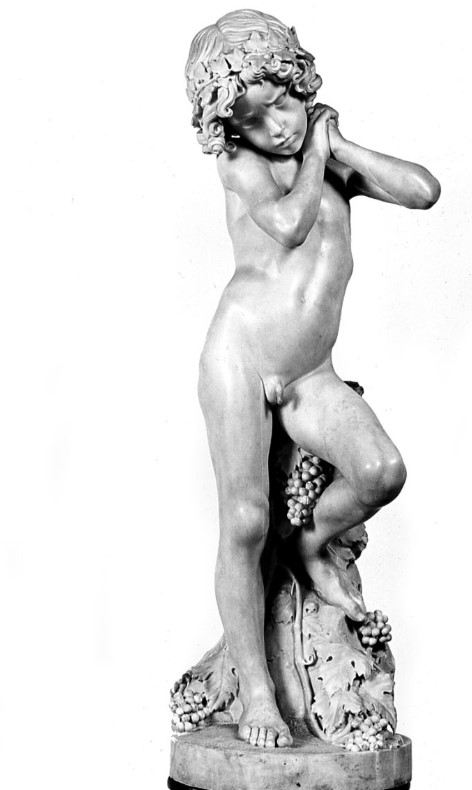
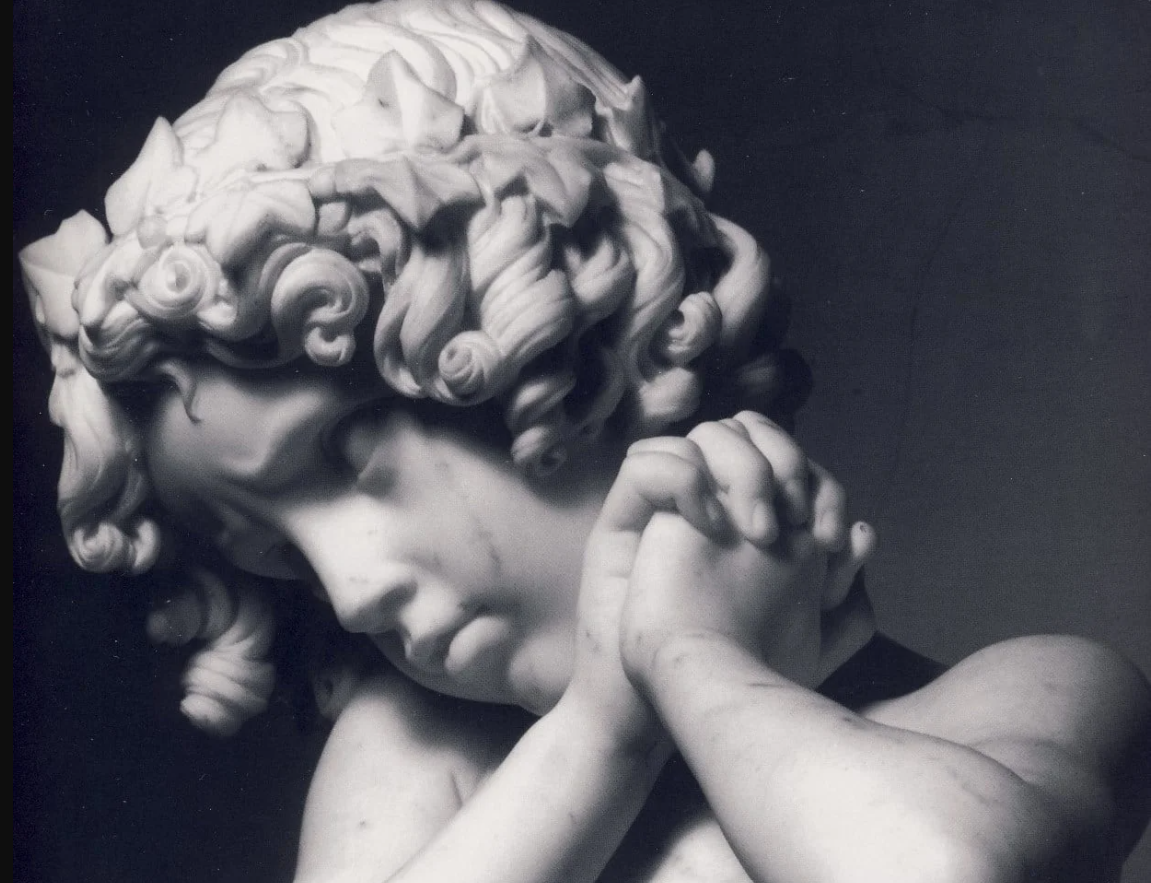
Il giovane Bacco porta le mani giunte al volto quasi si fosse raccolto in preghiera. Il viso concentrato e dolente è incorniciato dai capelli che ricadono sulle spalle con voluminosi boccoli, trattenuti da una corona di pampini.
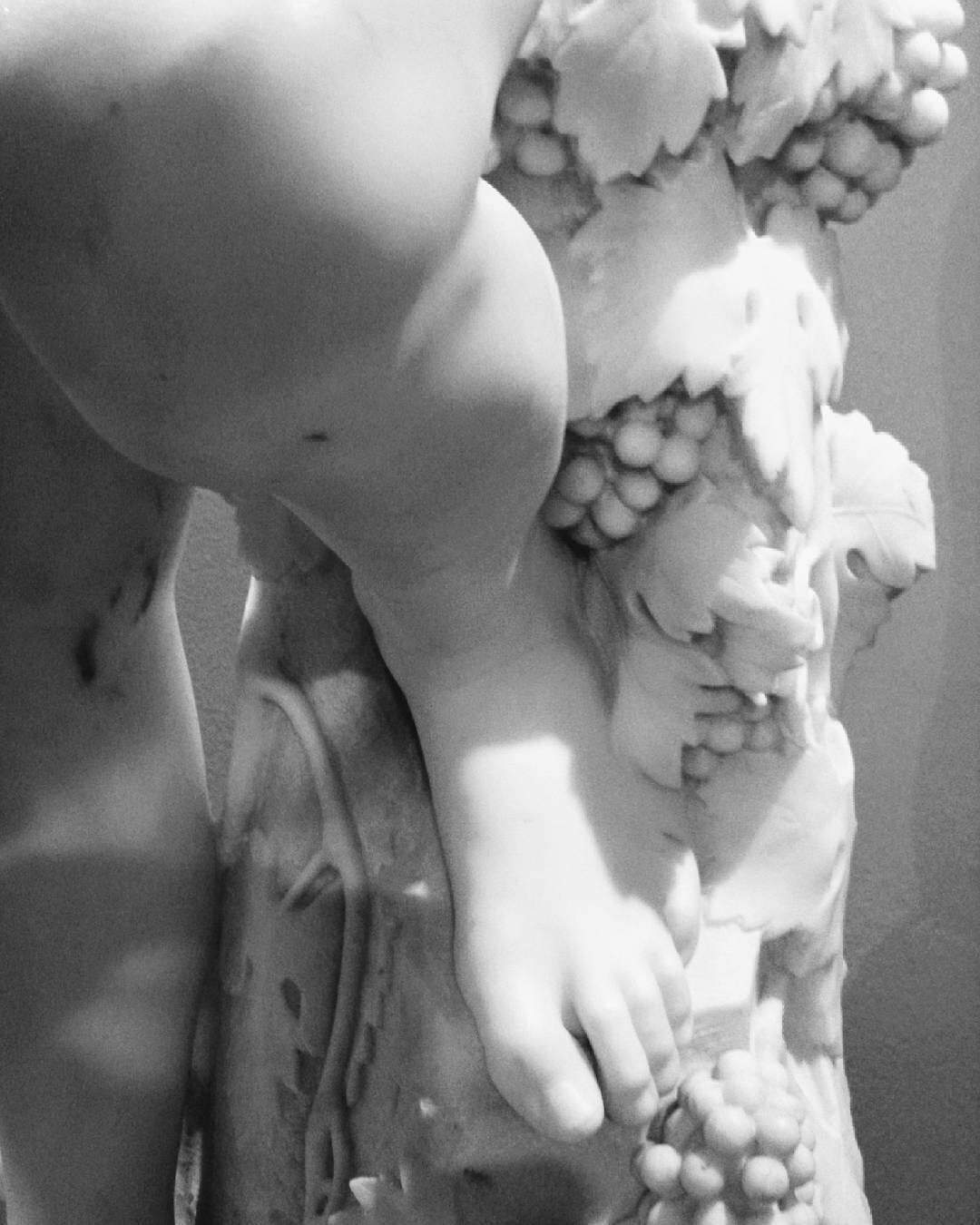
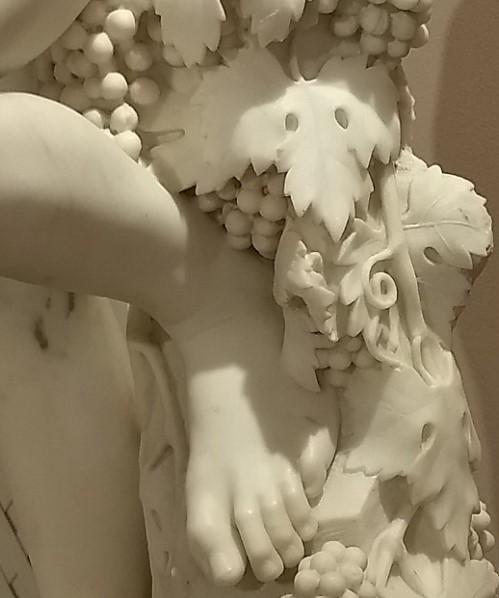
Il profondo coinvolgimento emotivo del ragazzino rende bene l’idea di quanto possa essere devastante la crittogama per quelle stesse uve che si vedono avviluppate sul broncone posizionato dietro di lui che aiuta a scaricare il peso dell’opera a terra.
Per il momento il vostro Michelangelo Buonarroti vi saluta dandovi appuntamento ai prossimi post e sui social.
Sculpture of the day: The Sick Bacchino by Dupré
The sculpture of the day that I propose to you today is the Sick Bacchino by Giovanni Dupré, sculpted by the artist in 1857.
In the album containing ancient photographs of the artist’s works accompanied by numerous notes written in his own hand, kept at Villa Dupré in Fiesole, Dupré wrote “’Bacco Crittogamo. This statue was sculpted in 1854. I made the sketch, or the first idea, the previous year when I went to Naples for Salute and it was really then that the grape disease was raging and suggested this idea to me. The original is in Petersburg by Prince Bosboroko. I repeated it for Mr. Gatti who sold it in London and I don’t remember to whom, then it was repeated for Mr. Duke Ala Ponzoni now living in Paris and another for Mr. Vonwiller of Naples. G. Dupre”.
The very first sketch for Bacchus was created before Dupré’s Neapolitan stay, between October 1853 and the spring of 1854. After his return to Florence it was literally destroyed and created again in a different way. Immediately afterwards the model was given as a gift by the sculptor to a Veronese priest whose exact identity is not known.
The first marble transposition was completed in the summer of 1857 and is the one now kept in the Hermitage Museum in St. Petersburg.
With this sculpture, Giovanni Dupré wanted to compete directly with Lorenzo Bartolini who had already worked on the Bacchus Child a few decades earlier, also known as the Masher.
The sculptor, referring to classical antiquity but following the tastes of his own era, wanted to sculpt in marble this young Bacchus who looks sorrowfully at the fate of the grapes, affected by cryptogama.
Suffering and emaciated as the vines around him, his thinness and face marked by displeasure reflect the bad fate of the imminent harvest, decimated by the parasitic disease that affects the vines.
The young Bacchus brings his hands clasped to his face as if he were gathered in prayer. His concentrated and painful face is framed by hair that falls over his shoulders in voluminous ringlets, held back by a crown of straw.
The boy’s deep emotional involvement gives a good idea of how devastating the cryptogama can be for those same grapes that can be seen wrapped around the branch positioned behind him which helps to unload the weight of the work on the ground.
For the moment, your Michelangelo Buonarroti greets you and will meet you in future posts and on social media.

Sostienici – Support Us
Se questo blog ti piace e ti appassiona, puoi aiutarci a farlo crescere sempre più sostenendoci in modo concreto condividendo i post, seguendo le pagine social e con un contributo che ci aiuta ad andare avanti con il nostro lavoro di divulgazione. . ENGLISH: If you like and are passionate about this blog, you can help us make it grow more and more by supporting us in a concrete way by sharing posts, following social pages and with a contribution that helps us to move forward with our dissemination work.
8,00 €
-
31 marzo 1889: inaugurata la Torre Eiffel tra critiche feroci e un destino inaspettato
🇮🇹Il 31 marzo 1889 segna una data destinata a cambiare per sempre il volto di Parigi e dell’immaginario collettivo globale: viene inaugurata la Torre Eiffel, l’opera più audace e discussa del suo tempo… 🇬🇧March 31, 1889 marks a date destined to change the face of Paris and the global collective imagination forever: the Eiffel Tower,…
-
Sodoma in mostra a Torino: il Rinascimento al Museo Accorsi-Ometto
🇮🇹Al Museo di Arti Decorative Accorsi-Ometto arriva una mostra dedicata al Sodoma: oltre 50 opere, alcune mai viste prima, raccontano la formazione dell’artista e il suo dialogo con maestri come Pinturicchio… 🇬🇧An exhibition dedicated to Sodoma arrives at the Accorsi-Ometto Museum of Decorative Arts: over 50 works, some never before seen, recount the artist’s development…
-
Il Compianto sul Cristo morto di Correggio: pathos e devozione
🇮🇹Con l’inizio della Settimana Santa, vi propongo il Compianto sul Cristo morto di Antonio Allegri, più noto come il Correggio: uno dei vertici assoluti della pittura emiliana del Cinquecento… 🇬🇧With the beginning of Holy Week, I propose the Lamentation over the Dead Christ by Antonio Allegri, better known as Correggio: one of the absolute peaks…
Condividi:


Questo sono io





sostienici

Sostienici – Support Us
Se questo blog ti piace e ti appassiona, puoi aiutarci a farlo crescere sempre più sostenendoci in modo concreto condividendo i post, seguendo le pagine social e con un contributo che ci aiuta ad andare avanti con il nostro lavoro di divulgazione. . ENGLISH: If you like and are passionate about this blog, you can help us make it grow more and more by supporting us in a concrete way by sharing posts, following social pages and with a contribution that helps us to move forward with our dissemination work.
€10,00


