
Ultimato il restauro della Croce del Lorenzetti: il sangue dipinto con un pigmento più costoso dell’oro
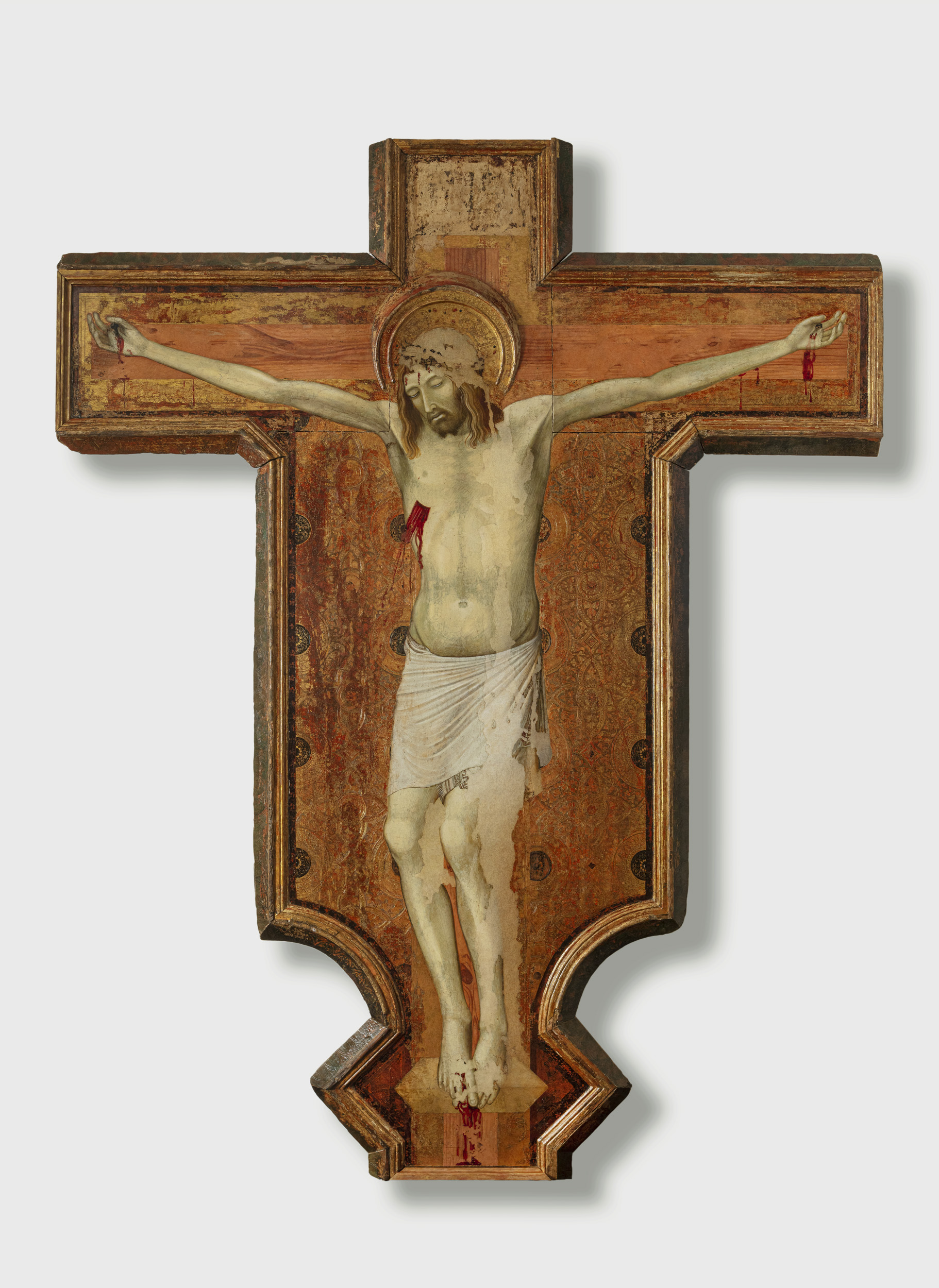
Ci sono voluti quasi tre anni di restauro e una stretta collaborazione tra direzioni, specialisti e preziosi sostenitori economici per poter tornare ad apprezzare appieno uno dei capolavori della pittura senese del Trecento: la Croce del Carmine di Ambrogio Lorenzetti.
La Croce dipinta del Carmine di Siena di Ambrogio Lorenzetti, dopo l’accurato restauro con la direzione e il coordinamento scientifico di Stefano Casciu, curato dalla restauratrice Muriel Vervat e realizzato grazie al generoso contributo di Friends of Florence attraverso il dono di The Giorgi Family Foundation, è stata presentata oggi nella sala dedicata della Pinacoteca dove resterà esposta in evidenza fino all’8 gennaio 2024.
Al termine dell’esposizione temporanea la Croce del Carmine sarà poi ricollocata nella Sala 7 della Pinacoteca, insieme ad altre opere di Ambrogio Lorenzetti, artista conosciuto soprattutto come il Pittore del Buon Governo nel Palazzo Pubblico di Siena.
La monumentale proveniente dal convento di San Niccolò al Carmine, venne depositata dal Comune di Siena presso il Regio Istituto di Belle Arti di Siena nel 1862, entrando così a far parte di quel nucleo originario di opere che compongono la collezione della Pinacoteca Nazionale.
Le vicende relative alla storia del convento del Carmine fanno ipotizzare che l’opera sia stata realizzata intorno al 1328-1330, datazione che trova riscontro nello stile.
Probabilmente un’opera giovanile dell’artista molto legata alla pittura giottesca, ma con spunti che caratterizzeranno la produzione più matura del maestro e un gusto raffinato nell’elaborata decorazione a punzoni del tabellone e dell’aureola.
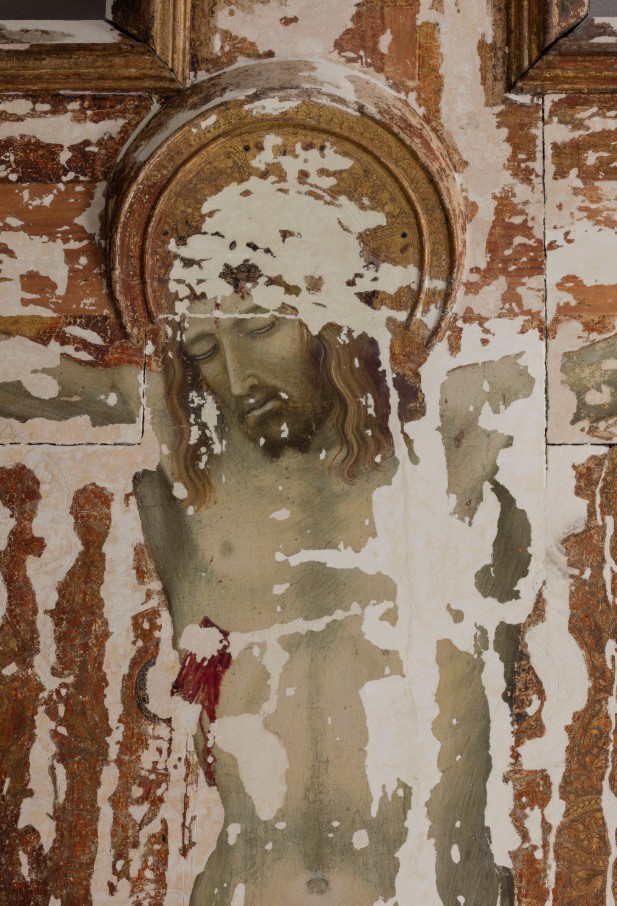
Lorenzetti invece di dipingere la consueta campitura blu alle spalle del Cristo, ha preferito scegliere di dar forma alle realistiche venature del legno della Croce. L’abilità del pittore sta proprio nella resa degli elementi naturalistici che si esprime con evidenza nella figura del Cristo, nella sua anatomia modellata con il chiaroscuro che descrive le fasce muscolari con efficacia.

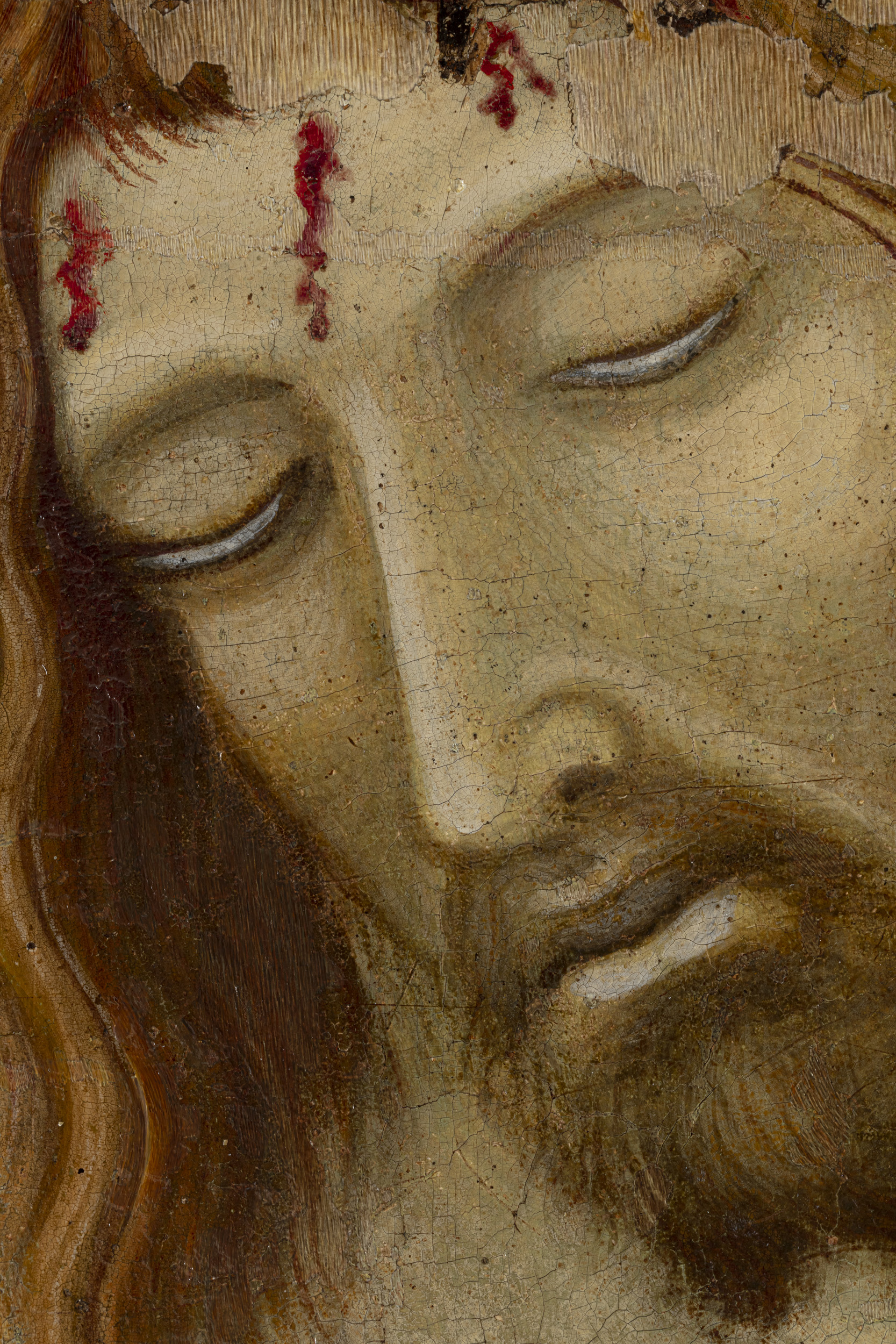
Con una pittura composta da sottili pennellate morbide, Ambrogio, delinea barba e capelli castani che ricadono incorniciando il volto, dalla cui espressione si percepisce l’ultimo momento di dolore prima di rassegnarsi alla morte.
La testa è reclinata in avanti, con un effetto drammatico accentuato dall’aureola a rilievo, e dal basso si osservano le labbra carnose, ma già velate da un riflesso cianotico assieme alle e le palpebre socchiuse che donano alla figura uno sguardo umano.
Il restauro
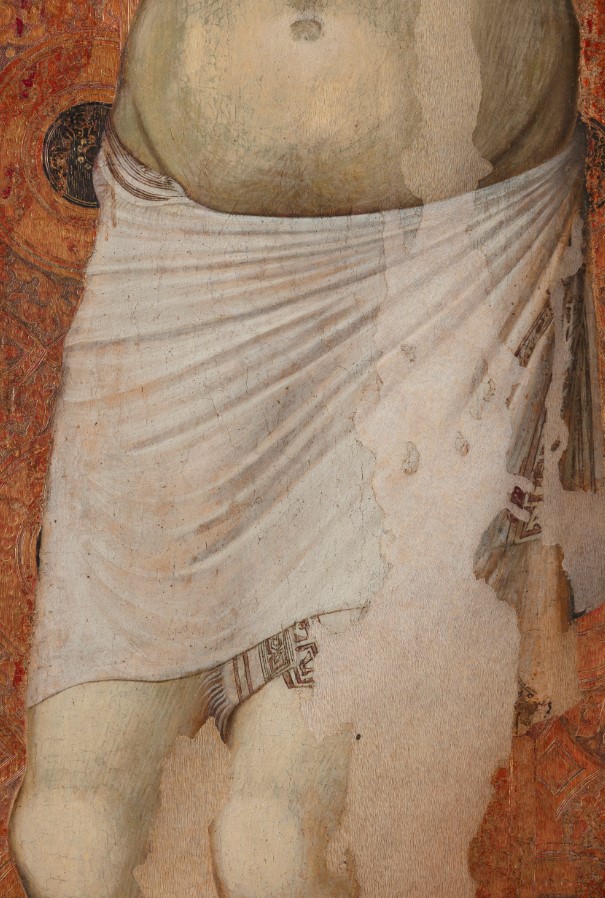
A inizio lavori l’opera presentava diversi problemi conservativi. Durante l’Ottocento le infiltrazioni di acque piovane all’interno del Convento del Carmine a Siena provocarono al dipinto notevoli ed estese cadute di colore, risparmiando però il volto del Cristo che rimase protetto dall’aureola aggettante rispetto al livello della croce.
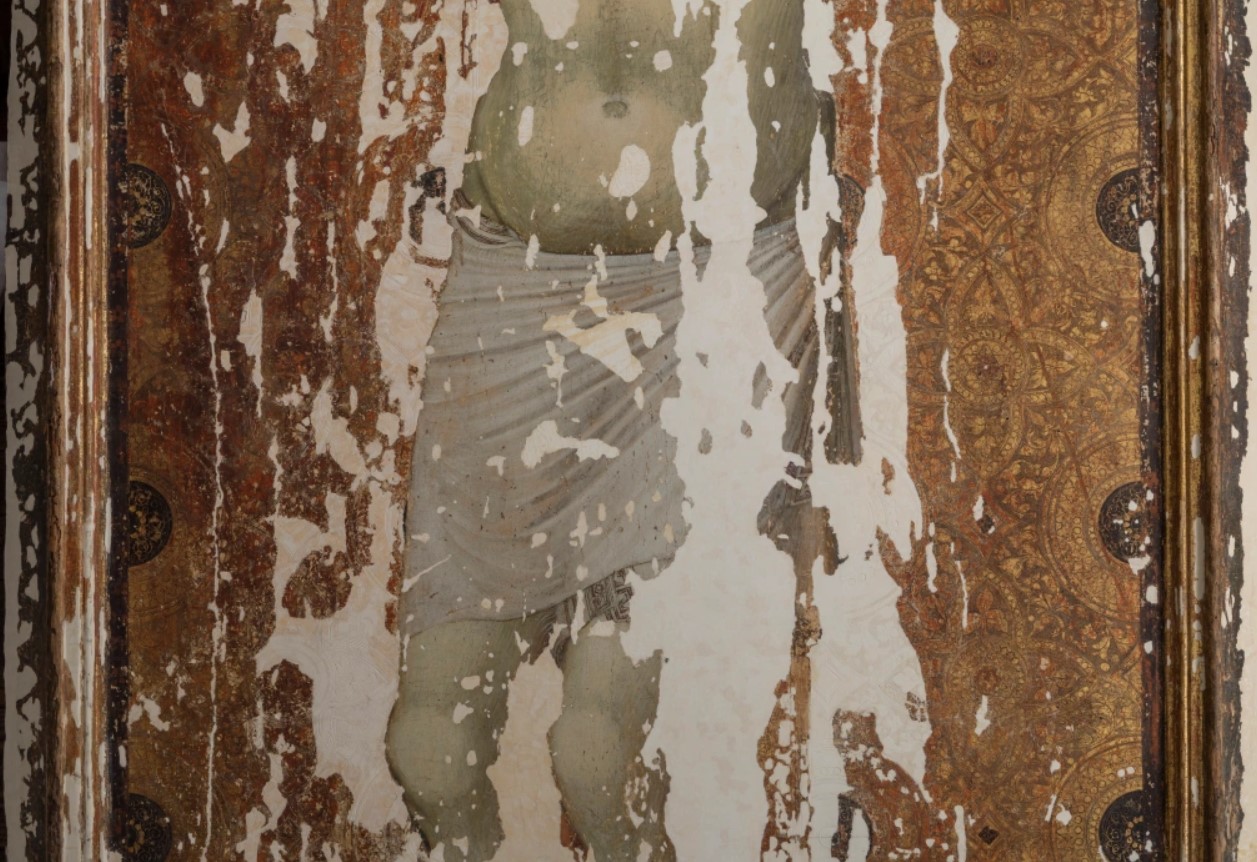
Prima di questo intervento l’opera era stata già sottoposta a un restauro, realizzato fra il 1953 e il 1956 a cura dell’ICR di Roma sotto la direzione di Cesare Brandi. Tale restauro mise in evidenza le parti originali, grazie alla rimozione delle ridipinture successive, che furono sostituite da campiture neutre in sottolivello.
Quel restauro, allineato alle teorie conservative del tempo, in gran parte valide ancora oggi, ha reso tuttavia la lettura dell’opera molto frammentaria.
L’obiettivo del restauro attuale è stato il recupero della materia originale, seguito però dalla reintegrazione cromatica delle lacune, per una lettura unitaria e più godibile dell’opera.

L’intervento è stato preceduto da un articolato programma di indagini scientifiche, a cura dell’IFAC-CNR e ISPC–CNR di Firenze che oltre ad essere stato un prezioso sostegno per il progetto di restauro, ha permesso di approfondire la sofisticata tecnica pittorica di Ambrogio Lorenzetti.
L’analisi stratigrafica ha evidenziato la modalità di stesura del sangue che scorre dalle ferite di Cristo, eseguito con due tipi di rosso: uno di base, più corposo e ricavato dal cinabro, al quale si sovrappone uno strato più scuro e brillante in lacca rossa, ottenuta col rosso kermes, un pigmento prezioso, più costoso dell’oro, che è segnale evidente di una committenza di rilievo.
L’intervento inoltre è stato un momento importante per condurre uno studio più approfondito della tecnica esecutiva ed è stato accompagnato da riflessioni sulle scelte conservative, in particolare sul fondo oro e sulle grandi lacune che interessavano il corpo del Cristo.
Il fondo dorato della croce non è solo una preziosa decorazione, ma ha rivelato, attraverso il restauro, uno studio sofisticato da parte di Ambrogio Lorenzetti sulla diffusione della luce.
All’epoca di Lorenzetti, quando la Croce era esposta in chiesa, l’illuminazione era data solo dalla luce naturale che filtrava dalle finestre, modificandosi nell’intensità e nella direzione a seconda delle ore del giorno, e dalle fiamme delle candele. Queste fonti di luce davano alla materia pittorica una luminosità viva e mutevole che metteva in valore la plasticità dell’anatomia dipinta del corpo di Cristo, dove i punti di maggiore rilievo sono le spalle e le ginocchia.
E proprio questo fondo dorato, realizzato dal pittore come un tessuto riccamente decorato quasi come fosse cuoio lavorato a bulino con figure geometriche probabilmente realizzate a compasso, appariva molto danneggiato.
Lo studio accurato dei moduli simmetrici ai lati del Cristo ha permesso di congiungere le linee perdute dei cerchi, senza applicare forzature e invenzioni che avrebbero condizionato la leggibilità dell’opera. Con la pulitura inoltre è emerso il legno dipinto della croce sulla quale è inchiodato il Cristo: la tonalità rosea e le venature verosimili, ora creano un forte contrasto con il tessuto geometrico del fondo.
Infine il trattamento delle numerose lacune ha rappresentato un momento fondamentale del restauro utile a ridare voce all’intenzione poetica e artistica di Ambrogio Lorenzetti e a restituire valore narrativo alla materia pittorica originale.
“Il restauro della Croce del Carmine di Ambrogio Lorenzetti è stato un progetto importante per la nostra fondazione poiché ci ha consentito di lavorare nuovamente per la conservazione del patrimonio di Siena, meta di tanti programmi di studio che, come Friends of Florence, organizziamo periodicamente per i nostri sostenitori .Siena da sempre è una città che affascina tutti i nostri benefattori. Quest’ultimo intervento, iniziato in piena pandemia, è stato davvero un progetto di grande soddisfazione, affiancare come donatori il meticoloso lavoro della restauratrice Muriel Vervat, seguito attentamente dal Direttore lavori Stefano Casciu e dal Direttore della Pinacoteca Nazionale Axel Hémery è stato un privilegio per Friends of Florence. Ci ha permesso di partecipare, passo dopo passo, al recupero conservativo del capolavoro.
È stato un lavoro magistrale durante il quale la condivisione delle scelte e delle riflessioni fra la restauratrice e gli storici dell’arte è stata davvero generativa poiché ha consentito non solo di tornare a fruire dell’opera nella sua incredibile bellezza, ma anche di apprendere nuove informazioni sulla tecnica e sulla maestria di Ambrogio Lorenzetti, vero caposaldo del Trecento Senese. – afferma Simonetta Brandolini d’Adda, Presidente di Friends of Florence
Simonetta Brandolini d’adda, presidente di Friends of Florence
Per il momento il vostro Michelangelo Buonarroti vi saluta dandovi appuntamento ai prossimi post e sui social.


The restoration of Lorenzetti’s Cross has been completed: the blood painted with a pigment more expensive than gold
It took almost three years of restoration and close collaboration between managements, specialists and precious economic supporters to be able to fully appreciate one of the masterpieces of fourteenth-century Sienese painting: the Croce del Carmine by Ambrogio Lorenzetti.
The painted Cross of the Carmine of Siena by Ambrogio Lorenzetti, after the careful restoration under the direction and scientific coordination of Stefano Casciu, curated by the restorer Muriel Vervat and created thanks to the generous contribution of Friends of Florence through the gift of The Giorgi Family Foundation , was presented today in the dedicated room of the Pinacoteca where it will remain on display until 8 January 2024.
At the end of the temporary exhibition the Carmine Cross will then be relocated to Room 7 of the Art Gallery, together with other works by Ambrogio Lorenzetti, an artist known above all as the Painter of Good Government in the Palazzo Pubblico of Siena.
The monumental work from the convent of San Niccolò al Carmine was deposited by the Municipality of Siena at the Royal Institute of Fine Arts of Siena in 1862, thus becoming part of that original nucleus of works that make up the collection of the National Art Gallery.
The events relating to the history of the Carmine convent suggest that the work was created around 1328-1330, a dating which is confirmed by the style.
Probably an early work by the artist closely linked to Giotto’s painting, but with ideas that characterized the master’s more mature production and a refined taste in the elaborate punch decoration of the board and the halo.
Lorenzetti, instead of painting the usual blue background behind Christ, preferred to choose to give shape to the realistic grain of the wood of the Cross. The painter’s skill lies precisely in the rendering of the naturalistic elements which is clearly expressed in the figure of Christ, in his anatomy modeled with chiaroscuro which effectively describes the muscle groups.
With a painting composed of thin, soft brushstrokes, Ambrogio outlines the beard and brown hair that fall to frame the face, from whose expression one perceives the last moment of pain before resigning oneself to death.
His head is tilted forward, with a dramatic effect accentuated by the halo in relief, and from below we can observe the full lips, but already veiled by a cyanotic reflection together with the half-closed eyelids that give the figure a human look.
The restoration
At the beginning of the works the work presented several conservation problems. During the 19th century, the infiltration of rainwater inside the Convent of Carmine in Siena caused significant and extensive loss of color in the painting, however sparing the face of Christ which remained protected by the halo projecting above the level of the cross.
Before this intervention the work had already undergone a restoration, carried out between 1953 and 1956 by the ICR of Rome under the direction of Cesare Brandi. This restoration highlighted the original parts, thanks to the removal of subsequent repaintings, which were replaced by neutral sub-level backgrounds.
That restoration, aligned with the conservative theories of the time, largely still valid today, however made the reading of the work very fragmentary.
The objective of the current restoration was the recovery of the original material, followed however by the chromatic reintegration of the gaps, for a unified and more enjoyable reading of the work.
The intervention was preceded by a complex program of scientific investigations, carried out by the IFAC-CNR and ISPC–CNR of Florence which, in addition to being a precious support for the restoration project, made it possible to delve deeper into the sophisticated pictorial technique of Ambrogio Lorenzetti.
The stratigraphic analysis highlighted the method of spreading the blood flowing from Christ’s wounds, performed with two types of red: a basic one, more full-bodied and obtained from cinnabar, on which a darker and brighter layer of red lacquer is superimposed , obtained with kermes red, a precious pigment, more expensive than gold, which is a clear sign of an important commission.
The intervention was also an important moment to conduct a more in-depth study of the execution technique and was accompanied by reflections on conservative choices, in particular on the gold background and on the large gaps that affected the body of Christ.
The golden background of the cross is not only a precious decoration, but has revealed, through the restoration, a sophisticated study by Ambrogio Lorenzetti on the diffusion of light.
At Lorenzetti’s time, when the Cross was displayed in the church, lighting was provided only by the natural light that filtered through the windows, changing in intensity and direction depending on the time of day, and by the flames of the candles. These light sources gave the pictorial material a lively and changing luminosity which highlighted the plasticity of the painted anatomy of Christ’s body, where the most important points are the shoulders and knees.
And precisely this golden background, created by the painter as a richly decorated fabric almost as if it were leather worked with a burin with geometric figures probably created with a compass, appeared very damaged.
The careful study of the symmetrical modules on the sides of Christ made it possible to join the lost lines of the circles, without applying forcing and inventions that would have affected the readability of the work. With the cleaning, the painted wood of the cross on which Christ is nailed also emerged: the pink hue and the realistic grain now create a strong contrast with the geometric fabric of the background.
Finally, the treatment of the numerous gaps represented a fundamental moment of the restoration useful for giving voice to the poetic and artistic intention of Ambrogio Lorenzetti and restoring narrative value to the original pictorial material.
“The restoration of Ambrogio Lorenzetti’s Croce del Carmine was an important project for our foundation as it allowed us to work again for the conservation of Siena’s heritage, the destination of many study programs which, like Friends of Florence, we organize periodically to our supporters. Siena has always been a city that fascinates all our benefactors. This latest intervention, which began in the midst of the pandemic, was truly a project of great satisfaction; supporting as donors the meticulous work of the restorer Muriel Vervat, carefully followed by the Director of Works Stefano Casciu and the Director of the National Art Gallery Axel Hémery was a privilege for Friends of Florence. It allowed us to participate, step by step, in the conservative recovery of the masterpiece.
It was a masterful work during which the sharing of choices and reflections between the restorer and the art historians was truly generative as it allowed us not only to return to enjoying the work in its incredible beauty, but also to learn new information on the technique and mastery of Ambrogio Lorenzetti, a true cornerstone of the Sienese fourteenth century. – says Simonetta Brandolini d’Adda, President of Friends of Florence
Simonetta Brandolini d’adda, president of Friends of Florence
For the moment, your Michelangelo Buonarroti greets you and will meet you in future posts and on social media.

Sostienici – Support Us
Se questo blog ti piace e ti appassiona, puoi aiutarci a farlo crescere sempre più sostenendoci in modo concreto condividendo i post, seguendo le pagine social e con un contributo che ci aiuta ad andare avanti con il nostro lavoro di divulgazione. . ENGLISH: If you like and are passionate about this blog, you can help us make it grow more and more by supporting us in a concrete way by sharing posts, following social pages and with a contribution that helps us to move forward with our dissemination work.
10,00 €
-
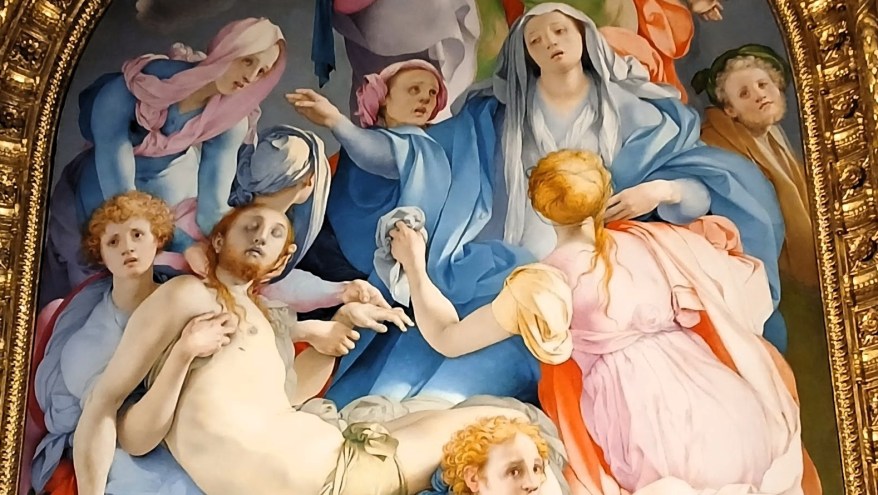
La Deposizione del Pontormo: il capolavoro dell’artista
🇮🇹Ti coinvolge. Ti mette a disagio. Ti costringe a sentire. E’ la Deposizione dalla Croce, dipinta da Jacopo Pontormo tra il 1525 e il 1528 per la Cappella Capponi… 🇬🇧It draws you in. It makes you uncomfortable. It forces you to feel. It’s the Deposition from the Cross, painted by Jacopo Pontormo between 1525 and…
-
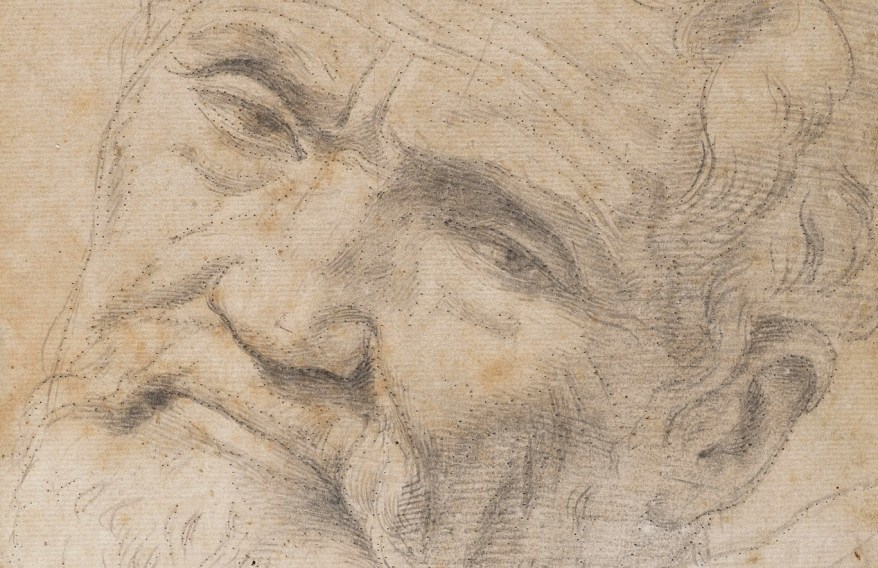
Non chiamatelo Braghettone: il 4 aprile del 1566 muore Daniele da Volterra, l’artista che salvò il Giudizio Universale
🇮🇹Braghettone? No, molto di più. Il 4 aprile 1566 moriva Daniele da Volterra, il mio allievo più fedele, l’uomo che mi rimase accanto fino all’ultimo respiro e che salvò il mio Giudizio Universale dalla distruzione… 🇬🇧Braghettone? No, much more. On April 4, 1566, Daniele da Volterra died, my most faithful student, the man who remained…
-
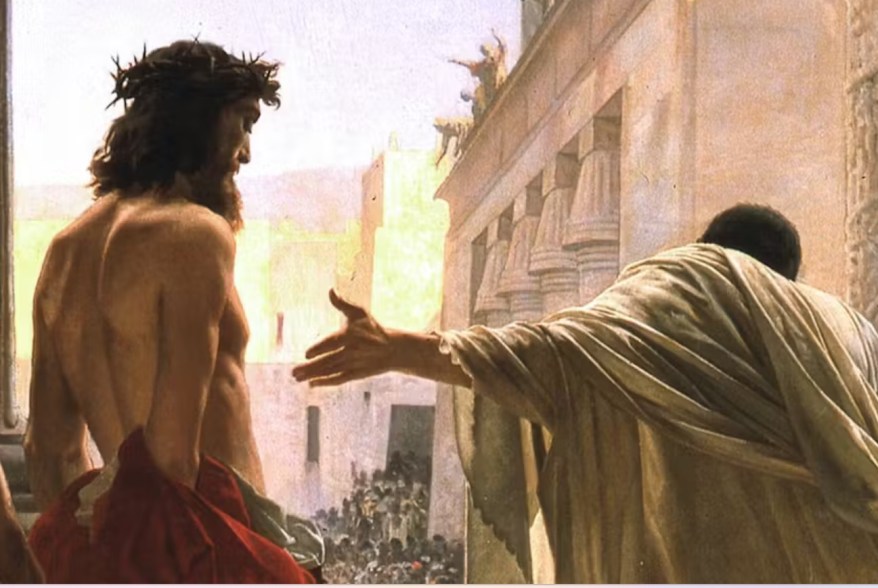
Venerdì Santo: gli “Ecce Homo” più intensi della storia dell’arte
🇮🇹Ecce Homo. Da Antonello da Messina a Tintoretto, fino al sorprendente capolavoro di Antonio Ciseri, questo soggetto ha attraversato i secoli raccontando dolore, umanità e coscienza… 🇬🇧Ecce Homo. From Antonello da Messina to Tintoretto, to Antonio Ciseri’s astonishing masterpiece, this subject has spanned the centuries, recounting pain, humanity, and conscience…
Condividi:


Questo sono io





sostienici

Sostienici – Support Us
Se questo blog ti piace e ti appassiona, puoi aiutarci a farlo crescere sempre più sostenendoci in modo concreto condividendo i post, seguendo le pagine social e con un contributo che ci aiuta ad andare avanti con il nostro lavoro di divulgazione. . ENGLISH: If you like and are passionate about this blog, you can help us make it grow more and more by supporting us in a concrete way by sharing posts, following social pages and with a contribution that helps us to move forward with our dissemination work.
€10,00


