
La Scultura del giorno: il busto di Thomas Baker del Bernini
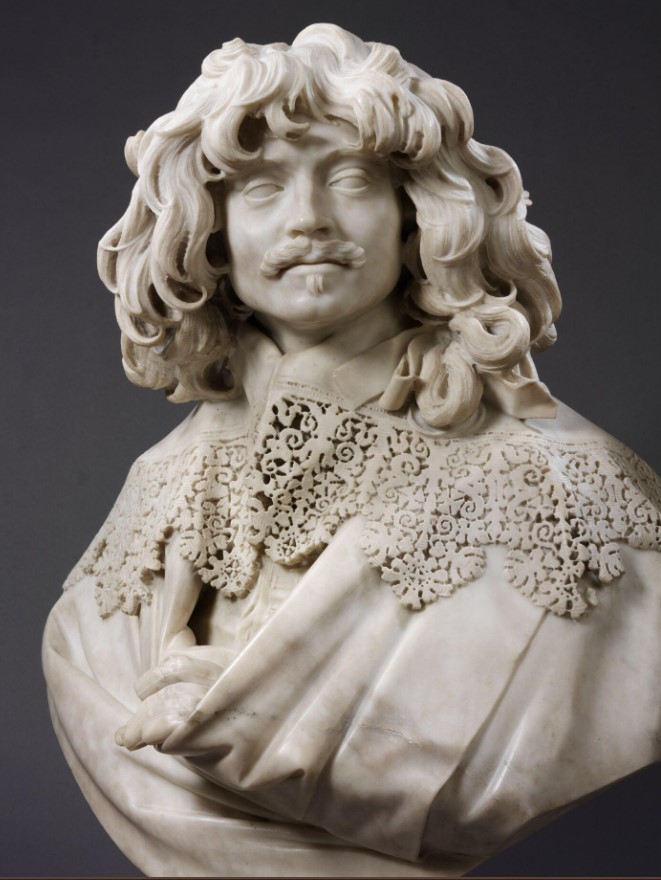
La scultura del giorno che voglio proporvi oggi è il busto di Thomas Baker scolpito dal Bernini nel 1638.
Ora bisogna dire che l’opera fu ideata e impostata dal grande Gian Lorenzo Bernini ma per la maggior parte il lavoro di esecuzione fu portato avanti da uno dei suoi aiuti più fidati: Andrea Bolgi detto più comunemente il Carrarino dato che nacque in quel di Carrara il 22 giugno del 1606.
I busti ritratto erano particolarmente richiesti nell’antica Roma e furono riportati in auge nel Quattrocento. Da quel momento in poi aumentò a dismisura l’interesse dei papi, alti prelati e membri influenti della società per far riprodurre il proprio volto nel marmo, a futura memoria.
La maggior parte dei busti commissionati agli scultori erano destinati all’esposizione pubblica e servivano per aumentare la propria autorevolezza.
Il busto di Thomas Baker invece è un po’ insolito perchè, a differenza dei busti scolpiti dei suoi contemporanei, si trattava di una commissione privata fatta a Bernini da un membro della società non così influente e assai modesto.

Durante il soggiorno francese del 1665, Bernini disegnò il volto del committente del busto studiandone a fondo l’espressione e la mimica facciale.
Una volta tornato in terra natìa, l’artista scolpì il blocco di marmo di Carrara andando a memoria e seguendo i disegni realizzati in precedenza per restituire al freddo marmo l’aspetto del reale volto di Baker.

Bernini a ragion veduta, era solito vantarsi di saper dare al marmo l’aspetto della carne: come dargli torto? Sapeva il fatto suo.
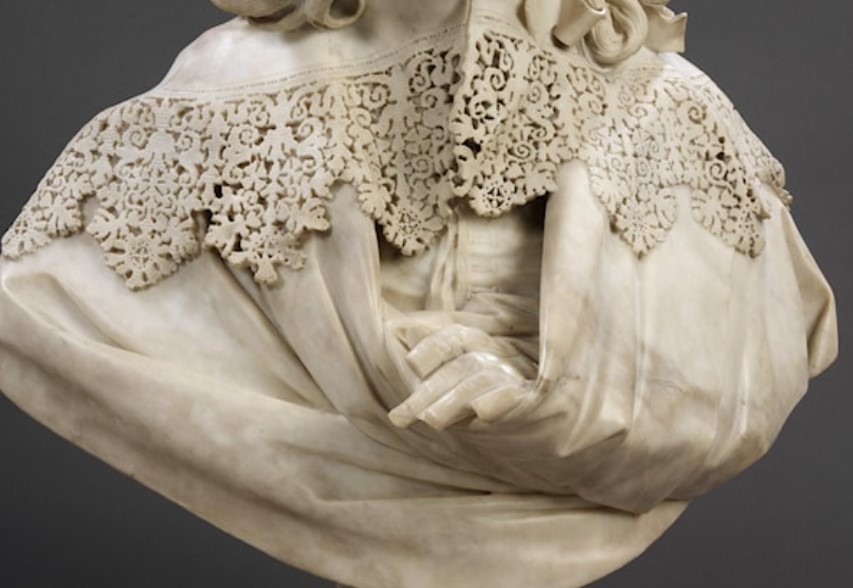
L’espressione che segna il volto di Thomas Baker è stata resa dall’artista con un realismo estremo così come sono mirabili i merletti che decorano il bavero del committente e quei capelli fluenti che sembrano morbidi come piume.

Ma chi era Thomas Baker? Nato nel 1606 fu l’alto sceriffo di Suffolk a partire dal 1657 e fu molto vicino alla corte di Carlo I.
Il busto in questione fu acquistato nel 1921 per un prezzo di 1480 ghinee dal Victoria and Albert Museum di Londra dove tutt’oggi è possibile apprezzarlo.
Per il momento il vostro Michelangelo Buonarroti vi saluta dandovi appuntamento ai proismi post e sui social.
Sculpture of the day: Bernini’s bust of Thomas Baker
The sculpture of the day that I want to offer you today is the bust of Thomas Baker sculpted by Bernini in 1638.
Now it must be said that the work was conceived and set up by the great Gian Lorenzo Bernini but for the most part the execution work was carried out by one of his most trusted assistants: Andrea Bolgi more commonly known as il Carrarino since he was born in Carrara on 22 June 1606.
Portrait busts were particularly in demand in ancient Rome and were revived in the fifteenth century. From that moment on, the interest of popes, high prelates and influential members of society increased dramatically in having their faces reproduced in marble for future memory.
Most of the busts commissioned to the sculptors were intended for public display and served to increase one’s authority. The bust of Thomas Baker, on the other hand, is a bit unusual because, unlike the sculpted busts of his contemporaries, it was a private commission made to Bernini by a not so influential and very modest member of society.
During his stay in France in 1665, Bernini drew the face of the patron of the bust by studying his expression and facial expressions in depth.
Once back in his native land, the artist sculpted the block of Carrara marble from memory and following the drawings previously made to restore the appearance of Baker’s real face to the cold marble.
Bernini, rightly so, used to boast of being able to give marble the appearance of flesh: how can you blame him? He knew his stuff.
The expression that marks Thomas Baker’s face was rendered by the artist with extreme realism just as the laces that decorate the collar of the client and that flowing hair that seem soft as feathers are wonderful.
But who was Thomas Baker? Born in 1606 he was High Sheriff of Suffolk from 1657 and was very close to the court of Charles I.
The bust in question was purchased in 1921 for a price of 1480 guineas by the Victoria and Albert Museum where it can still be appreciated today.
For the moment, your Michelangelo Buonarroti greets you by making an appointment at proismi posts and on social media.

Sostienici – Support Us
Se questo blog ti piace e ti appassiona, puoi aiutarci a farlo crescere sempre più sostenendoci in modo concreto condividendo i post, seguendo le pagine social e con un contributo che ci aiuta ad andare avanti con il nostro lavoro di divulgazione. . ENGLISH: If you like and are passionate about this blog, you can help us make it grow more and more by supporting us in a concrete way by sharing posts, following social pages and with a contribution that helps us to move forward with our dissemination work.
8,00 €
-
Cenacolo di Leonardo: i dettagli che raccontano il tradimento
🇮🇹Nel Cenacolo di Leonardo da Vinci, custodito a Santa Maria delle Grazie, Cristo annuncia il tradimento e il tempo si ferma… 🇬🇧In Leonardo da Vinci’s Last Supper, housed in Santa Maria delle Grazie, Christ announces the betrayal and time stands still…
-
La Lavanda dei Piedi di Tintoretto: Il Capolavoro Veneziano al Prado
🇮🇹Tra i capolavori più affascinanti del Rinascimento veneziano, “La Lavanda dei Piedi” di Jacopo Tintoretto rappresenta un perfetto equilibrio tra spiritualità, innovazione compositiva e straordinaria forza narrativa… 🇬🇧Among the most fascinating masterpieces of the Venetian Renaissance, Jacopo Tintoretto’s “The Washing of the Feet” represents a perfect balance between spirituality, compositional innovation, and extraordinary narrative force…
-
Il Sacrificio di Isacco e quel momento tra la vita e la morte
🇮🇹Oggi voglio raccontarvi alcuni dettagli sul mio disegno del Sacrificio di Isacco, conservato oggi a Casa Buonarroti. Su quel foglio volli tracciare il momento preciso in cui la paura fa spazio al miracolo… 🇬🇧Today I want to tell you some details about my drawing of the Sacrifice of Isaac, now preserved at Casa Buonarroti. On…
Condividi:


Questo sono io





sostienici

Sostienici – Support Us
Se questo blog ti piace e ti appassiona, puoi aiutarci a farlo crescere sempre più sostenendoci in modo concreto condividendo i post, seguendo le pagine social e con un contributo che ci aiuta ad andare avanti con il nostro lavoro di divulgazione. . ENGLISH: If you like and are passionate about this blog, you can help us make it grow more and more by supporting us in a concrete way by sharing posts, following social pages and with a contribution that helps us to move forward with our dissemination work.
€10,00


