
La Scultura del giorno: Cupido con la farfalla di Antoine Denis Chaudet
La scultura di cui vi parlo oggi è il Cupido con la farfalla scolpita da Antoine Denis Chudet.
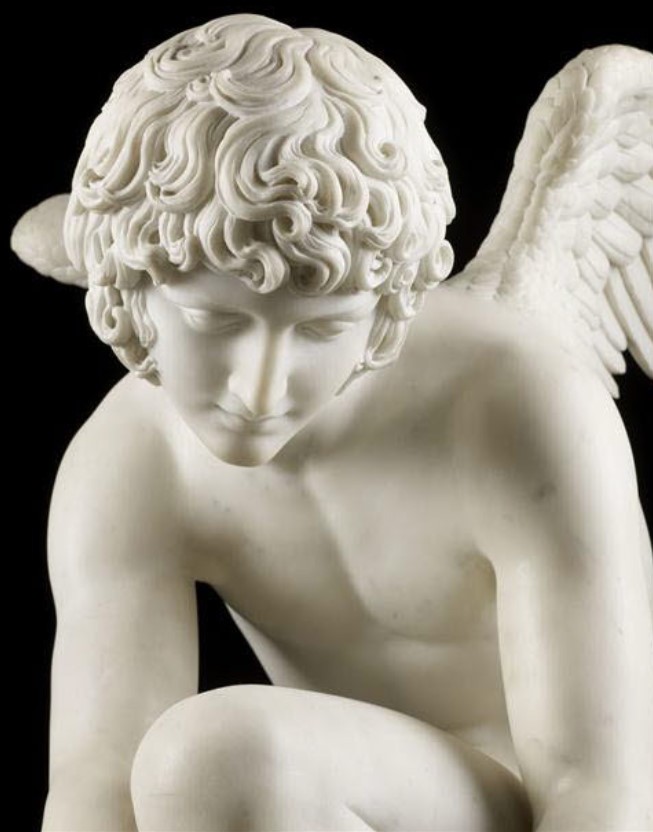
L’artista francese si lasciò influenzare non poco dallo stile neoclassico di Canova tanto che il suo personale modo di dar forma alle opere cambiò radicalmente dopo il periodo trascorso a Roma fra il 1784 e il 1789.
Fu un’artista amato da Napoleone il quale volle commissionargli diversi lavori fra il quali La Pace, nel 1805.
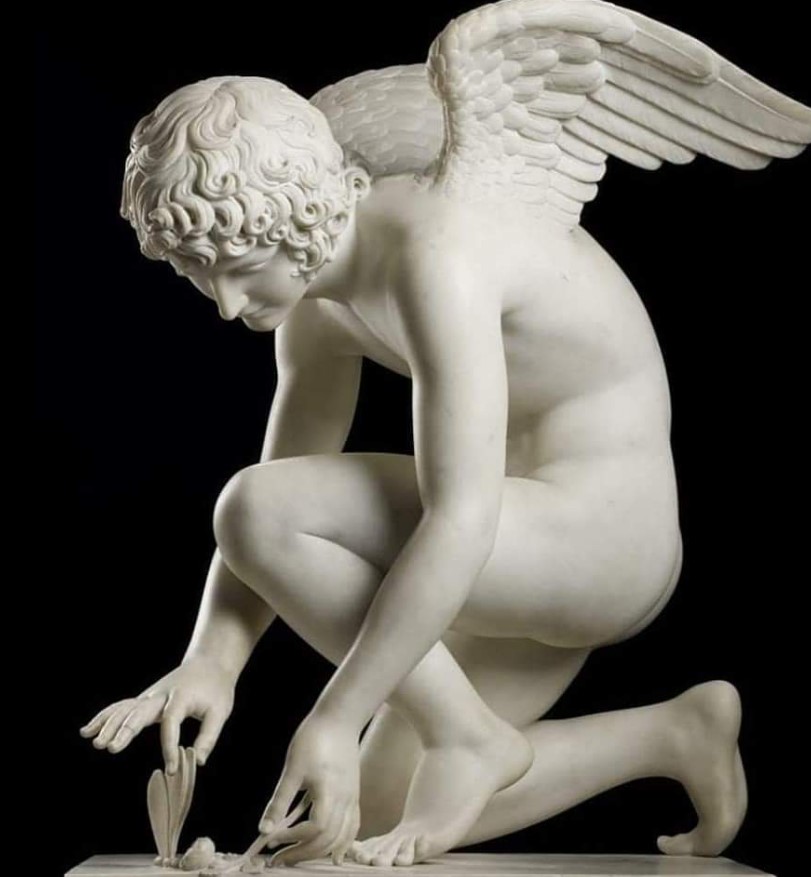
Chaudet presentò il modello in gesso del Cupido con la farfalla al Salone di Parigi del 1802 ma non ebbe modo né tempo di trasporre il marmo la sua opera.
Nel 1810 passò a miglior vita e fu l’amico e collaboratore Pierre Cartellier a scolpire l’opera a grandezza naturale attenendosi scrupolosamente al gesso e portando a termine il lavoro nel 1817.
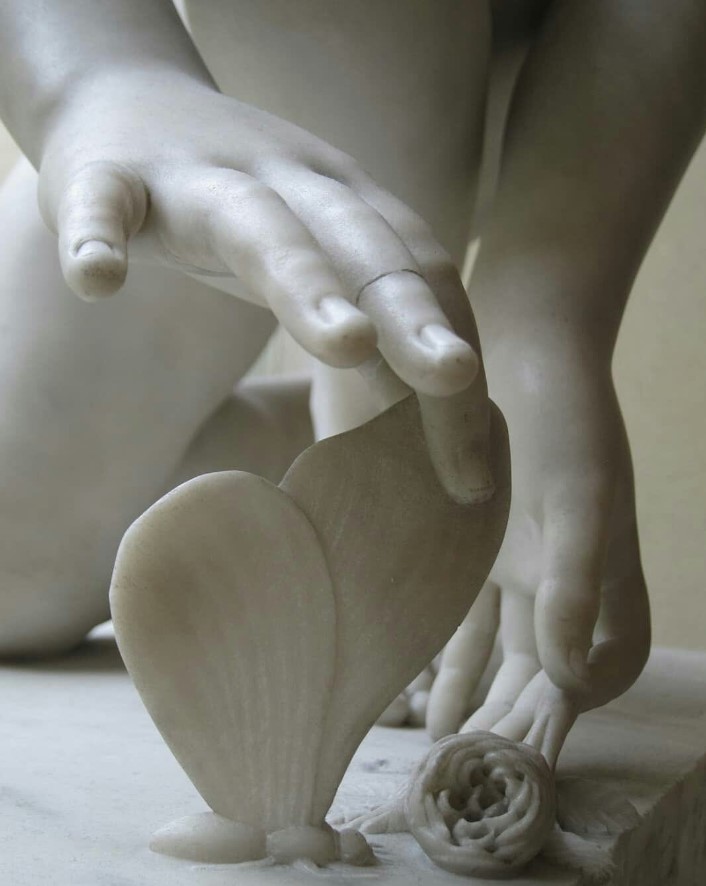
Il Cupido sembra stia giocando con la farfalla ma le cose non stanno esattamente così: in realtà la sta tormentando. L’insetto rappresenta psiche o l’anima, in preda alle pene d’amore inflittele senza via di scampo.
Sembra quasi che la farfalla stia tentando di raggiungere la rosa attratta dai suoi effluvi mentre Cupido la trattiene per il gusto di non farla arrivare a ciò che desidera più di ogni altra cosa.
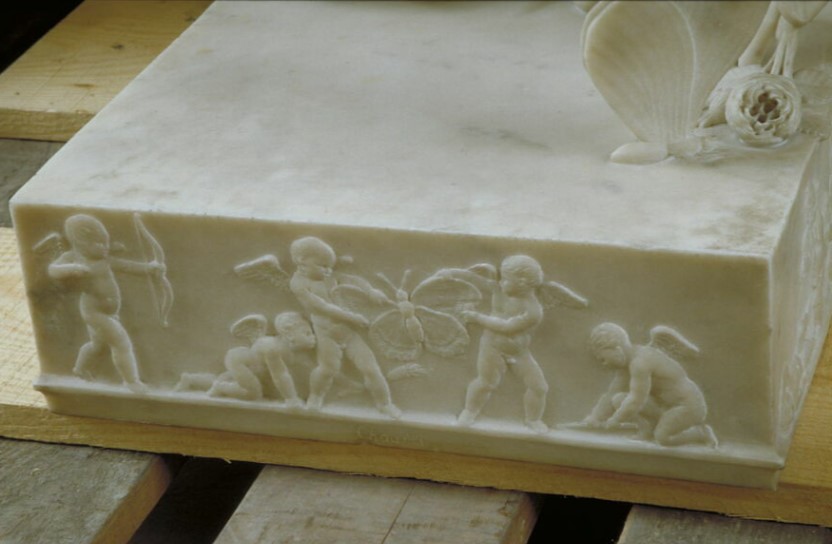
Nel basamento dell’opera si ribadisce il concetto che l’artista ha proposto nella scultura con cupido alato che tenta di scoccare la freccia in direzione della farfalla trattenuta da due putti mentre altri due soffiano sulle fiaccole accese, alimentando sempre di più il desiderio d’amore.
L’opera apparteneva alla vedova di Chaudet e fu acquistata da lei dalla Maison du Roi e collocata il 20 giugno del 1817 nel Grand Trianon di Versailles.
Dal 1847 fa parte delle collezioni del Museo del Louvre.

Per il momento il vostro Michelangelo Buonarroti vi saluta dandovi appuntamento ai prossimi post e sui social.
Sculpture of the day: Cupid with butterfly by Antoine Denis Chaudet
The sculpture I’m telling you about today is the Cupid with the butterfly sculpted by Antoine Denis Chudet.
The French artist let himself be greatly influenced by Canova’s neoclassical style, so much so that his personal style changed radically after the period he spent in Rome between 1784 and 1789. He was an artist loved by Napoleon who commissioned him various works between such as Peace, in 1805.
Chaudet presented the plaster model of Cupid with the butterfly at the Paris Salon of 1802 but had no way or time to transpose his work into marble.
In 1810 he passed away and it was his friend and collaborator Pierre Cartellier who sculpted the life-size work scrupulously sticking to plaster, completing the work in 1817.
The Cupid who appears to be playing with the butterfly is actually tormenting it. The insect represents the psyche or the soul, prey to the pains of love inflicted on it with no way out.
It almost seems that the butterfly is trying to reach the rose, attracted by her scents, but that cupid holds her back for the sake of not letting her get to what he wants more than anything else.
The base of the work reiterates the concept that the artist proposed in the sculpture with a winged cupid who tries to shoot the arrow in the direction of the butterfly held by two putti while two others blow on the lit torches, fueling more and more the desire to Love.
The work belonged to the widow of Chaudet and was purchased by her from the Maison du Roi and placed on 20 June 1817 in the Grand Trianon of Versailles. Since 1847 it has been part of the collections of the Louvre Museum.
For the moment, your Michelangelo Buonarroti greets you by making an appointment for the next posts and on social media.

Sostienici – Support Us
Se questo blog ti piace e ti appassiona, puoi aiutarci a farlo crescere sempre più sostenendoci in modo concreto condividendo i post, seguendo le pagine social e con un contributo che ci aiuta ad andare avanti con il nostro lavoro di divulgazione. . ENGLISH: If you like and are passionate about this blog, you can help us make it grow more and more by supporting us in a concrete way by sharing posts, following social pages and with a contribution that helps us to move forward with our dissemination work.
8,00 €
-
La Pietà di Tincolini: a Pontedera l’arte torna a fare domande scomode
🇮🇹“Pietà”, la scultura di Filippo Tincolini, insieme alle parole di Federico Quaranta e Andrea Pezzi, non è stato solo uno spettacolo. È stata una domanda lanciata in faccia al pubblico, impossibile da evitare: siamo ancora capaci di provare pietà? 🇬🇧 “Pietà,” Filippo Tincolini’s sculpture, along with the words of Federico Quaranta and Andrea Pezzi, wasn’t…
-
Ai Musei Vaticani i fasti barocchi di Urbano VIII: in mostra gli arazzi della manifattura Barberini
🇮🇹A quattro secoli dalla consacrazione della Basilica di San Pietro, i Musei Vaticani dedicano una mostra all’Arazzeria Barberini, simbolo di una cultura visiva capace di fondere magnificenza estetica e affermazione politica… 🇬🇧Four centuries after the consecration of St. Peter’s Basilica, the Vatican Museums are dedicating an exhibition to the Barberini Tapestry Factory, a symbol of…
-
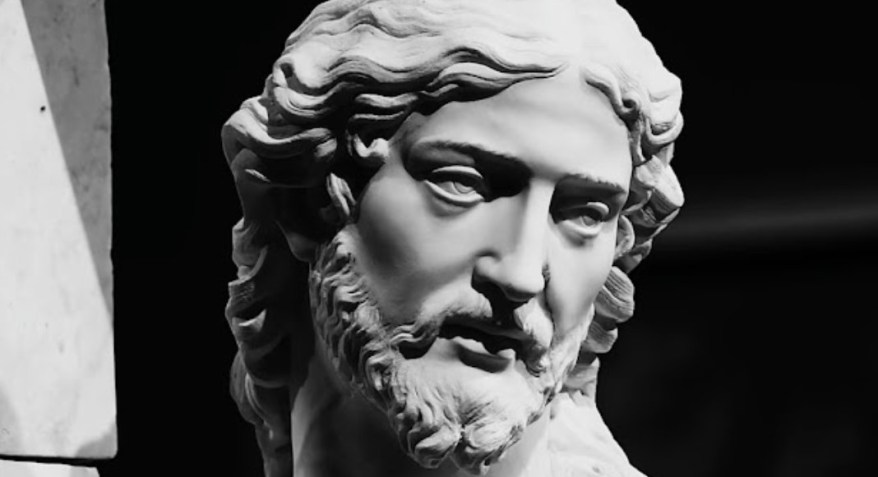
Le Opere della Pasqua: come la Resurrezione ha ispirato Arte e Cultura
🇮🇹La Pasqua, oltre ad essere una ricorrenza religiosa è un momento in cui la storia, l’arte e la spiritualità si intrecciano per raccontare il fulcro della fede cristiana: la resurrezione di Cristo. .. 🇬🇧Easter, beyond being a religious holiday, is a moment when history, art, and spirituality intertwine to recount the core of the Christian…
Condividi:


Questo sono io





sostienici

Sostienici – Support Us
Se questo blog ti piace e ti appassiona, puoi aiutarci a farlo crescere sempre più sostenendoci in modo concreto condividendo i post, seguendo le pagine social e con un contributo che ci aiuta ad andare avanti con il nostro lavoro di divulgazione. . ENGLISH: If you like and are passionate about this blog, you can help us make it grow more and more by supporting us in a concrete way by sharing posts, following social pages and with a contribution that helps us to move forward with our dissemination work.
€10,00


