

La Scultura del giorno: Giacobbe e l’Angelo del Maderno
La scultura del giorno che vi propongo oggi è il gruppo di Giacobbe e l’Angelo scolpito da Stefano Maderno attorno al 1628, oggi ubicato nella sublime Galleria degli Specchi della Galleria Doria Pamphilj a Roma.
L’opera fu impostata dall’artista per una visione frontale ma ciò non toglie che guardandola da altri punti di vista proponga interessanti scorci da osservare con attenzione.
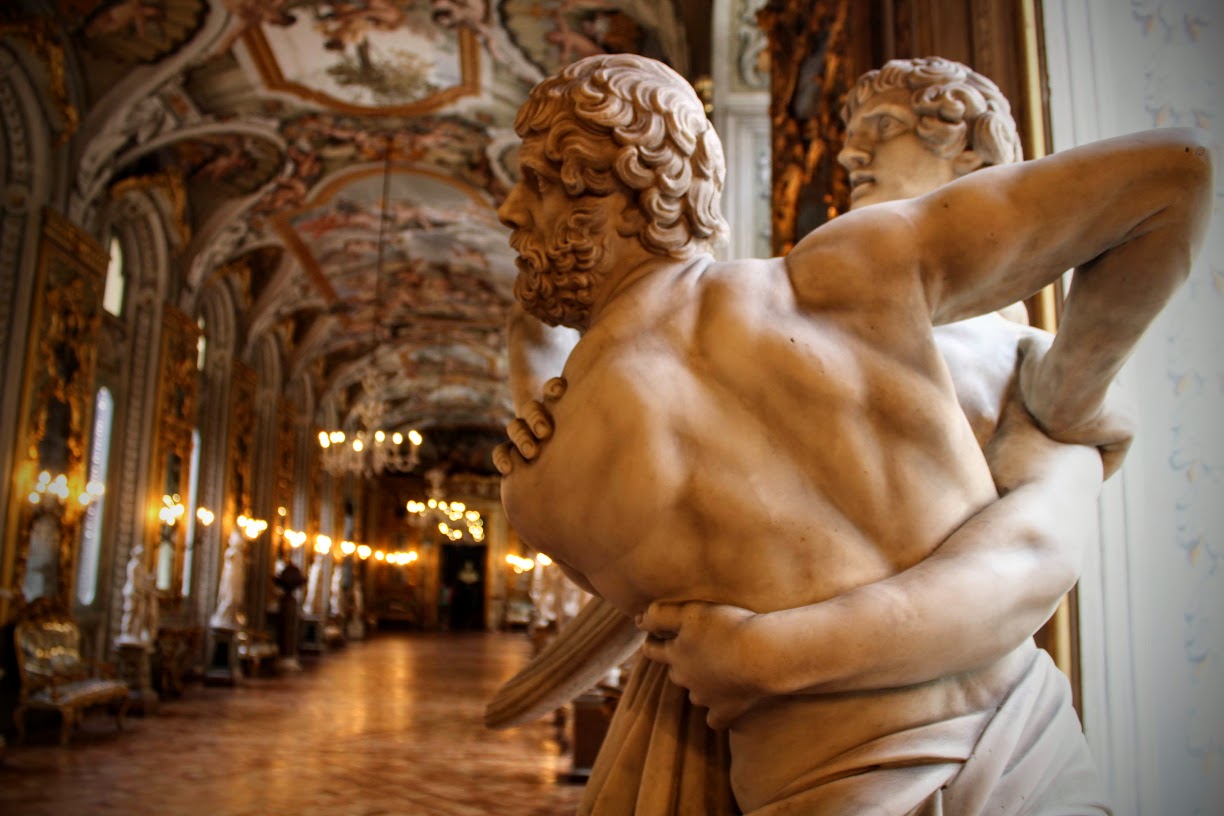
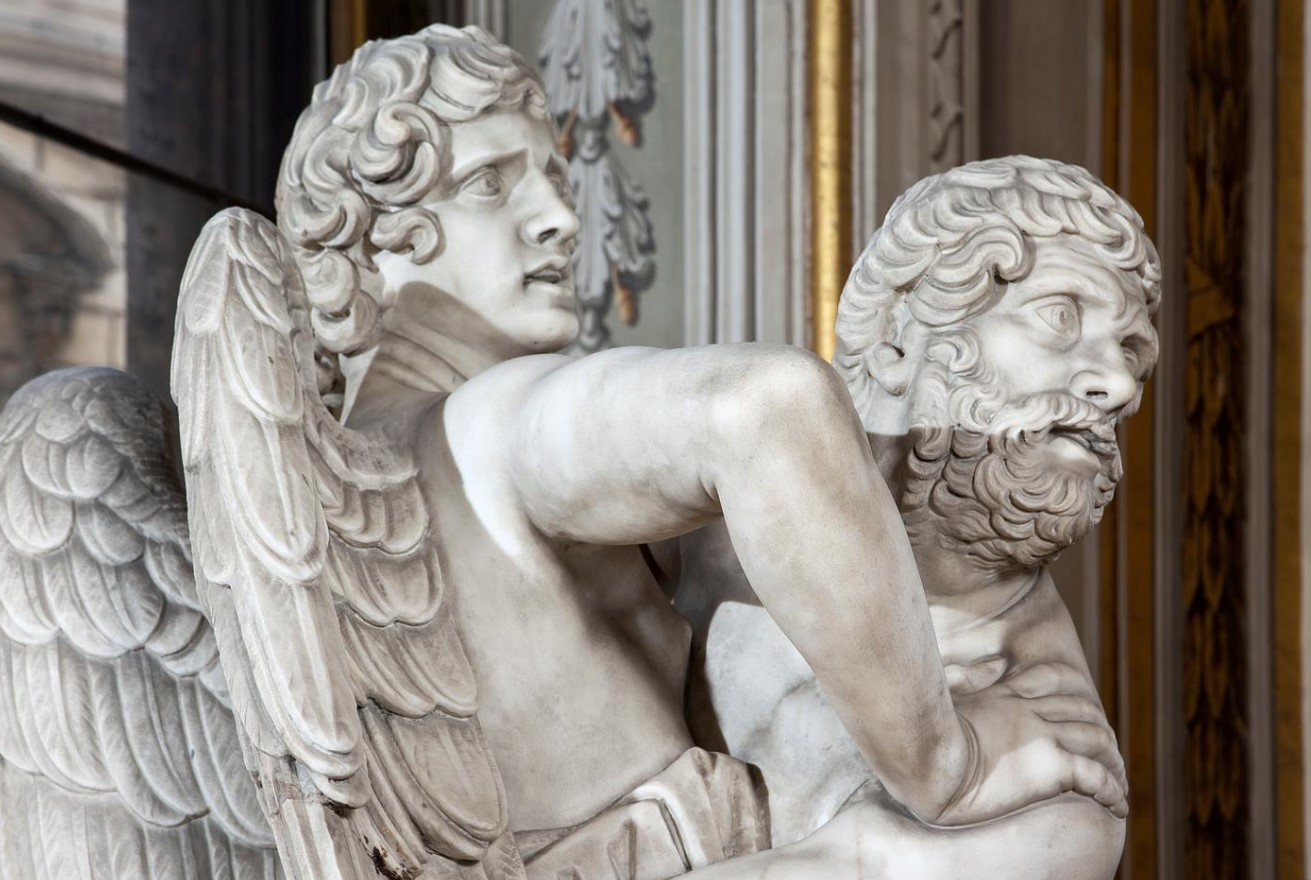
I protagonisti della scultura sono un giovane angelo di bell’aspetto e un uomo in età matura. Entrambi guardano nella medesima direzione e hanno il volto segnato da un’espressione di stupore, quasi come se all’improvviso fossero colti da una qualche visione capace di distrarli dalla lotta.
Quella sospensione della contesa è resa in modo ottimale dal Maderno che riesce a suggerire senza mostrare una terza presenza. Lo sguardo di Giacobbe e quello dell’angelo lasciano intuire che il loro sospendere l’azione è causato da una figura che seppur non rappresentata, è percettibile.
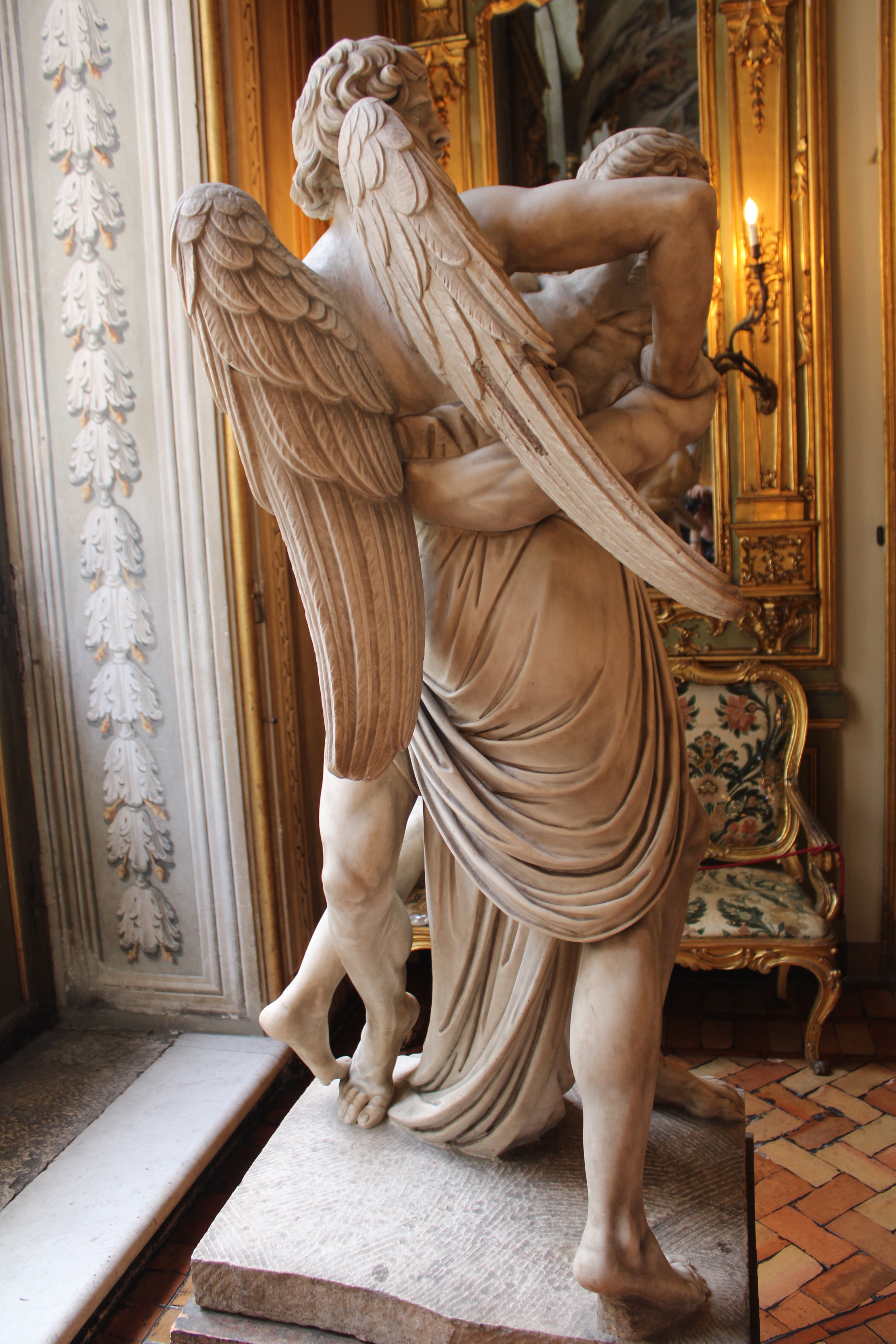
Si tratta di una luce fortemente simbolica e forse un tempo, nella collocazione originale, l’opera davvero veniva investita da una fonte luminosa naturale che rendeva ancora più coinvolgente il gruppo scultoreo del Maderno.
Lo scultore non fa altro che scolpire nel marmo ciò che narra il racconto biblico: la colluttazione fra l’angelo e Giacobbe.
Quando infatti Giacobbe ritornò assieme alla famiglia verso il paese d’origine, lungo il cammino si fermò presso il torrente Iabbok. Lì rimase da solo lottando con un angelo fino all’aurora. Siccome non riusciva a vincerlo, la creatura celeste gli percosse il femore lussandolo.
Disse l’Angelo “lasciami andare che spunta l’Aurora” e Giacobbe rispose “non ti lascerò partire se prima non mi avrai benedetto”. “Qual è il tuo nome?” “Giacobbe” “Non più Giacobbe sarà il tuo nome ma Israele, perché hai combattuto con Dio e con gli uomini e hai vinto” (Gen 32, 23-30)
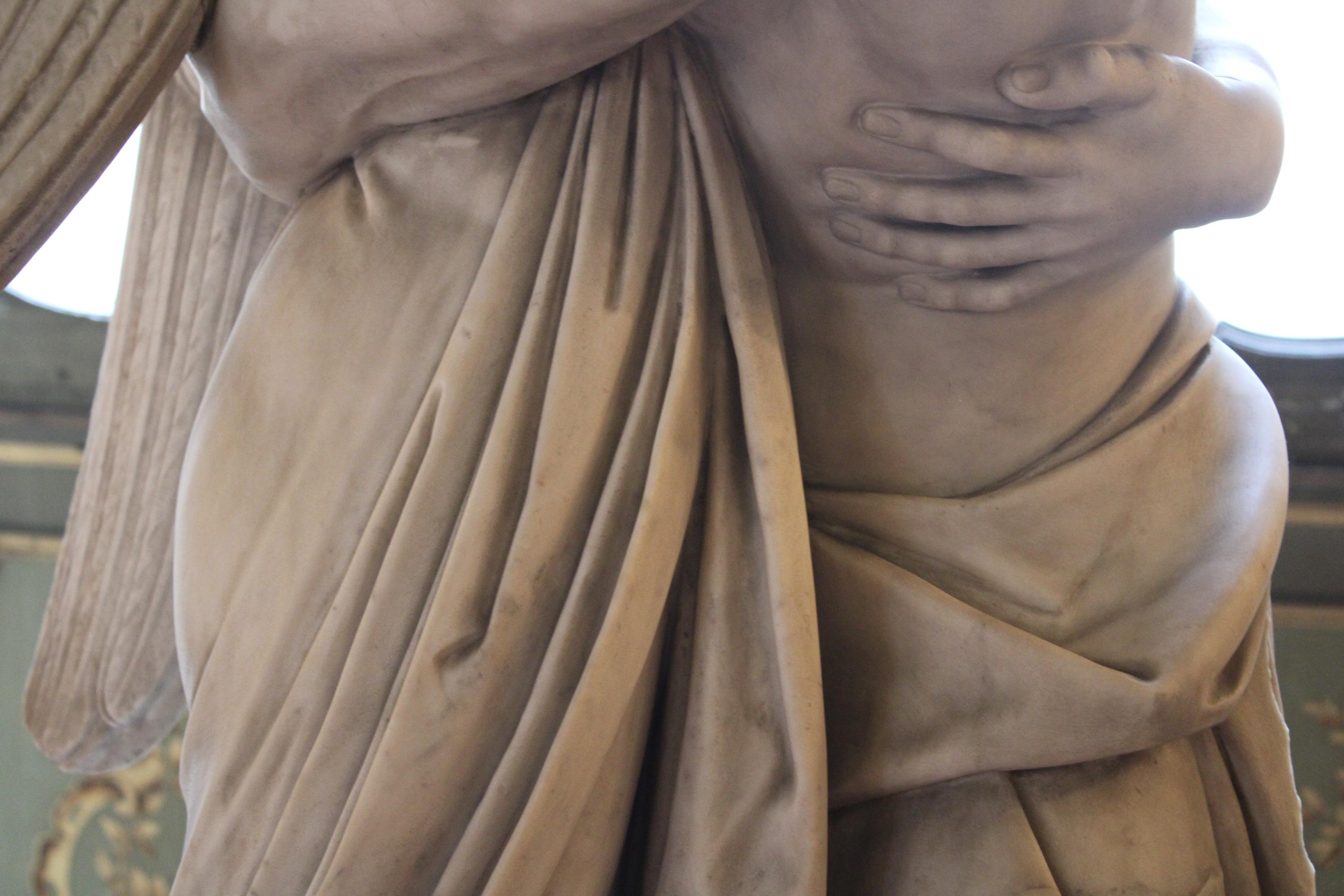
Quindi il fenomeno che distrae i due lottatori è l’aurora, simbolo metaforico di una nova era per il popolo di Dio che da allora prese il nome di Israele.
Il tema iconografico di Giacobbe e l’angelo non è uno dei più ricorrenti nella storia dell’arte del Seicento. Probabilmente il Maderno, per dar forma al suo gruppo, trasse ispirazione dal motivo della porta meridionale della Basilica della Santa Casa di Loreto, realizzato tempo prima da Antonio Calcagni.
Dagli archivi della famiglia Pamphilj risulta che il 29 agosto del 1645 furono pagati sedici facchini per il trasporto del gruppo di Giacobbe e l’Angelo da casa di monsignor Raggi fino alla Vigna.
Da allora l’opera iniziò a far parte ininterrottamente delle collezioni Pamphilj anche se passò un po’ di tempo prima di essere posizionata laddove oggi è possibile ammirarla.
Per il momento il vostro Michelangelo Buonarroti vi saluta dandovi appuntamento ai prossimi post e sui social.

Sculpture of the day: Jacob and the Angel by Maderno
The sculpture of the day that I propose to you today is the group of Jacob and the Angel sculpted by Stefano Maderno around 1628, now located in the sublime Galleria degli Specchi of the Galleria Doria Pamphilj in Rome.
The work was set up by the artist for a frontal view but the fact remains that looking at it from other points of view it offers interesting glimpses to observe carefully.
The protagonists of the sculpture are a good-looking young angel and a man of mature age. Both look in the same direction and their faces are marked by an expression of amazement, almost as if they were suddenly seized by some vision capable of distracting them from the fight.
That suspension of the dispute is best rendered by Maderno who manages to suggest without showing a third presence. Jacob’s gaze and that of the angel let us intuit that their suspension of the action is caused by a figure which, although not represented, is perceptible.
It is a strongly symbolic light and perhaps once, in the original location, the work was really hit by a natural light source that made Maderno’s sculptural group even more engaging.
The sculptor does nothing but sculpt in marble what the biblical story narrates: the scuffle between the angel and Jacob.
In fact, when Jacob returned with his family to the country of origin, along the way he stopped at the Jabbok stream. There he remained alone wrestling with an angel until dawn. Since he could not win it, the celestial creature struck his femur dislocating it.
The Angel said “let me go until dawn appears” and Jacob replied “I will not let you leave unless you first bless me”. “What’s your name?” “Jacob” “Your name will no longer be Jacob but Israel, because you fought with God and with men and won” (Gen 32, 23-30)
So the phenomenon that distracts the two wrestlers is the dawn, a metaphorical symbol of a new era for the people of God who have since taken the name of Israel.
The iconographic theme of Jacob and the angel is not one of the most recurring in the history of seventeenth-century art. Probably Maderno, to give shape to his group, drew inspiration from the motif of the southern door of the Basilica of the Santa Casa in Loreto, created some time before by Antonio Calcagni.
From the archives of the Pamphilj family it appears that on 29 August 1645 sixteen porters were paid to transport the group of Jacob and the Angel from Monsignor Raggi’s house to the Vineyard.
Since then the work began to be part of the Pamphilj collections without interruption even if it took some time before it was positioned where it can be admired today.
For the moment, your Michelangelo Buonarroti greets you by making an appointment for the next posts and on social media.

Sostienici – Support Us
Se questo blog ti piace e ti appassiona, puoi aiutarci a farlo crescere sempre più sostenendoci in modo concreto condividendo i post, seguendo le pagine social e con un contributo che ci aiuta ad andare avanti con il nostro lavoro di divulgazione. . ENGLISH: If you like and are passionate about this blog, you can help us make it grow more and more by supporting us in a concrete way by sharing posts, following social pages and with a contribution that helps us to move forward with our dissemination work.
8,00 €
-
La Pietà di Tincolini: a Pontedera l’arte torna a fare domande scomode
🇮🇹“Pietà”, la scultura di Filippo Tincolini, insieme alle parole di Federico Quaranta e Andrea Pezzi, non è stato solo uno spettacolo. È stata una domanda lanciata in faccia al pubblico, impossibile da evitare: siamo ancora capaci di provare pietà? 🇬🇧 “Pietà,” Filippo Tincolini’s sculpture, along with the words of Federico Quaranta and Andrea Pezzi, wasn’t…
-
Ai Musei Vaticani i fasti barocchi di Urbano VIII: in mostra gli arazzi della manifattura Barberini
🇮🇹A quattro secoli dalla consacrazione della Basilica di San Pietro, i Musei Vaticani dedicano una mostra all’Arazzeria Barberini, simbolo di una cultura visiva capace di fondere magnificenza estetica e affermazione politica… 🇬🇧Four centuries after the consecration of St. Peter’s Basilica, the Vatican Museums are dedicating an exhibition to the Barberini Tapestry Factory, a symbol of…
-
Le Opere della Pasqua: come la Resurrezione ha ispirato Arte e Cultura
🇮🇹La Pasqua, oltre ad essere una ricorrenza religiosa è un momento in cui la storia, l’arte e la spiritualità si intrecciano per raccontare il fulcro della fede cristiana: la resurrezione di Cristo. .. 🇬🇧Easter, beyond being a religious holiday, is a moment when history, art, and spirituality intertwine to recount the core of the Christian…
Condividi:


Questo sono io





sostienici

Sostienici – Support Us
Se questo blog ti piace e ti appassiona, puoi aiutarci a farlo crescere sempre più sostenendoci in modo concreto condividendo i post, seguendo le pagine social e con un contributo che ci aiuta ad andare avanti con il nostro lavoro di divulgazione. . ENGLISH: If you like and are passionate about this blog, you can help us make it grow more and more by supporting us in a concrete way by sharing posts, following social pages and with a contribution that helps us to move forward with our dissemination work.
€10,00


1 commento »