
150 anni fa il David iniziò il viaggio verso la Galleria dell’Accademia
150 anni fa, il 31 luglio del 1873, il David iniziò a spostarsi da Piazza della Signoria verso la Galleria dell’Accademia che lo avrebbe accolto al riparo dagli agenti atmosferici.
Non solo. Nel corso dei secoli il baricentro dell’opera si era spostato in avanti e andava a sollecitare le caviglie che già presentavano dei cretti, ovvero delle fessurazioni. Era necessario riposizionare il baricentro nella posizione originale al più presto per evitare problematiche importanti alla stabilità del colosso.
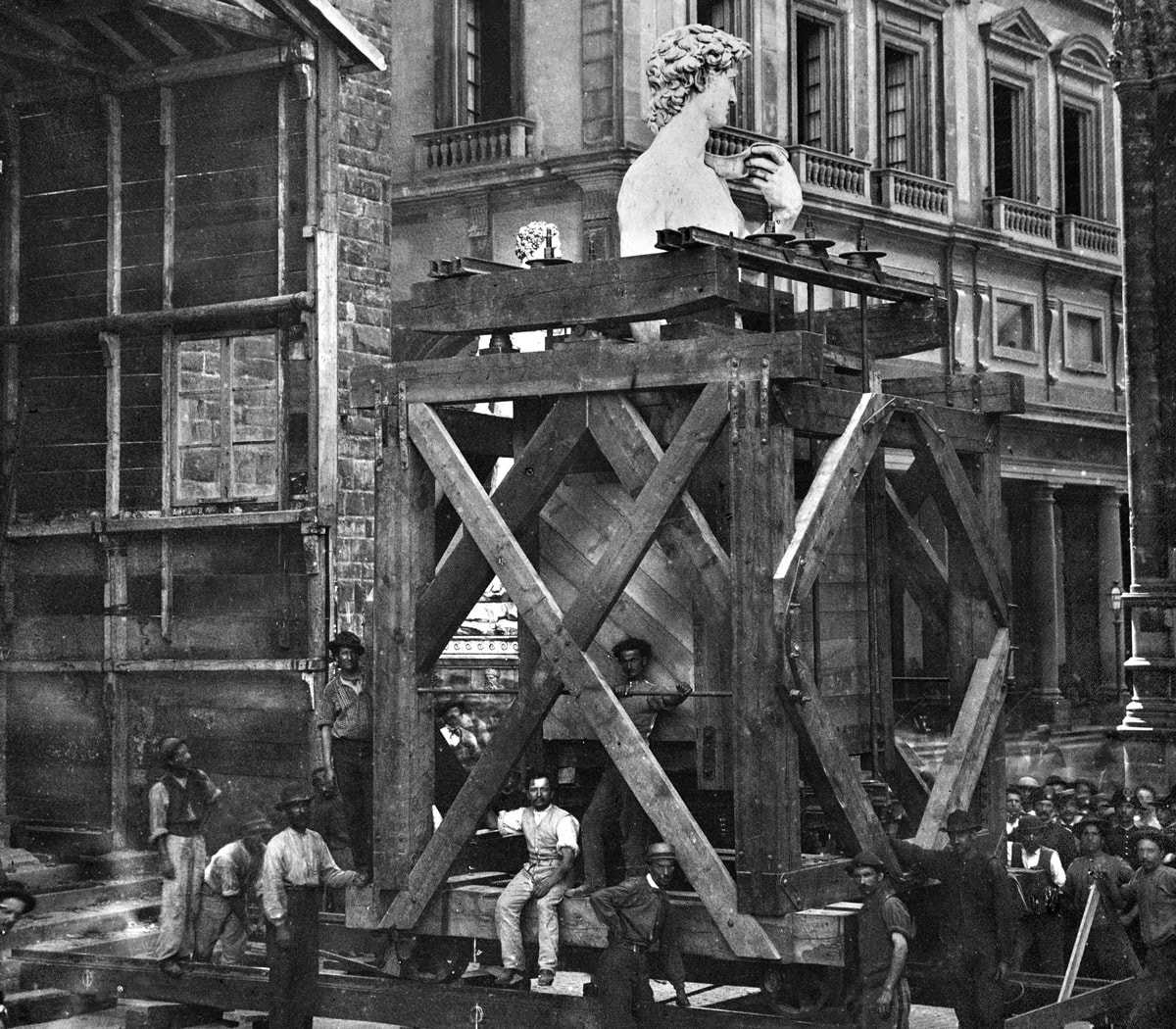
Qualche mese prima, nel maggio dello stesso anno, era stato affidato all’architetto Emilio de Fabris e all’ingegnere Porra il compito di coordinare e mettere a punto il trasporto del gigante di marmo, curandone ogni minimo dettaglio.
Non è un caso che i due scelsero di trasportare l’opera su rotaie, mettendo a punto una sorta di carrozza ferroviaria che si spostava su quattro ruote. Francesco Porra era infatti un ingegnere delle ferrovie e conosceva bene vantaggi e svantaggi di quel tipo di trasporto.
Il carro per il trasporto
Per l’occasione fu progettato un particolare carro di legno all’interno del quale, con non poca fatica, fu posizionato verticalmente il David, senza piedistallo.
Fino alla zona del diaframma la scultura era contenuta in una cassa di legno e poi legata fermamente all’opera nella zona della base, all’altezza delle ginocchia e nella parte più alta delle gambe.

Per attenuare l’effetto delle scosse e delle vibrazioni durante lo spostamento, venne predisposto un apparto di sospensione dotato di robuste molle a spirale in acciaio.
Il carro avanzava lentamente su delle rotaie e, per affrontare le curve obbligate dagli angoli delle strade, fu predisposto un piano girante.
Tutti i dispositivi meccanici che hanno consentito di condurre il David fino all’Accademia furono realizzati nelle officine delle Strade Ferrate Romane.
Il piedistallo perduto per sempre
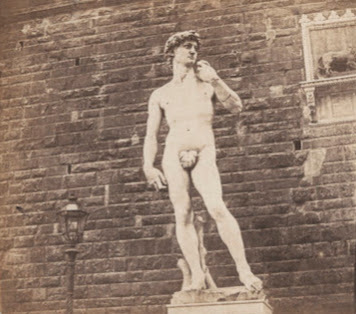
Lo spostamento del David fu un lavoro colossale e non privo di qualsiasi rischio. Per far scendere dall’arengario di Palazzo Vecchio il colosso, non ci fu altro modo che distruggere letteralmente il piedistallo originale che potete vedere nella foto che vi propongo a seguire.

Un vero peccato ma la priorità del momento era quella di mettere al riparo la scultura che, anche a causa dell’ardito intervento di restauro del Costoli, aveva accelerato negli ultimi tempi il processo di degrado causato da lunghi secoli di esposizione agli agenti atmosferici.
Il basamento originale recava la scritta latina Exemplum salutis publicae cives posvere.
La durata del trasferimento del David
Il trasporto durò cinque giorni: dal 31 luglio al 4 di agosto del 1873. Si lavorava allo spostamento dalle 4 fino alle 11 del mattino perché poi iniziava a fare troppo caldo e diventava difficoltoso per gli addetti al lavoro faticare sotto il sole a picco.
Il David fece il suo ingresso trionfale nella Galleria dell’Accademia passando attraverso un varco appositamente aperto in una delle pareti.
L’operazione si concluse senza veruno incidente”
Scrissero il Poggi e il Porra nel diario dello spostamento
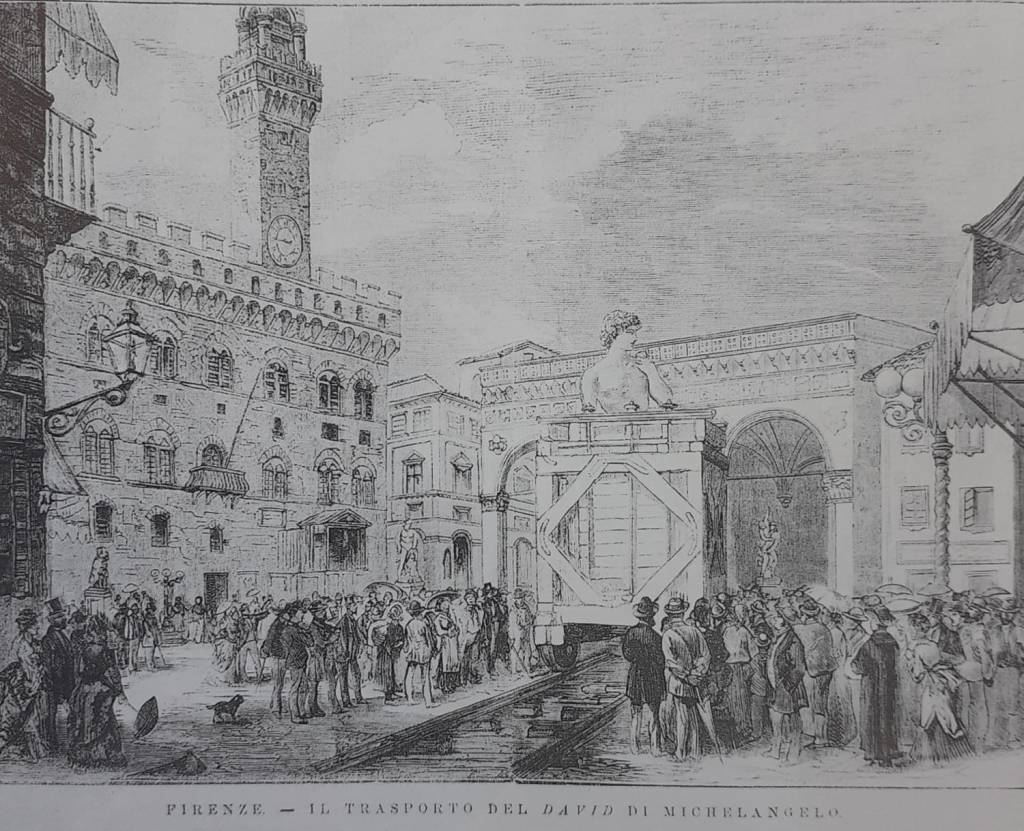
Le foto dell’epoca così come le cronache documentano che l’impresa venne vissuta dai fiorentini come un grandioso evento. Le strade erano piene zeppe di curiosi che non volevano perdere l’occasione di vedere il David spostarsi poco a poco.
Prima di essere esposto di nuovo al pubblico, il David dovette attendere qualche anno ancora ovvero fino alla ultimazione della sua tribuna progettata da Emilio de Fabris.
Il libro
Se volete conoscere tutta ma proprio tutta la storia del David, dal momento dell’estrazione del blocco nelle cave di Fantiscritti fino ai giorni vostri, vi propongo il libro che ha scritto colei che da anni mi da voce: la mia alter ego Antonietta Bandelloni.
Il libro Lui, il David lo trovate QUA.

Per il momento il vostro Michelangelo Buonarroti vi saluta dandovi appuntamento ai prossimi post e sui social
150 years ago the David began its journey to the Accademia Gallery
150 years ago, on 31 July 1873, the David began to move from Piazza della Signoria towards the Galleria dell’Accademia which would shelter it from the elements.
Not only. Over the centuries the center of gravity of the work had moved forward and went to solicit the ankles which already had cracks, or fissures. It was necessary to reposition the center of gravity in the original position as soon as possible to avoid important problems for the stability of the colossus.
A few months earlier, in May of the same year, the task of coordinating and fine-tuning the transport of the marble giant had been entrusted to the architect Emilio de Fabris and the engineer Porra, taking care of every minimum detail.
It is no coincidence that the two chose to transport the work on rails, developing a sort of railway carriage that moved on four wheels. Francesco Porra was in fact a railway engineer and knew the advantages and disadvantages of that type of transport well.
The carriage for transport
For the occasion, a particular wooden cart was designed inside which, with no small effort, the David was positioned vertically, without a pedestal.
Up to the diaphragm area, the sculpture was contained in a wooden box and then firmly tied to the work in the area of the base, at the height of the knees and in the highest part of the legs.
To mitigate the effect of shocks and vibrations during movement, a suspension apparatus was provided with sturdy steel spiral springs.
The wagon advanced slowly on the rails and, to deal with the curves required by the street corners, a rotating floor was set up.
All the mechanical devices that made it possible to carry the David up to the Academy were made in the workshops of the Roman railways.
The pedestal lost forever
Moving the David was a colossal job and not without all risks. To get the colossus down from the arengario of Palazzo Vecchio, there was no other way than to literally destroy the original pedestal that you can see in the photo that I propose to follow.
A real pity but the priority of the moment was to shelter the sculpture which, also due to Costoli’s bold restoration work, had recently accelerated the process of degradation caused by long centuries of exposure to atmospheric agents.
The original base bore the Latin inscription Exemplum salutis publicae cives posvere.
The duration of the transfer of the David
The transport lasted five days: from 31 July to 4 August 1873. Work was carried out on the move from 4 to 11 in the morning because then it started to get too hot and it became difficult for the workers to work hard under the blazing sun.
David made his triumphal entry into the Accademia Gallery by passing through a specially opened opening in one of the walls.
The operation was completed without any incident.”
Poggi and Porra wrote in the diary of the move
The photos of the time as well as the chronicles document that the enterprise was experienced by the Florentines as a grandiose event. The streets were crammed with onlookers who didn’t want to miss the opportunity to see the David move little by little.
Before being exhibited to the public again, the David had to wait a few more years or until the completion of his grandstand designed by Emilio de Fabris.
For the moment, your Michelangelo Buonarroti greets you by making an appointment for the next posts and on social media.

Sostienici – Support Us
Se questo blog ti piace e ti appassiona, puoi aiutarci a farlo crescere sempre più sostenendoci in modo concreto condividendo i post, seguendo le pagine social e con un contributo che ci aiuta ad andare avanti con il nostro lavoro di divulgazione. . ENGLISH: If you like and are passionate about this blog, you can help us make it grow more and more by supporting us in a concrete way by sharing posts, following social pages and with a contribution that helps us to move forward with our dissemination work.
10,00 €
-
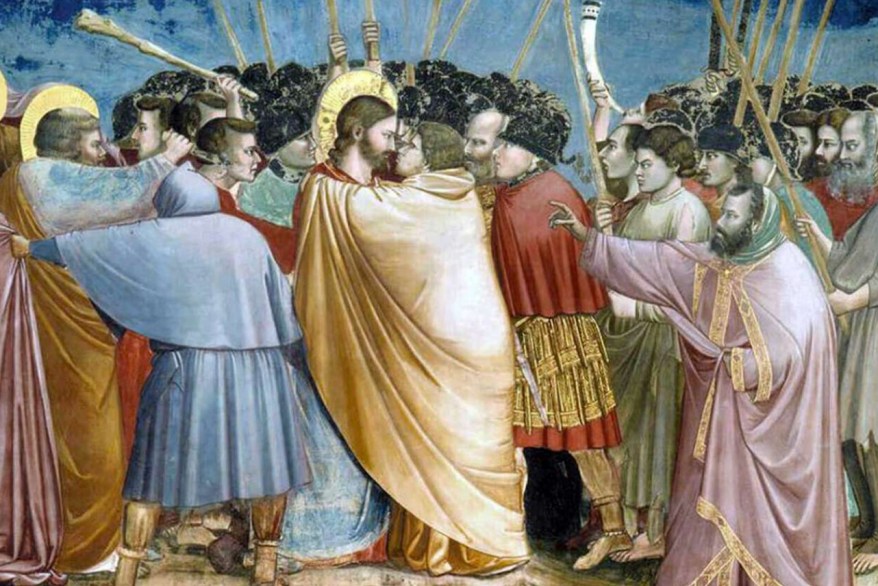
Mercoledì Santo: il giorno del tradimento di Giuda affrescato da Giotto
🇮🇹Il Mercoledì Santo è il giorno del silenzio, della riflessione e del tradimento. È il momento in cui Giuda sceglie di vendere Gesù per trenta denari, segnando uno dei passaggi più dolorosi della Settimana Santa…. 🇬🇧Holy Wednesday is a day of silence, reflection, and betrayal. ✝It is the moment when Judas chooses to sell Jesus…
-
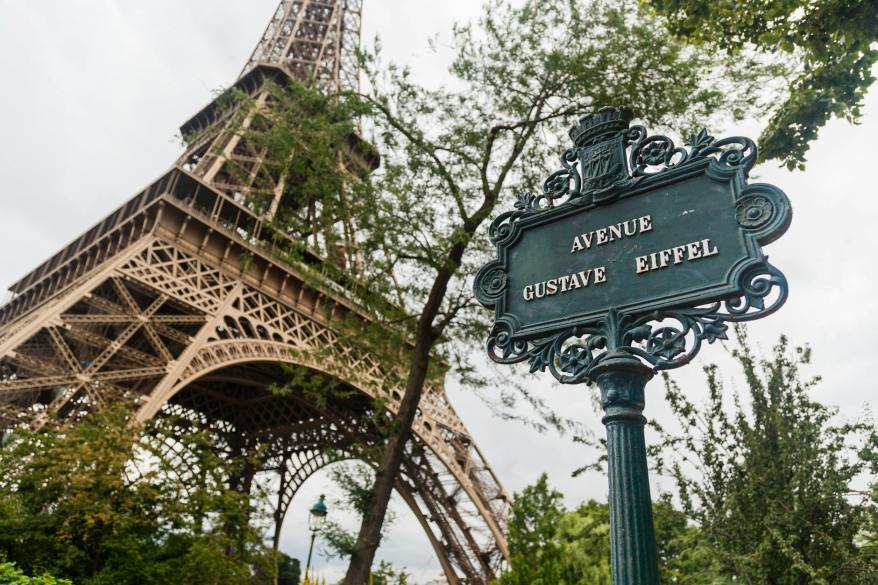
31 marzo 1889: inaugurata la Torre Eiffel tra critiche feroci e un destino inaspettato
🇮🇹Il 31 marzo 1889 segna una data destinata a cambiare per sempre il volto di Parigi e dell’immaginario collettivo globale: viene inaugurata la Torre Eiffel, l’opera più audace e discussa del suo tempo… 🇬🇧March 31, 1889 marks a date destined to change the face of Paris and the global collective imagination forever: the Eiffel Tower,…
-
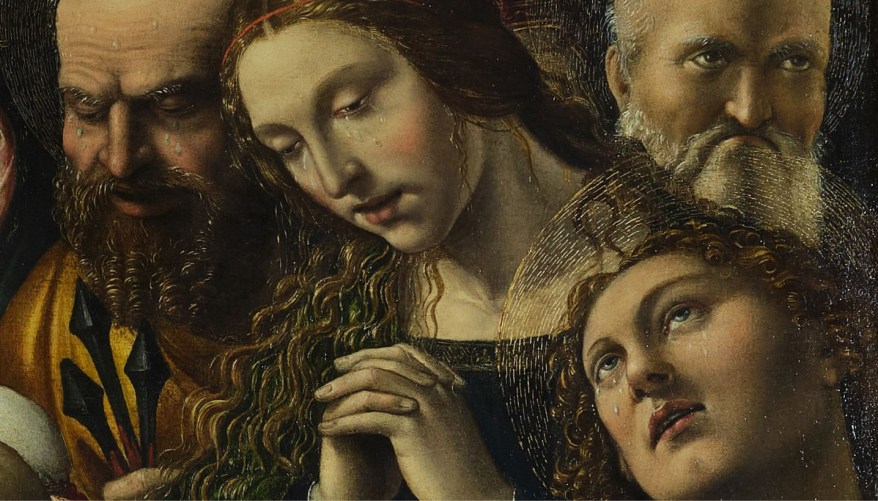
Sodoma in mostra a Torino: il Rinascimento al Museo Accorsi-Ometto
🇮🇹Al Museo di Arti Decorative Accorsi-Ometto arriva una mostra dedicata al Sodoma: oltre 50 opere, alcune mai viste prima, raccontano la formazione dell’artista e il suo dialogo con maestri come Pinturicchio… 🇬🇧An exhibition dedicated to Sodoma arrives at the Accorsi-Ometto Museum of Decorative Arts: over 50 works, some never before seen, recount the artist’s development…
Condividi:


Questo sono io





sostienici

Sostienici – Support Us
Se questo blog ti piace e ti appassiona, puoi aiutarci a farlo crescere sempre più sostenendoci in modo concreto condividendo i post, seguendo le pagine social e con un contributo che ci aiuta ad andare avanti con il nostro lavoro di divulgazione. . ENGLISH: If you like and are passionate about this blog, you can help us make it grow more and more by supporting us in a concrete way by sharing posts, following social pages and with a contribution that helps us to move forward with our dissemination work.
€10,00


