10 ottobre 1521: il Cristo Portacroce viene posizionato in Santa Maria sopra Minerva
Era un 10 ottobre come oggi ma del 1521 quando finalmente, dopo tante tribolazioni, la seconda versione del Cristo Portacroce fu posizionato nella Chiesa di Santa Maria sopra Minerva, a Roma.
L’inaugurazione ufficiale avrebbe dovuto essere celebrata celebrata in pompa magna il giorno di Ognissanti dello stesso anno come riportò Federigo Frizzi nella lettera che mi scrisse da Roma il 19 ottobre del 1521.
Purtroppo le cose però non andarono così. Metello Vari, il committente del lavoro, non voleva scoprire l’opera fino a quando fossero stati murati gli ornamenti. Il Frizzi voleva essere pagato da lui prima di eseguire quel lavoro mentre il Vari voleva a tutti i costi pagarlo a lavoro ultimato. Mi scrisse il Frizzi il 2 novembre del 1521: “Non so chi se la vincerà, o lui o io.”

Ma chi era questo Federigo Frizzi?
Il Frizzi era lo scultore che avevo incaricato di rimediare ai danni che aveva fatto sull’opera Pietro Urbano. Il 10 marzo del 1521 il Frizzi fu avvertito da Bernardo Cenci che avrebbe dovuto metter mano al Cristo per provare ad aggiustarlo.
“Amicco charisimo, avisovi chome meser Bernardo Cenci m’à mostro una vostra letera, per la quale voi l’avisate che faci riccapito a me, c[i]oè de l’ornamento de la statua che voi avete fatto. Io ve ne ringrazio per le mile volte; e chosì vi priego che, se io son buono a chosa nesuna per voi, che voi mi ccomandiate, ché io non arei al mondo mag[i]or piacere che di far chosa che vi fusi grata…”
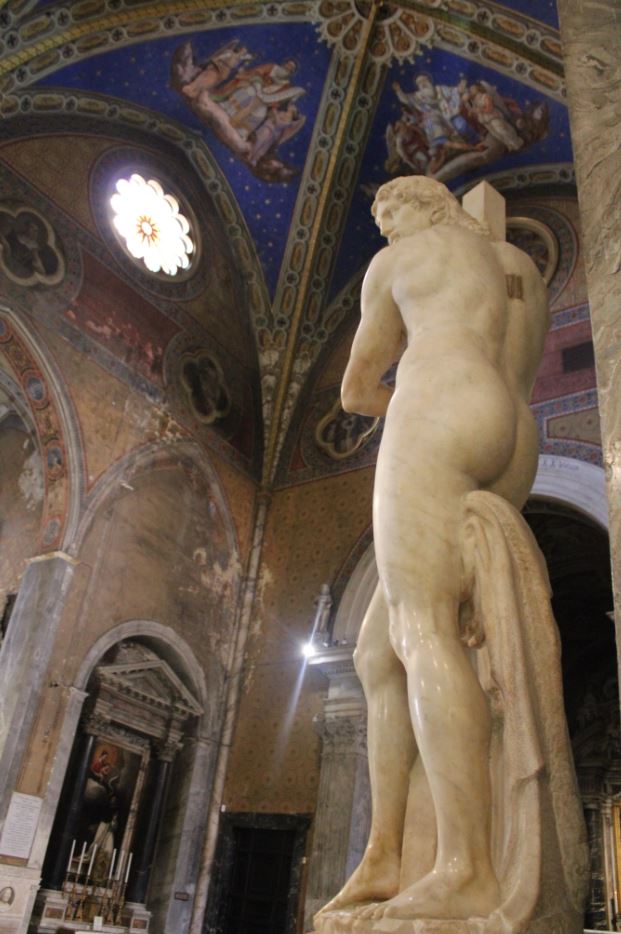
Il Cristo Portacroce di Santa Maria Minerva fu definita dal Vasari nell’edizione della Giuntina “Figura mirabilissima” mentre nella Torrentiniana la descrive come “Una figura miracolosissima”.
Per il momento il vostro Michelangelo Buonarroti vi saluta dandovi appuntamento ai prossimi post e sui social.
October 10, 1521: the Christ Portacroce is placed in Santa Maria sopra Minerva
It was October 10 like today but in 1521 when finally, after many tribulations, the second version of the Christ Carrier was placed in the Church of Santa Maria sopra Minerva, in Rome.
The official inauguration should have been celebrated with great fanfare on All Saints’ Day of the same year as reported by Federigo Frizzi in the letter that he wrote to me from Rome on October 19, 1521.
Unfortunately, however, things did not go that way. Metello Vari, the commissioner of the work, did not want to discover the work until the ornaments were walled up. Frizzi wanted to be paid by him before carrying out that work while Vari wanted to pay him at all costs when the work was completed. Frizzi wrote me on November 2, 1521: “I don’t know who will win it, either him or me.”
But who was this Federigo Frizzi?
“Dear friend, I inform you that Messer Bernardo Cenci has shown me a letter from you in which you inform him that he is referring to me to finish the sculpture you have made. I thank you a thousand times and please command me what to do if you think I am capable of doing it. My pleasure more
great is to be useful to you … “
The Christ Carrying Cross of Santa Maria Minerva was defined by Vasari in the Giuntina edition as “a most wonderful figure” while in the Torrentiniana he describes it as “A most miraculous figure”.
For the moment, your Michelangelo Buonarroti greets you by giving you an appointment at the next posts and on social networks.
Sostienici – Support Us
Se questo blog ti piace e ti appassiona, puoi aiutarci a farlo crescere sempre più sostenendoci in modo concreto condividendo i post, seguendo le pagine social e con un contributo che ci aiuta ad andare avanti con il nostro lavoro di divulgazione. . ENGLISH: If you like and are passionate about this blog, you can help us make it grow more and more by supporting us in a concrete way by sharing posts, following social pages and with a contribution that helps us to move forward with our dissemination work.
10,00 €
-
Rape, bava di lumache e cocomeri: i miei versi dedicati a una donna
🇮🇹Due cocomeri in un sacco, una lumaca sul viso e denti bianchi come la pastinaca. Lo scrissi nei versi dedicati a una donna non senza ironia… Two watermelons in a sack, a snail on the face, and teeth as white as a parsnip. I wrote this in some verses dedicated to a woman—not without a…
-
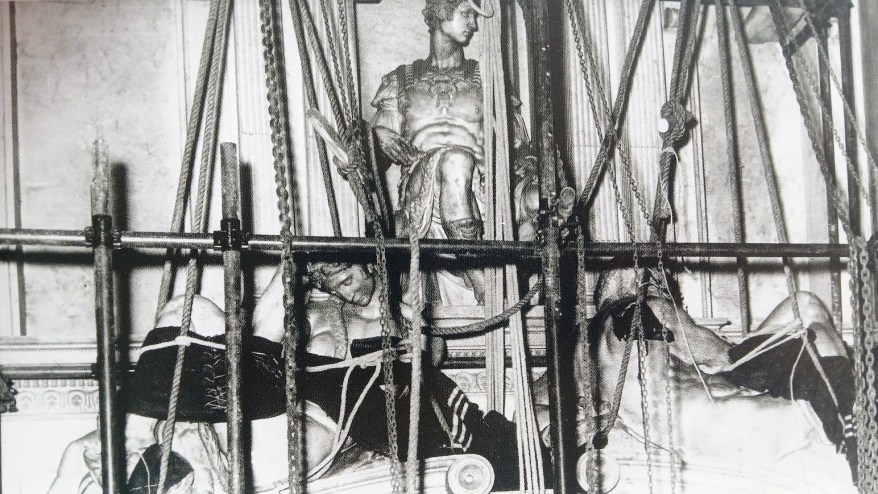
Firenze e la Seconda Guerra Mondiale: così vennero protette le mie sculture nella Sagrestia Nuova
🇮🇹Durante la Seconda Guerra Mondiale le mie sculture nella Sagrestia Nuova vennero protette dai bombardamenti. Ecco la storia della loro salvaguardia… 🇬🇧During the Second World War, my sculptures in the New Sacristy were protected from the bombings. Here is the story of how they were safeguarded…
-
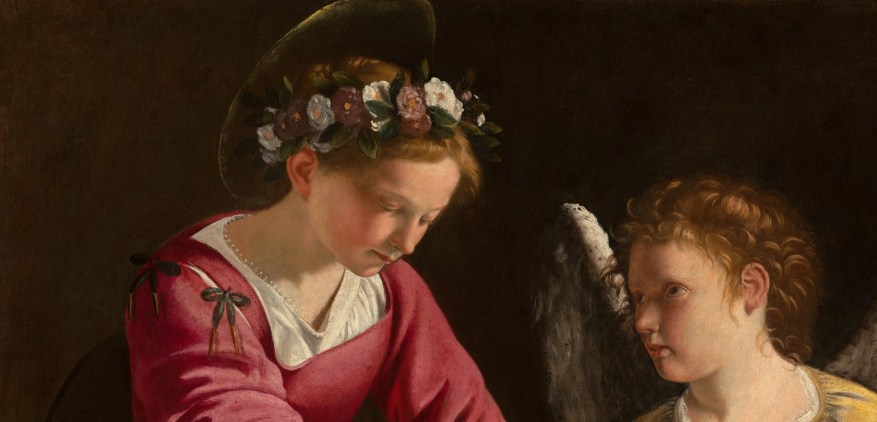
22 novembre, Santa Cecilia: perché è la patrona della musica e come l’hanno raffigurata i grandi artisti
🇮🇹Il 22 novembre si celebra Santa Cecilia, patrona della musica. Ecco come Raffaello, Stefano Maderno e altri artisti l’hanno raffigurata… 🇬🇧November 22nd marks the feast of Saint Cecilia, the patron saint of music. Here is how Raphael, Stefano Maderno, and other artists have depicted her…
Condividi:


Questo sono io



sostienici

Sostienici – Support Us
Se questo blog ti piace e ti appassiona, puoi aiutarci a farlo crescere sempre più sostenendoci in modo concreto condividendo i post, seguendo le pagine social e con un contributo che ci aiuta ad andare avanti con il nostro lavoro di divulgazione. . ENGLISH: If you like and are passionate about this blog, you can help us make it grow more and more by supporting us in a concrete way by sharing posts, following social pages and with a contribution that helps us to move forward with our dissemination work.
€10,00