
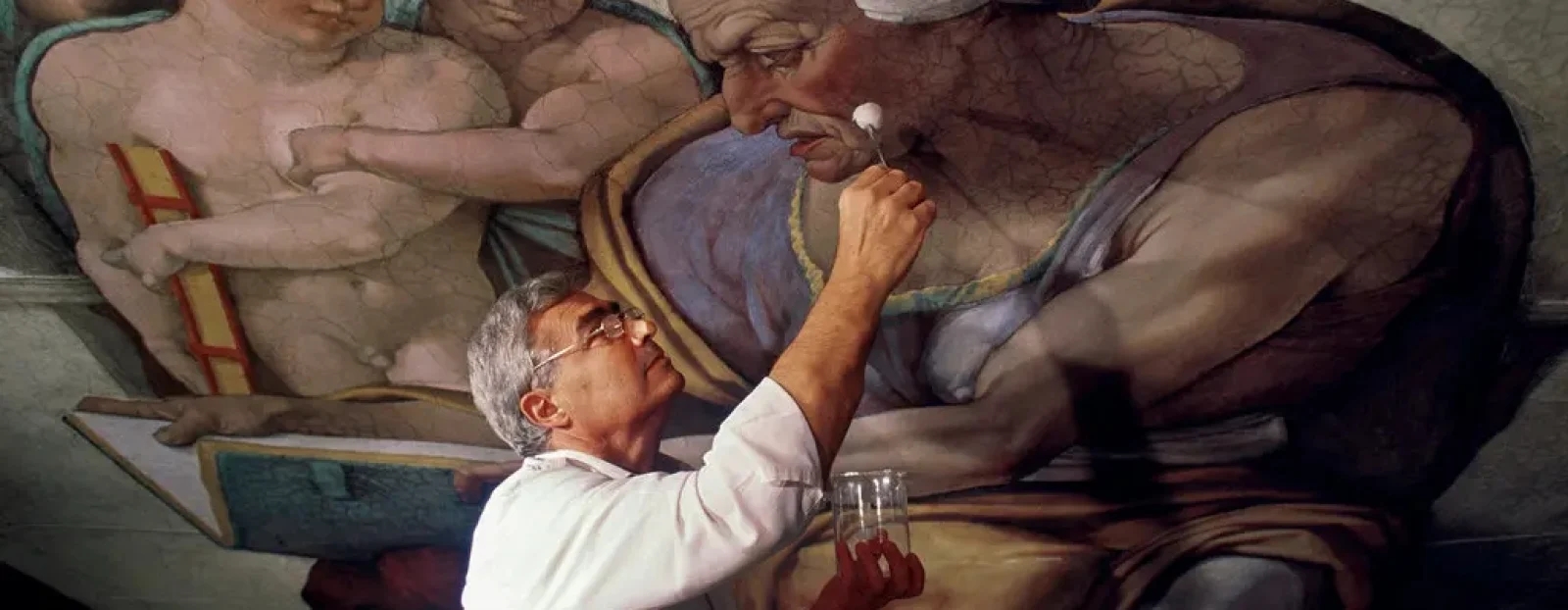
I lussuriosi per le parti vergognose
La Cappella Sistina è un insieme di storie e di storie nelle storie. Notare tutti i particolari in una visita sommaria, magari in mezzo a chissà quante altre persone, non è certo una cosa semplice.
Fra il chiasso e la folla, lo stupore, il turbino di colori e gli atteggiamenti dei corpi non si possono cogliere dettagli che però sono fondamentali per capire il gran lavoro che c’è dietro ogni minima porzione di affresco. No, non sto parlando del lavoro fisico bensì di quello mentale.
Osservate il Giudizio Universale nella zona poco sopra Minosse: un gruppo di dannati tenta l’ascesa al cielo ma, mentre gli angeli minacciano di prenderli a pugni, i demoni li tirano verso il basso afferrando “i superbi per i capelli, i lussuriosi per le parti vergognose, e conseguentemente ogni vizioso per quella parte che peccò” come scrisse il mio amico Condivi.

Da un’anima dannata che viene tirata verso il basso, pende un sacchetto pieno di denari e un paio di chiavi.
È probabilmente un riferimento a uno dei tanti papi che incoraggiavano e promuovevano allegramente la compravendita delle cariche ecclesiastiche, forse un tacito omaggio a Niccolò III che Dante mise nell’ottavo girone dell’Inferno.
Il sempre vostro Michelangelo Buonarroti e i suoi racconti
The lustful for the shameful parts
The Sistine Chapel is a collection of stories and stories within stories.
Noticing all the details in a brief visit, perhaps in the midst of who knows how many other people, is certainly not a simple thing. Between the noise and the crowd, the amazement, the whirlwind of colors and the attitudes of the bodies, it is impossible to grasp the details which, however, are fundamental to understand the great work behind every small portion of the fresco. No, I’m not talking about physical work but mental work.
Observe the Last Judgment in the area just above Minos: a group of damned try to ascend to heaven but, while the angels threaten to punch them, the demons pull them down, grabbing “the proud by the hair, the lustful by the shameful parts, and consequently every vicious for that part that sinned ”as my friend Condivi wrote.

A bag full of money and a couple of keys hangs from a damned soul that is pulled down. It is a reference to one of the many popes who cheerfully encouraged and promoted the buying and selling of ecclesiastical offices, perhaps a tacit homage to Nicholas III that Dante placed in the eighth circle of Hell.
Always yours Michelangelo Buonarroti and his stories

Sostienici – Support Us
Se questo blog ti piace e ti appassiona, puoi aiutarci a farlo crescere sempre più sostenendoci in modo concreto condividendo i post, seguendo le pagine social e con un contributo che ci aiuta ad andare avanti con il nostro lavoro di divulgazione. . ENGLISH: If you like and are passionate about this blog, you can help us make it grow more and more by supporting us in a concrete way by sharing posts, following social pages and with a contribution that helps us to move forward with our dissemination work.
5,00 €
-
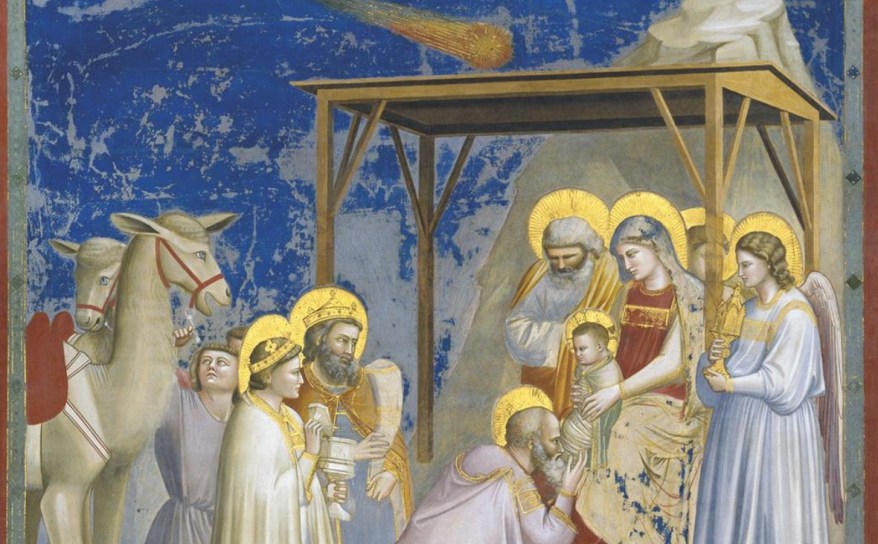
La stella di Betlemme nei dipinti: com’era rappresentata la luce che guidò i Magi
🇮🇹Come veniva rappresentata la stella di Betlemme nei dipinti? Da Giotto ai grandi maestri del Rinascimento, scopri il significato della luce che guidò i Re Magi verso Gesù Bambino… 🇬🇧How was the Star of Bethlehem depicted in paintings? From Giotto to the great masters of the Renaissance, discover the meaning of the light that guided…
-
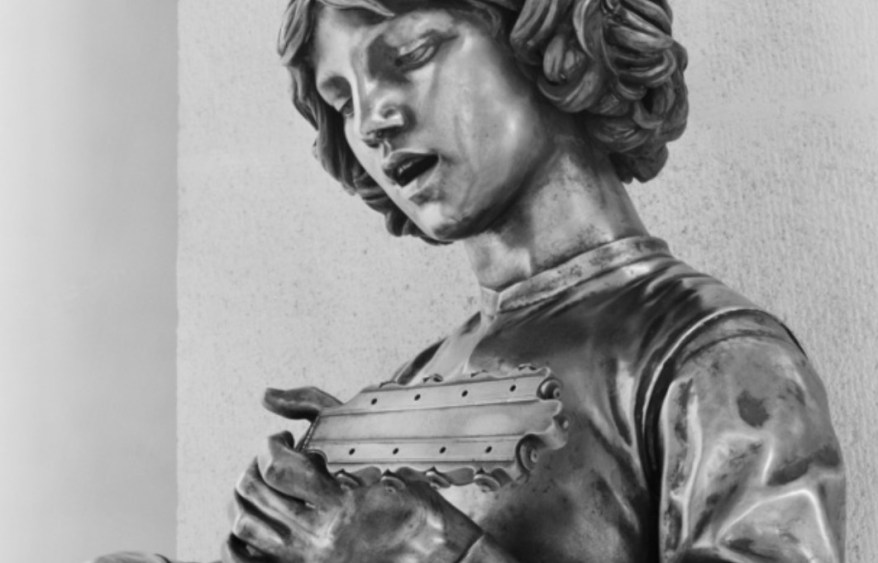
Paul Dubois e il Cantore fiorentino: la scultura in bronzo argentato del 1865 che conquistò il pubblico
🇮🇹Paul Dubois, il Cantore fiorentino del Quattrocento: la raffinata scultura in bronzo argentato del 1865 che conquistò Parigi con dettagli straordinari… 🇬🇧Paul Dubois, the 15th-century Florentine singer: an exquisite silvered bronze sculpture from 1865 that captivated Paris with its extraordinary detail…
-

11 novembre 1789: nasceva Pietro Tenerani, lo scultore di Carrara che conquistò Roma
🇮🇹 L’11 novembre 1789 nasceva Pietro Tenerani, lo scultore di Carrara che conquistò Roma. Cresciuto fra i marmi delle Apuane, diventò allievo prediletto di Bertel Thorvaldsen e uno dei protagonisti della scultura italiana dell’Ottocento… 🇬🇧On November 11, 1789, Pietro Tenerani was born—the sculptor from Carrara who conquered Rome. Having grown up among the marbles of…
Condividi:


Questo sono io





sostienici

Sostienici – Support Us
Se questo blog ti piace e ti appassiona, puoi aiutarci a farlo crescere sempre più sostenendoci in modo concreto condividendo i post, seguendo le pagine social e con un contributo che ci aiuta ad andare avanti con il nostro lavoro di divulgazione. . ENGLISH: If you like and are passionate about this blog, you can help us make it grow more and more by supporting us in a concrete way by sharing posts, following social pages and with a contribution that helps us to move forward with our dissemination work.
€10,00


