
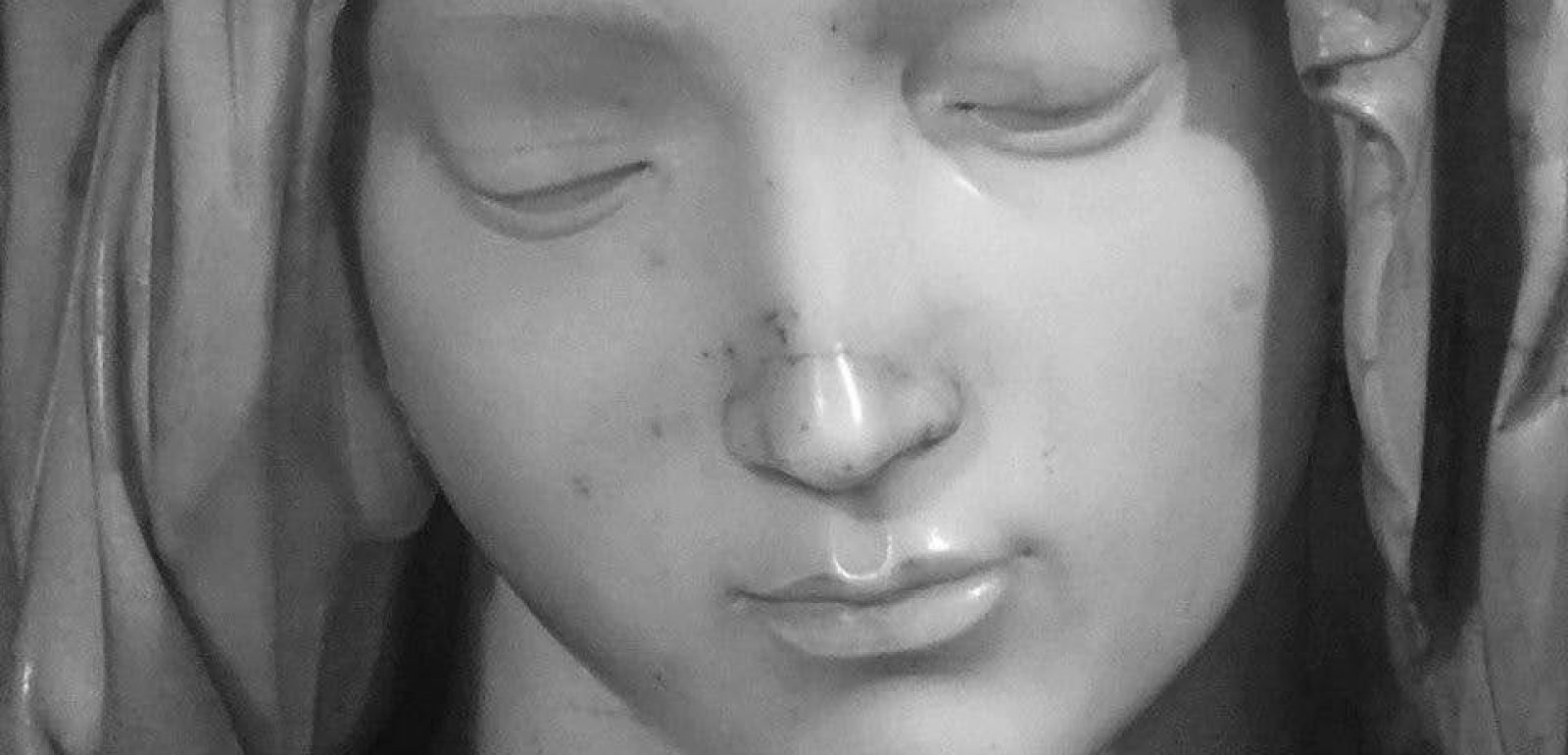
Quando l’Amore ti toglie a te stesso: il mio madrigale più struggente
Ho spesso trovato che l’Amore sappia fare ciò che né scalpello né pennello possono: togliermi a me stesso. In questo mio madrigale, nato come un sospiro e cresciuto come fiamma, confessai lo smarrimento dell’anima innamorata, che si scopre non più padrona di sé.
O Dio, o Dio, o Dio: il grido dell’uomo che si perde
“O Dio, o Dio, o Dio” — così apro il mio canto, con una triplice invocazione che appartiene alla voce popolare del mio secolo. Non è ornamento, ma necessità. La ripetizione è ansia, è tremore, è il battito stesso del cuore che chiama soccorso.
Come può esser ch’io non sia più mio?
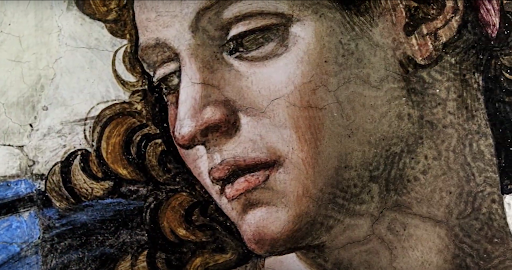
Innamorandomi, sento che la mia anima si è trasferita altrove. L’amore non mi aggiunge: mi sottrae. Mi accorgo che ciò che ero — saldo, consapevole, dominatore delle mie forme e dei miei pensieri — vacilla. L’io si scioglie, e il centro della mia volontà non abita più in me.
“Chi m’ha tolto a me stesso?” — Il potere dell’amato
Mi domando: chi m’ha tolto a me stesso, che a me fusse più presso o più di me potessi che poss’io?
Quale forza può essermi più vicina di me stesso? Quale dominio può superare il mio sul mio stesso cuore? Eppure accade: l’amato diviene più intimo di quanto io sia a me. È come se l’anima mia avesse cambiato dimora, e ora risiedesse in colui o colei che amo.
L’innamorato perde sé per ritrovarsi nell’altro. Non è metafora gentile, ma verità bruciante: il mio centro è fuori di me.
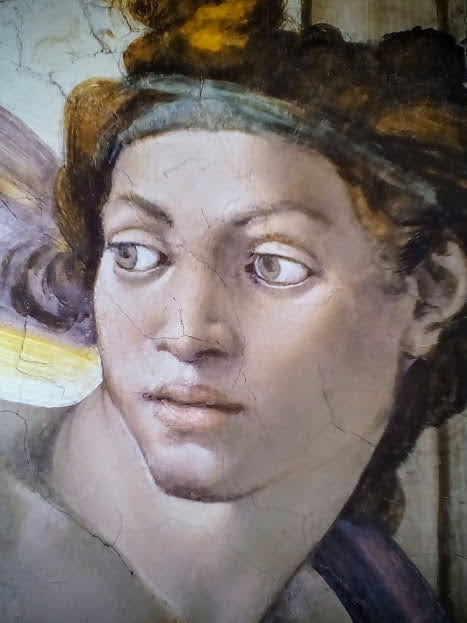
Come mi passa el core chi non par che mi tocchi?
E ancora mi stupisco: come mi passa el core chi non par che mi tocchi?
Com’è possibile che io sia trafitto senza mano, ferito senza lama? L’Amore non ha bisogno di materia per colpire. Non vi è contatto, non vi è urto, eppure il cuore è attraversato.
È un colpo invisibile, e tuttavia più acuto del ferro. L’amato non mi tocca, e tuttavia mi trapassa. Questa è la meraviglia e il tormento: la ferita nasce da lontano, senza gesto apparente.
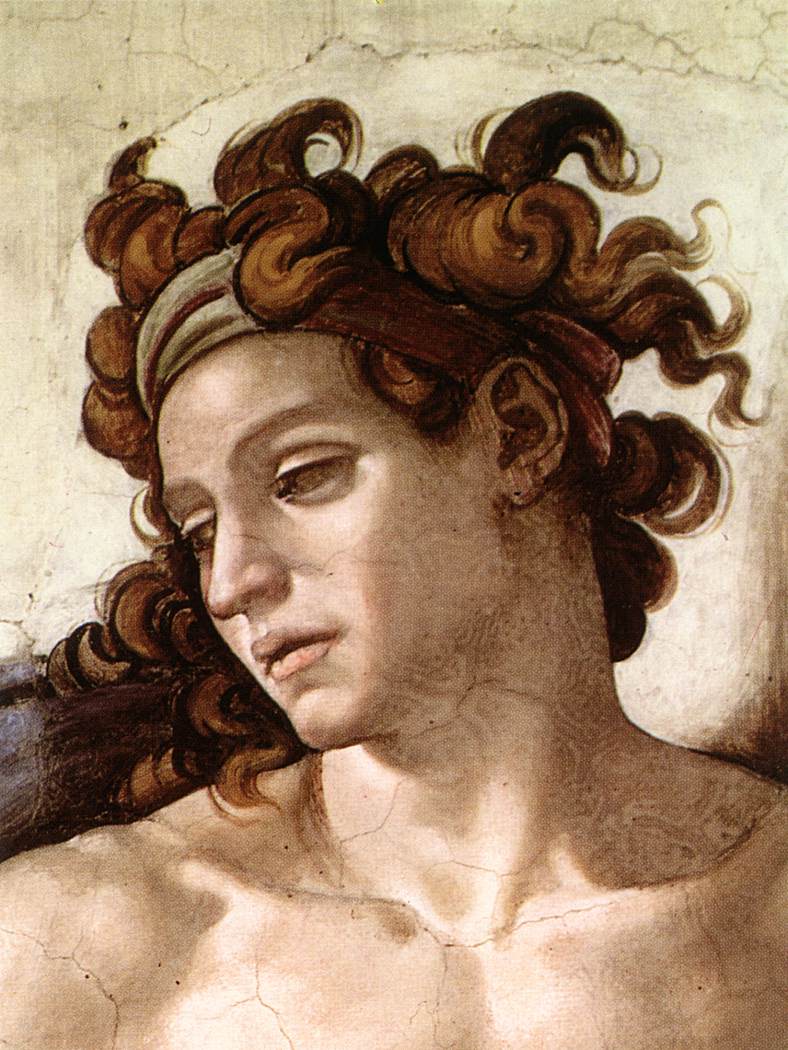
L’Amore entra dagli occhi e cresce nel cuore
Che cosa è questo, Amore, c’al core entra per gli occhi?
Gli occhi sono la porta sovrana. Da essi l’immagine dell’amato scivola dentro di me, e lì prende forma viva. Non è semplice visione: è ingresso, è invasione dolce e tremenda.
Per poco spazio dentro par che cresca.
Il cuore è stretto, limitato, fragile come una cavità di marmo che attende lo scalpello. Eppure quell’immagine, entrata per uno spiraglio, si dilata. Cresce come seme in terra nascosta, come acqua versata in vaso già colmo.
Quando l’amore trabocca: il rischio dell’eccesso
E s’avvien che trabocchi?
L’amore è simile a liquido ardente: se non trova contenimento, straripa. E quando trabocca, non resta più misura né governo. L’io è sommerso. Il cuore, incapace di contenere tanta presenza, si spezza o si riversa tutto nell’altro.
Questo è il pericolo e insieme la grandezza dell’amare: perdere la forma, dissolversi, accettare che l’identità si confonda.
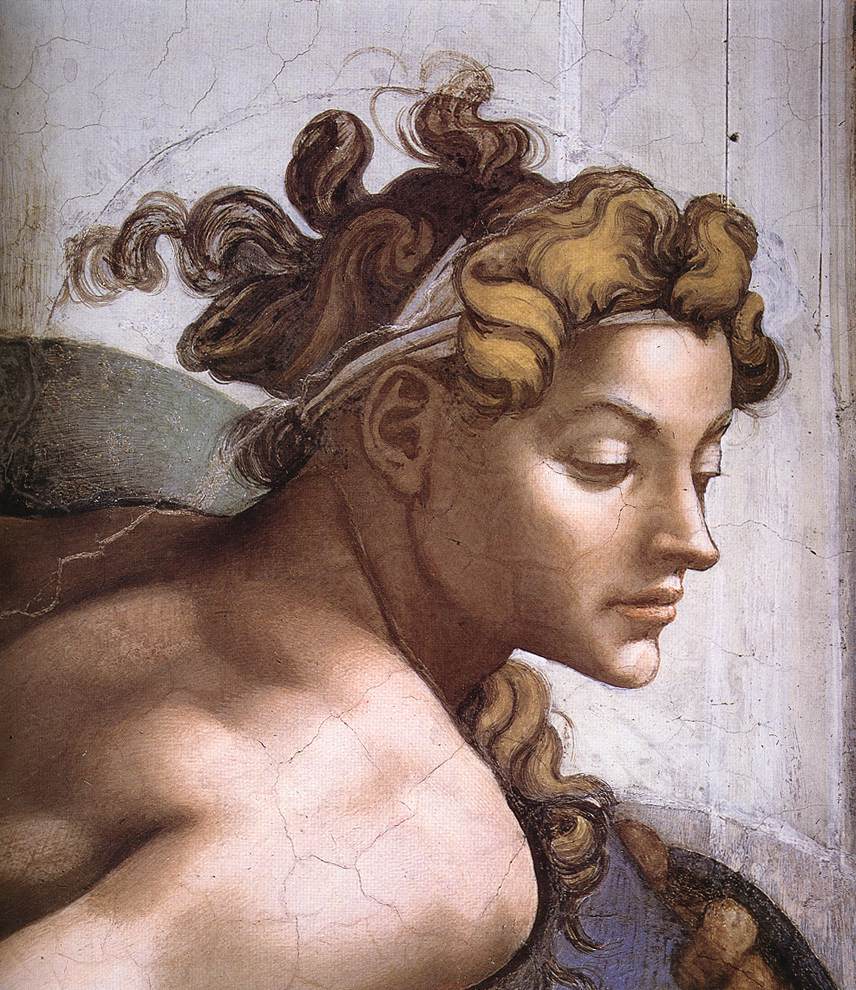
L’innamorato perde sé per diventare altro
L’innamorato non è più uno. Si divide, si sposta, si decentra. L’anima migra, e ciò che resta è un corpo che cerca la propria dimora altrove.
Amare è un atto di espropriazione e di dono. Si perde sé per abitare nell’altro. E in questo smarrimento vi è insieme pena e beatitudine.
Così io, che ho dato vita al marmo e ho cercato l’eterno nelle forme, mi ritrovo fragile davanti a un’immagine che entra dagli occhi e mi riplasma dall’interno.
Come può esser ch’io non sia più mio?
O Dio, o Dio, o Dio,
chi m’ha tolto a me stesso,
c’a me fusse più presso
o più di me potessi che poss’io?
O Dio, o Dio, o Dio,
come mi passa el core
chi non par che mi tocchi?
Che cosa è questo, Amore,
c’al core entra per gli occhi,
per poco spazio dentro par che cresca?
E s’avvien che trabocchi?
Per il momento il sempre vostro Michelangelo Buonarroti vi saluta dandovi appuntamento ai prossimi post e sui social.
When Love Takes You Away: My Most Heartbreaking Madrigal
I have often found that Love can do what neither chisel nor brush can: take me away from myself. In this madrigal of mine, born as a sigh and growing like a flame, I confessed the bewilderment of the soul in love, which discovers it is no longer master of itself.
O God, O God, O God: the cry of the lost man
“O God, O God, O God”—thus I open my song, with a triple invocation that belongs to the popular voice of my century. It is not ornament, but necessity. Repetition is anxiety, it is trembling, it is the very beating of the heart calling for help.
How can it be that I am no longer mine?
In falling in love, I feel that my soul has moved elsewhere. Love does not add to me: it subtracts from me. I realize that what I was—steadfast, aware, master of my forms and my thoughts—is wavering. The ego dissolves, and the center of my will no longer dwells within me.
“Who took me from myself?” — The Power of the Beloved
I ask myself: who took me from myself, who was closer to me, or who could control more of myself than I can?
What force can be closer to me than myself? What power can surpass my own over my own heart? And yet it happens: the beloved becomes more intimate than I am to myself. It is as if my soul had changed its abode, and now resides in the one I love.
The lover loses himself to find himself in the other. This is not a gentle metaphor, but a burning truth: my center is outside of me.
How can he who does not seem to touch me pass through my heart?
And still I wonder: how can he who does not seem to touch me pass through my heart?
How is it possible that I am pierced without a hand, wounded without a blade? Love needs no material to strike. There is no contact, no shock, yet the heart is pierced.
It is an invisible blow, yet sharper than iron. The beloved does not touch me, yet he pierces me. This is the wonder and the torment: the wound arises from afar, without apparent gesture.
Love enters through the eyes and grows in the heart.
What is this, Love, that enters the heart through the eyes?
The eyes are the sovereign door. Through them the image of the beloved slips into me, and there it takes on living form. It is not a simple vision: it is an entrance, a sweet and terrible invasion.
For a small space within, it seems to grow.
The heart is narrow, limited, fragile like a marble cavity awaiting the chisel. Yet that image, having entered through a crack, expands. It grows like a seed in hidden soil, like water poured into an already full vase.
When Love Overflows: The Risk of Excess
And what if it overflows?
Love is like a burning liquid: if it finds no containment, it overflows. And when it overflows, there is no longer any measure or control. The self is submerged. The heart, incapable of containing so much presence, breaks or pours itself entirely into the other.
This is the danger and at the same time the greatness of love: losing one’s shape, dissolving, accepting that identity becomes confused.
The lover loses himself to become something else.
The lover is no longer one. He divides, moves, decentralizes. The soul migrates, and what remains is a body seeking its home elsewhere.
Loving is an act of expropriation and gift. One loses oneself to dwell in the other. And in this loss there is both pain and bliss.
Thus I, who gave life to marble and sought eternity in its forms, find myself fragile before an image that enters through my eyes and reshapes me from within.
Come può esser ch’io non sia più mio?
O Dio, o Dio, o Dio,
chi m’ha tolto a me stesso,
c’a me fusse più presso
o più di me potessi che poss’io?
O Dio, o Dio, o Dio,
come mi passa el core
chi non par che mi tocchi?
Che cosa è questo, Amore,
c’al core entra per gli occhi,
per poco spazio dentro par che cresca?
E s’avvien che trabocchi?
For now, yours truly, Michelangelo Buonarroti bids you farewell and looks forward to seeing you in future posts and on social media.

Sostienici – Support Us
Se questo blog ti piace e ti appassiona, puoi aiutarci a farlo crescere sempre più sostenendoci in modo concreto condividendo i post, seguendo le pagine social e con un contributo che ci aiuta ad andare avanti con il nostro lavoro di divulgazione. . ENGLISH: If you like and are passionate about this blog, you can help us make it grow more and more by supporting us in a concrete way by sharing posts, following social pages and with a contribution that helps us to move forward with our dissemination work.
10,00 €
Articoli
Condividi:


Questo sono io





sostienici

Sostienici – Support Us
Se questo blog ti piace e ti appassiona, puoi aiutarci a farlo crescere sempre più sostenendoci in modo concreto condividendo i post, seguendo le pagine social e con un contributo che ci aiuta ad andare avanti con il nostro lavoro di divulgazione. . ENGLISH: If you like and are passionate about this blog, you can help us make it grow more and more by supporting us in a concrete way by sharing posts, following social pages and with a contribution that helps us to move forward with our dissemination work.
€10,00


