
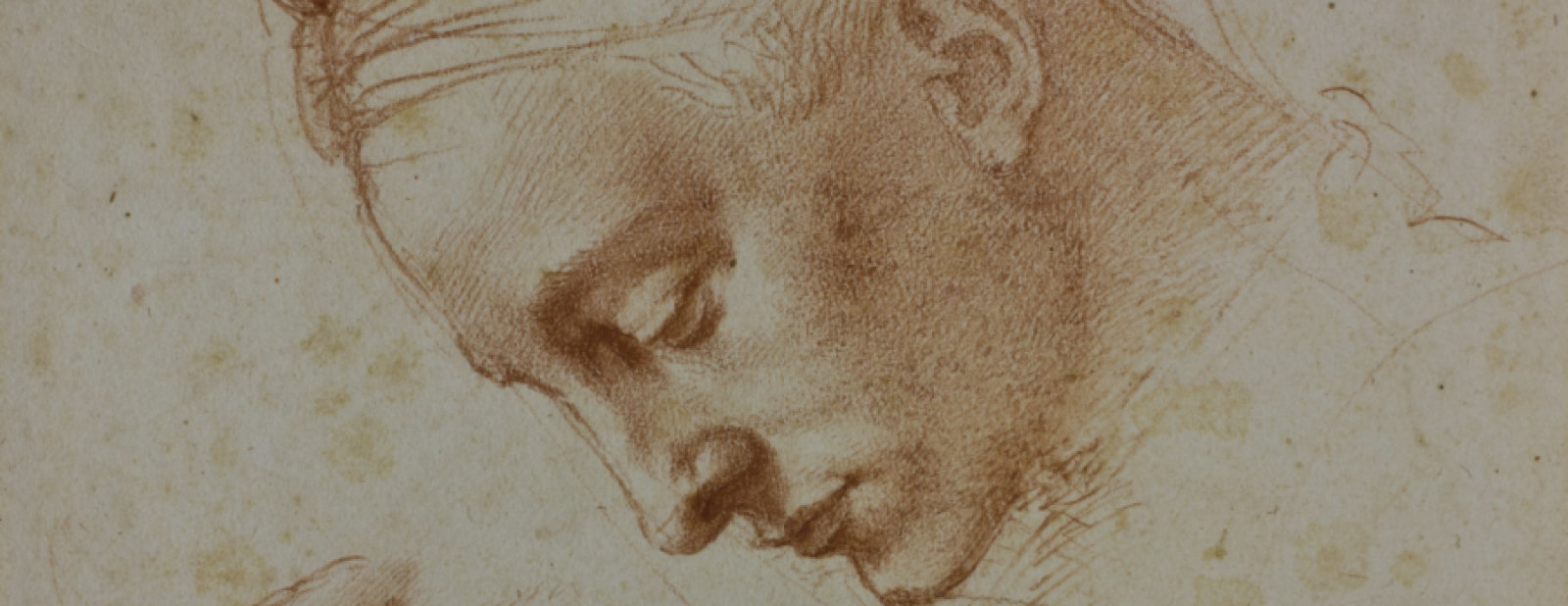
Sanremo 2026: quando la musica diventa arte, da Melozzo a Caravaggio
Oggi si accendono le luci del Festival di Sanremo e l’Italia torna a parlare di musica, emozioni e spettacolo. Ma molto prima del palco dell’Ariston, le note avevano già trovato spazio nelle opere dei grandi maestri.
La musica attraversa la storia dell’arte come simbolo di armonia, spiritualità e passione, diventando protagonista in alcuni dei capolavori più celebri di sempre.
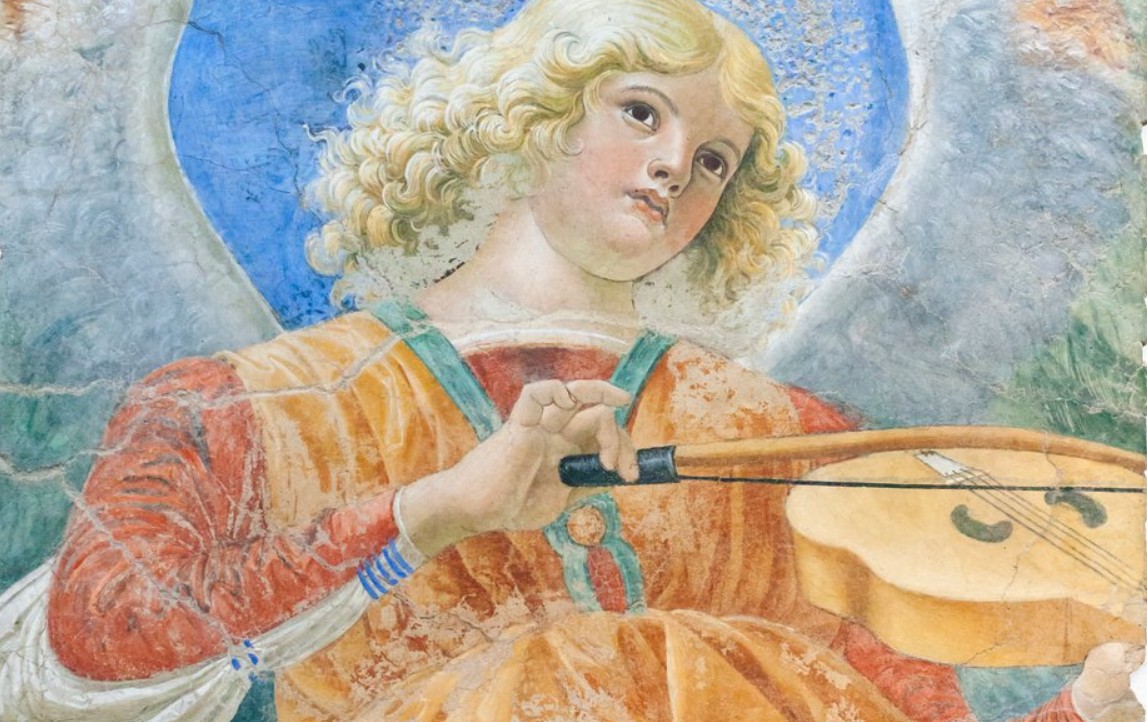
La musica celeste negli angeli di Melozzo da Forlì
Nel Quattrocento, Melozzo da Forlì rivoluziona la rappresentazione dello spazio e del divino con i suoi straordinari angeli musicanti. Realizzati per la Basilica dei Santi Apostoli a Roma, questi affreschi mostrano figure sospese tra cielo e terra mentre suonano liuti, viole e arpe.
Gli angeli sembrano librarsi nell’aria, grazie a una prospettiva ardita e a un senso di leggerezza che rende la scena dinamica e coinvolgente. La musica, in queste immagini, è simbolo di perfezione celeste e di armonia universale. È il suono dell’eterno tradotto in pittura.

Il Concerto di Caravaggio e la musica come emozione umana
Con Caravaggio la musica cambia volto e diventa esperienza terrena. Nel dipinto Concerto, un gruppo di giovani musicisti è colto in un momento intimo, tra spartiti e strumenti, immerso in una luce intensa e drammatica.
Qui non c’è più la distanza del sacro, ma la vicinanza dei corpi, degli sguardi, delle mani che sfiorano le corde. La musica diventa racconto di desiderio, concentrazione, attesa. È un frammento di vita quotidiana che vibra sulla tela.

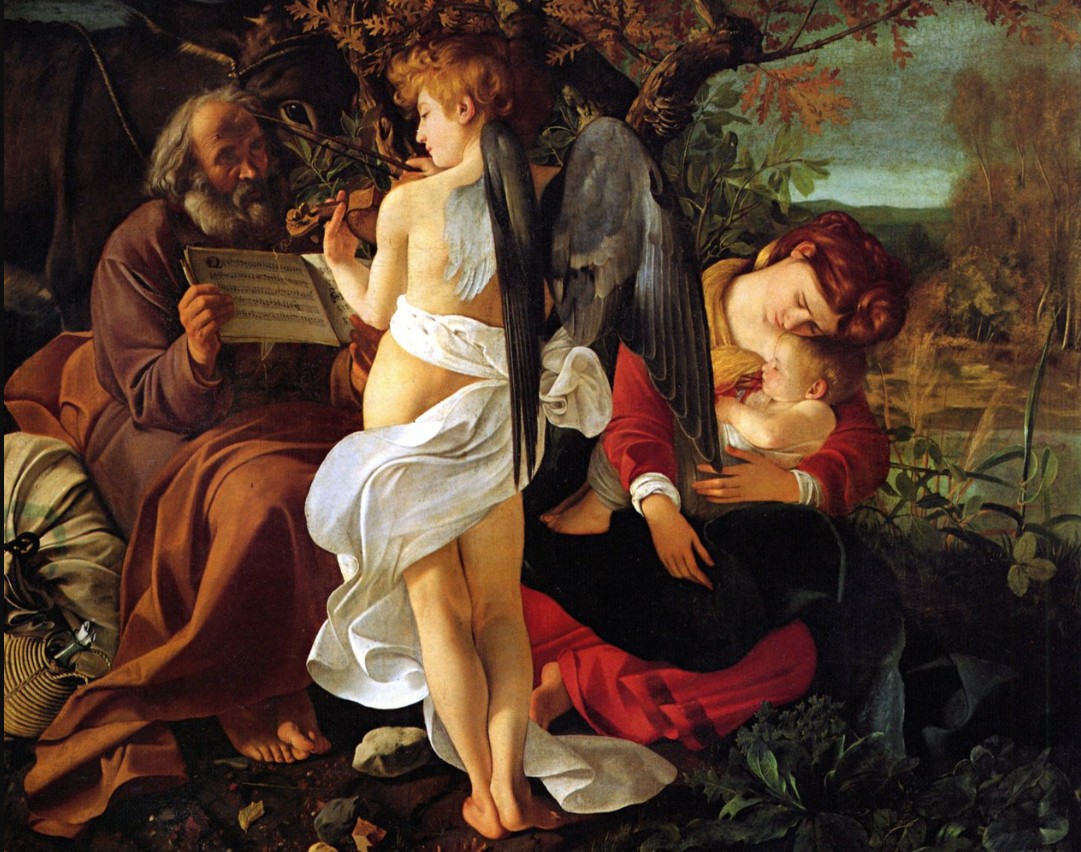
La Fuga in Egitto e l’angelo violinista
Nella Riposo durante la fuga in Egitto, sempre di Caravaggio, compare un dettaglio sorprendente: un angelo che suona il violino per la Sacra Famiglia durante una pausa del viaggio. Il paesaggio è dolce, naturale, quasi sospeso nel tempo.
La musica diventa conforto e protezione, un momento di pace in una storia segnata dalla fuga e dall’incertezza. L’angelo non è distante, ma partecipe, immerso nella scena. Il suono si trasforma in presenza viva, capace di accompagnare e sostenere.
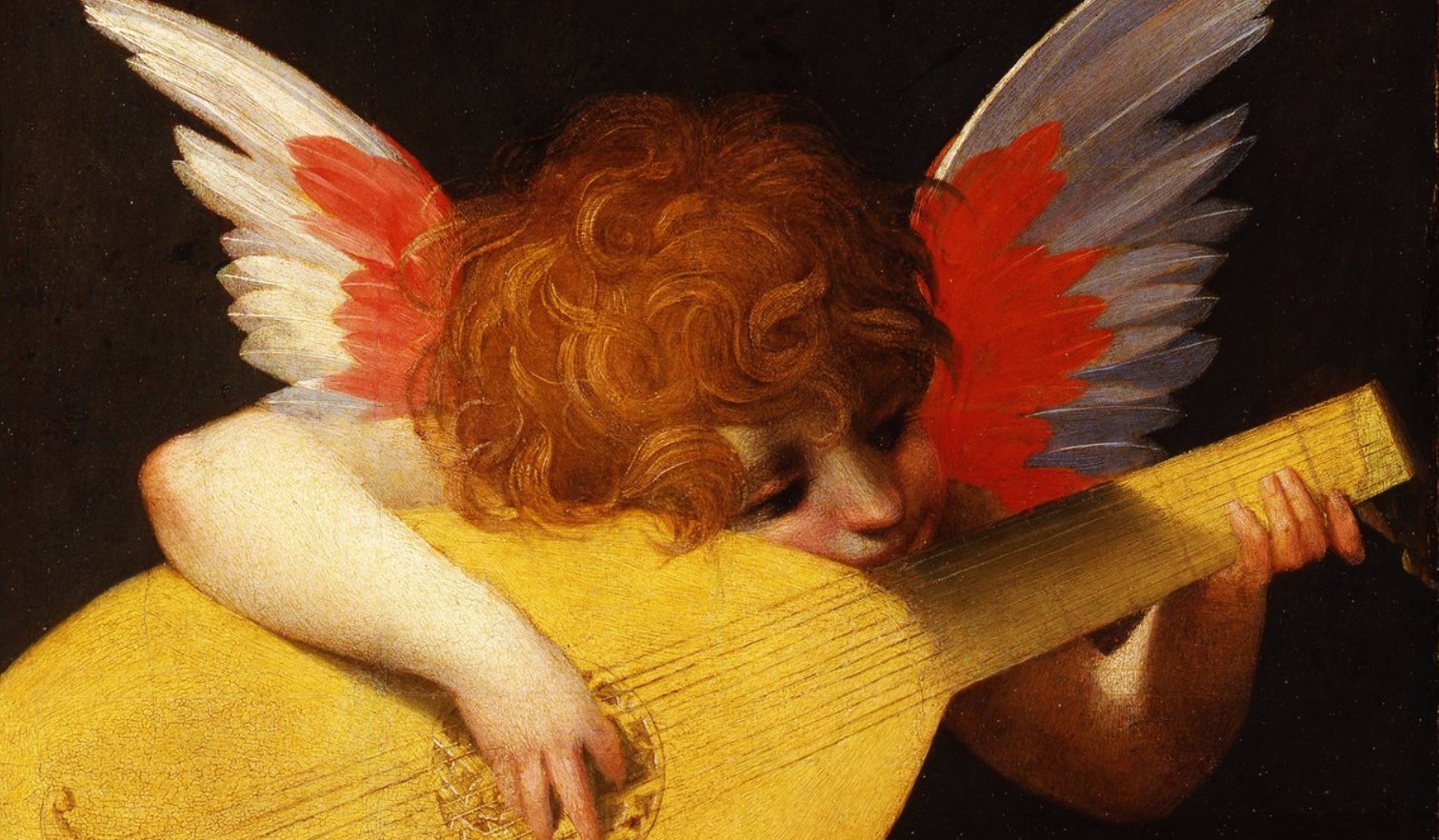
L’angelo musicante del Rosso Fiorentino e la tensione manierista
Con Rosso Fiorentino la musica assume toni più drammatici. Nel suo angelo musicante le linee si tendono, i colori si accendono, le figure sembrano attraversate da un’energia inquieta.
Non è più solo armonia celeste, ma vibrazione emotiva intensa. La musica diventa gesto, movimento interiore, espressione di una spiritualità che non è quiete, ma ricerca e tensione.
Da Vermeer a Chagall, la musica attraversa i secoli
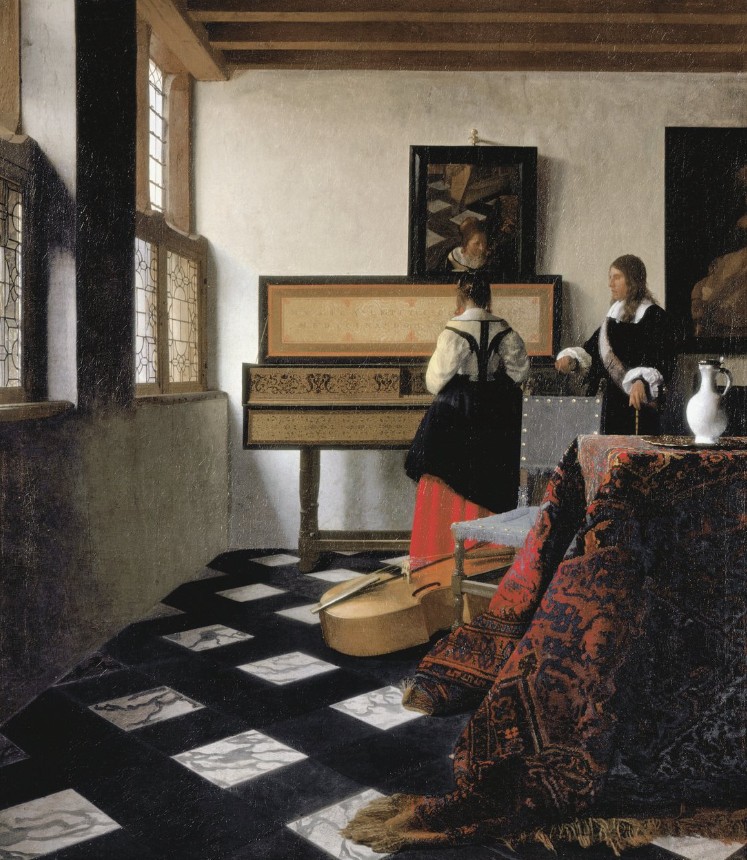
Nel Seicento, Jan Vermeer racconta la musica negli interni domestici, come nella Lezione di musica, dove il suono diventa linguaggio silenzioso tra maestro e allieva, simbolo di educazione e seduzione.
Nel Novecento, Marc Chagall trasforma i violinisti in figure sospese nel cielo, cariche di memoria e sogno, mentre Pablo Picasso scompone chitarre e spartiti nelle geometrie del Cubismo, reinventando visivamente il ritmo e la percezione dello spazio.
Dall’arte al palco di Sanremo: la forza eterna delle note
Se oggi il Festival di Sanremo celebra la musica contemporanea, la storia dell’arte dimostra che le note sono da sempre fonte di ispirazione visiva e spirituale.
Dagli angeli rinascimentali ai musicisti barocchi, fino alle avanguardie moderne, la musica continua a unire cielo e terra, intimità e spettacolo, silenzio e vibrazione. E mentre il pubblico applaude le nuove hit, le tele dei grandi maestri ricordano che ogni melodia può diventare eterna.
Per il momento il sempre vostro Michelangelo Buonarroti vi saluta dandovi appuntamento ai prossimi post e sui social.

Sanremo 2026: When Music Becomes Art, From Melozzo to Caravaggio
Today, the lights of the Sanremo Festival are turned on, and Italy returns to the topic of music, emotion, and entertainment. But long before the Ariston stage, music had already found its way into the works of the great masters. Music has spanned the history of art as a symbol of harmony, spirituality, and passion, becoming the protagonist in some of the most celebrated masterpieces of all time.
Heavenly Music in the Angels of Melozzo da Forlì
In the 15th century, Melozzo da Forlì revolutionized the representation of space and the divine with his extraordinary music-making angels. Created for the Basilica of the Holy Apostles in Rome, these frescoes depict figures suspended between heaven and earth while playing lutes, violas, and harps.
The angels truly appear to move through the air, thanks to a bold perspective and a sense of lightness that makes the scene dynamic and engaging. In these images, music is a symbol of celestial perfection and universal harmony. It is the sound of the eternal translated into painting.
Caravaggio’s Concerto and Music as a Human Emotion
With Caravaggio, music changes face and becomes an earthly experience. In the painting Concerto, a group of young musicians is captured in an intimate moment, amidst scores and instruments, bathed in an intense and dramatic light.
Here, the distance of the sacred is no longer present, but rather the closeness of bodies, gazes, and hands touching the strings. Music becomes a tale of desire, concentration, and anticipation. It is a fragment of everyday life that vibrates on the canvas.
The Flight into Egypt and the Violinist Angel
In Caravaggio’s Rest on the Flight into Egypt, a surprising detail appears: an angel playing the violin for the Holy Family during a pause in their journey. The landscape is gentle, natural, almost suspended in time.
Music becomes comfort and protection, a moment of peace in a story marked by flight and uncertainty. The angel is not distant, but involved, immersed in the scene. The sound transforms into a living presence, capable of accompanying and sustaining.
Rosso Fiorentino’s Music-Making Angel and Mannerist Tension
With Rosso Fiorentino, music takes on more dramatic tones. In his Music-Making Angel, the lines become tense, the colors brighten, the figures seem to be permeated by a restless energy.
It is no longer just celestial harmony, but intense emotional vibration. Music becomes gesture, interior movement, the expression of a spirituality that is not quiet, but searching and tension.
From Vermeer to Chagall, Music Spans the Centuries
In the 17th century, Jan Vermeer depicts music in domestic interiors, as in The Music Lesson, where sound becomes a silent language between teacher and student, a symbol of education and seduction.
In the twentieth century, Marc Chagall transformed violinists into figures suspended in the sky, imbued with memory and dream, while Pablo Picasso deconstructed guitars and scores into the geometric forms of Cubism, visually reinventing rhythm and the perception of space.
From art to the Sanremo stage: the eternal power of music
While today the Sanremo Music Festival celebrates contemporary music, art history demonstrates that music has always been a source of visual and spiritual inspiration.
From Renaissance angels to Baroque musicians, to the modern avant-garde, music continues to unite heaven and earth, intimacy and spectacle, silence and vibration. And while audiences applaud new hits, the canvases of the great masters remind us that every melody can become eternal.
For now, yours truly, Michelangelo Buonarroti bids you farewell and says hello to future posts and social media.

Sostienici – Support Us
Se questo blog ti piace e ti appassiona, puoi aiutarci a farlo crescere sempre più sostenendoci in modo concreto condividendo i post, seguendo le pagine social e con un contributo che ci aiuta ad andare avanti con il nostro lavoro di divulgazione. . ENGLISH: If you like and are passionate about this blog, you can help us make it grow more and more by supporting us in a concrete way by sharing posts, following social pages and with a contribution that helps us to move forward with our dissemination work.
10,00 €
Articoli
Condividi:


Questo sono io





sostienici

Sostienici – Support Us
Se questo blog ti piace e ti appassiona, puoi aiutarci a farlo crescere sempre più sostenendoci in modo concreto condividendo i post, seguendo le pagine social e con un contributo che ci aiuta ad andare avanti con il nostro lavoro di divulgazione. . ENGLISH: If you like and are passionate about this blog, you can help us make it grow more and more by supporting us in a concrete way by sharing posts, following social pages and with a contribution that helps us to move forward with our dissemination work.
€10,00


