
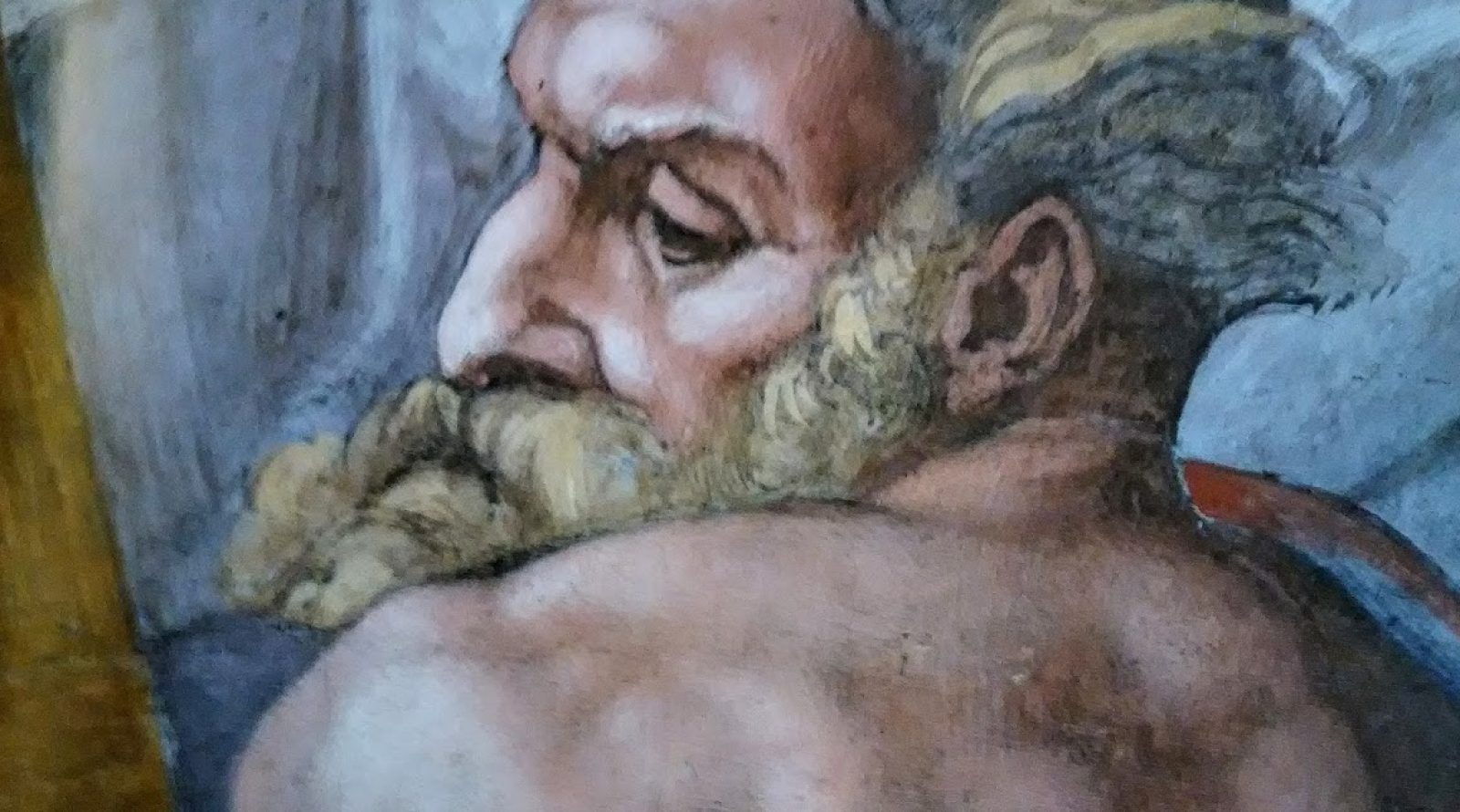
Il profeta Geremia e il peso del destino
Sono sette i profeti dell’Antico Testamento che affrescai nella volta della Cappella Sistina. Tra questi figura Geremia, collocato al di sotto della Separazione della luce dalle tenebre, sul lato opposto della Sibilla Libica, perché la sua parola parlava proprio di quel confine sottile tra disperazione e salvezza.
Chi era il profeta Geremia: storia e significato
Geremia, uomo di Dio e di tormento, è noto come il profeta sofferente. Non temette re né sacerdoti: denunciò le ingiustizie, svelò i peccati, e soprattutto indicò le cause del male, nascoste nel cuore umano. Avrebbe voluto non aver ricevuto il dono della profezia, eppure non poté tacere ciò che Dio gli rivelava.

E Dio gli disse: “Ti faranno guerra, ma non ti vinceranno, perché io sono con te per salvarti”.
Parola che si compì con la morte e la resurrezione di Cristo, quando la promessa della salvezza si fece carne.
Il profeta filosofo
Quando dipinsi Geremia, non volli un uomo che gridasse, ma un uomo che pensasse. La sua non è posa di profeta che tuona, ma del filosofo in meditazione.
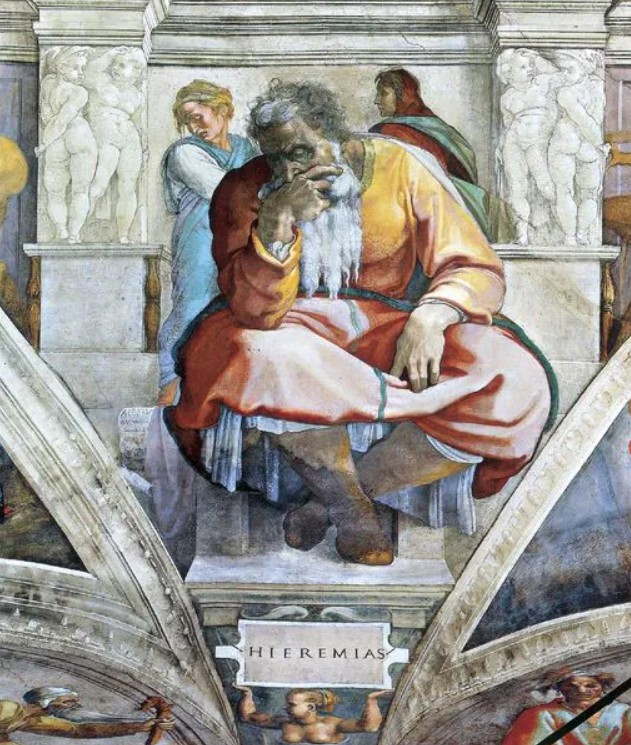
Siede su un trono marmoreo che quasi scompare sotto il peso della sua malinconia. Le gambe sono incrociate alle caviglie, avvolte dalla sottoveste chiara, con quella veste gialla ammantata di rosa. Con la mano destra copre la bocca e sostiene la testa piegata in avanti: gesto di silenzio, riflessione e pure di amarezza.
Il gesto della mano: simbolo del pensiero
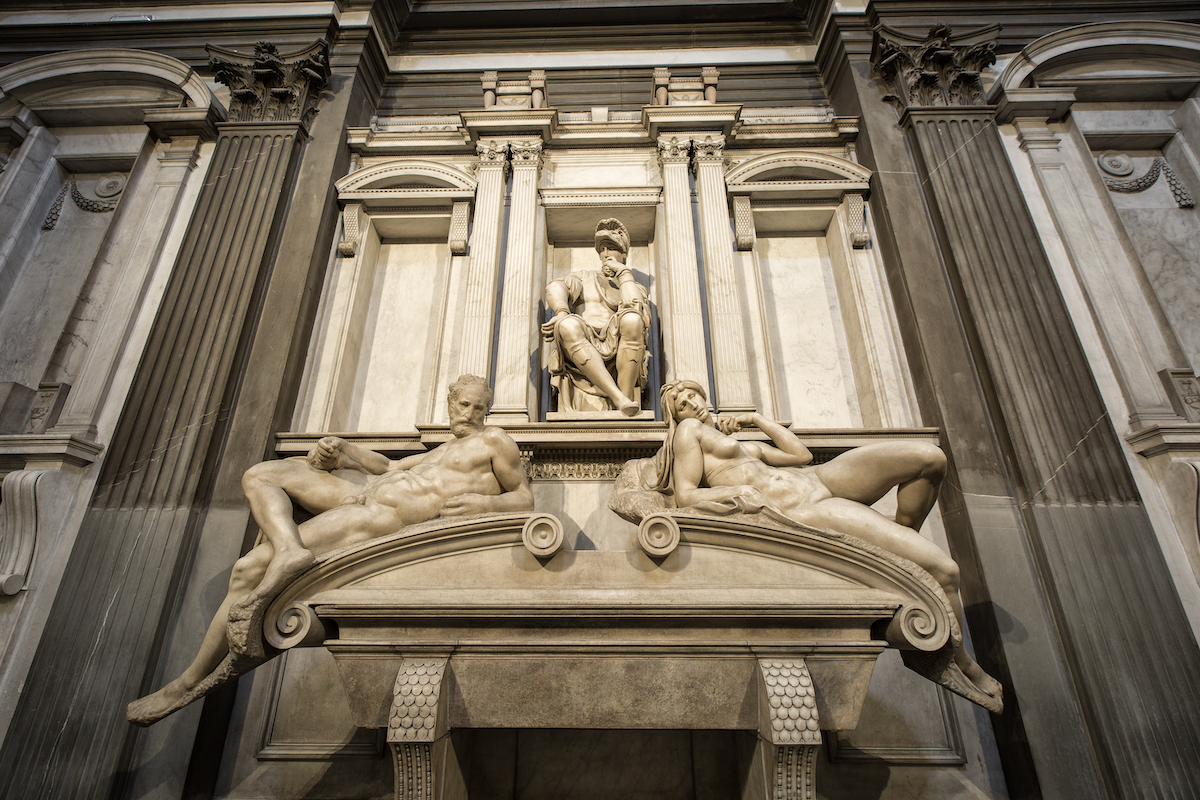
Osservate bene quella mano. Non vi ricorda un’altra opera mia
Anni dopo, nella Sagrestia Nuova, diedi lo stesso atteggiamento a Lorenzo de’ Medici, duca d’Urbino. È il gesto del pensiero profondo, dell’uomo che contempla il destino e ne avverte il peso.
I due spiriti dietro il profeta
Alle spalle del profeta stanno due giovani spiriti. Uno, dai capelli chiari, ne imita la malinconia: come se il dolore di Geremia si propagasse a chi gli è vicino.
Vedesi quel Ieremia, con le gambe incrocicchiate, tenersi una mano alla barba posando il gomito sopra il ginocchio, l’altra posar nel grembo et aver la testa chinata, d’una maniera che ben dimostrala malenconia, i pensieri, la cogitazione e l’amaritudine che egli ha de ‘l suo popolo; così medesimamente due putti, che gli sono dietro, e similmente è nella prima Sibilla di sotto a lui verso la porta nella quale, volendo esprimere la vecchiezza, oltra che egli, avviluppandola di panni, ha voluto mostrare che già i sangui sono agghiacciati dal tempo et inoltre, nel leggere, per avere la vista logora, le fa accostare il libro alla vista accuratissimamente“.
Così scrisse del profeta Geremia il mio carissimo amico Giorgio Vasari

Il profeta sofferente e la promessa della salvezza
A questo vecchio, triste e severo, sono sempre stato legato. Geremia non lottò con spade, ma con la parola; non cercò gloria, ma verità.
Fu uomo che spesso si fronteggiò col Diavolo e rimproverò i re, perché il popolo potesse tornare alla luce.
Ecco perché lo dipinsi non come un vincitore, ma come un pensatore. Non come un eroe, ma come un uomo che soffre per gli uomini.
Poiché talvolta, nel silenzio di una mano sulla bocca, si nasconde la profezia più grande.
Per il momento il sempre vostro Michelangelo Buonarroti vi saluta dandovi appuntamento ai prossimi post e sui social.

The Prophet Jeremiah and the Weight of Destiny
I frescoed seven Old Testament prophets on the Sistine Chapel ceiling. Among them is Jeremiah, placed beneath the Separation of Light from Darkness, on the opposite side of the Libyan Sibyl, because his words spoke precisely to that fine line between despair and salvation.
Who Was the Prophet Jeremiah: History and Meaning
Jeremiah, a man of God and torment, is known as the suffering prophet. He feared neither kings nor priests: he denounced injustices, revealed sins, and above all, pointed to the causes of evil, hidden in the human heart. He wished he had not received the gift of prophecy, yet he could not remain silent about what God was revealing to him.
And God said to him: “They will make war against you, but they will not overcome you, for I am with you to save you.”
A word that was fulfilled with the death and resurrection of Christ, when the promise of salvation became flesh.
The Prophet-Philosopher
When I painted Jeremiah, I didn’t want a man who shouted, but a man who thought. His pose is not that of a prophet thundering, but of a philosopher in meditation.
He sits on a marble throne that almost disappears under the weight of his melancholy. His legs are crossed at the ankles, wrapped in a light-colored slip, with that yellow robe draped in pink. With his right hand, he covers his mouth and supports his head, bowed forward: a gesture of silence, reflection, and even bitterness.
The gesture of the hand: a symbol of thought
Look closely at that hand. Doesn’t it remind you of another work of mine?
Years later, in the New Sacristy, I depicted Lorenzo de’ Medici, Duke of Urbino, in the same pose. It is the gesture of deep thought, of a man contemplating destiny and feeling its weight.
The two spirits behind the prophet
Behind the prophet stand two young spirits. One, with light hair, imitates his melancholy, as if Jeremiah’s grief spread to those around him.
“This Jeremiah is seen, with his legs crossed, one hand in his beard, his elbow resting on his knee, the other in his lap, and his head bowed, in a manner that clearly demonstrates the melancholy, thoughts, brooding, and bitterness he feels for his people. Likewise, two little boys are behind him, and similarly in the first Sibyl below him, toward the door, where, wanting to express old age, he also wanted to show, by wrapping her in cloths, that her blood is already frozen by time. Furthermore, when reading, because her eyesight is worn out, he makes her hold the book very carefully to her eyes”
Thus wrote my dear friend Giorgio Vasari of the prophet Jeremiah.
The suffering prophet and the promise of salvation
I have always been attached to this sad and stern old man. Jeremiah did not fight with swords, but with words; he did not seek glory, but truth.
He was a man who often confronted the Devil and rebuked kings, so that the people might return to the light.
That is why I painted him not as a victor, but as a thinker. Not as a hero, but as a man who suffers for men.
Because sometimes, in the silence of a hand The greatest prophecy lies hidden in his mouth.
For now, yours truly, Michelangelo Buonarroti, bids farewell and invites you to join him in future posts and on social media.

Sostienici – Support Us
Se questo blog ti piace e ti appassiona, puoi aiutarci a farlo crescere sempre più sostenendoci in modo concreto condividendo i post, seguendo le pagine social e con un contributo che ci aiuta ad andare avanti con il nostro lavoro di divulgazione. . ENGLISH: If you like and are passionate about this blog, you can help us make it grow more and more by supporting us in a concrete way by sharing posts, following social pages and with a contribution that helps us to move forward with our dissemination work.
10,00 €
Articoli
Condividi:


Questo sono io





sostienici

Sostienici – Support Us
Se questo blog ti piace e ti appassiona, puoi aiutarci a farlo crescere sempre più sostenendoci in modo concreto condividendo i post, seguendo le pagine social e con un contributo che ci aiuta ad andare avanti con il nostro lavoro di divulgazione. . ENGLISH: If you like and are passionate about this blog, you can help us make it grow more and more by supporting us in a concrete way by sharing posts, following social pages and with a contribution that helps us to move forward with our dissemination work.
€10,00


1 commento »