
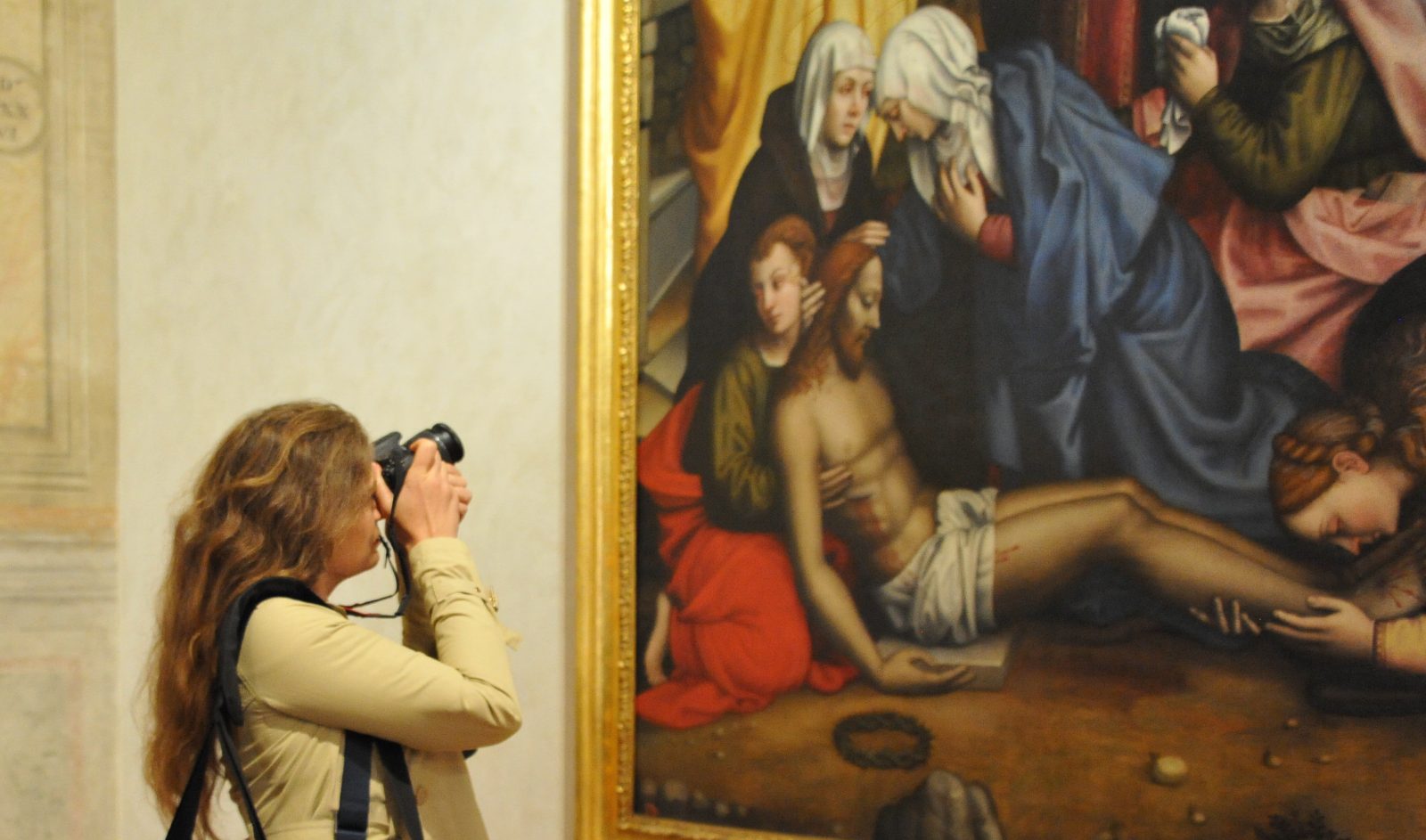
31 ottobre 1512: Giulio II inaugura la volta della Cappella Sistina
Il 31 ottobre del 1512, Papa Giulio II, indossò le sue vesti più preziose e chiamò a raccolta alti prelati e cardinali per svelare al mondo la volta della Cappella Sistina che avevo terminato di affrescare.
Hodie primum capela nostra, pingi finita, aperta est, nam per tres aut quatour annos tectum sive fornix eius tecta sempre fuit ex solari ipsum totum cooperiente.
Paride Grassi, cerimoniere di papa Giulio II

Avevo trascorso quattro lunghi anni della mia arrampicato su per i ponteggi, a mangiar colore e a respirare l’umidità dell’intonaco appena steso. Mi facevano male le ossa e m’ero conquistato problemi alla vista che dovetti curare a lungo. Avevo litigato ferocemente col pontefice per tutto il tempo e dovetti rispedire da dove erano venuti i primi assistenti che avevo chiamato da Firenze.
Alla fine però quelle tribolazioni, quei giorni interi passati a dipingere senza tregua e le conseguenze che pagai in termini di salute valsero la pena, o almeno così mi sembra.
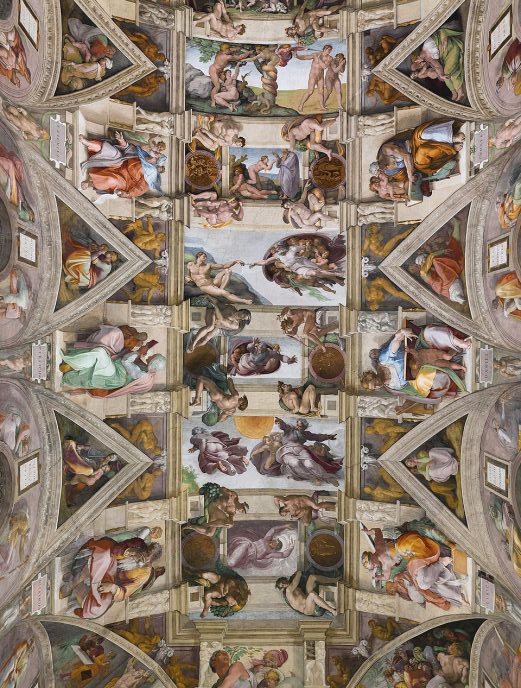
Tutta quella fatica era servita per creare la meraviglia del mondo e vi assicuro che quando i presenti videro la volta affrescata, non si capacitarono di ciò che la vista gli stava raccontando.
Il papa sapeva già dall’inizio che quel lavoro mio avrebbe fatto rimbalzare di bocca in bocca il nome suo, da quel giorno fino all’eternità. E così è stato, almeno fino a oggi.
Le manie di grandezza di Giulio II son cosa nota e prima di entrare con la sua corte e tutti gli invitati nella Sistina, aveva messo in piedi un pranzo luculliano durato ore e ore. Una festa che poco aveva a che fare con il sacro ma molto col profano.

Alla sua mensa presero posto tanti prelati e autorità dell’epoca. Fra velluti, raso prezioso e tessuti damascati pareva d’essere a uno sfoggio della ricchezza ma pure del cattivo gusto. Chi troppo ostenta spesso nulla stringe, tenetevelo a mente: a volte può far comodo.
Sua Santità volle si recitassero due commedie in onore dell’oratore di Parma e alla fine di quel pranzo che pareva non finire mai, s’avviò verso la Sistina seguito da 17 cardinali vestiti pure loro di tutto punto.
Io che per anni feci una vita da miserabile perché del lusso volentieri ne facevo a meno così come di tutto ciò che non era necessario per la sopravvivenza, vedevo questi porporati sfilarmi accanto. Mi veniva quasi da ridere ma rimasi serio, impegnato a scorgere le emozioni del momento sui loro volti.
Per giorni non si parlò d’altro in tutta Roma. Non della festa intendo, ma degli affreschi miei.

Pensate che la seconda parte della volta l’avevo affrescata solamente in un anno: qualcosa di incredibile.
Scrisse Antonio Billi: “ha volsuto a tutto il mondo mostrare che tutti li altri gli sono inferiori, et tutti quegli che vogliono di tale arte essere chiamati maestri, a pari di quella di Michelagniolo conosciesi essere tutte le altre cose impiastrate”.
Il vostro Michelangelo Buonarroti che oggi volentieri ricorda quella vigilia di Ognissanti del 1512.
October 31, 1512: Julius II inaugurates the Sistine Chapel ceiling
On October 31, 1512, Pope Julius II donned his most precious robes and summoned high-ranking prelates and cardinals to unveil to the world the Sistine Chapel ceiling I had finished frescoing.
Hodie primum capela nostra, pingi finita, aperta est, nam per tres aut quatour annos tectum sive fornix eius tecta sempre fuit ex solari ipsum totum cooperiente.
Paride Grassi, cerimoniere di papa Giulio II
I had spent four long years of my life climbing the scaffolding, ingesting paint, and breathing the dampness of freshly applied plaster. My bones ached, and I had developed vision problems that required long-term treatment. I had argued fiercely with the pontiff the entire time, and I had to send the first assistants I had called from Florence back where they had come from.
In the end, however, those tribulations, those entire days spent painting non-stop, and the consequences I paid in terms of health, were worth it—or so it seems to me.
All that effort had gone into creating the wonder of the world, and I assure you, when those present saw the frescoed ceiling, they couldn’t believe what their eyes were telling them.
The Pope knew from the beginning that my work would make his name known from that day until eternity. And so it has been, at least until today.
Julius II’s delusions of grandeur are well known, and before entering the Sistine Chapel with his court and all his guests, he had prepared a lavish lunch that lasted hours and hours. A feast that had little to do with the sacred but a lot to do with the profane.
Many prelates and dignitaries of the time sat at his table. Among velvets, precious satins, and damask fabrics, it seemed like a display of wealth but also of bad taste. Those who show off too much often get nothing; keep that in mind: sometimes it can be convenient.
His Holiness requested two comedies be performed in honor of the orator from Parma, and at the end of that seemingly endless lunch, he headed toward the Sistine Chapel, followed by 17 cardinals, also dressed in their finest.
For years, I had lived a miserable life because I willingly did without luxury and anything not necessary for survival. I watched these cardinals pass me by. I almost laughed, but I remained serious, intent on seeing the emotions of the moment on their faces.
For days, all of Rome was talking about nothing else. Not about the celebration, I mean, but about my frescoes.
Consider that I had frescoed the second part of the vault in only one year: something incredible.
Antonio Billi wrote: “He wanted to show the whole world that all others are inferior to him, and that all those who want to be called masters of this art, like Michelangelo, are known to be as smeared as all other things.”
Your Michelangelo Buonarroti who today gladly recalls that All Saints’ Eve of 1512.

Sostienici – Support Us
Se questo blog ti piace e ti appassiona, puoi aiutarci a farlo crescere sempre più sostenendoci in modo concreto condividendo i post, seguendo le pagine social e con un contributo che ci aiuta ad andare avanti con il nostro lavoro di divulgazione. . ENGLISH: If you like and are passionate about this blog, you can help us make it grow more and more by supporting us in a concrete way by sharing posts, following social pages and with a contribution that helps us to move forward with our dissemination work.
10,00 €
Condividi:


Questo sono io





sostienici

Sostienici – Support Us
Se questo blog ti piace e ti appassiona, puoi aiutarci a farlo crescere sempre più sostenendoci in modo concreto condividendo i post, seguendo le pagine social e con un contributo che ci aiuta ad andare avanti con il nostro lavoro di divulgazione. . ENGLISH: If you like and are passionate about this blog, you can help us make it grow more and more by supporting us in a concrete way by sharing posts, following social pages and with a contribution that helps us to move forward with our dissemination work.
€10,00


