
L’antico mondano che sarebbe dovuto finire in mano agli scalpellini
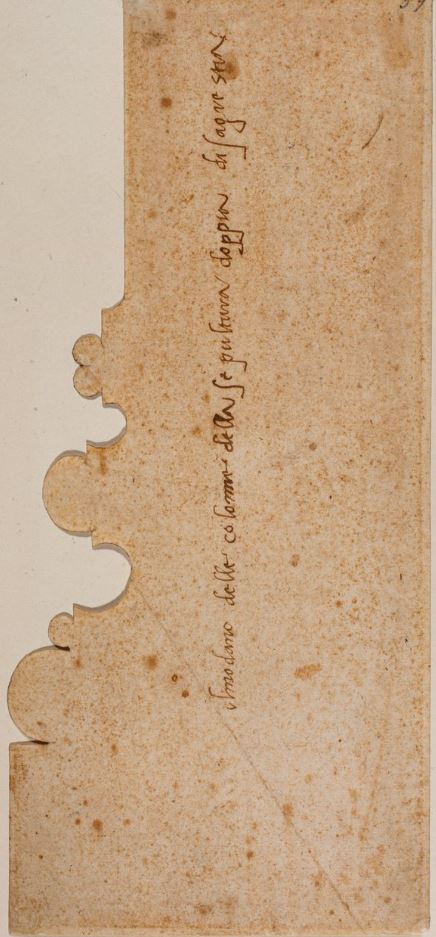
Il disegno che vi propongo, realizzato a penna e matita su carta, è lo studio del profilo di una colonna per la Sagrestia Nuova.
Come indica ciò che scrissi sopra il profilo, quello studio riguarda nello specifico le basi delle colonne della ‘sepoltura doppia’ di Lorenzo de’ Medici morto nel 1492 e del fratello Giuliano assassinato durante la congiura dei Pazzi, il 26 aprile del 1478.
Quella sepoltura, così come l’avevo pensata, non riuscii a realizzarla e oggi potete ammirare un semplice cassone sopra il quale vennero poi poi posizionati i Santi Cosma e Damiano assieme alla Madonna Medici.
Tecnicamente questo foglio si chiama mondano, termine usato per indicare il profilo a grandezza naturale di un elemento architettonico che poi viene adoperato come guida dagli scalpellini.
Dovete sapere che, oltre a mondani di carta, ne realizzai anche su fogli di latta. Sul mio libro dei ricordi infatti si legge della realizzazione di “fogli di ferro stagniato per fare modanature per gli scharpellini di San Lorenzo” e a seguire facci riferimento al pagamento “per un modano d’una mensola a bacio di Puccione legnaiuolo”.
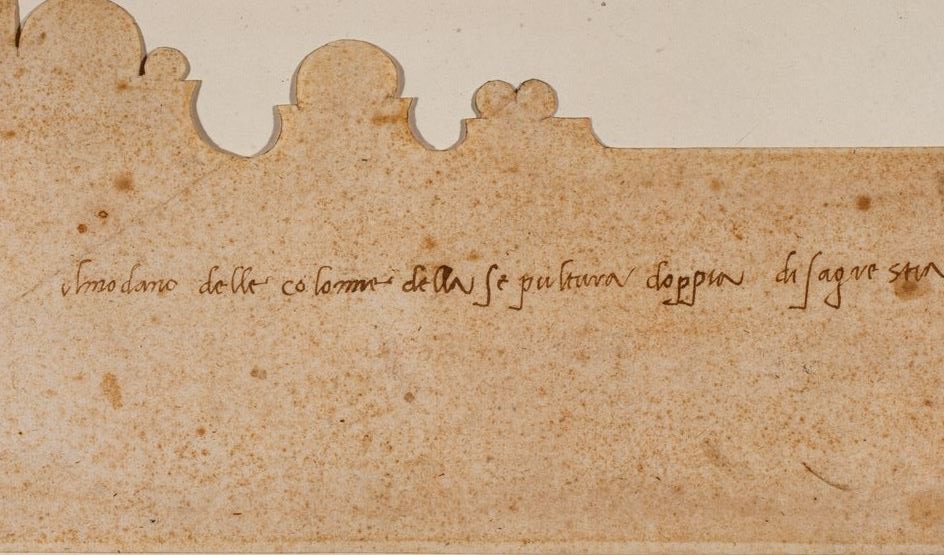
Probabilmente questo foglio è da ricondurre, come datazione, a quegli stessi anni in cui misi nero su bianco quei riferimenti, attorno al 1524.
Micheal Hirst precisa che disegni e mondani di altro tipo erano destinati a essere distrutti per evitare la replica ma, in questo specifico caso, non vennero dati alle fiamme forse perché quella tomba doppia da me immaginata non venne mai realizzata.
Il foglio in questione appartiene alle ricche collezioni di Casa Buonarroti, a Firenze.
Per il momento il sempre vostro Michelangelo Buonarroti vi saluta dandovi appuntamento ai prossimi post e sui social.
The ancient mundane that should have ended up in the hands of the stonecutters
The drawing I propose to you, made in pen and pencil on paper, is the study of the profile of a column for the New Sacristy.
As indicated by what I wrote above the profile, that study specifically concerns the bases of the columns of the ‘double burial’ of Lorenzo de’ Medici who died in 1492 and of his brother Guliano who was murdered during the Pazzi conspiracy on 26 April 1478.
I was unable to create that burial as I had imagined it and today you can admire a simple chest on which the Saints Cosmas and Damian were then placed together with the Madonna Medici.
Technically this sheet is called a mundane, a term used to indicate the life-size profile of an architectural element that is then used as a guide by the stonecutters.
You should know that, in addition to paper mundanes, I also made them on sheets of tin. In fact, in my book of memories we read about the creation of “sheets of tinned iron to make moldings for the scharpellini of San Lorenzo” and then refer to the payment “for a molding of a kiss shelf by Puccione the carpenter”.
This sheet can probably be traced back, as a date, to those same years in which I put those references down on paper, around 1524.
Hirst specifies that drawings and other types of mundanes were destined to be destroyed to avoid replication but, in this specific case, they were not burned perhaps because the double tomb I imagined was never built.
The son in question belongs to the rich collections of Casa Buonarroti, in Florence.
For the moment, yours truly Michelangelo Buonarroti bids you farewell, making an appointment to see you in the next posts and on social media.

Sostienici – Support Us
Se questo blog ti piace e ti appassiona, puoi aiutarci a farlo crescere sempre più sostenendoci in modo concreto condividendo i post, seguendo le pagine social e con un contributo che ci aiuta ad andare avanti con il nostro lavoro di divulgazione. . ENGLISH: If you like and are passionate about this blog, you can help us make it grow more and more by supporting us in a concrete way by sharing posts, following social pages and with a contribution that helps us to move forward with our dissemination work.
10,00 €
Condividi:


Questo sono io





sostienici

Sostienici – Support Us
Se questo blog ti piace e ti appassiona, puoi aiutarci a farlo crescere sempre più sostenendoci in modo concreto condividendo i post, seguendo le pagine social e con un contributo che ci aiuta ad andare avanti con il nostro lavoro di divulgazione. . ENGLISH: If you like and are passionate about this blog, you can help us make it grow more and more by supporting us in a concrete way by sharing posts, following social pages and with a contribution that helps us to move forward with our dissemination work.
€10,00


