
Firenze: riapre al pubblico la Galleria degli Affreschi al Museo degli Innocenti
La Galleria degli Affreschi del Museo degli Innocenti riapre i battenti al pubblico.
Dal 23 maggio entrerà a far parte del circuito museale, dopo il significativo progetto di riqualificazione iniziato nell’agosto del 2023 e appena portato a termine.
Tale restyling ha avuto come obiettivo principale il miglioramento dell’accessibilità, una questione cruciale per permettere a tutti di apprezzare il patrimonio artistico custodito in questo prestigioso istituto. Il nuovo allestimento valorizza le opere esposte, rendendole non solo più fruibili ma anche meglio inserite nel contesto della loro storia e significato.
La Galleria e le Stanze dei Priore sono situate lungo il quadrilatero interno del complesso architettonico dell’Istituto degli Innocenti e insistono sul portico del Cortile degli uomini.
Nel corso dei secoli hanno avuto differenti funzioni fino a quando, nel 1971 accolsero un nucleo di sinopie e di affreschi staccati ricevuti in deposito dalla Soprintendenza alla Gallerie fiorentine, oggi Gallerie degli Uffizi, a seguito dell’alluvione di Firenze del 1966.
permettendo ai visitatori di immergersi nell’arte fiorentina dei secoli passati. Tra gli artisti che hanno lasciato un’impronta significativa nel museo ci sono nomi illustri come Alessandro Allori e Lorenzo Monaco, i cui lavori raccontano storie e tradizioni di grande rilevanza culturale e storica.

Sono 28 in totale le opere che si trovano all’interno della Galleria. 27 tra sinopie e affreschi staccati in deposito, fra i quali due nuclei costituiti dal ciclo pittorico della seconda metà del Cinquecento di Alessandro Allori e bottega, e da due pregevoli dipinti murali di Lorenzo Monaco datati agli inizi del Quattrocento.
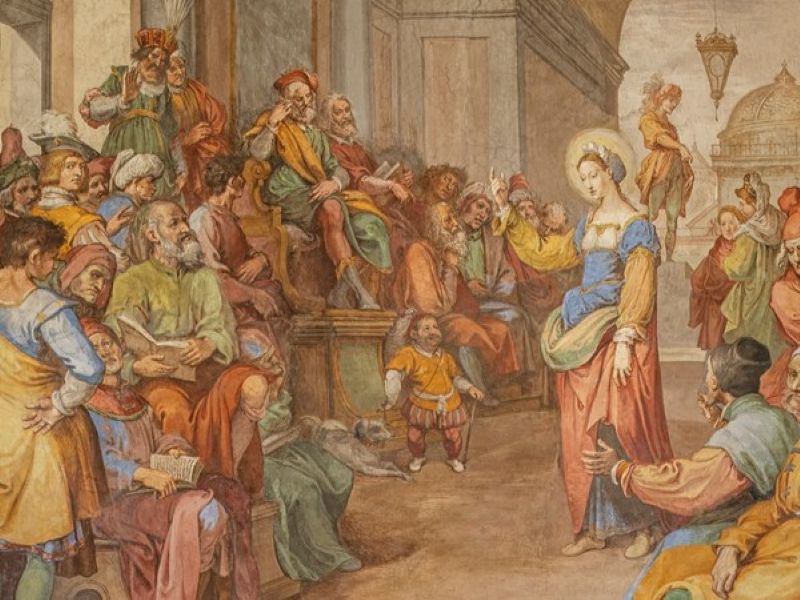
La 28^ opera è la Disputa di Santa Caterina d’Alessandria con i filosofi di Bernardino Poccetti di proprietà dell’Istituto.
Il progetto di riqualificazione è stato sostenuto da fondi del Ministero della Cultura, un segno dell’importanza attribuita alla cultura e al patrimonio artistico nel panorama italiano. Gli interventi effettuati hanno trasformato gli spazi interni, rendendoli completamente accessibili a tutti i visitatori, anche a coloro con disabilità. Sono state implementate nuove tecnologie che facilitano la fruizione delle opere, garantendo un’esperienza più ricca e coinvolgente.
Dopo l’intervento di riqualificazione, la Galleria è stata resa completamente accessibile e il percorso espositivo è stato completamente rivisto e aggiornato, seguendo un ordinamento principalmente cronologico e tematico.
I pannelli informativi realizzati per accompagnare la visita raccontano gli spazi e le opere, soffermandosi su con approfondimenti sulle tecniche di realizzazione e di restauro dell’affresco.
Le opere nella Galleria
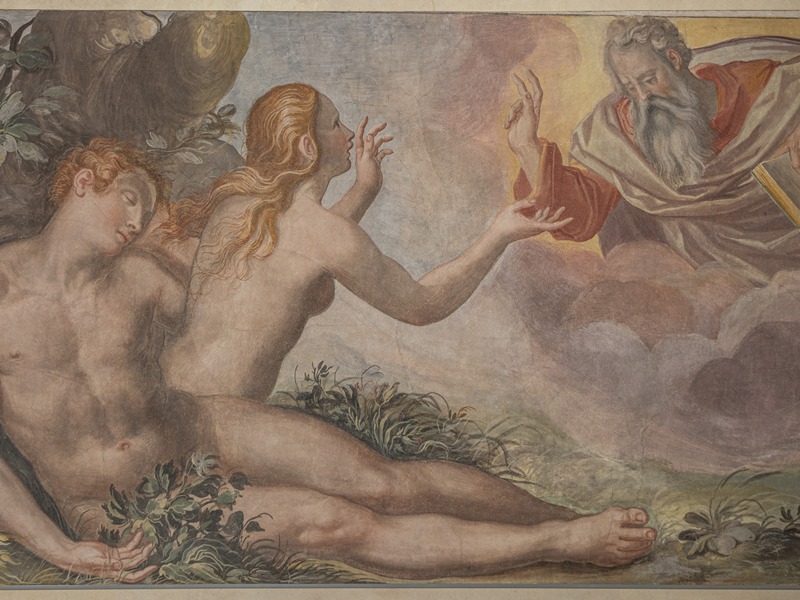
Un punto focale è senza dubbio il ciclo di affreschi del 1576, realizzato da Alessandro Allori e la sua bottega per la cappella dell’Ospedale delle Donne di Santa Maria Nuova. Questi dipinti, raffiguranti episodi dell’Antico Testamento e sei imponenti figure di profeti, evidenziano una chiara influenza michelangiolesca, richiamando direttamente i celebri affreschi della Cappella Sistina in Vaticano.
Proseguendo dalla Galleria, si accede alla Cappellina (o “Cappellina delle suore”), un piccolo oratorio costruito nel 1955. Questo spazio, nato per sostituire la precedente cappella interna è stato oggetto di una ristrutturazione che ha riaperto l’affaccio sulla Chiesa di Santa Maria degli Innocenti.
Qui sono custoditi alcuni dei più preziosi affreschi staccati, giunti al Museo degli Innocenti nel 1971. Tra questi spiccano due opere di Lorenzo Monaco: la suggestiva “Crocifissione con la Madonna e San Giovanni Evangelista” (1400-1410) e l’intensa raffigurazione del “Cristo in Pietà” (1411-1413).
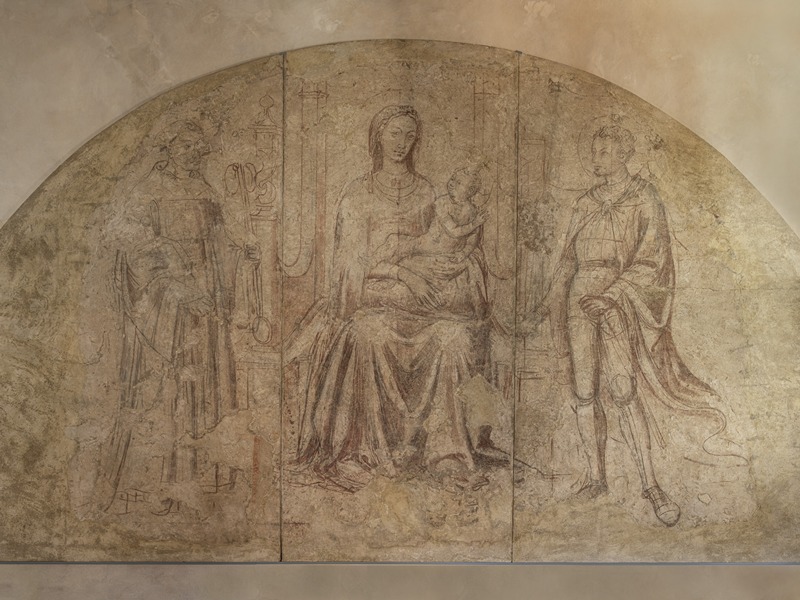
Una sezione specifica della Galleria è dedicata allo studio delle sinopie e all’approfondimento delle tecniche di realizzazione e restauro degli affreschi. Qui si possono ammirare opere quattrocentesche di Bicci di Lorenzo, tra cui la “Madonna col Bambino tra San Giovanni Battista e Santo monaco”, “Sant’Antonio abate” e la “Madonna col Bambino tra i Santi Leonardo e Giorgio”, accanto alla seicentesca “Ultima cena” di Matteo Rosselli.
Infine, il vestibolo d’ingresso alle Stanze del Priore accoglie l’affresco di Bernardino Poccetti, “La Disputa di Santa Caterina d’Alessandria con i filosofi”, datato al 1612.
Questo percorso artistico offre un’immersione profonda nella storia e nelle tecniche dell’affresco, permettendo di apprezzare capolavori che spaziano dal Gotico al Barocco.
Per il momento il sempre vostro Michelangelo Buonarroti vi saluta dandovi appuntamento ai prossimi post e sui social.
Florence: the Gallery of Frescoes at the Museo degli Innocenti reopens to the public
The Gallery of Frescoes at the Museo degli Innocenti reopens its doors to the public.
From May 23, it will become part of the museum circuit, after the significant redevelopment project that began in August 2023 and has just been completed.
The main objective of this restyling was to improve accessibility, a crucial issue to allow everyone to appreciate the artistic heritage preserved in this prestigious institute. The new layout enhances the works on display, making them not only more usable but also better inserted into the context of their history and meaning.
The Gallery and the Prior’s Rooms are located along the internal quadrilateral of the architectural complex of the Istituto degli Innocenti and insist on the portico of the Cortile degli uomini.
Over the centuries they have had different functions until, in 1971, they welcomed a group of sinopias and detached frescoes received in storage by the Superintendence of the Florentine Galleries, now the Uffizi Galleries, following the 1966 flood in Florence.
allowing visitors to immerse themselves in the Florentine art of past centuries. Among the artists who have left a significant mark on the museum are illustrious names such as Alessandro Allori and Lorenzo Monaco, whose works tell stories and traditions of great cultural and historical importance.
There are 28 works in total inside the Gallery. 27 sinopias and detached frescoes in storage, including two groups consisting of the pictorial cycle from the second half of the sixteenth century by Alessandro Allori and his workshop, and two valuable mural paintings by Lorenzo Monaco dating back to the early fifteenth century.
The 28th work is the Dispute of Saint Catherine of Alexandria with the Philosophers by Bernardino Poccetti, owned by the Institute.
The redevelopment project was supported by funds from the Ministry of Culture, a sign of the importance attributed to culture and artistic heritage in the Italian panorama. The interventions carried out have transformed the interior spaces, making them completely accessible to all visitors, including those with disabilities. New technologies have been implemented that facilitate the use of the works, ensuring a richer and more engaging experience.
After the redevelopment intervention, the Gallery was made completely accessible and the exhibition route was completely revised and updated, following a mainly chronological and thematic order.
The information panels created to accompany the visit describe the spaces and the works, focusing on in-depth information on the techniques of creation and restoration of the fresco.
The works in the Gallery
A focal point is undoubtedly the cycle of frescoes from 1576, created by Alessandro Allori and his workshop for the chapel of the Women’s Hospital of Santa Maria Nuova. These paintings, depicting episodes from the Old Testament and six imposing figures of prophets, show a clear Michelangelo influence, directly recalling the famous frescoes of the Sistine Chapel in the Vatican.
Continuing from the Gallery, you enter the Cappellina (or “Chapel of the nuns”), a small oratory built in 1955. This space, created to replace the previous internal chapel, has been the subject of a renovation that has reopened the view of the Church of Santa Maria degli Innocenti.
Here are kept some of the most precious detached frescoes, which arrived at the Museo degli Innocenti in 1971. Among these, two works by Lorenzo Monaco stand out: the evocative “Crucifixion with the Madonna and Saint John the Evangelist” (1400-1410) and the intense depiction of the “Christ in Pietà” (1411-1413).
A specific section of the Gallery is dedicated to the study of sinopias and the in-depth study of the techniques for creating and restoring frescoes. Here you can admire fifteenth-century works by Bicci di Lorenzo, including the “Madonna and Child between Saint John the Baptist and Saint Monk”, “Saint Anthony the Abbot” and the “Madonna and Child between Saints Leonardo and George”, alongside the seventeenth-century “Last Supper” by Matteo Rosselli.
Finally, the entrance vestibule to the Stanze del Priore hosts the fresco by Bernardino Poccetti, “The Dispute of Saint Catherine of Alexandria with the Philosophers”, dated 1612.
This artistic journey offers a deep immersion in the history and techniques of fresco, allowing you to appreciate masterpieces ranging from Gothic to Baroque.
For the moment, your ever Michelangelo Buonarroti bids you farewell, making an appointment with you in the next posts and on social media.

Sostienici – Support Us
Se questo blog ti piace e ti appassiona, puoi aiutarci a farlo crescere sempre più sostenendoci in modo concreto condividendo i post, seguendo le pagine social e con un contributo che ci aiuta ad andare avanti con il nostro lavoro di divulgazione. . ENGLISH: If you like and are passionate about this blog, you can help us make it grow more and more by supporting us in a concrete way by sharing posts, following social pages and with a contribution that helps us to move forward with our dissemination work.
10,00 €
Condividi:


Questo sono io





sostienici

Sostienici – Support Us
Se questo blog ti piace e ti appassiona, puoi aiutarci a farlo crescere sempre più sostenendoci in modo concreto condividendo i post, seguendo le pagine social e con un contributo che ci aiuta ad andare avanti con il nostro lavoro di divulgazione. . ENGLISH: If you like and are passionate about this blog, you can help us make it grow more and more by supporting us in a concrete way by sharing posts, following social pages and with a contribution that helps us to move forward with our dissemination work.
€10,00


