
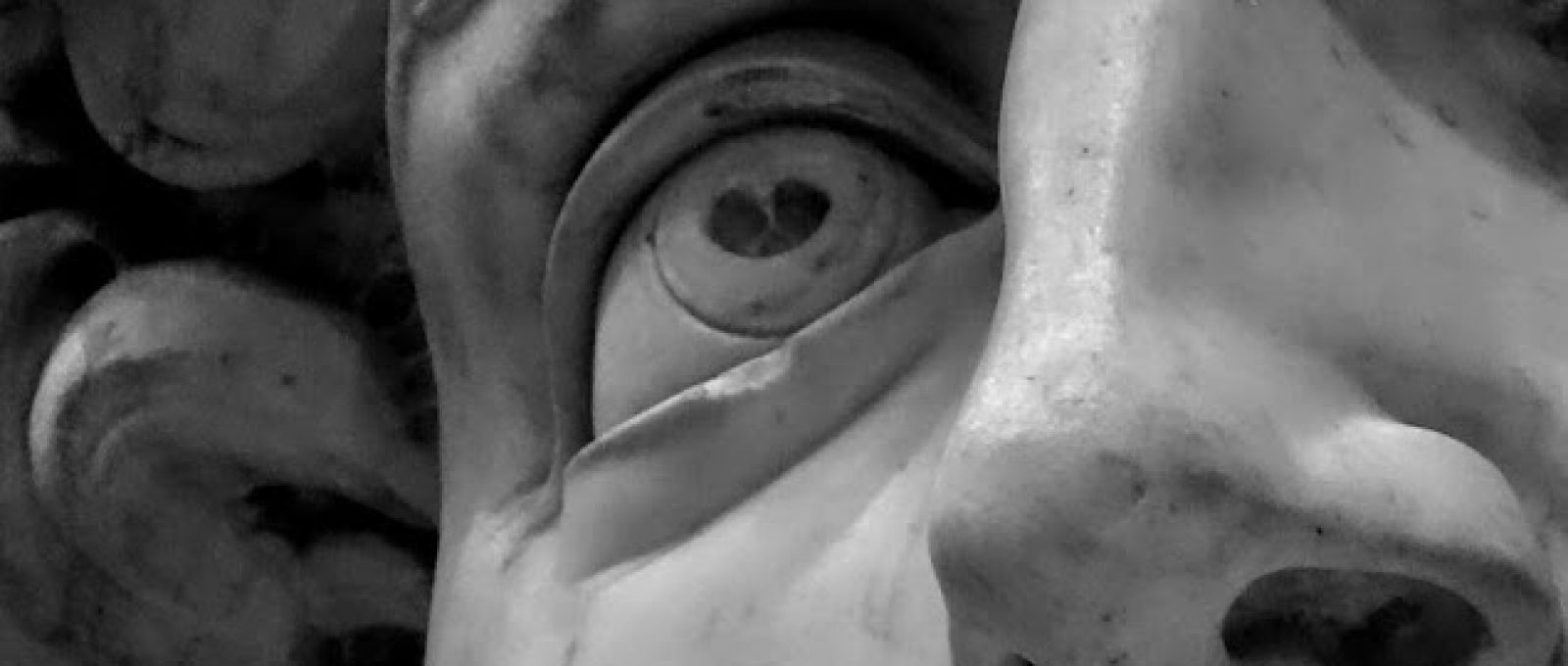
Raffaello avrebbe voluto dipingere a olio tutta la Stanza di Costantino
Dopo dieci anni di restauro, gli 800 metri quadrati della grande Sala di Costantino di Raffaello tornano a essere visibili nella loro totalità. Non sono mancate le sorprese come quelle relative all’inedita tecnica di esecuzione e la scoperta di nuovi dettagli sull’ultima grande impresa decorativa murale del maestro urbinate.
L’intervento conservativo è stato eseguito dal Laboratorio di Restauro Dipinti e Materiali Lignei dei Musei Vaticani, sotto la direzione di Francesca Persegati.
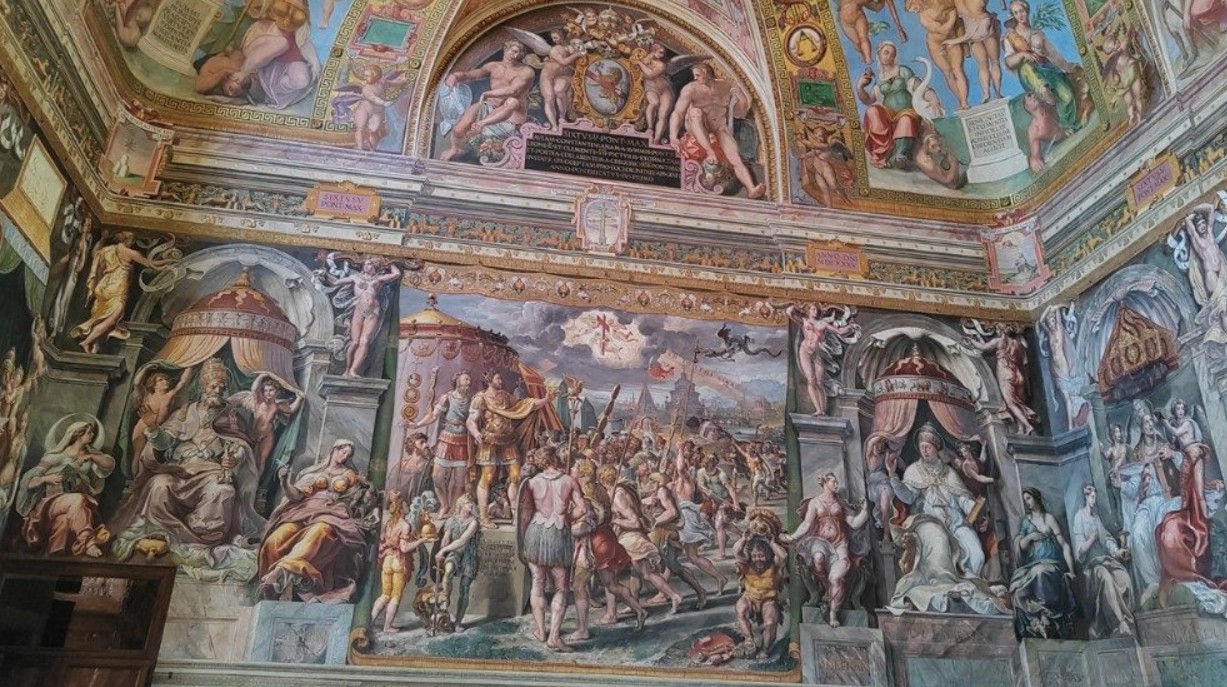
Il restauro ha avuto inizio con la parete della Visione della Croce nel marzo 2015 ed è stato portato a termine nel dicembre 2024 con la volta decorata con il grande arazzo dipinto.
Nel corso degli anni sono state fatte diverse scoperte sulla tecnica pittorica di Raffaello e della sua laboriosa bottega.
Ci vollero più di 60 anni per completare le pitture murali della Stanza di Costantino e nel frattempo si succedettero cinque pontefici: da Leone x a Sisto V.

Raffaello avrebbe voluto dipingere a olio tutta la Stanza di Costantino
Il restauro è stato avviato iniziando dalle due figure di Comitas e Iustitia, le uniche dipinte a olio dalle quali Raffaello iniziò a lavorare alla Stanza di Costantino.
Fabio Piacentini, responsabile del cantiere fin dal 2015, rivela che probabilmente Raffaello avrebbe voluto dipingere a olio l’intera stanza.
Raffaello assieme ai collaboratori Giulio Romano e Giovanni Francesco Penni, iniziano a metter mano alle decorazioni pittoriche nell’ottobre 1519 ma, pochi mesi dopo, il 6 aprile del 1520, Raffaello morì.

“La pittura a olio su muro era già nota ai pittori fin dal Quattrocento, forse anche in Toscana, ma con altre modalità. Raffaello realizza le figure della Comitas e della Iustitia su una preparazione di colofonia, una resina naturale che deve essere applicata a caldo e stesa direttamente sulla struttura murale – afferma Piacentini – l’ultima grande impresa decorativa di Raffaello rappresenta una svolta nel suo percorso artistico: la presenza dei chiodi su gran parte della parete ci offre la certezza che volesse dipingere a olio tutta la stanza. Indubbiamente questa è stata una scoperta quasi rivoluzionaria, fino a questo momento unica nel suo genere”.
Dopo la morte di Raffaello, i collaboratori proseguirono l’opera mettendo da parte l’olio e preferendo il puro affresco.
L’olio ha tempi di esecuzione molto più lenti rispetto all’affresco che richiede rapidità. Adoperando l’olio Raffaello avrebbe avuto modo di effettuare più ritocchi all’occorrenza.
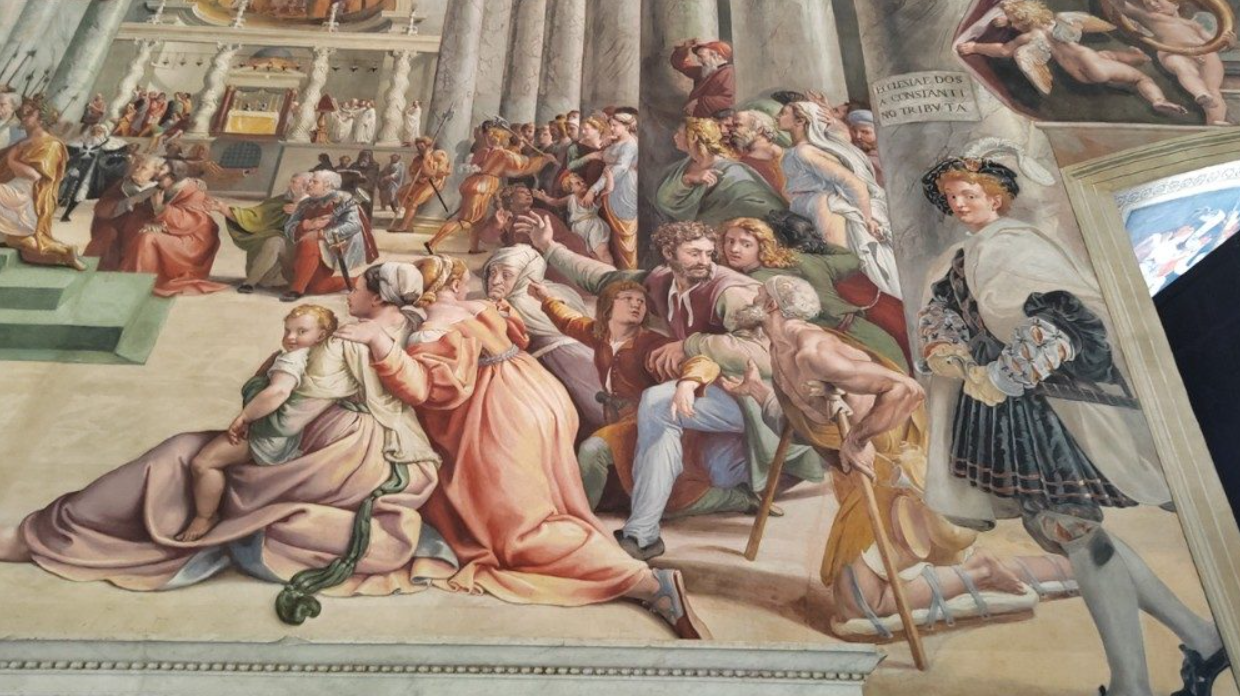
Il restauro è stato coordinato dal Reparto per l’Arte dei secoli XV-XVI ed eseguito dal Laboratorio di Restauro Dipinti e Materiali Lignei in collaborazione con il Gabinetto di Ricerche Scientifiche e con il supporto economico del Capitolo di New York dei Patrons of the Arts in the Vatican Museums.
Per il momento il sempre vostro Michelangelo Buonarroti vi saluta dandovi appuntamento ai prossimi post e sui social.
Raphael Would Have Liked to Paint the Entire Room of Constantine in Oil
After ten years of restoration, the 800 square meters of Raphael’s large Room of Constantine are once again visible in their entirety, after having revealed new techniques of execution and new details on the last great decorative mural undertaking by the master from Urbino.
The conservative intervention was carried out by the Laboratory for the Restoration of Paintings and Wooden Materials of the Vatican Museums, under the direction of Francesca Persegati.
The restoration began with the wall of the Vision of the Cross in March 2015 and was completed in December 2024 with the vault decorated with the large painted tapestry.
Over the years, several discoveries have been made about the painting technique of Raphael and his industrious workshop.
It took more than 60 years to complete the murals of the Room of Constantine and in the meantime five popes succeeded each other: from Leo X to Sixtus V.
Raphael would have liked to paint the entire Room of Constantine in oils
The restoration was started starting with the two figures of Comitas and Iustitia, the only ones painted in oils from which Raphael began working on the Room of Constantine.
Fabio Piacentini, head of the construction site since 2015, reveals that Raphael would probably have liked to paint the entire room in oils.
Raphael, together with his collaborators Giulio Romano and Giovanni Francesco Penni, began to work on the pictorial decorations in October 1519 but, a few months later, on April 6, 1520, Raphael died.
“Oil painting on walls was already known to painters since the fifteenth century, perhaps also in Tuscany, but with other methods. Raphael created the figures of Comitas and Iustitia on a preparation of rosin, a natural resin that must be applied hot and spread directly on the wall structure – says Piacentini – Raphael’s last great decorative undertaking represents a turning point in his artistic career: the presence of nails on a large part of the wall gives us the certainty that he wanted to paint the entire room in oil. Undoubtedly this was an almost revolutionary discovery, up to this point unique in its kind”.
After Raphael’s death, his collaborators continued the work, putting oil aside and preferring pure fresco.
Oil has much slower execution times than fresco, which requires speed. By using oil, Raphael would have been able to make more retouches when necessary.
The restoration was coordinated by the Department for 15th-16th Century Art and carried out by the Laboratory for the Restoration of Paintings and Wooden Materials in collaboration with the Cabinet for Scientific Research and with the financial support of the New York Chapter of the Patrons of the Arts in the Vatican Museums.
For the moment, yours truly Michelangelo Buonarroti bids you farewell and will see you in the next posts and on social media.

Sostienici – Support Us
Se questo blog ti piace e ti appassiona, puoi aiutarci a farlo crescere sempre più sostenendoci in modo concreto condividendo i post, seguendo le pagine social e con un contributo che ci aiuta ad andare avanti con il nostro lavoro di divulgazione. . ENGLISH: If you like and are passionate about this blog, you can help us make it grow more and more by supporting us in a concrete way by sharing posts, following social pages and with a contribution that helps us to move forward with our dissemination work.
10,00 €
Condividi:


Questo sono io





sostienici

Sostienici – Support Us
Se questo blog ti piace e ti appassiona, puoi aiutarci a farlo crescere sempre più sostenendoci in modo concreto condividendo i post, seguendo le pagine social e con un contributo che ci aiuta ad andare avanti con il nostro lavoro di divulgazione. . ENGLISH: If you like and are passionate about this blog, you can help us make it grow more and more by supporting us in a concrete way by sharing posts, following social pages and with a contribution that helps us to move forward with our dissemination work.
€10,00


