

Conclave: fumata nera e fumata bianca. Tutto quello che c’è da sapere
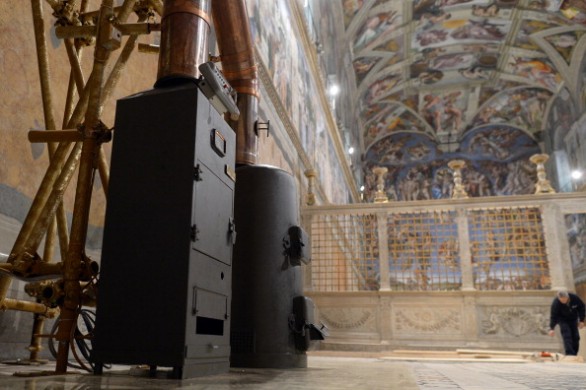
Durante i lavori di preparazione della Cappella Sistina in vista di un Conclave, vengono posizionate le due stufe necessarie per bruciare le schede elettorali dei cardinali e per segnalare all’esterno l’avvenuta elezione o meno del nuovo pontefice.
I fedeli posizionati in Piazza San Pietro in attesa di conoscere il nome del nuovo successore di Pietro, due volte al giorno indirizzano lo sguardo verso il camino della Sistina.
Se la fumata esce nera, niente di fatto, i cardinali ancora non hanno scelto. Quando la fumata però appare bianca, dì lì a non molto sarà palesato il nome del nuovo papa.
Perché sono due le stufe?
Una stufa serve per bruciare solo le schede mentre l’altra solo per segnalare l’elezione pontificia o l’inizio di lì a poco della nuova sessione di votazione.
L’inserimento della seconda stufa è stata un’innovazione voluta da papa Giovanni Paolo II, assieme al suono a festa delle campane della Basilica di San Pietro.

La fumata bianca dunque è accompagnata dalle campane che non solo manifestano la gioia della nuova elezione, ma la rendono palese anche nel caso in cui, a causa di vari fattori, sia poco leggibile la fumata bianca.
Le nuove disposizioni trovarono applicazione per la prima volta nella storia durante il conclave che vide eleggere pontefice Benedetto XVI.
Le caratteristiche delle due stufe collegate tra di loro
La stufa che serve per bruciare le schede e altri eventuali documenti scritti relativi all’elezione del nuovo pontefice è in ghisa e ha una forma cilindrica. Ha un’altezza di circa un metro e quella attualmente adoperata fu inaugurata nel 1939.
Sulla calotta superiore sono riportate, mediante punzonatura, le date di elezione e i nomi degli ultimi pontefici, da Pio XII a Papa Francesco.
Sapete, fino al 2005, prima ancora che il conclave iniziasse, veniva effettuata una fumata gialla di prova, per controllare il corretto funzionamento della stessa.

Da cosa dipende il diverso colore delle fumate?
Durante il conclave che ha visto uscire pontefice papa Francesco, i colori nero e bianco delle fumate sono stati molto evidenti e nettamente distinguibili.
In passato però le fumate tendevano al grigio invece che al nero ed era difficile distinguere chiaramente l’avvenuta elezione del pontefice.
Per la fumata nera si aggiungeva catrame e, in precedenza sostanze oleose, mente per la fumata bianca, le schede venivano bruciate assieme alla paglia.
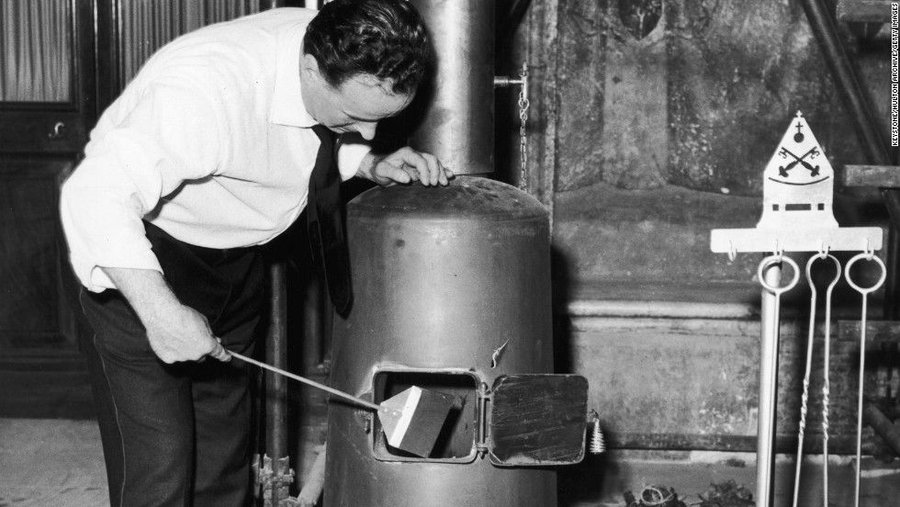
Oggi è divenuta consuetudine aggiungere fumogeni a varia composizione che evidenzino il bianco e il nero del fumo.
Nello specifico si adoperano fumogeni a base di perclorato di potassio, antracene e zolfo per il colore nero mentre per rendere il fumo bianco più corposo e visibile, i fumogeni contengono si adoperano clorato di potassio, lattosio e colofonia.
Per il momento il sempre vostro Michelangelo Buonarroti vi saluta dandovi appuntamento ai prossimi post e sui social.

Sostienici – Support Us
Se questo blog ti piace e ti appassiona, puoi aiutarci a farlo crescere sempre più sostenendoci in modo concreto condividendo i post, seguendo le pagine social e con un contributo che ci aiuta ad andare avanti con il nostro lavoro di divulgazione. . ENGLISH: If you like and are passionate about this blog, you can help us make it grow more and more by supporting us in a concrete way by sharing posts, following social pages and with a contribution that helps us to move forward with our dissemination work.
10,00 €
Conclave: black smoke and white smoke. Everything you need to know
During the preparation work of the Sistine Chapel for a Conclave, the two stoves needed to burn the cardinals’ ballots and to signal to the outside world whether or not the new pontiff has been elected are also positioned.
The faithful positioned in St. Peter’s Square waiting to know the name of Peter’s new successor, direct their gaze towards the chimney of the Sistine Chapel twice a day. If the smoke comes out black, nothing has happened, the cardinals have not yet chosen. However, when the smoke appears white, the name of the new pope will soon be revealed.
Why are there two stoves?
One stove is used to burn only the ballots while the other is used to signal the papal election or the start of the new voting session shortly thereafter. The inclusion of the second stove was an innovation desired by Pope John Paul II, together with the festive ringing of the bells of St. Peter’s Basilica.
the white smoke is therefore accompanied by bells that not only show the joy of the new election, but also make it clear in the case in which, due to various factors, the white smoke is difficult to read.
The new provisions were applied for the first time in history during the conclave that saw Benedict XVI elected as Pope.
The characteristics of the two stoves connected to each other
the stove that is used to burn the ballots and any other written documents relating to the election of the new Pope is made of cast iron and has a cylindrical shape. It is about one meter high and the one currently used was inaugurated in 1939.
The upper cap shows, by means of a stamping, the election dates and the names of the last six Popes, from Pius XII to Benedict XVI.
You know, until 2005, before the conclave even began, a yellow test smoke was carried out to check that it was working correctly.
What does the different color of the smoke depend on?
During the conclave that saw the exit of Pope Francis, the black and white colors of the smoke were very evident and clearly distinguishable.
In the past, however, the smoke tended to be gray instead of black and it was difficult to clearly distinguish the election of the pontiff.
For the black smoke, tar was added and, previously, oily substances, while for the white smoke, the ballots were burned together with straw.
Today it has become customary to add smoke bombs of various compositions that highlight the white and black of the smoke. Specifically, smoke bombs based on potassium perchlorate, anthracene and sulfur are used for the black color, while to make the white smoke more full-bodied and visible, the smoke bombs contain potassium chlorate, lactose and rosin.
For the moment, your always Michelangelo Buonarroti bids you farewell, making an appointment with you in the next posts and on social media.
Sostienici – Support Us
Se questo blog ti piace e ti appassiona, puoi aiutarci a farlo crescere sempre più sostenendoci in modo concreto condividendo i post, seguendo le pagine social e con un contributo che ci aiuta ad andare avanti con il nostro lavoro di divulgazione. . ENGLISH: If you like and are passionate about this blog, you can help us make it grow more and more by supporting us in a concrete way by sharing posts, following social pages and with a contribution that helps us to move forward with our dissemination work.
10,00 €
Condividi:


Questo sono io





sostienici

Sostienici – Support Us
Se questo blog ti piace e ti appassiona, puoi aiutarci a farlo crescere sempre più sostenendoci in modo concreto condividendo i post, seguendo le pagine social e con un contributo che ci aiuta ad andare avanti con il nostro lavoro di divulgazione. . ENGLISH: If you like and are passionate about this blog, you can help us make it grow more and more by supporting us in a concrete way by sharing posts, following social pages and with a contribution that helps us to move forward with our dissemination work.
€10,00


