
Luigi Pampaloni e la Venere al Bagno: la Galleria dell’Accademia acquisisce una nuova opera
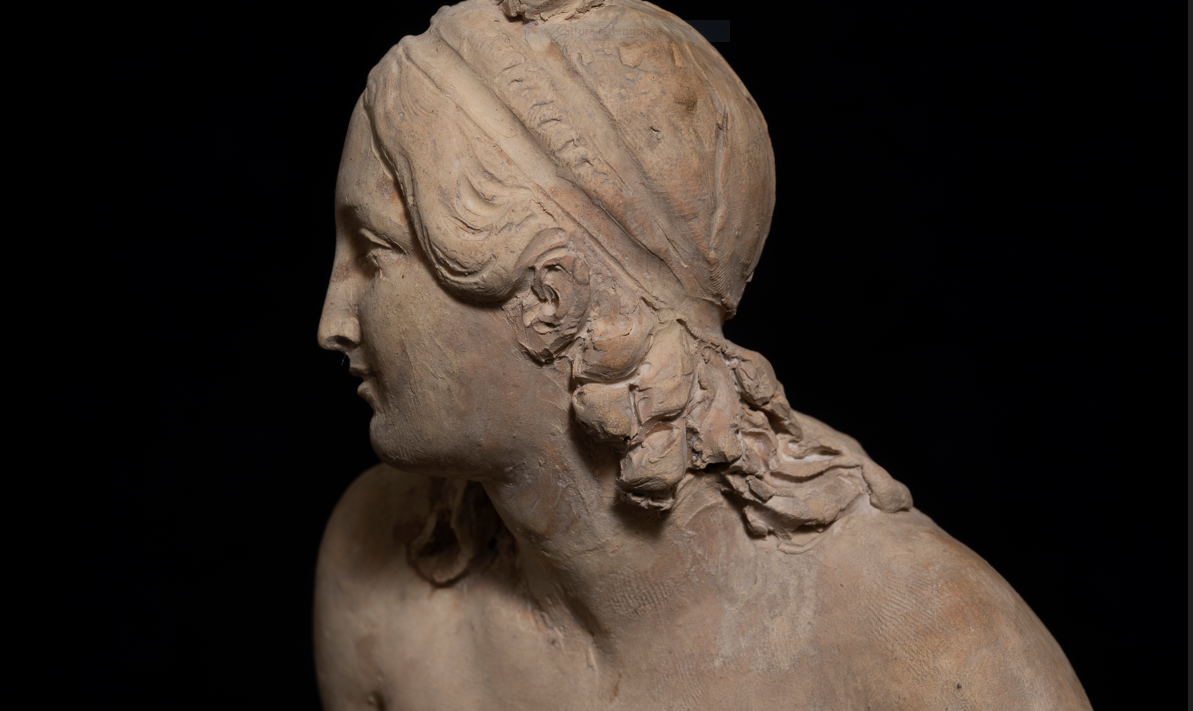
La Galleria dell’Accademia di Firenze ha acquisito il bozzetto in terracotta della Venere al Bagno realizzato dallo scultore Luigi Pampaloni nel 1836.
L’opera verrà esposta nella Gipsoteca assieme ad altri modelli in gesso dell’artista e del suo noto maestro Lorenzo Bartolini di cui per altro oggi è l’anniversario della nascita (7 gennaio 1777).
Accenni biografici di Pampaloni
Luigi Pampaloni nacque a Firenze nel 1791 ed era figlio di un modesto commerciante del capoluogo toscano. Nel 1806 si avvicinò all’arte frequentando un corso di pittura presso l’Accademia di Belle Arti di Firenze ma affinò le sue abilità scultoree grazie a Lorenzo Bartolini, suo maestro all’Accademia di Belle Arti di Carrara, dove Pampaloni si trasferì nel 1810.
La storia della Venere al Bagno
Pampaloni presentò per la prima volta al pubblico il modello della Venere al bagno all’Esposizione annuale dell’Accademia di Belle Arti nel 1838. L’opera, assai lontana dalla rigidità più tipica del neoclassicismo, molto si avvicina alla produzione del Bartolini e di quello che veniva chiamato ‘bello naturale’.
Il bozzetto in terracotta del Pampaloni alto 38 centimetri è stato esposto all’ultima edizione della Biennale Internazionale dell’Antiquariato di Firenze e acquisito dalla Galleria dell’Accademia di Firenze.
Le sue caratteristiche
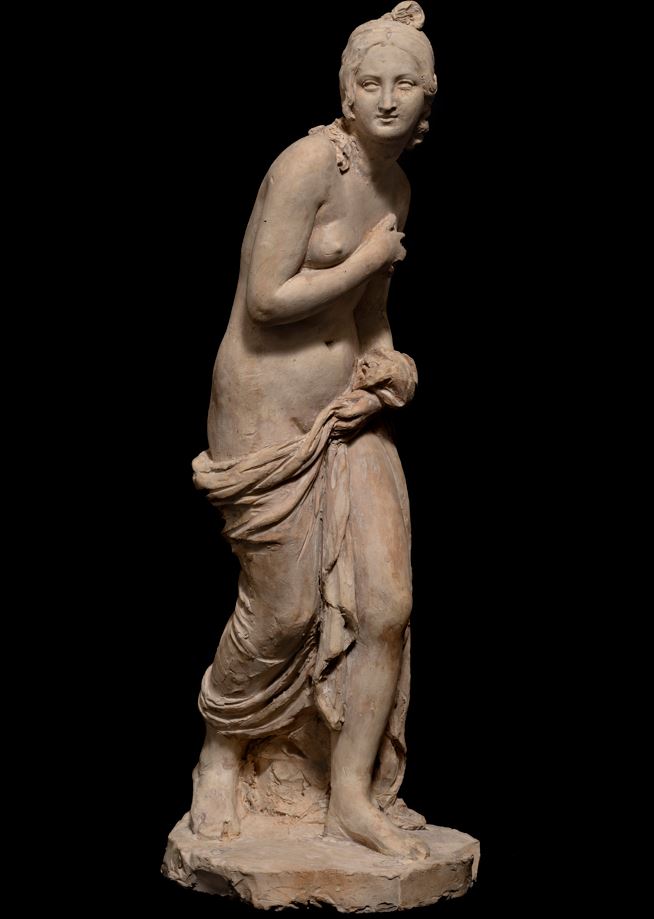
La Venere al bagno ritrae la dea mentre si sta per immergere in acqua, facendo scivolare la veste verso il basso. Con un gesto istintivo si porta la mano al seno per coprirlo mentre reclina il busto in avanti.
Pampaloni, modellando la creta, riuscì a dare all’opera efficaci effetti di chiaroscuro.
La freschezza del modellato, tipica del bozzetto e della lavorazione in creta, è molto attenuata nella versione in gesso dell’opera, che differisce dalla prima idea dell’artista per alcuni dettagli. Nella terracotta, per esempio, lo sguardo di Venere mostra un imbarazzo che sembra perdersi nella redazione successiva, più maliziosa e seducente.

Nel modello in gesso, inoltre, l’acconciatura è più studiata rispetto al bozzetto, che ritrae la dea con estrema naturalezza e perfetta spontaneità.
“L’acquisizione del bozzetto di Luigi Pampaloni migliorerà la comprensione di un artista strettamente legato al museo fiorentino – ha evidenziato Giulia Coco, curatrice della Gipsoteca della Galleria dell’Accademia di Firenze- la Gipsoteca ospita, infatti, un nucleo di opere dello scultore acquistate dallo Stato italiano alla fine dell’800, dopo la sua morte, ed esposte in dialogo e a confronto con i modelli di Bartolini. La presenza di Venere al bagno, soggetto che non figura tra i gessi del Pampaloni già in museo, rafforza ulteriormente questo legame. Non solo. Il bozzetto, che costituisce la fase creativa precedente a quella figurata nel gesso e poi nel marmo, ovvero la primissima idea dell’artista, e in quanto tale destinato all’atelier, richiama il fare artistico che anima la Gipsoteca, ricostruzione ideale dello studio d’artista, e più in generale la vocazione della Galleria dell’Accademia, museo didattico di riferimento per l’istituto accademico”.
Per il momento il sempre vostro Michelangelo Buonarroti vi saluta dandovi appuntamento ai prossimi post e sui social.
Luigi Pampaloni and the Bathing Venus: the Accademia Gallery acquires a new work
The Accademia Gallery in Florence has acquired the terracotta model of the Bathing Venus created by the sculptor Luigi Pampaloni in 1836.
The work will be exhibited in the Gipsoteca together with other plaster models by the artist and his famous master Lorenzo Bartolini, whose birth anniversary is today (7 January 1777).
Biographical notes on Pampaloni
Luigi Pampaloni was born in Florence in 1791 and was the son of a modest merchant from the Tuscan capital. In 1806 he approached art by attending a painting course at the Academy of Fine Arts in Florence but refined his sculptural skills thanks to Lorenzo Bartolini, his teacher at the Academy of Fine Arts in Carrara, where Pampaloni moved in 1810.
The history of the Bathing Venus
Pampaloni presented the model of the Bathing Venus to the public for the first time at the Annual Exhibition of the Academy of Fine Arts in 1838. The work, far from the rigidity more typical of neoclassicism, is very close to the production of Bartolini and what was called ‘beautiful nature’.
The 38-centimeter-high terracotta model by Pampaloni was exhibited at the latest edition of the International Biennial of Antiques in Florence and acquired by the Galleria dell’Accademia in Florence.
Its characteristics
The Bathing Venus portrays the goddess as she is about to immerse herself in water, sliding her dress downwards. With an instinctive gesture she brings her hand to her breast to cover it while leaning her torso forward.
Pampaloni, modeling the clay, managed to give the work effective chiaroscuro effects.
The freshness of the modeling, typical of the sketch and the clay work, is much attenuated in the plaster version of the work, which differs from the artist’s first idea in some details. In the terracotta, for example, Venus’s gaze shows an embarrassment that seems to get lost in the subsequent version, more mischievous and seductive.
In the plaster model, moreover, the hairstyle is more studied than in the sketch, which portrays the goddess with extreme naturalness and perfect spontaneity.
“The acquisition of Luigi Pampaloni’s sketch will improve the understanding of an artist closely linked to the Florentine museum,” highlighted Giulia Coco, curator of the Gipsoteca della Galleria dell’Accademia in Florence. “The Gipsoteca hosts, in fact, a group of works by the sculptor purchased by the Italian State at the end of the 19th century, after his death, and exhibited in dialogue and comparison with Bartolini’s models. The presence of Venus bathing, a subject that does not appear among Pampaloni’s plaster casts already in the museum, further strengthens this bond. And that’s not all. The sketch, which constitutes the creative phase preceding the one depicted in plaster and then in marble, or rather the artist’s very first idea, and as such intended for the atelier, recalls the artistic work that animates the Gipsoteca, an ideal reconstruction of the artist’s studio, and more generally the vocation of the Galleria dell’Accademia, an educational museum of reference for the academic institute.”
For the moment, yours truly, Michelangelo Buonarroti bids you farewell, making an appointment to see you in the next posts and on social media.
Articoli
Condividi:


Questo sono io





sostienici

Sostienici – Support Us
Se questo blog ti piace e ti appassiona, puoi aiutarci a farlo crescere sempre più sostenendoci in modo concreto condividendo i post, seguendo le pagine social e con un contributo che ci aiuta ad andare avanti con il nostro lavoro di divulgazione. . ENGLISH: If you like and are passionate about this blog, you can help us make it grow more and more by supporting us in a concrete way by sharing posts, following social pages and with a contribution that helps us to move forward with our dissemination work.
€10,00


