
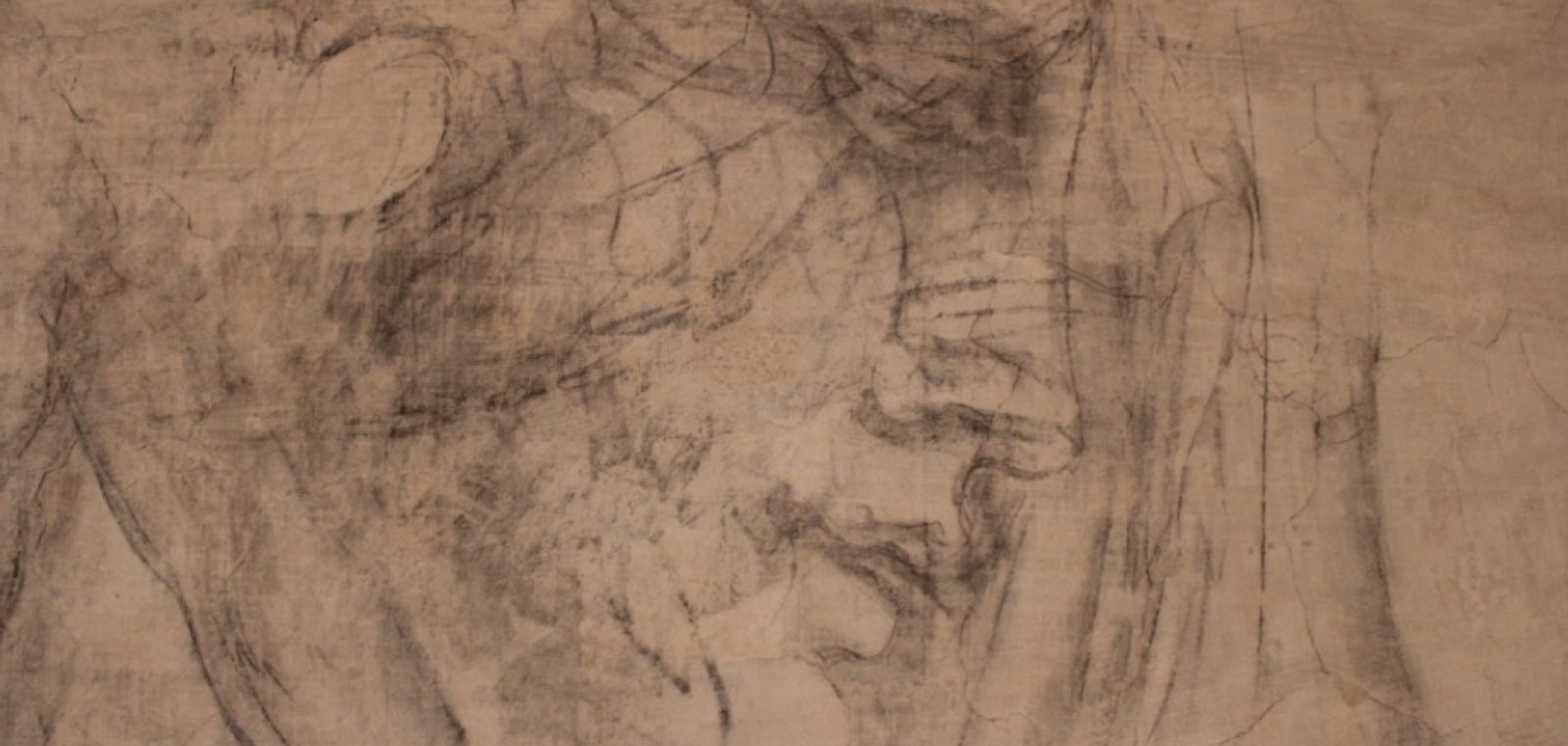
La Scultura del giorno: Ercole e Diomede di Vincenzo de’ Rossi
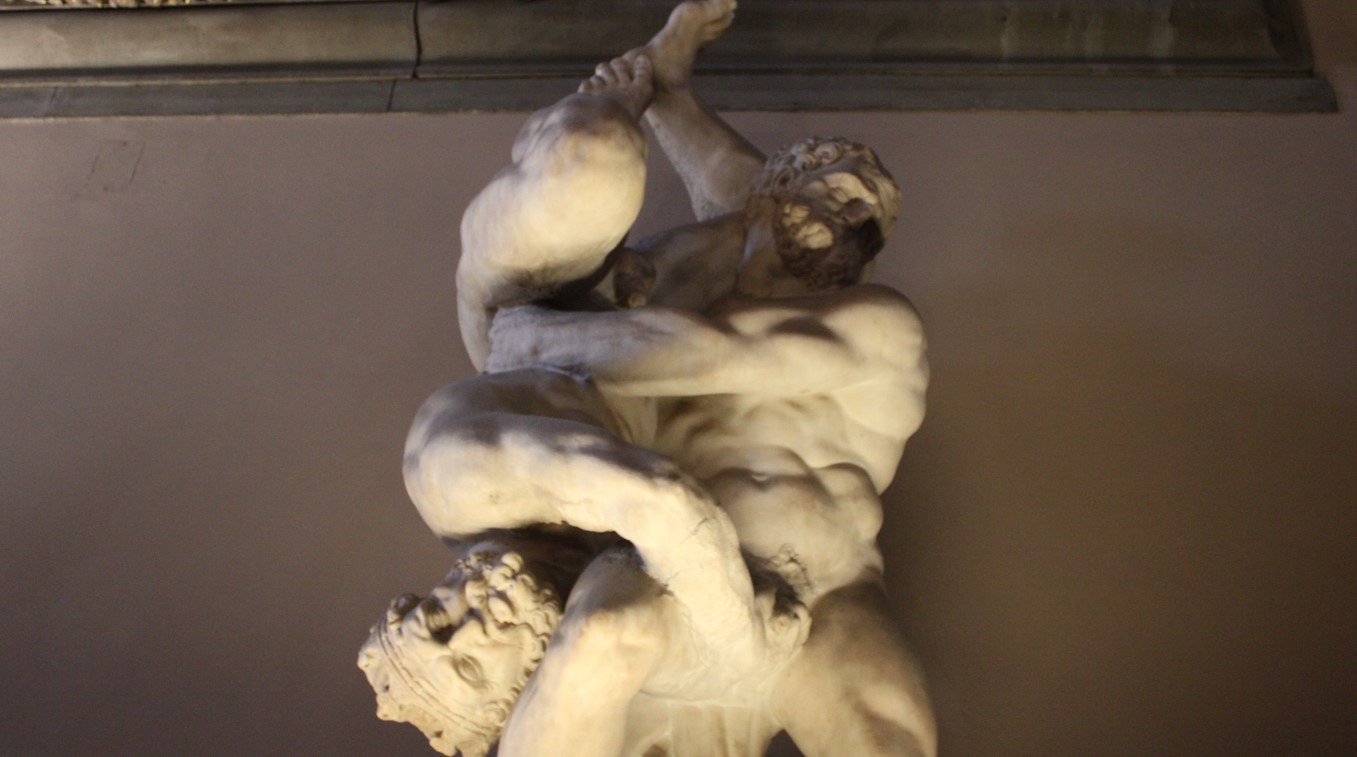
La scultura del giorno che vi propongo oggi è il gruppo di Ecole e Diomede scolpito da Vincenzo de’ Rossi che si trova nel Salone de’ Cinquecento di Palazzo Vecchio, poco distante dal mio Genio della Vittoria.
De’ Rossi fu allievo del Bandinelli e nelle sue opere il gigantismo del suo maestro così come l’appiccicare al corpo muscoli a caso, sono ben evidenti.
Lavorò per lungo tempo a Roma dove scolpì anche Teseo ed Elena. Fu proprio quell’opera che gli valse l’ammirazione di Cosimo I. Il Granduca volle che lo seguisse fino a Roma e, come narra il mio caro amico Giorgio Vasari, “gli diede non molto dopo a fare di marmo, in figure maggiori del vivo e tutte tonde, le fatiche di Ercole“.
La datazione dell’opera in questione è strettamente legata alla quella di tutte le opere relative alle fatiche di Ercole, ultimate nel 1587.

In una lettera che Vincenzo de’ Rossi scrisse a Cosimo I nel marzo del 1563, si evince che per scolpire aveva a disposizione uno stanzone nell’Opera del Duomo, un tempo studio del Bandinelli. In quel frangente aveva tra le mani quattro opere. Sappiamo che il 2 marzo 1566 Ercole e Caco era già ultimato mentre nel 1584 erano stati portati a termine gli altri sette gruppi.
Quando De’ Rossi passò a miglior vita, sia Ercole e Diomede che gli altri gruppo si trovavano ancora nel suo laboratorio. Nel 1592 furono fatte condurre da Ferdinando I nel Salone de’ Cinquecento dove ancora erano in corso i lavori in vista del sontuoso battesimo di Cosimo II.
Al tempo di Firenze capitale però, nel 1865, tutte le sculture furono spostate al Bargello dove rimasero fino al 1884 per far poi ritorno definitivamente a Palazzo Vecchio.
La vicenda di Ercole e Diomede
L’affrontamento tra Ercole e Diomede è una delle dodici fatiche più celebri dell’eroe greco. Si tratta dell’ottava fatica imposta ad Ercole da Euristeo che consiste nella cattura delle feroci cavalle di Diomede, re della Tracia. Tali creature mostruose, nutrite con carne umana, erano simbolo di forza bruta e indomabile.
Figlio di Ares, dio della guerra, Diomede era un guerriero feroce e crudele, perfettamente in sintonia con le sue cavalle. Con la sua forza sovrumana, Ercole si recò in Tracia per affrontare Diomede e le sue bestie. La battaglia fu cruenta. Ercole, dopo aver ucciso Diomede, dovette affrontare anche l’attacco dei Bistoni, il popolo di Diomede.
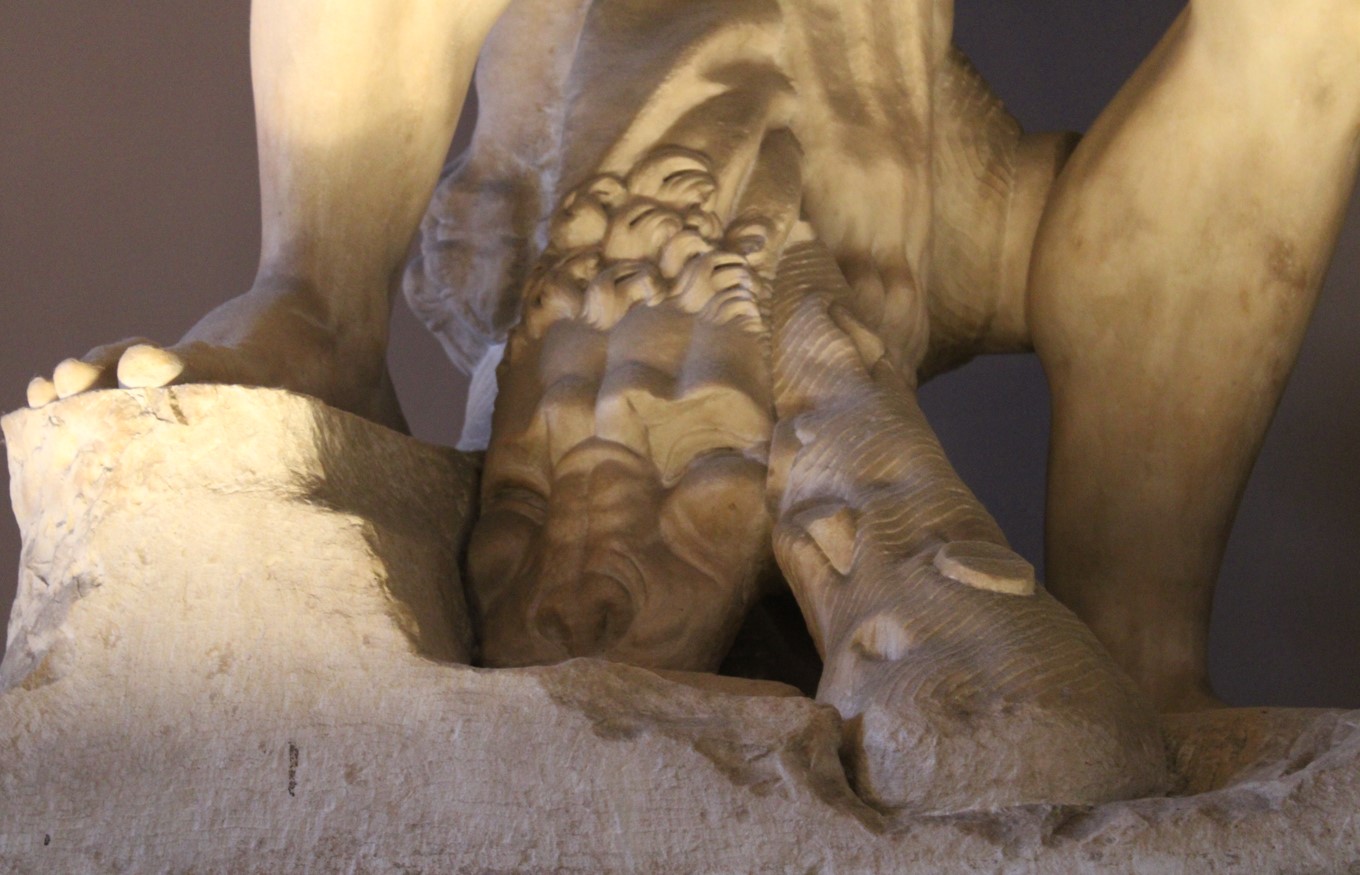
La statua di Ercole e Diomede di Vincenzo de Rossi è alta quasi tre metri (297 cm) ed è caratterizzata da un’anatomia esagerata, con una muscolatura assai forzata, proprio come era solito fare il suo maestro Bandinelli.
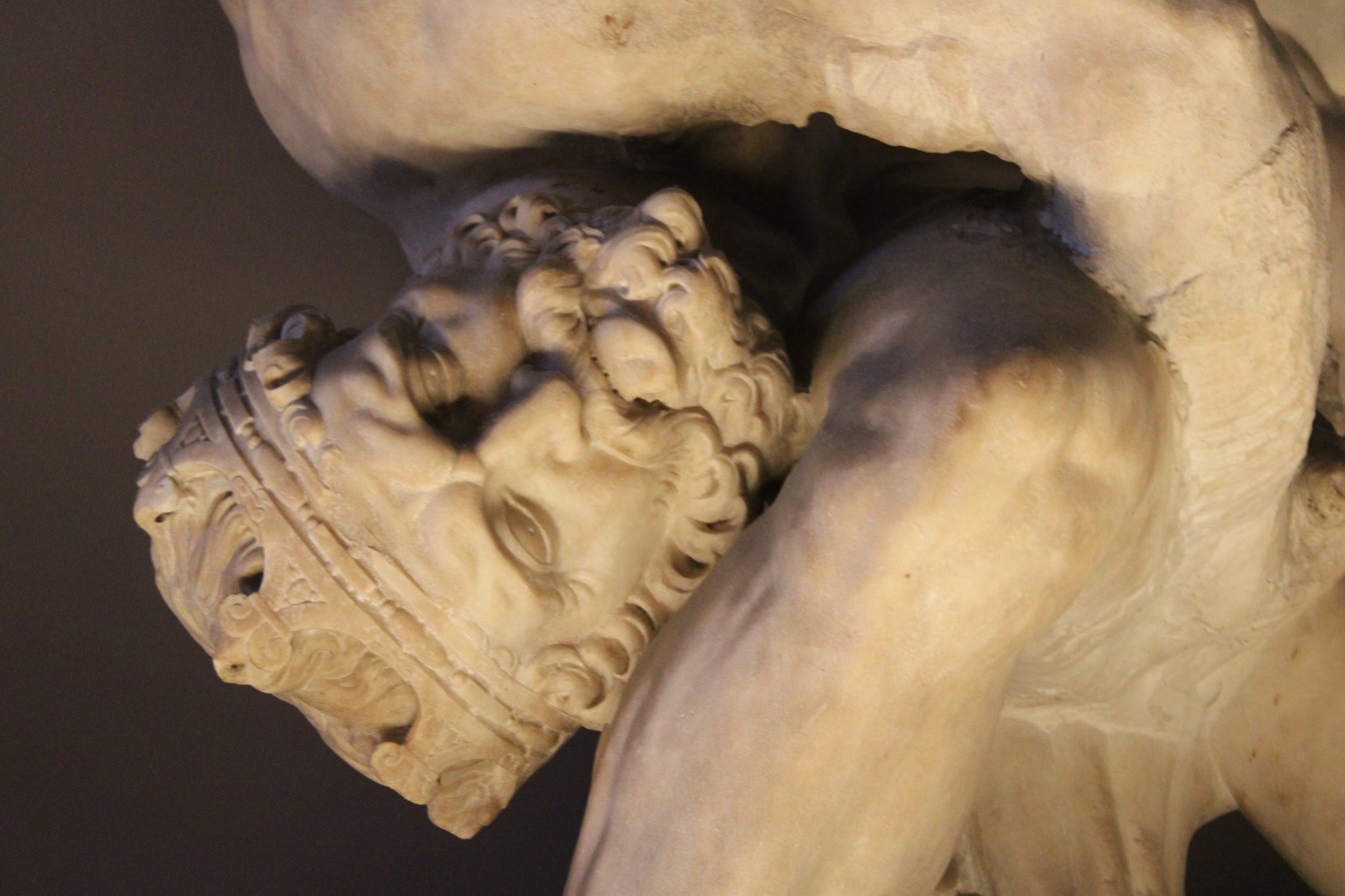
Ercole, simbolo della forza e del coraggio, è scolpito nel pieno dello sforzo fisico, con i muscoli tesi e le vene in evidenza. La sua figura imponente domina la scena, incarnando l’ideale dell’eroe classico mentre Diomede, re dei Bistoni, è rappresentato come un avversario tenace e feroce, ma destinato alla sconfitta. La sua espressione è sfigurata dalla rabbia e dalla paura mentre cerca invano di resistere alla forza di Ercole.
Per il momento il sempre vostro Michelangelo Buonarroti vi saluta dandovi appuntamento ai prossimi post e sui social.
Sculpture of the day: Hercules and Diomedes by Vincenzo de’ Rossi
The sculpture of the day that I propose to you today is the group of Ecole and Diomedes sculpted by Vincenzo de’ Rossi that is located in the Salone de’ Cinquecento of Palazzo Vecchio, not far from my Genio della Vittoria.
De’ Rossi was a student of Bandinelli and in his works the gigantism of his master as well as the sticking of muscles to the body at random, are very evident.
He worked for a long time in Rome where he also sculpted Theseus and Helen. It was precisely that work that earned him the admiration of Cosimo I. The Grand Duke wanted him to follow him to Rome and, as my dear friend Giorgio Vasari tells, “he commissioned him not long after to make marble, in figures larger than life and all round, the labors of Hercules“.
The dating of the work in question is strictly linked to the realization of all the works related to the labors of Hercules, completed in 1587.
In a letter that Vincenzo de’ Rossi wrote to Cosimo I in March 1563, he had a large room in the Opera del Duomo at his disposal for sculpting, once Bandinelli’s studio. At that time he had four works in his hands. We know that on March 2, 1566, Hercules and Cacus was already completed while in 1584 the other seven groups had been completed.
When De’ Rossi passed away, both Hercules and Diomedes and the other groups were still in his laboratory. In 1592, Ferdinand I had them taken to the Salone de’ Cinquecento where work was still underway in preparation for the sumptuous baptism of Cosimo II.
However, at the time of Florence as capital, in 1865, all the sculptures were moved to the Bargello where they remained until 1884 and then returned permanently to Palazzo Vecchio.
The story of Hercules and Diomedes
The confrontation between Hercules and Diomedes is one of the twelve most famous labors of the Greek hero. It is the eighth labor imposed on Hercules by Eurystheus which consists in the capture of the ferocious mares of Diomedes, king of Thrace. These monstrous creatures, fed on human flesh, were a symbol of brute and indomitable strength.
Son of Ares, god of war, Diomedes was a ferocious and cruel warrior, perfectly in tune with his mares. With his superhuman strength, Hercules went to Thrace to face Diomedes and his beasts. The battle was bloody. Hercules, after killing Diomedes, also had to face the attack of the Bistones, the people of Diomedes.
The statue of Hercules and Diomedes by Vincenzo de Rossi is almost three meters tall (297 cm) and is characterized by an exaggerated anatomy, with very forced musculature, just like his master Bandinelli used to do.
Hercules, symbol of strength and courage, is sculpted in the midst of physical effort, with tense muscles and veins in evidence. His imposing figure dominates the scene, embodying the ideal of the classical hero while Diomedes, king of the Bistones, is represented as a tenacious and ferocious opponent, but destined for defeat. His expression is disfigured by anger and fear as he tries in vain to resist the strength of Hercules.
For the moment, the ever-yours Michelangelo Buonarroti bids you farewell, making an appointment with you in the next posts and on social media.

Sostienici – Support Us
Se questo blog ti piace e ti appassiona, puoi aiutarci a farlo crescere sempre più sostenendoci in modo concreto condividendo i post, seguendo le pagine social e con un contributo che ci aiuta ad andare avanti con il nostro lavoro di divulgazione. . ENGLISH: If you like and are passionate about this blog, you can help us make it grow more and more by supporting us in a concrete way by sharing posts, following social pages and with a contribution that helps us to move forward with our dissemination work.
10,00 €
Articoli
Condividi:


Questo sono io





sostienici

Sostienici – Support Us
Se questo blog ti piace e ti appassiona, puoi aiutarci a farlo crescere sempre più sostenendoci in modo concreto condividendo i post, seguendo le pagine social e con un contributo che ci aiuta ad andare avanti con il nostro lavoro di divulgazione. . ENGLISH: If you like and are passionate about this blog, you can help us make it grow more and more by supporting us in a concrete way by sharing posts, following social pages and with a contribution that helps us to move forward with our dissemination work.
€10,00


