
Giubileo 2025: Bernini e la Trasformazione della Gradinata di San Pietro
Dopo aver percorso la Piazza di San Pietro accolti dal grande abbraccio di colonne in travertino realizzato dal Bernini, si arriva alla scalinata che consente di addentrarsi nel portico della Basilica.
Ora dovete sapere la gradinata un tempo era larga 118,6 metri, quanto tutta la facciata della Basilica, realizzata dall’architetto Carlo Maderno a partire dal 1607 e ultimata nel 1612.
Al Bernini però poco piacque la gradinata così ampia perché, a suo dire, contribuiva a far sembrare tutta l’imponente struttura troppo piatta.
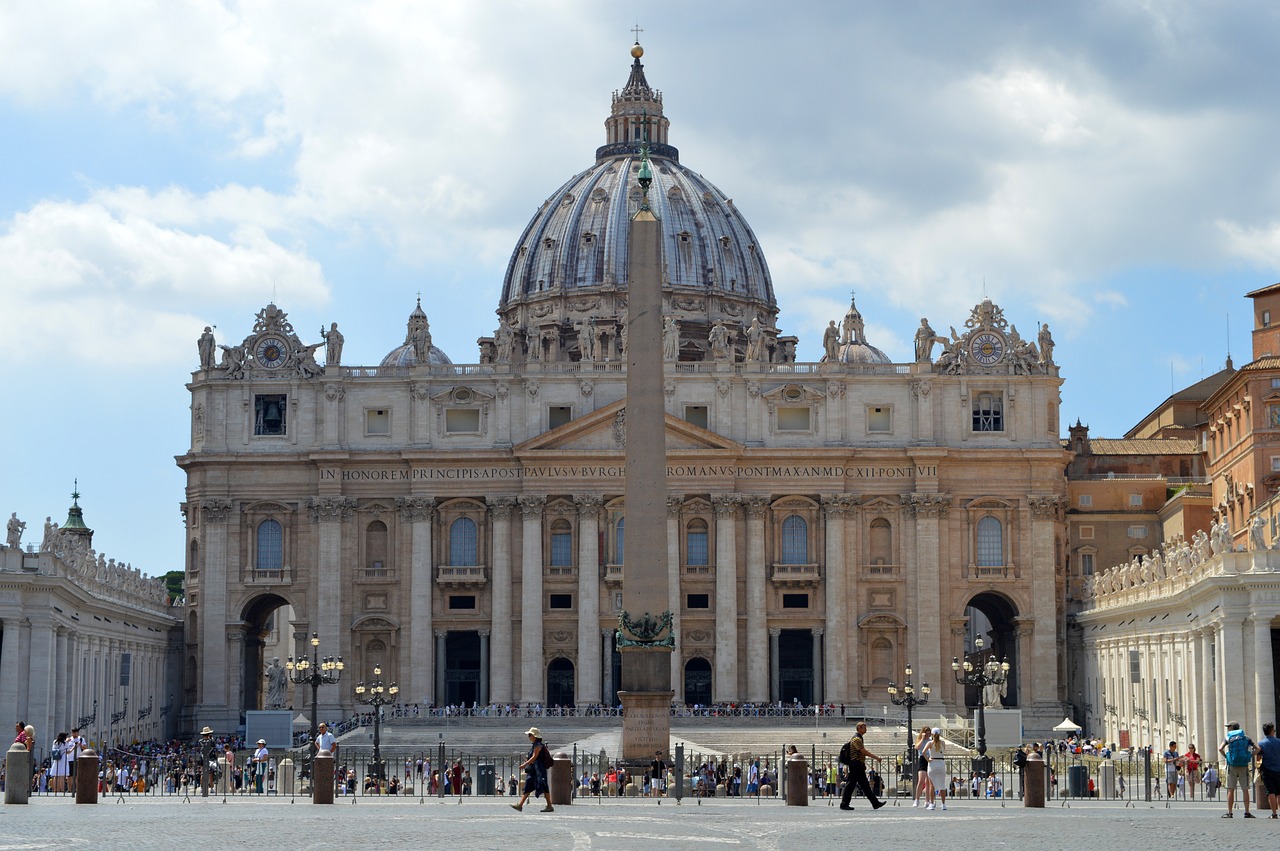
Decise dunque di demolire la parte a destra e a sinistra lasciando solo i gradini nella zona centrale, ma non solo.
Fece scavare il terreno sottostante per abbassare apprezzabilmente il terreno di calpestio, cercando di avvicinarsi al massimo al livello del piano su cui poggiava la base del grande Obelisco. In questo modo limitò anche la pendenza della Piazza portandola al 3% mentre prima era molto più accentuata.
Ai lati della scalinata rimasta integra, realizzò due passaggi che potessero essere percorsi anche con le carrozze.
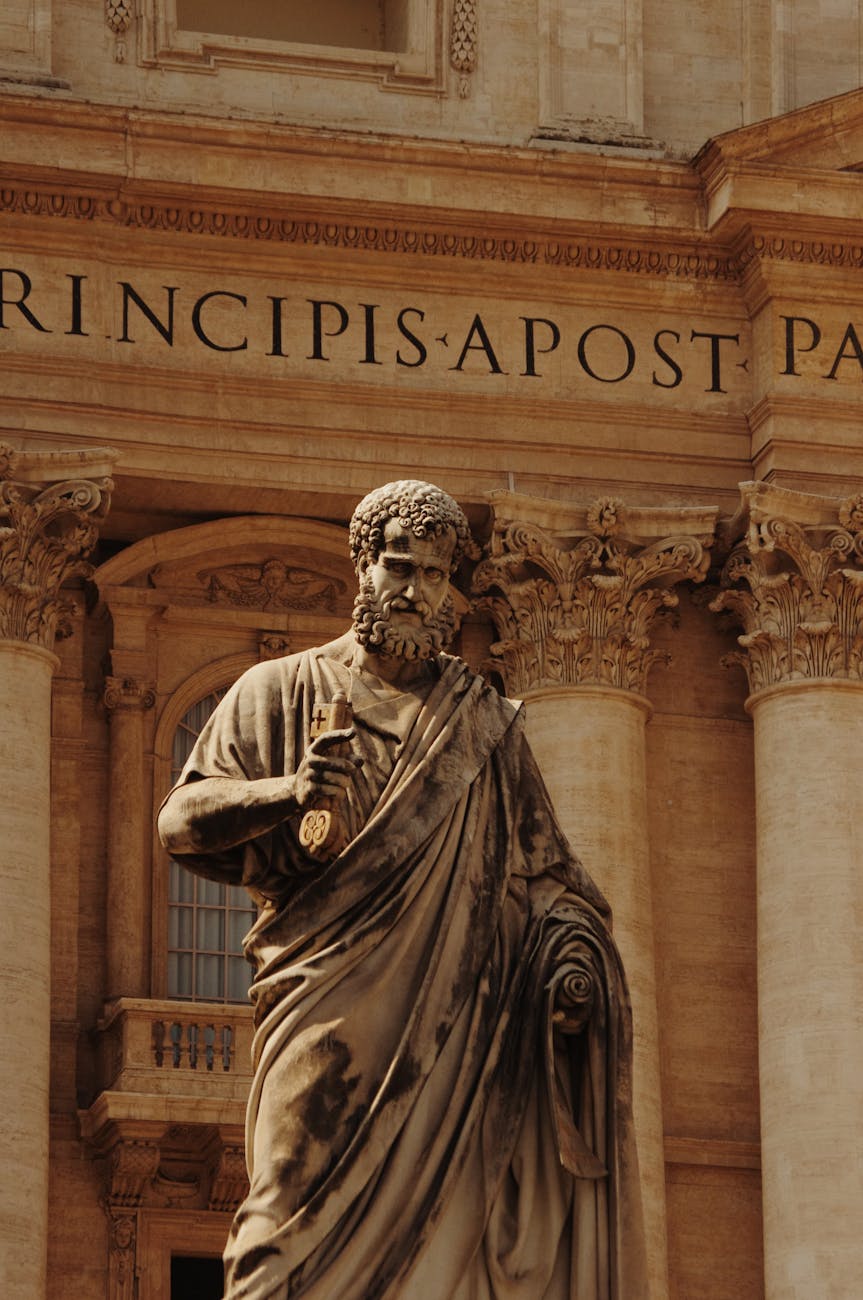
La gradinata è sorvegliata da due sculture: San Pietro di Giuseppe del Fabris e San Paolo realizzata da Adamo Tadolini, entrambe realizzate nel 1874.
Le opere furono commissionate per sostituire le precedenti, volute da papa Pio II nel 1462 e di incerta attribuzione. Si ipotizza potesse averle scolpite Paolo Romano o Mino del Reame e oggi si trovano all’interno dei Palazzi Apostolici, al riparo dagli agenti atmosferici.
Per il momento il sempre vostro Michelangelo Buonarroti vi saluta dandovi appuntamento ai prossimi post e sui social.
Jubilee 2025: the steps leading to St. Peter’s Basilica
After walking through St. Peter’s Square, welcomed by the great embrace of travertine columns created by Bernini, you arrive at the steps that allow you to enter the portico of the Basilica.
Now you should know that the steps were once 118.6 meters wide, as wide as the entire facade of the Basilica built by the architect Carlo Maderno starting in 1607 and completed in 1612.
However, Bernini did not like the wide steps because, in his opinion, they contributed to making the entire imposing structure seem too flat.
He therefore decided to demolish the part on the right and left, leaving only the steps in the central area but not only that.
He had the ground underneath excavated to significantly lower the walking surface, trying to get as close as possible to the level of the floor on which the base of the great Obelisk rested. In this way he also limited the slope of the Piazza bringing it to 3% while before it was much more accentuated.
On the sides of the staircase that remained intact, he created two passages that could also be traveled by carriages.
The works were commissioned to replace the previous ones, commissioned by Pope Pius II in 1462 and of uncertain attribution. It is assumed that Paolo Romano or Mino del Reame could have sculpted them and today they are located inside the Apostolic Palaces, protected from the elements.
For the moment, the always your Michelangelo Buonarroti bids you farewell, making an appointment with you in the next posts and on social media.

Sostienici – Support Us
Se questo blog ti piace e ti appassiona, puoi aiutarci a farlo crescere sempre più sostenendoci in modo concreto condividendo i post, seguendo le pagine social e con un contributo che ci aiuta ad andare avanti con il nostro lavoro di divulgazione. . ENGLISH: If you like and are passionate about this blog, you can help us make it grow more and more by supporting us in a concrete way by sharing posts, following social pages and with a contribution that helps us to move forward with our dissemination work.
10,00 €
-
31 marzo 1889: inaugurata la Torre Eiffel tra critiche feroci e un destino inaspettato
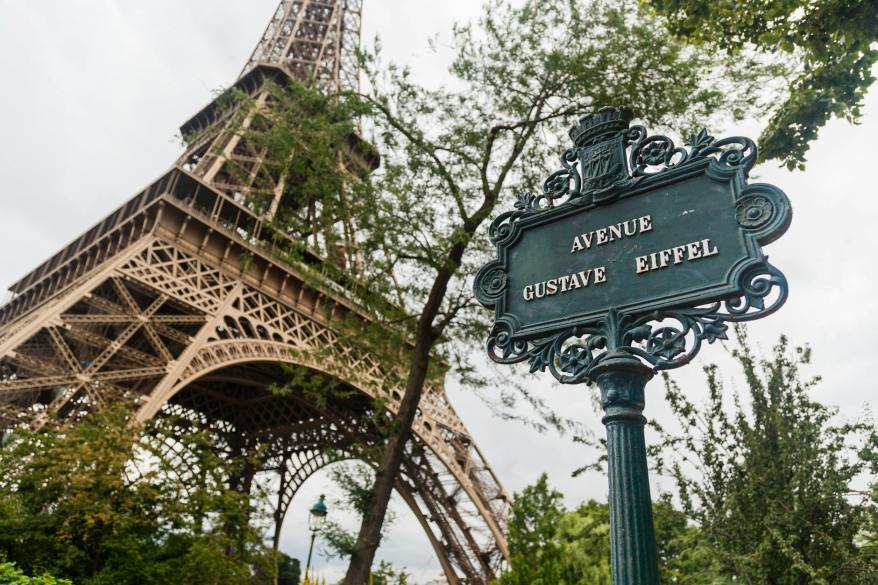
🇮🇹Il 31 marzo 1889 segna una data destinata a cambiare per sempre il volto di Parigi e dell’immaginario collettivo globale: viene inaugurata la Torre Eiffel, l’opera più audace e discussa del suo tempo… 🇬🇧March 31, 1889 marks a date destined to change the face of Paris and the global collective imagination forever: the Eiffel Tower,…
-
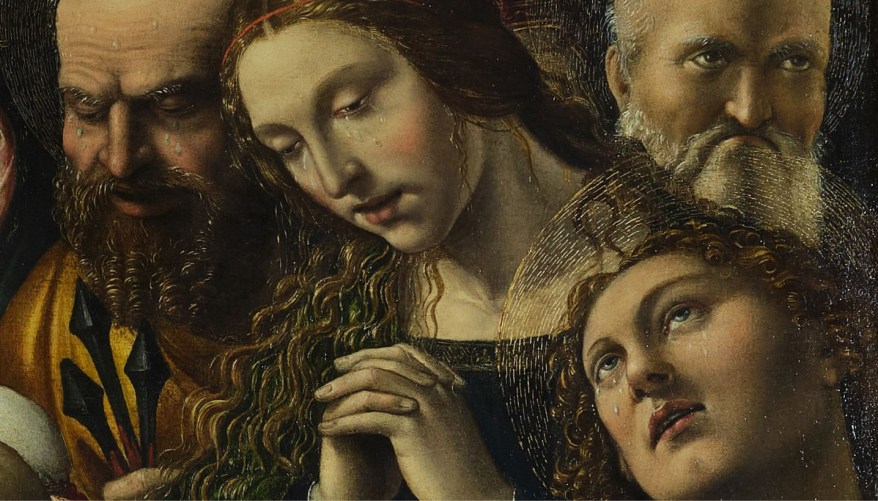
Sodoma in mostra a Torino: il Rinascimento al Museo Accorsi-Ometto
🇮🇹Al Museo di Arti Decorative Accorsi-Ometto arriva una mostra dedicata al Sodoma: oltre 50 opere, alcune mai viste prima, raccontano la formazione dell’artista e il suo dialogo con maestri come Pinturicchio… 🇬🇧An exhibition dedicated to Sodoma arrives at the Accorsi-Ometto Museum of Decorative Arts: over 50 works, some never before seen, recount the artist’s development…
-
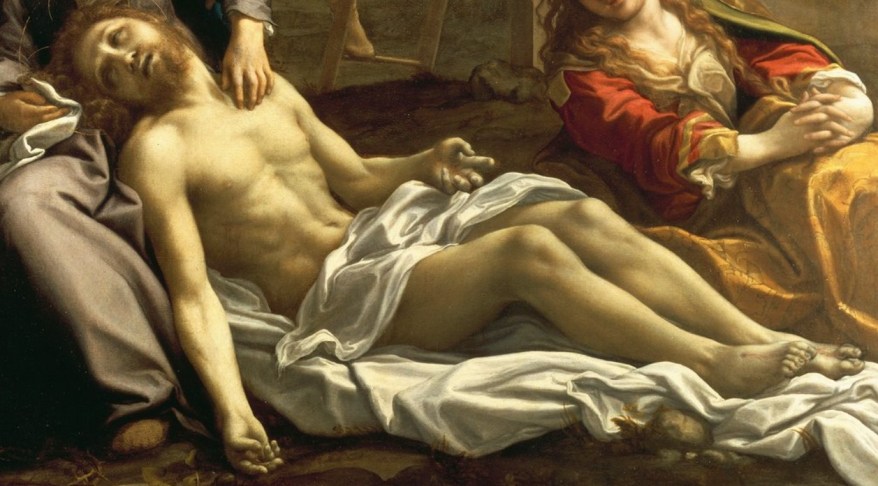
Il Compianto sul Cristo morto di Correggio: pathos e devozione
🇮🇹Con l’inizio della Settimana Santa, vi propongo il Compianto sul Cristo morto di Antonio Allegri, più noto come il Correggio: uno dei vertici assoluti della pittura emiliana del Cinquecento… 🇬🇧With the beginning of Holy Week, I propose the Lamentation over the Dead Christ by Antonio Allegri, better known as Correggio: one of the absolute peaks…
Condividi:


Questo sono io





sostienici

Sostienici – Support Us
Se questo blog ti piace e ti appassiona, puoi aiutarci a farlo crescere sempre più sostenendoci in modo concreto condividendo i post, seguendo le pagine social e con un contributo che ci aiuta ad andare avanti con il nostro lavoro di divulgazione. . ENGLISH: If you like and are passionate about this blog, you can help us make it grow more and more by supporting us in a concrete way by sharing posts, following social pages and with a contribution that helps us to move forward with our dissemination work.
€10,00


