

Un Michelangelo alla Biennale di Firenze?
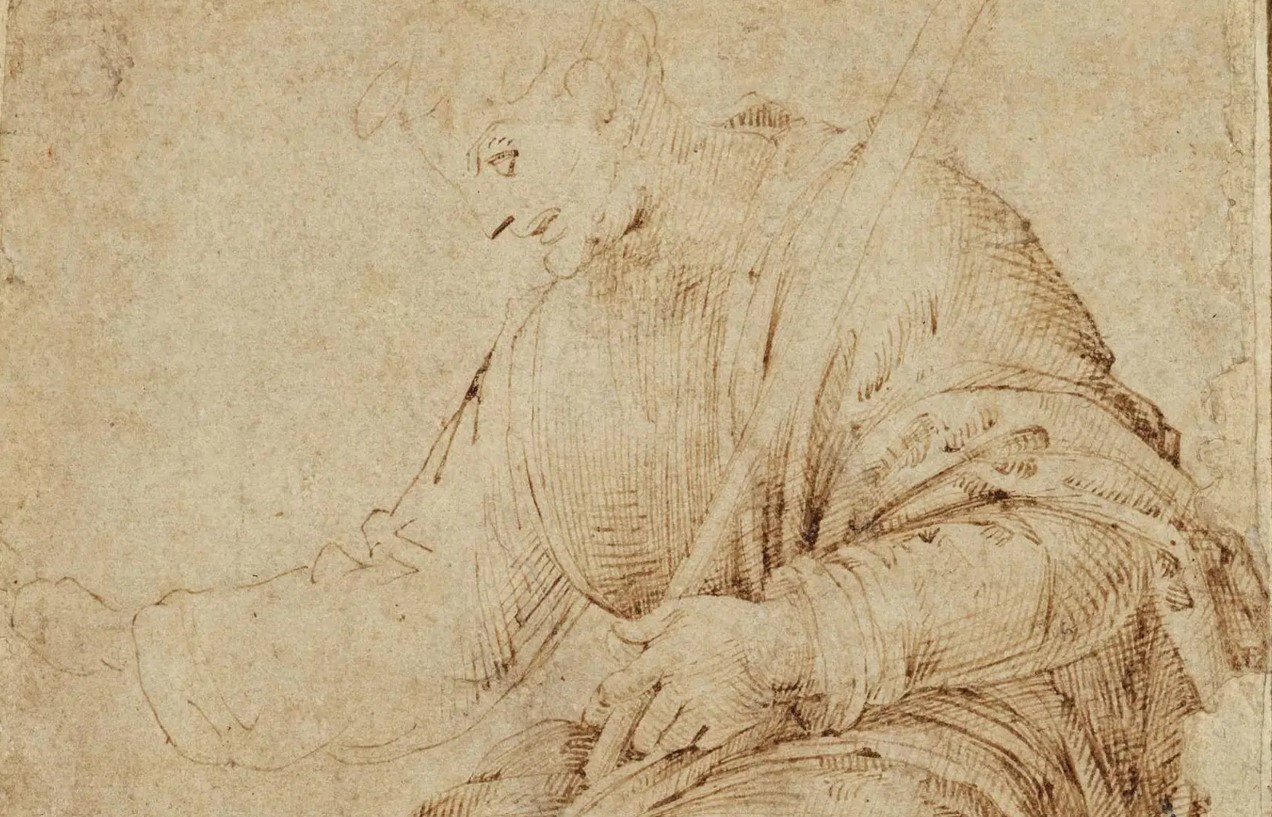
Tra le opere più preziose presentate a Palazzo Corsini, in occasione della Biennale Internazionale dell’Antiquariato di Firenze 2024 BIAF, figura un disegno attribuito a me.
È uno studio di Giove che si presume abbia realizzato attorno al 1490, quando avevo quindici anni e già ero entrato a far parte dello stuolo di ragazzi che studiava nel giardino di San Marco sotto l’attenta guida di Bertoldo di Giovanni.
Allo stesso periodo risalgono i primi disegni giovanili arrivati fino ai vostri tempi come quelli che tracciai osservando le figure della Cappella Brancacci nella chiesa di Santa Maria del Carmine, a Firenze.
Chi propone il disegno e il costo
Realizzato a penna con due tonalità di inchiostro marrone e linee a stilo, ha una dimensione di 220×153 mm ed è stato presentato dalla Dickinson per una cifra da capogiro: 2milioni di euro.
La Biaf è una delle più importanti mostre a livello internazionale dedicate all’arte italiana e quest’anno propone più di 80 gallerie provenienti da tutto il mondo con opere straordinarie.

La storia del disegno di Giove
Il disegno di Giove è stato acquistato a un’asta parigina dalla galleria Dickinson oltre trent’anni fa, come opera di artista anonimo.
Alcuni studiosi come Paul Joannides, Timothy Clifford, Zoltán Kárpáti, Miles Chappell e David Ekserdjian hanno avuto modo di vedere e approfondire lo studio dell’opera attribuendolo a me.
Addirittura sostengono sia il primo disegno che realizzai arrivato fino ai vostri giorni. Il primo studioso a ipotizzare potesse trattarsi di un’opera mia è stato Miles Chappell, studioso di disegni fiorentini del Quattrocento e del Cinquecento.
Vero è che nei miei primi disegni giovanili era frequente adoperassi due tipi di inchiostro ma è altrettanto vero che questo sistema era molto in voga nella bottega del Ghirlandaio.
I dubbi sull’attribuzione
Osservando con attenzione il disegno e mettendolo a confronto con quelli giovanili, che realizzai nello stesso periodo, a dire il vero qualche dubbio mi viene.
Sebbene sia un disegno di quel periodo e di buona qualità, ho qualche perplessità sull’attribuzione. A mio avviso appare troppo sommario il tratteggio, in particolare nella parte del collo e del busto di Giove che non segue l’andamento del corpo ma appare molto rigido e poco funzionale nel modellare la figura.
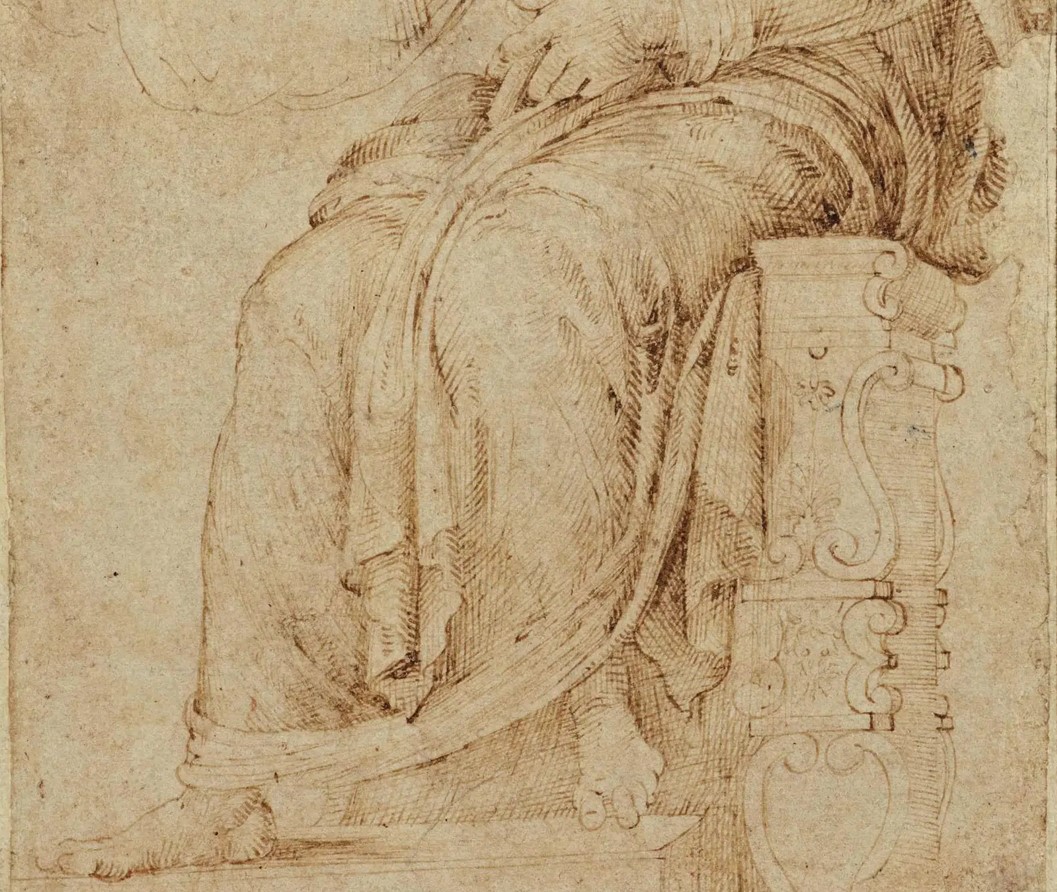
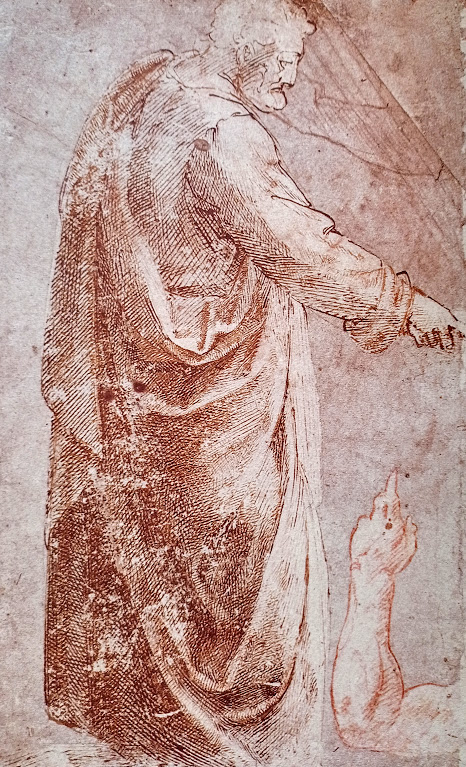
Osservate con attenzione il piede sinistro che sembra quasi sospeso nel vuoto con una forma non così attinente al reale e una posa irreale. Vero è che all’epoca ero giovane ma paragonandolo a San Pietro che disegnai osservando l’opera del Masaccio ecco, la differenza mi sembra notevole nella qualità del modellato.
Altra cosa che poco mi convince è il disegno dettagliato del trono su cui Giove siede. Dettagliato nelle linee principali tanto da mostrare i decori in modo netto e preciso mi fa mettere in dubbio l’autografia.
Nel corpus dei miei disegni sarebbe questo un unico esempio di una riproduzione così minuziosa di un oggetto se si escludono gli studi dei capitelli fatti in età più matura o studi relativi a progetti che poi realizzai come la saliera per il Duca di Urbino o i candelabri per la Sagrestia Nuova. In questi casi che vi ho citato però la qualità del disegno è molto diversa se messa a confronto con quella del trono di Giove.
Per il momento il sempre vostro Michelangelo Buonarroti vi saluta dandovi appuntamento ai prossimi post e sui social.
© All rights reserved

A Michelangelo at the Florence Biennale?
Among the most precious works presented at Palazzo Corsini, on the occasion of the International Biennial of Antiques of Florence 2024 BIAF, there is a drawing attributed to me.
It is a study of Jupiter that I supposedly made around 1490, when I was fifteen years old and had already become part of the crowd of boys who studied in the garden of San Marco under the careful guidance of Bertoldo di Giovanni.
The first youthful drawings that have reached your time date back to the same period, such as those that I traced observing the figures of the Brancacci Chapel in the church of Santa Maria del Carmine, in Florence.
Who proposed the drawing and the cost
Made in pen with two shades of brown ink and stylus lines, it has a size of 220×153 mm and was presented by Dickinson for a mind-boggling sum: 2 million euros.
Biaf is one of the most important international exhibitions dedicated to Italian art and this year it offers more than 80 galleries from all over the world with extraordinary works.
The history of the Jupiter drawing
The Jupiter drawing was purchased at a Parisian auction by the Dickinson gallery over thirty years ago, as a work by an anonymous artist.
Some scholars such as Paul Joannides, Timothy Clifford, Zoltán Kárpáti, Miles Chappell and David Ekserdjian have had the opportunity to see and study the work in depth, attributing it to me.
They even claim it is the first drawing I made that has survived to this day. The first scholar to hypothesize that it could be a work of mine was Miles Chappell, a scholar of Florentine drawings from the 15th and 16th centuries.
It is true that in my early drawings it was common to use two types of ink but it is equally true that this system was very popular in Ghirlandaio’s workshop.
Doubts about the attribution
Looking carefully at the drawing and comparing it with the youthful ones, which I made in the same period, to tell the truth I have some doubts.
Although it is a drawing from that period and of good quality, I have some doubts about the attribution. In my opinion the hatching appears too summary, in particular in the part of the neck and the bust of Jupiter which does not follow the shape of the body but appears very rigid and not very functional in modeling the figure.
Look carefully at the left foot which seems almost suspended in the void with a shape not so pertinent to reality and an unreal pose. It is true that at the time I was young but comparing it to Saint Peter which I drew observing the work of Masaccio, well, the difference seems notable in the quality of the modeling.
Another thing that does not convince me is the detailed drawing of the throne on which Jupiter sits. Detailed in the main lines so as to show the decorations in a clear and precise way makes me doubt the autograph.
In the corpus of my drawings this would be a unique example of such a meticulous reproduction of an object if we exclude the studies of the capitals made in my later years or studies related to projects that I later realized such as the salt cellar for the Duke of Urbino or the candelabra for the New Sacristy. In these cases that I have mentioned, however, the quality of the drawing is very different when compared to that of the throne of Jupiter.
For the moment, yours truly Michelangelo Buonarroti bids you farewell and gives you an appointment for the next posts and on social media.
© All rights reserved

Sostienici – Support Us
Se questo blog ti piace e ti appassiona, puoi aiutarci a farlo crescere sempre più sostenendoci in modo concreto condividendo i post, seguendo le pagine social e con un contributo che ci aiuta ad andare avanti con il nostro lavoro di divulgazione. . ENGLISH: If you like and are passionate about this blog, you can help us make it grow more and more by supporting us in a concrete way by sharing posts, following social pages and with a contribution that helps us to move forward with our dissemination work.
10,00 €
-
31 marzo 1889: inaugurata la Torre Eiffel tra critiche feroci e un destino inaspettato
🇮🇹Il 31 marzo 1889 segna una data destinata a cambiare per sempre il volto di Parigi e dell’immaginario collettivo globale: viene inaugurata la Torre Eiffel, l’opera più audace e discussa del suo tempo… 🇬🇧March 31, 1889 marks a date destined to change the face of Paris and the global collective imagination forever: the Eiffel Tower,…
-
Sodoma in mostra a Torino: il Rinascimento al Museo Accorsi-Ometto
🇮🇹Al Museo di Arti Decorative Accorsi-Ometto arriva una mostra dedicata al Sodoma: oltre 50 opere, alcune mai viste prima, raccontano la formazione dell’artista e il suo dialogo con maestri come Pinturicchio… 🇬🇧An exhibition dedicated to Sodoma arrives at the Accorsi-Ometto Museum of Decorative Arts: over 50 works, some never before seen, recount the artist’s development…
-
Il Compianto sul Cristo morto di Correggio: pathos e devozione
🇮🇹Con l’inizio della Settimana Santa, vi propongo il Compianto sul Cristo morto di Antonio Allegri, più noto come il Correggio: uno dei vertici assoluti della pittura emiliana del Cinquecento… 🇬🇧With the beginning of Holy Week, I propose the Lamentation over the Dead Christ by Antonio Allegri, better known as Correggio: one of the absolute peaks…
Condividi:


Questo sono io





sostienici

Sostienici – Support Us
Se questo blog ti piace e ti appassiona, puoi aiutarci a farlo crescere sempre più sostenendoci in modo concreto condividendo i post, seguendo le pagine social e con un contributo che ci aiuta ad andare avanti con il nostro lavoro di divulgazione. . ENGLISH: If you like and are passionate about this blog, you can help us make it grow more and more by supporting us in a concrete way by sharing posts, following social pages and with a contribution that helps us to move forward with our dissemination work.
€10,00


