

Orsanmichele: riapre dopo il restauro e offre una vista spettacolare su Firenze
Dopo un intenso anno di lavori di restauro, messa in sicurezza, riallestimento e miglioria degli accessi riapre finalmente al pubblico il complesso di Orsanmichele, compreso l’ultimo piano cheoffre una spettacolare vista dall’alto su tutta Firenze.
A partire dal 19 gennaio i visitatori potranno accedere ogni giorno della settimana al complesso, ad eccezion fatta del martedì.
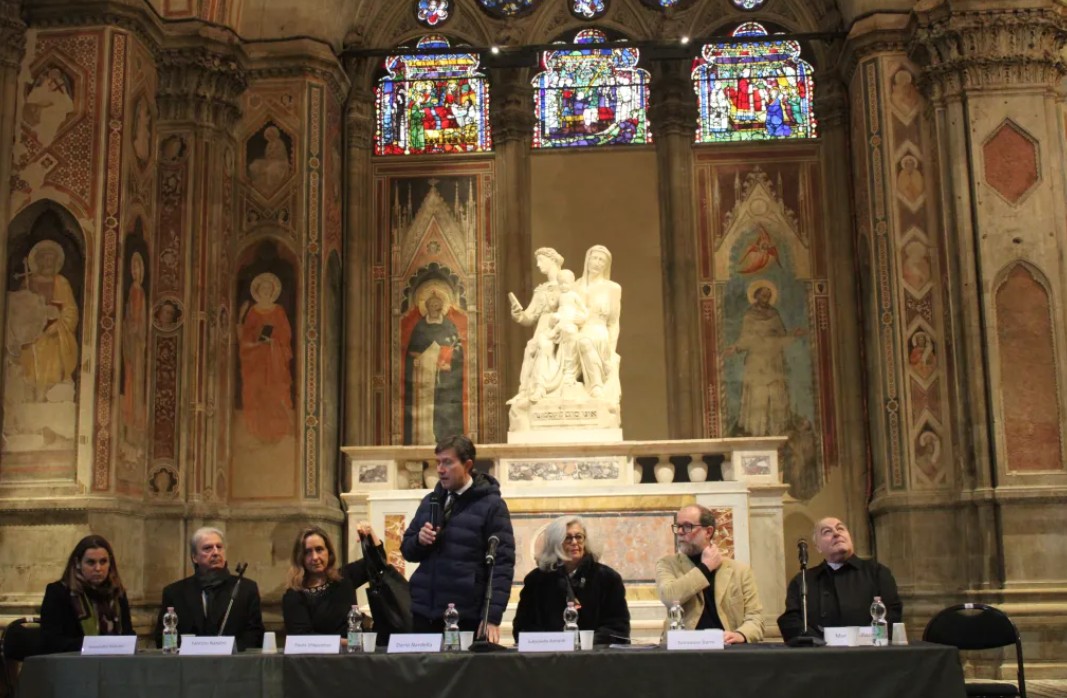
Sono serviti 400 giorni di lavoro per apportare le migliorie al museo e alla Chiesa di Orsanmichele che adesso consentiranno di poter osservare con criteri contemporaneo di musealizzazione le 13 opere originali in bronzo e in marmo che un tempo si trovavano quotidianamente esposte agli occhi dei passanti, nelle nicchie esterne

Il grande intervento relativo al complesso di Orsanmichele è l’ultima opera che viene presentata dalla direttrice dei Musei del Bargello Paola D’Agostino che proprio oggi termina il suo mandato di otto anni, lasciandosi alle spalle una serie di lavori e ammodernamenti molto importanti.
Massimo Osanna, direttore generale dei musei, assumerà la direzione ad interim.

I grandi scultori del Rinascimento fiorentino quali Lorenzo Ghiberti con il San Giovanni Battista, Santo Stefano e San Matteo, Donatello con il San Marco e San Pietro, Nanni di Banco con Sant’Eligio, San Filippo, Quattro Santi Coronati, Andrea del Verrocchio con Incredulità di San Tommaso, Baccio da Montelupo con San Giovanni Evangelista, il Giambologna con San Luca poste al fianco delle opere trecentesche di Piero di Giovanni Tedesco con la sua Madonna della Rosa e Niccolò di Pietro Lamberti con San Giacomo Maggiore, potranno essere apprezzate nel migliore dei modi possibili.
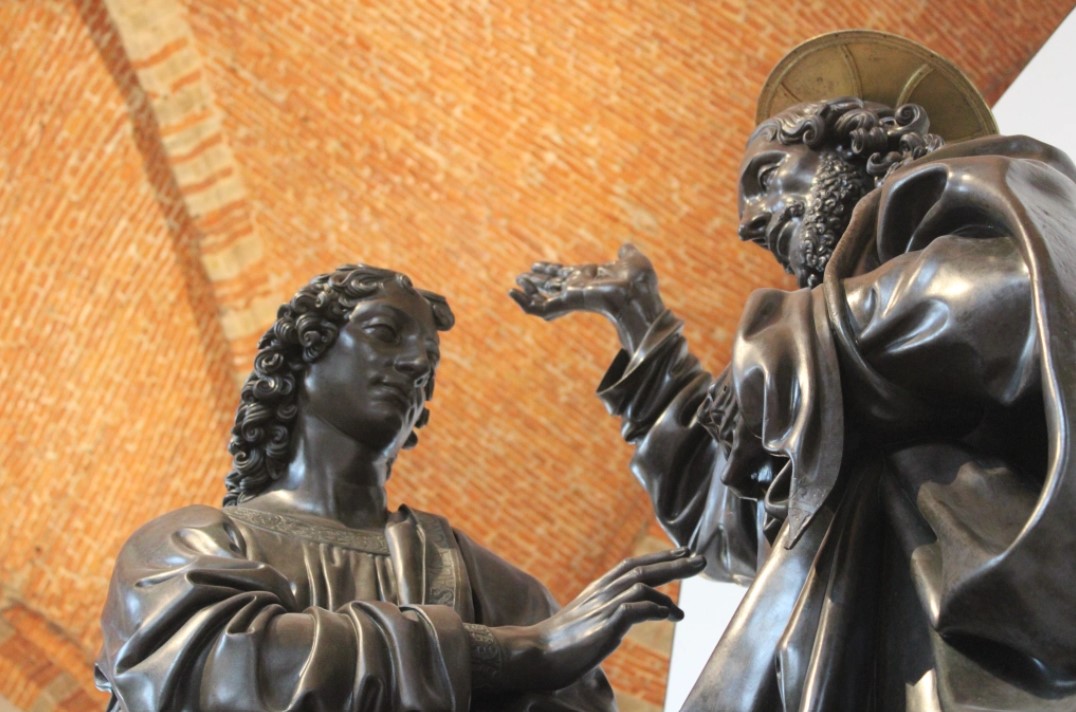
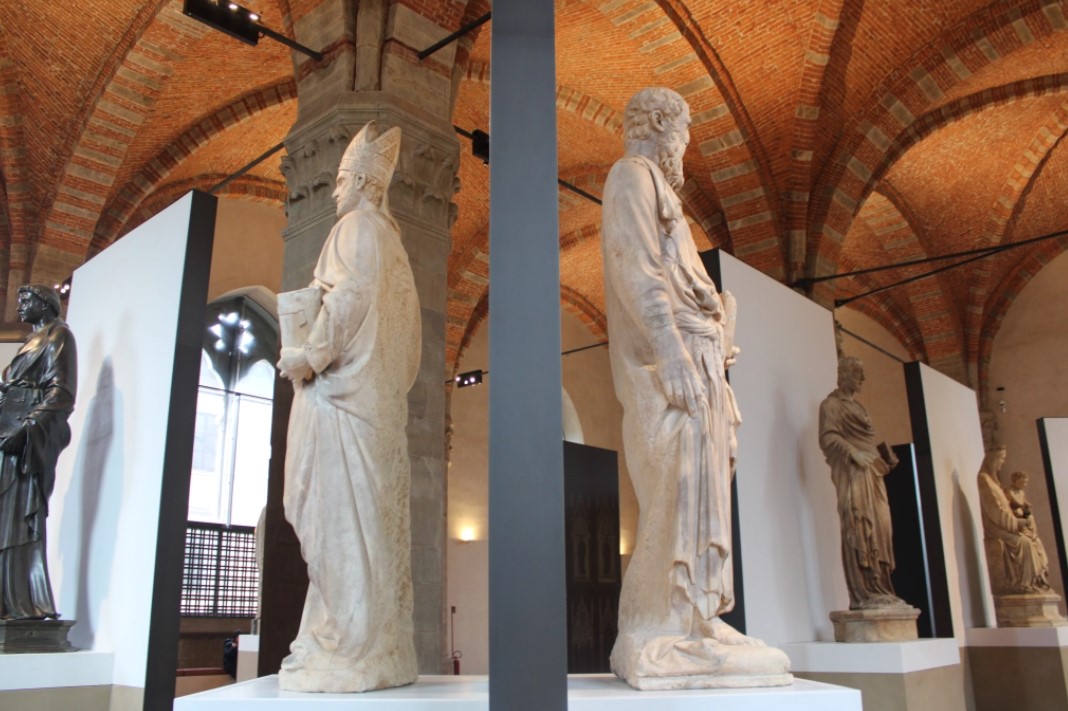
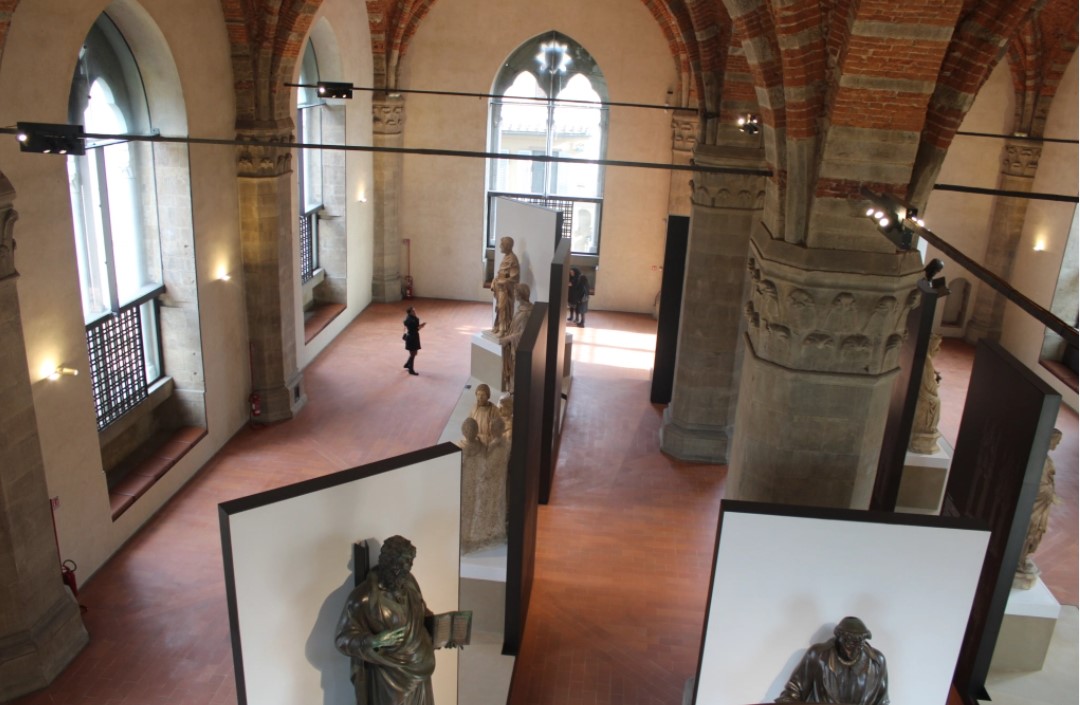
Mentre all’interno della chiesa gli architetti hanno lavorato sulle grandi bussole di accesso che incorniciano i portali in legno e sull’impianto di illuminazione, nel museo sono state realizzate strutture atte ad alzare le sculture, quasi come se fossero al di sopra di un podio ma non solo.
La loro attuale collocazione ha alle spalle un fondale bianco che ripropone la vista obbligata data dai tabernacoli. Inoltre tutte le sculture si trovano nella posizione corrispondente a quando erano nelle nicchie esterne: un ottimo stratagemma per proporre al visitatore una immaginaria passeggiata che rispecchi l’esterno del complesso.
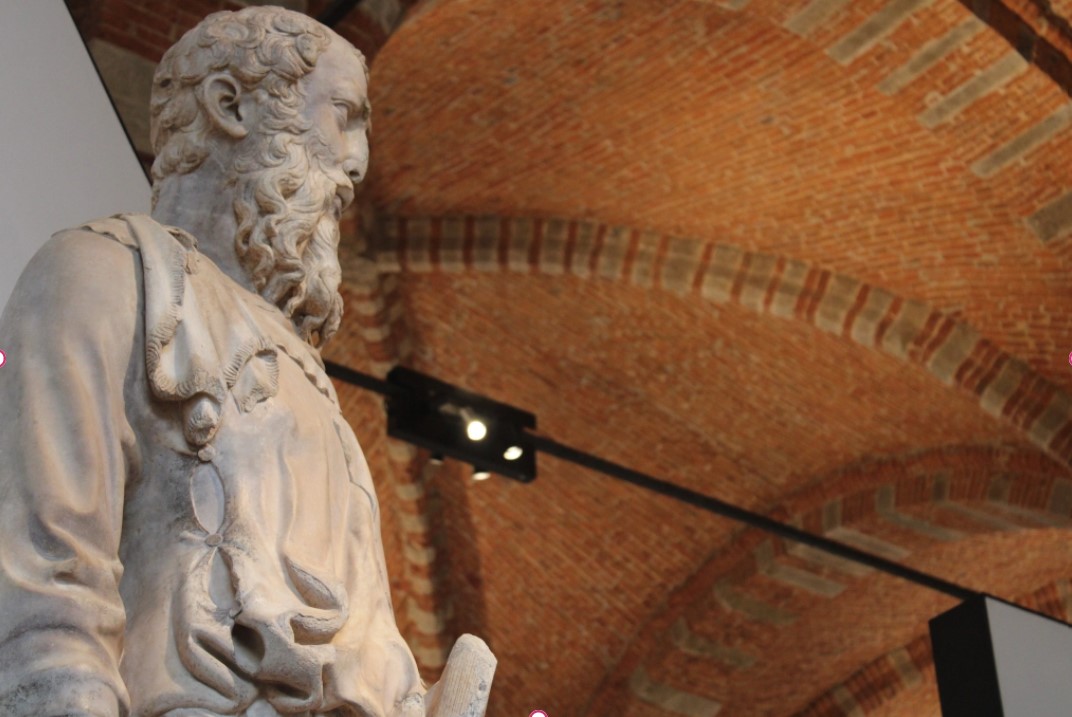
Sono particolarmente emozionanti le sculture del San Luca e il San Matteo poste in diagonale, proprio in corrispondenza degli angoli delle pedane che sembrano affacciarsi guardando i visitatori.
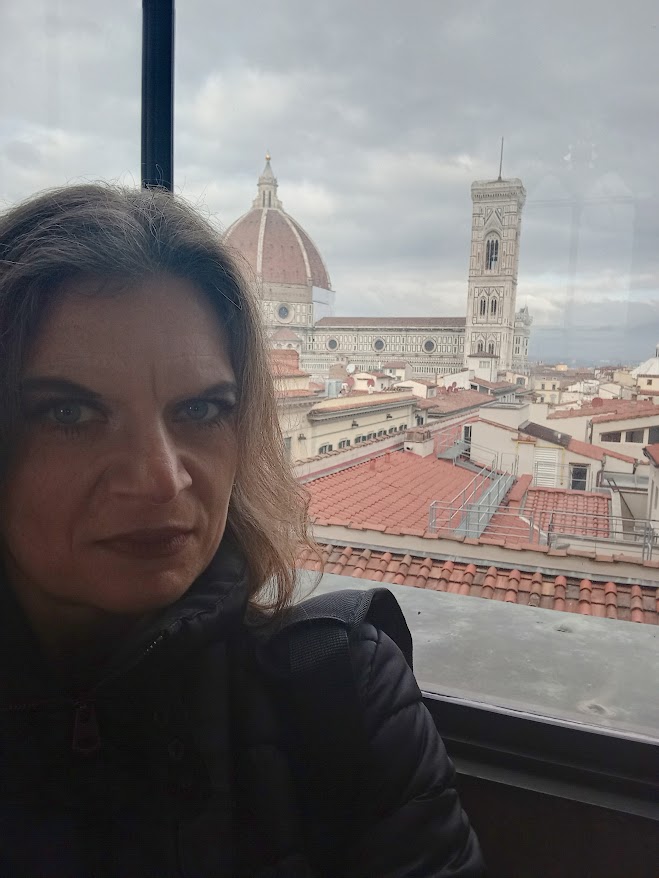
Sarà accessibile al terzo piano la spettacolare veduta a 360 gradi su Firenze che in un solo sguardo abbraccia il duomo con la cupola del Brunelleschi, le Cappelle Medicee, Palazzo Vecchio, Bargello, Badia e altri edifici cittadini inconfondibile
La chiusura del complesso monumentale ha permesso di portare avanti interventi di restauro e manutenzione straordinaria delle sculture presenti, dei dipinti murali e dei paramenti lapidei.
A distanza di cinque anni dal precedente intervento di manutenzione straordinaria, è stata effettuata la spolveratura integrale del meraviglioso tabernacolo dell’ Orcagna.
Nella parte absidale della chiesa è stato eseguito il restauro di gran parte delle pareti, con la pulitura del colonnini alla base delle grandi trifore e al ripristino degli intonaci di tamponatura.
Mediante la rimozione della vecchia sagrestia addossata alla parete nord-est, sono tornate visibili porzioni degli affreschi raffiguranti San Domenico e San Francesco, sulle quali è stato necessario intervenire con un restauro.
Sempre nella zona absidale sono stati restaurati i basamenti dei sei pilastri delle campate che risultavano molto sporchi a causa di macchie e tracce di materiali cerosi, stratificatisi nel corso del tempo.

Un recupero significativo e stato quello delle pitture delle facce di tre pilastri, raffiguranti San Giovanni Evangelista, San Barnoba e San Pietro, posizionati nelle campate nord-est e sud-est, il cui stato conservativo risultava alquanto degradato a causa di gravi distacchi degli intonaci, sollevamenti e disgregazione della pellicola pittorica.
L’intervento di pulitura, e di ritocco pittorico a velatura ha restituito unitarietà al ciclo pittorico, in particolare al brano con la figura di San Barnaba.

Per il momento il vostro Michelangelo Buonarroti vi saluta dandovi appuntamento ai prossimi post e sui social.
Orsanmichele: reopens after restoration and offers a spectacular view of Florence
After an intense year of restoration work, making it safe, rearranging and improving the accesses, the Orsanmichele complex finally reopens to the public, including the top floor which offers a spectacular view from above over the whole of Florence.
Starting from January 19th, visitors will be able to access the complex every day of the week, except Tuesday.
400 days of work were needed to make the improvements to the museum and the Church of Orsanmichele which will now allow us to observe with contemporary museum criteria the 13 original works in bronze and marble which were once exposed daily to the eyes of passers-by, in the external niches
The major intervention relating to the Orsanmichele complex is the latest work to be presented by the director of the Bargello Museums Paola D’Agostino who ends her eight-year mandate today, leaving behind a series of very important works and modernisations.
Massimo Osanna, general director of the museums, will take over the management ad interim.
The great sculptors of the Florentine Renaissance such as Lorenzo Ghiberti with Saint John the Baptist, Saint Stephen and Saint Matthew, Donatello with Saint Mark and Saint Peter, Nanni di Banco with Saint Eligio, Saint Philip, Four Crowned Saints, Andrea del Verrocchio with Incredulity of San Tommaso, Baccio da Montelupo with San Giovanni Evangelista, Giambologna with San Luca placed alongside the fourteenth-century works of Piero di Giovanni Tedesco with his Madonna della Rosa and Niccolò di Pietro Lamberti with San Giacomo Maggiore, can be appreciated at their best possible ways.
While inside the church the architects worked on the large access doors that frame the wooden portals and on the lighting system, in the museum structures were created to raise the sculptures, almost as if they were above a podium but not only.
Their current location has a white backdrop behind it which recreates the obligatory view given by the tabernacles. Furthermore, all the sculptures are found in the position corresponding to when they were in the external niches: an excellent ploy to offer the visitor an imaginary walk that reflects the exterior of the complex.
The sculptures of Saint Luke and Saint Matthew placed diagonally, right at the corners of the platforms which seem to look out at the visitors, are particularly exciting.
The spectacular 360-degree view of Florence will be accessible on the third floor, which in a single glance embraces the cathedral with Brunelleschi’s dome, the Medici Chapels, Palazzo Vecchio, Bargello, Badia and other unmistakable city buildings. The closure of the monumental complex has made it possible to bring ongoing restoration and extraordinary maintenance work on the sculptures present, the wall paintings and stone facings.
Five years after the previous extraordinary maintenance intervention, the complete dusting of the wonderful Orcagna tabernacle was carried out.
In the apse part of the church, the restoration of a large part of the walls was carried out, with the cleaning of the columns at the base of the large three-lancet windows and the restoration of the infill plaster.
Through the removal of the old sacristy against the north-east wall, portions of the frescoes depicting San Domenico and San Francesco became visible again, on which it was necessary to intervene with a restoration.
Also in the apse area, the bases of the six pillars of the spans were restored which were very dirty due to stains and traces of waxy materials, stratified over time.
A significant recovery was that of the paintings on the faces of three pillars, depicting Saint John the Evangelist, Saint Barnoba and Saint Peter, positioned in the north-east and south-east bays, whose state of conservation was somewhat degraded due to serious detachments of the plaster , lifting and disintegration of the pictorial film.
The cleaning and painting retouching intervention with glazing has restored unity to the pictorial cycle, in particular to the piece with the figure of San Barnaba.
For the moment, your Michelangelo Buonarroti greets you and will meet you in future posts and on social media.

Sostienici – Support Us
Se questo blog ti piace e ti appassiona, puoi aiutarci a farlo crescere sempre più sostenendoci in modo concreto condividendo i post, seguendo le pagine social e con un contributo che ci aiuta ad andare avanti con il nostro lavoro di divulgazione. . ENGLISH: If you like and are passionate about this blog, you can help us make it grow more and more by supporting us in a concrete way by sharing posts, following social pages and with a contribution that helps us to move forward with our dissemination work.
10,00 €
-
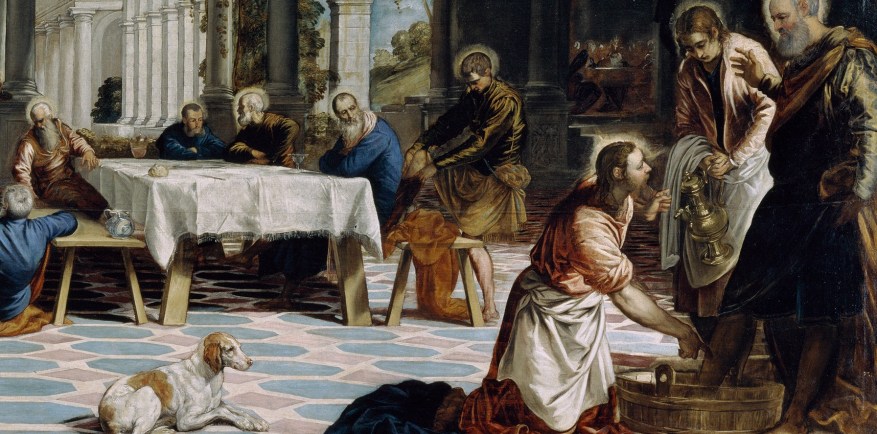
La Lavanda dei Piedi di Tintoretto: Il Capolavoro Veneziano al Prado
🇮🇹Tra i capolavori più affascinanti del Rinascimento veneziano, “La Lavanda dei Piedi” di Jacopo Tintoretto rappresenta un perfetto equilibrio tra spiritualità, innovazione compositiva e straordinaria forza narrativa… 🇬🇧Among the most fascinating masterpieces of the Venetian Renaissance, Jacopo Tintoretto’s “The Washing of the Feet” represents a perfect balance between spirituality, compositional innovation, and extraordinary narrative force…
-
Il Sacrificio di Isacco e quel momento tra la vita e la morte
🇮🇹Oggi voglio raccontarvi alcuni dettagli sul mio disegno del Sacrificio di Isacco, conservato oggi a Casa Buonarroti. Su quel foglio volli tracciare il momento preciso in cui la paura fa spazio al miracolo… 🇬🇧Today I want to tell you some details about my drawing of the Sacrifice of Isaac, now preserved at Casa Buonarroti. On…
-
Mercoledì Santo: il giorno del tradimento di Giuda affrescato da Giotto
🇮🇹Il Mercoledì Santo è il giorno del silenzio, della riflessione e del tradimento. È il momento in cui Giuda sceglie di vendere Gesù per trenta denari, segnando uno dei passaggi più dolorosi della Settimana Santa…. 🇬🇧Holy Wednesday is a day of silence, reflection, and betrayal. ✝It is the moment when Judas chooses to sell Jesus…
Condividi:


Questo sono io





sostienici

Sostienici – Support Us
Se questo blog ti piace e ti appassiona, puoi aiutarci a farlo crescere sempre più sostenendoci in modo concreto condividendo i post, seguendo le pagine social e con un contributo che ci aiuta ad andare avanti con il nostro lavoro di divulgazione. . ENGLISH: If you like and are passionate about this blog, you can help us make it grow more and more by supporting us in a concrete way by sharing posts, following social pages and with a contribution that helps us to move forward with our dissemination work.
€10,00


1 commento »