

Le Opere del Natale: l’Adorazione dei Magi di Velázquez
L’opera del Natale che vi propongo oggi è l’Adorazione dei Magi, una straordinaria opera a olio su tela dipinta da Diego Velàzquez quando aveva vent’anni, nel 1619.
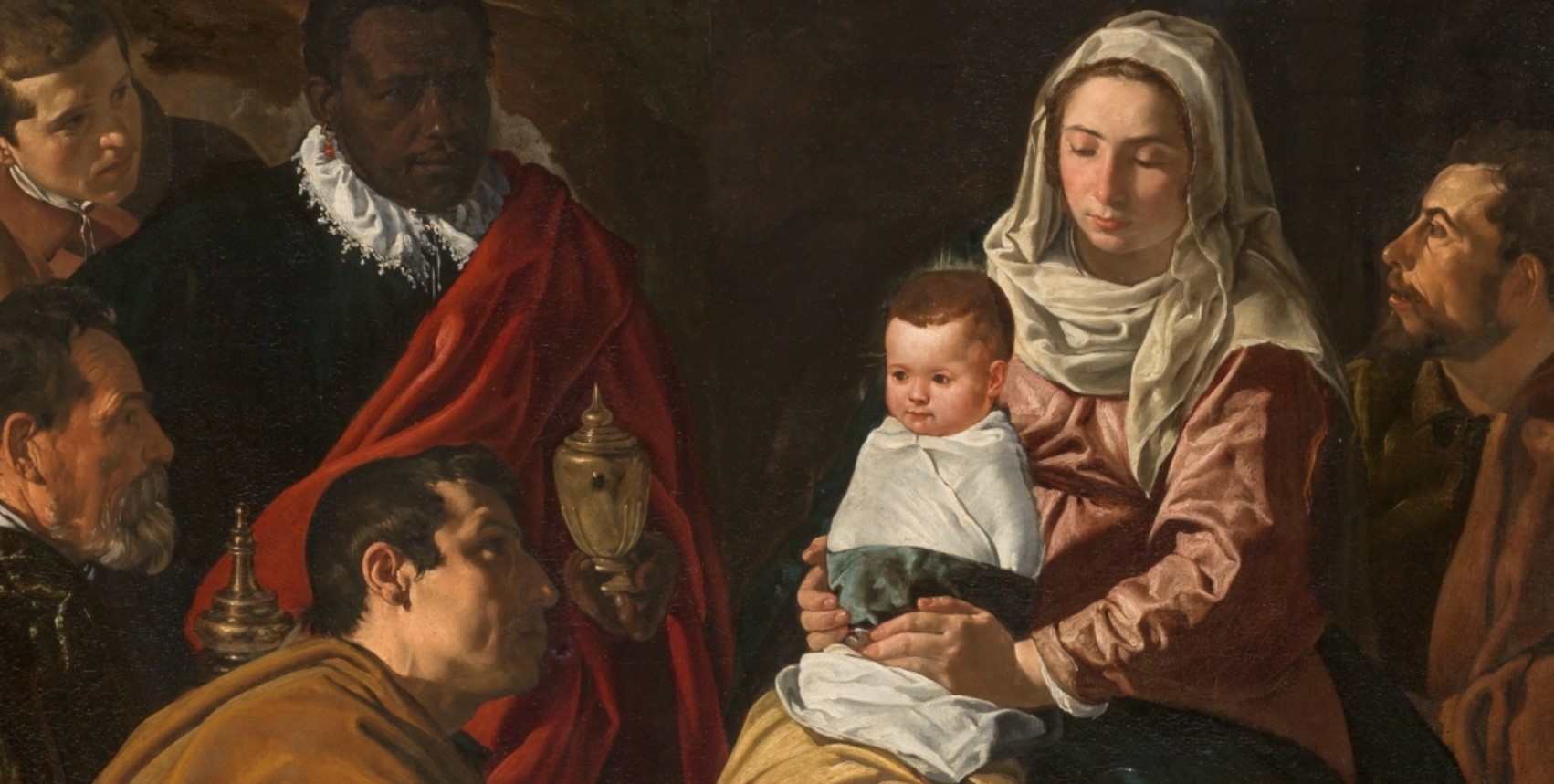
Osservando il dipinto oggi custodito presso il Museo del Prado di Madrid, è lampante il fatto che le figure siano state ritratte dal vivo e non idealizzate dall’artista. E’ infatti un vero e proprio ritratto di famiglia in cui la moglie Juana di Velazquez, all’epoca sedicenne, posò per essere ritratta nelle vesti della Vergine mentre i tratti della piccola figlia Francisca si ritrovano nel Gesù Bambino.
Nell’opera fanno la loro comparsa anche il fratello e il suocero Francisco Pacheco, a sua volta artista, nei panni dei Re Magi.
Come accennato prima, il dipinto fu realizzato da Velazquez da giovane, quando ancora figurava come apprendista presso la bottega del suocero Francisco Pacheco del Rio. Aguzzando la vista noterete che sotto il piede della Madonna, l’artista volle scrivere la data di realizzazione: 1619.
Fu il noviziato gesuita di San Luis a Siviglia a commissionare l’opera all’artista e, secondo la dottrina dei padri gesuiti, per rendere più vive le opere pittoriche, chi le realizzava avrebbe dovuto inserire al loro interno situazioni e personaggi contemporanei. In effetti è proprio quello che fece Velazquez che sembra rispetti alla lettera questa idea dei committenti.

La scena dell’Adorazione si svolge all’aperto, vicino a una rovina. Il centro della scena è occupato dalla Vergine con il Bambino. La Madre sostiene il figlio fasciato con le mani mentre rivolge verso di Lui uno sguardo amorevole.
Dietro la nuca di Cristo, interpretato dalla figlia di Velazaquez, si nota una luce che simboleggia l’avvenuta incarnazione di Dio sulla terra.
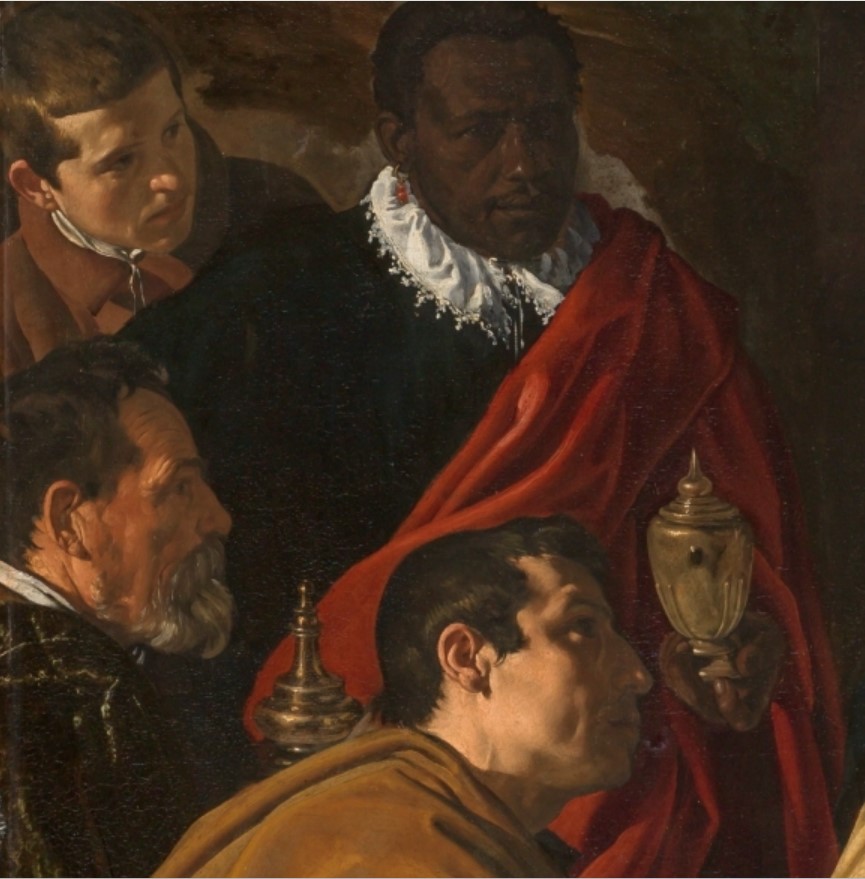
Dinnanzi al Bambino si inginocchia il Re Magio più giovane che potrebbe essere un autoritratto del giovane artista, avvolto in un manto color ocra, che si protende verso di Lui offrendogli il suo dono. Immediatamente dietro questo magio ne compare un altro più anziano, con il volto caratterizzato da una barba brizzolata. Probabilmente è lui il suocero e pittore Francisco Pacheco del Rio.
Il terzo magio sfoggia un colletto di pizzo bianco ed è accompagnato dal suo servitore e porta all’orecchio un orecchino di corallo rosso.
Dalla parte opposta dei Magi, si nota la presenza di San Giuseppe: l’unica figura che non volge lo sguardo verso il nuovo Nato ma osserva la Vergine.
Per il momento il vostro Michelangelo Buonarroti vi saluta dandovi appuntamento ai prossimi post e sui social.

The Works of Christmas: The Adoration of the Magi by Velázquez
The Christmas work that I propose to you today is the Adoration of the Magi, an extraordinary oil on canvas work painted by Diego Velàzquez when he was twenty years old, in 1619.
Looking at the painting now kept in the Prado Museum in Madrid, it is clear that the figures were portrayed live and not idealized by the artist. It is in fact a true family portrait in which Velazquez’s wife Juana, sixteen years old at the time, posed to be portrayed in the guise of the Virgin while the features of her little daughter Francisca are found in the Baby Jesus.
His brother and father-in-law Francisco Pacheco, himself an artist, also appear in the work as the Three Wise Men.
As mentioned before, the painting was created by Velazquez as a young man, when he was still an apprentice in the workshop of his father-in-law Francisco Pacheco del Rio. If you look closely you will notice that under the foot of the Madonna, the artist wanted to write the date of creation: 1619.
It was the Jesuit novitiate of San Luis in Seville that commissioned the work from the artist and, according to the doctrine of the Jesuit fathers, to make the pictorial works more alive, whoever created them should have inserted contemporary situations and characters within them. In fact, it is precisely what Velazquez did which seems to respect this idea of the clients to the letter.
The Adoration scene takes place outdoors, near a ruin. The center of the scene is occupied by the Virgin with the Child. The Mother supports her swaddled son with her hands while she turns a loving gaze towards him.
Behind the neck of Christ, played by Velazaquez’s daughter, there is a light that symbolizes the incarnation of God on earth.
The younger Wise King kneels in front of the Child, who could be a self-portrait of the young artist, wrapped in an ocher cloak, who reaches out towards him offering him his gift. Immediately behind this wizard another older one appears, with a face characterized by a graying beard. He is probably his father-in-law and painter Francisco Pacheco del Rio.
The third magician sports a white lace collar and is accompanied by his servant and wears a red coral earring in his ear.
On the opposite side of the Magi, we note the presence of Saint Joseph: the only figure who does not look towards the new born but observes the Virgin.
For the moment, your Michelangelo Buonarroti greets you and will meet you in future posts and on social media.

Sostienici – Support Us
Se questo blog ti piace e ti appassiona, puoi aiutarci a farlo crescere sempre più sostenendoci in modo concreto condividendo i post, seguendo le pagine social e con un contributo che ci aiuta ad andare avanti con il nostro lavoro di divulgazione. . ENGLISH: If you like and are passionate about this blog, you can help us make it grow more and more by supporting us in a concrete way by sharing posts, following social pages and with a contribution that helps us to move forward with our dissemination work.
8,00 €
-
Piero della Francesca moriva il 12 ottobre 1492: il genio della prospettiva
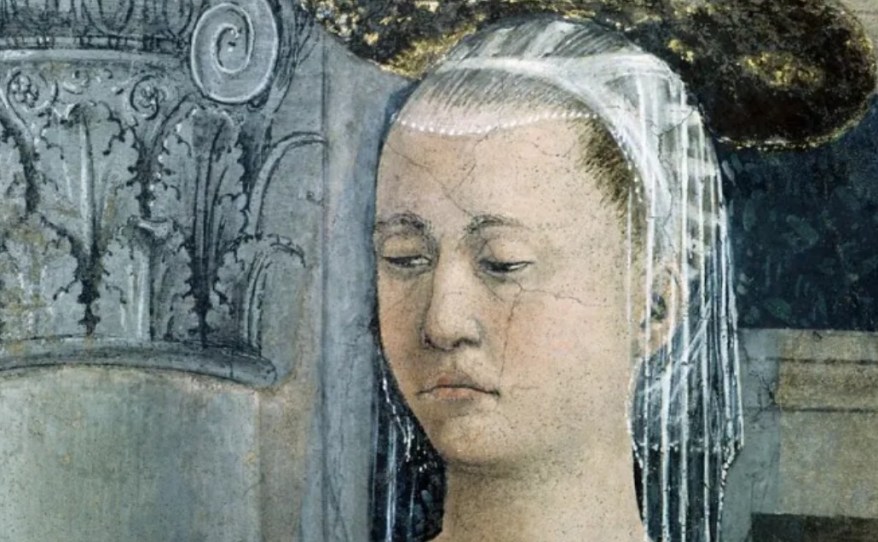
🇮🇹Il 12 ottobre 1492, mentre Cristoforo Colombo approdava nel continente americano, a Sansepolcro si spegneva Piero della Francesca… 🇬🇧On October 12, 1492, while Christopher Columbus was landing on the American continent, Piero della Francesca passed away in Sansepolcro…
-
La donna morsa dal serpente nella Cappella Sistina
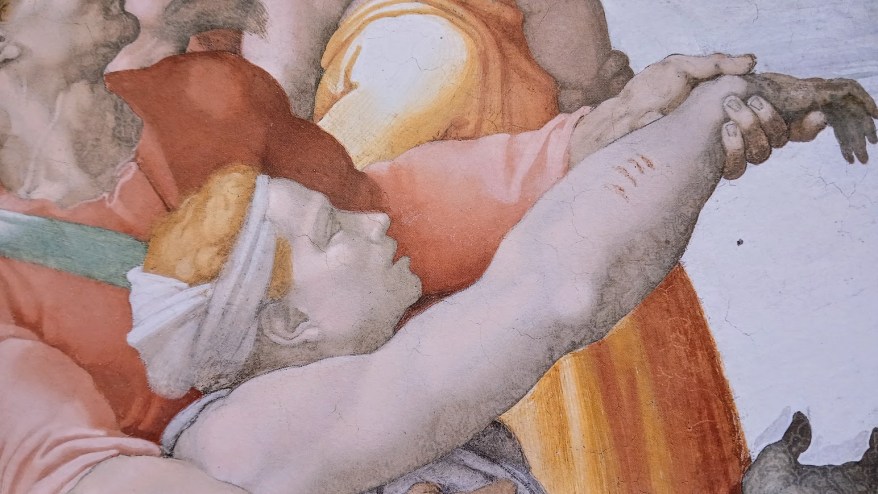
🇮🇹Quattro segni sul braccio. Nella volta della Cappella Sistina ho dipinto serpenti velenosi, corpi contorti e volti deformati dal terrore. Ma c’è un particolare che potrebbe sfuggirvi… 🇬🇧Four marks on the arm. On the ceiling of the Sistine Chapel, I painted venomous snakes, contorted bodies, and faces twisted by terror. But there is a detail…
-
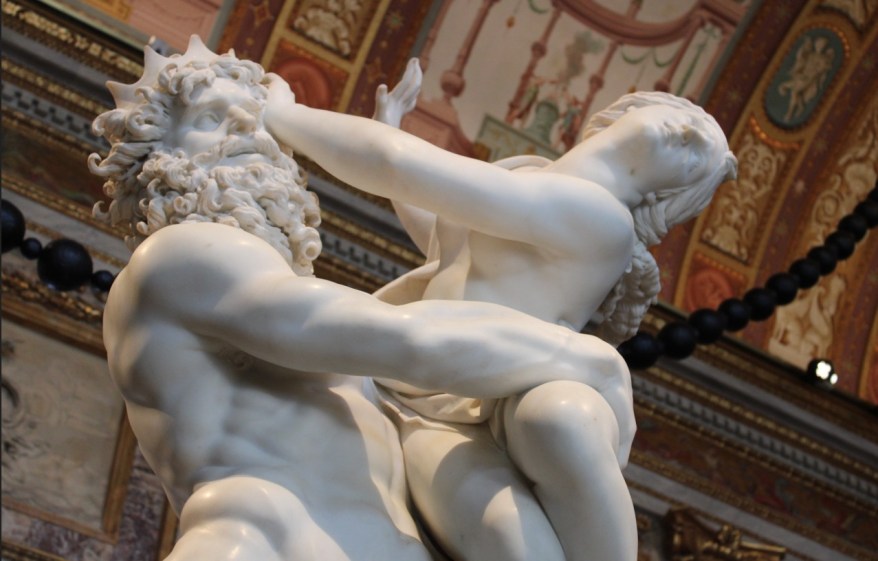
Gian Lorenzo Bernini: l’uomo che fece muovere il marmo
🇮🇹Davanti a una scultura di Gian Lorenzo Bernini, capita di avvicinarsi per osservare un dettaglio e ritrovarsi a seguire con lo sguardo l’intera scena. Una mano stringe una coscia, un volto si volta per sfuggire a uno sguardo, le dita si trasformano in foglie… 🇬🇧When standing before a sculpture by Gian Lorenzo Bernini, you might…
Condividi:


Questo sono io




sostienici

Sostienici – Support Us
Se questo blog ti piace e ti appassiona, puoi aiutarci a farlo crescere sempre più sostenendoci in modo concreto condividendo i post, seguendo le pagine social e con un contributo che ci aiuta ad andare avanti con il nostro lavoro di divulgazione. . ENGLISH: If you like and are passionate about this blog, you can help us make it grow more and more by supporting us in a concrete way by sharing posts, following social pages and with a contribution that helps us to move forward with our dissemination work.
€10,00


1 commento »