
4 dicembre: Santa Barbara nella storia dell’arte
Oggi 4 dicembre la chiesa cattolica ricorda Santa Barbara, patrona dei vigili del fuoco, degli artificieri, artiglieri, della marina militare e dei minatori.
Barbara nacque a Nocomedia nel 273. Il suo nome deriva dal greco e significa straniera, ovvero non romana.
Ebbe una sorte terribile quando il padre Dioscoro scoprì la sua fede cristiana e dopo il martirio della povera ragazza, suo padre fu incenerito da un fulmine a ciel sereno.

Nel corso dei secoli Santa Barbara fu raffigurata in sublimi opere d’arte ma c’è una rappresentazione di lei che a mio avviso le supera tutte. Raffaello la dipinse nella Madonna Sistina, inginocchiata ai piedi della Vergine mentre rivolge il suo sguardo verso i due angioletti che ricambiano quello sguardo con un’espressione buffa, quasi annoiata.
L’opera fu realizzata per il convento di San Sisto a Piacenza, come riporta anche il Vasari nelle Vite. Come mai oggi si trova nella Gemäldegalerie di Dresda? Purtroppo la Madonna Sistina fu sconsideratamente venduta nel 1754 dal priore del convento ad Augusto III di Polonia che la inserì nella collezione della galleria dove si trova oggi.

Questo capolavoro di Raffaello non ebbe vita facile. Durante il secondo dopoguerra, nel 1945, fu rubato e portato fino a Mosca per far ritorno a Dresda una decina di anni dopo.
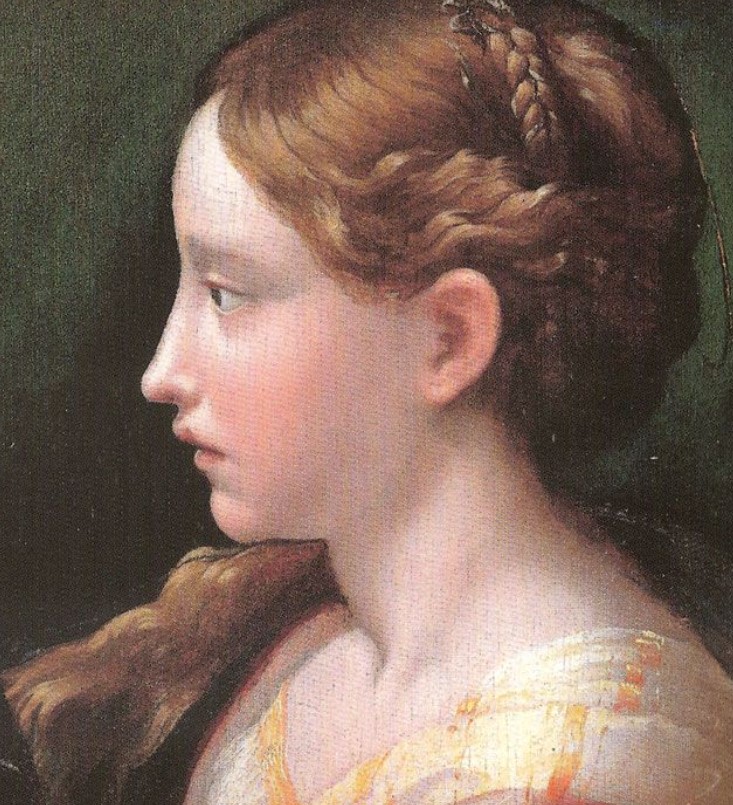
Santa Barbara fu dipinta anche dal Parmigianino a olio su tavola nel 1523, in un’opera oggi esposta al Museo del Prado a Madrid. Viene rappresentata a mezzo busto di profilo su uno sfondo verde.
Fra le mani ha la torre in cui venne imprigionata dal padre, simbolo del suo martirio assieme alle foglie di palma.
Il Parmigianino le donò un profilo delicato che si staglia sullo sfondo scuro. Mostra una raffinata acconciatura con un fermaglio sulla testa che le mantiene farmi i capelli intrecciati.

L’ultima Santa Barbara che vi propongo in questo 4 dicembre è quella a monocromo a olio su tavola del pittore fiammingo Jan van Eyck del 1437, conservata al Museo reale delle Belle Arti di Anversa. Un’opera assai insolita ma che sicuramente non lascia indifferenti.
Per il momento il vostro Michelangelo Buonarroti vi saluta dandovi appuntamento ai prossimi post e sui social.
December 4: Santa Barbara in the history of art
Today, December 4, the Catholic Church remembers Saint Barbara, patron saint of firefighters, bomb squads, artillerymen, the navy and miners.
Barbara was born in Nocomedia in 273. Her name comes from Greek and means foreign, that is, not Roman.
She had a terrible fate when her father Dioscoro discovered her Christian faith and after the martyrdom of the poor girl, her father was incinerated by a bolt of lightning from the blue.
Over the centuries, Santa Barbara was depicted in sublime works of art but there is one representation of her that in my opinion surpasses them all. Raphael painted her in the Sistine Madonna, kneeling at the feet of the Virgin while she turns her gaze towards the two little angels who return her gaze with a funny, almost bored expression.
The work was created for the convent of San Sisto in Piacenza, as Vasari also reports in the Lives. Why is it now in the Gemäldegalerie in Dresden? Unfortunately, the Sistine Madonna was thoughtlessly sold in 1754 by the prior of the convent to Augustus III of Poland who included it in the collection of the gallery where it is located today.
This masterpiece by Raphael did not have an easy life. During the Second World War, in 1945, it was stolen and taken to Moscow to return to Dresden about ten years later.
Santa Barbara was also painted by Parmigianino in oil on panel in 1523, in a work now exhibited at the Prado Museum in Madrid. She is represented half-length in profile on a green background.
In her hands he has the tower in which she was imprisoned by her father, a symbol of her martyrdom together with her palm leaves.
The Parmigianino gave it a delicate profile that stands out against the dark background. She shows a refined hairstyle with a clip on her head that keeps her hair braided.
The last Saint Barbara that I propose to you on this December 4th is the monochrome oil on panel one by the Flemish painter Jan van Eyck from 1437, preserved in the Royal Museum of Fine Arts in Antwerp. A very unusual work but one that certainly does not leave one indifferent.
For the moment, your Michelangelo Buonarroti greets you and will meet you in future posts and on social media.

Sostienici – Support Us
Se questo blog ti piace e ti appassiona, puoi aiutarci a farlo crescere sempre più sostenendoci in modo concreto condividendo i post, seguendo le pagine social e con un contributo che ci aiuta ad andare avanti con il nostro lavoro di divulgazione. . ENGLISH: If you like and are passionate about this blog, you can help us make it grow more and more by supporting us in a concrete way by sharing posts, following social pages and with a contribution that helps us to move forward with our dissemination work.
8,00 €
-
Il mio primo soggiorno a Bologna e l’incontro con Giovan Francesco Aldrovandi
🇮🇹Fuggii da Firenze a soli 19 anni. Senza certezze, senza protezioni. Solo con il mio talento. A Bologna trovai rifugio nella casa di Giovan Francesco Aldrovandi… 🇬🇧I fled Florence at just 19. Without certainties, without protection. Only with my talent. In Bologna, I found refuge in the home of Giovan Francesco Aldrovandi…
-
11 aprile 1514: muore Donato Bramante, il genio della scala elicoidale
🇮🇹Era l’11 aprile 1514 quando Donato Bramante morì a Roma. La sua scomparsa non cancellò però le tensioni, le rivalità e i giudizi contrastanti che avevano accompagnato tutta la sua carriera… 🇬🇧It was April 11, 1514, when Donato Bramante died in Rome. His passing, however, did not erase the tensions, rivalries, and conflicting opinions that…
-
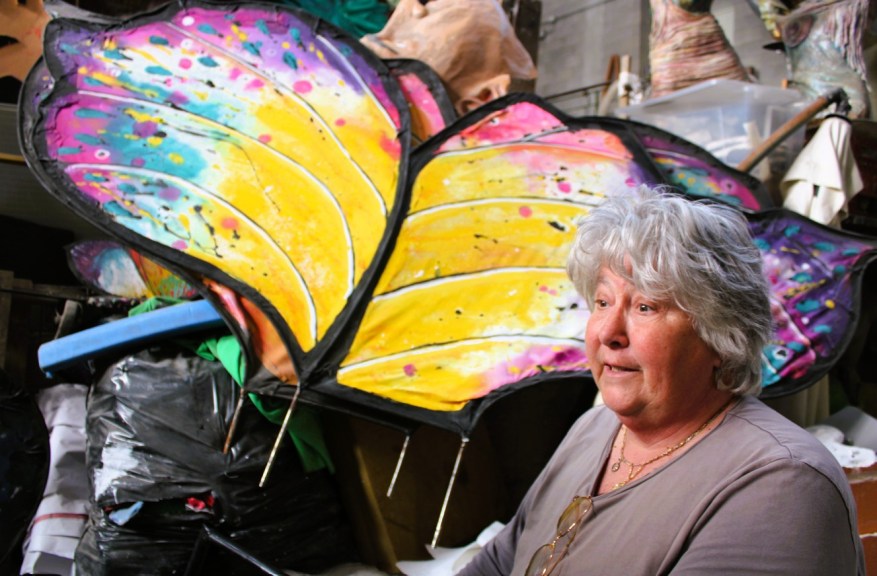
Dentro l’hangar 12 del Carnevale di Viareggio: dove la cartapesta prende vita con Marzia Etna
🇮🇹Ho incontrato Marzia Etna, maestra carrista da 40 anni: mentre racconta, le brillano gli occhi. E capisci subito una cosa: questo non è solo un lavoro, è vita tra carta a calco, ferro e sogni… 🇬🇧I met Marzia Etna, a master float builder for 40 years: her eyes sparkle as she talks. And you immediately…
Condividi:


Questo sono io





sostienici

Sostienici – Support Us
Se questo blog ti piace e ti appassiona, puoi aiutarci a farlo crescere sempre più sostenendoci in modo concreto condividendo i post, seguendo le pagine social e con un contributo che ci aiuta ad andare avanti con il nostro lavoro di divulgazione. . ENGLISH: If you like and are passionate about this blog, you can help us make it grow more and more by supporting us in a concrete way by sharing posts, following social pages and with a contribution that helps us to move forward with our dissemination work.
€10,00


