

Le Opere del Natale: la Natività quattrocentesca di Francesco di Giorgio Martini
L’opera del Natale che vi propongo oggi è la Natività di Gesù con san Bernardo e san Tommaso dipinta a tempera su tavola da Francesco di Giorgio Martini fra il 1475 e il 1476.
La tavola fu dipinta per il Monastero di San Benedetto fuori Porta Tufi a Siena, successicamnete distrutto, ed è l’unica opera che porta la firma dell’artista rinascimentale senese Francesco di Giorgio Martini.

Francesco di Giorgio oltre a essere un riconosciuto pitture fu anche un celebre scultore, ingegnere e architetto e lavorò sia a Siena che alla corte d’Urbino.
L’artista era spesso impegnato su più fronti e spesso ricorreva agli aiuti della sua bottega. Sulla tavola della Natività però c’è solo la sua mano perché i monaci committenti richiesero esplicitamente fosse solo lui a dipingerla.
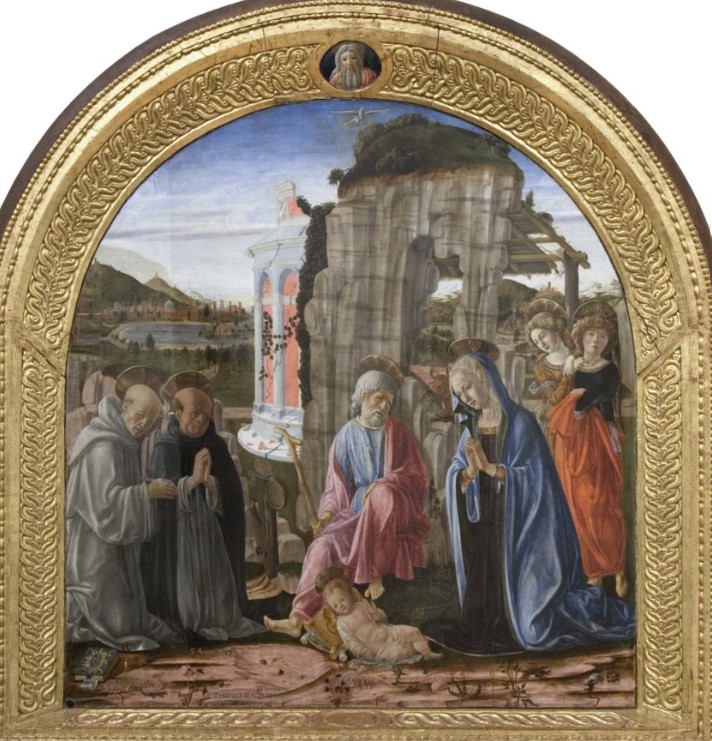
Vi racconto una particolarità. Vedete i due santi sulla sinistra?
Martini in origine dipinse San Bernardo e San Tommaso d’Aquino ma nel Seicento furono trasformati letteralmente in due santi locali: San Bernardino e il Beato Ambrogio Sansedoni.
Ne fu così aggiornata l’iconografia aggiungendo il sole con il monogramma sulla copertina del libro e la colomba che pare sussurrare all’orecchio di uno dei due santi. Anche le iscrizioni relative ai nomi di Bernardo e Tommaso d’Aquino furono accuratamente coperte e sostituite dai nomi degli altri santi. L’opera dopo il restauro ha riconquistato l’aspetto che aveva in origine.

Il dipinto di Martini ha molte affinità con la pittura fiorentina della seconda metà del Quattrocento e in particolare con quella di Filippo Lippi.
Anche la stesura del colore, molto incentrata sugli effetti della luce che definisce i volumi o l’utilizzo dello spazio è riconducibile alla scuola fiorentina.
Se volete vedere questo capolavoro con i vostri occhi non vi rimane che visitare la Pinacoteca di Siena.
Il sempre vostro Michelangelo Buonarroti vi saluta dandovi appuntamento ai prossimi post e sui social.

The Works of Christmas: the fifteenth-century Nativity of Francesco di Giorgio Martini
The Christmas work that I propose to you today is the Nativity of Jesus with Saint Bernard and Saint Thomas painted in tempera on wood by Francesco di Giorgio Martini between 1475 and 1476.
The panel was painted for the Monastery of San Benedetto outside Porta Tufi in Siena, which was subsequently destroyed, and is the only work that bears the signature of the Sienese Renaissance artist Francesco di Giorgio Martini.
Francesco di Giorgio, in addition to being a recognized painter, was also a famous sculptor, engineer and architect and worked both in Siena and at the court of Urbino.
The artist was often busy on multiple fronts and often resorted to the help of his workshop. However, there is only his hand on the panel of the Nativity because the commissioning monks explicitly requested that he alone paint it.
I’ll tell you a peculiarity. Do you see the two saints on the left?
Martini originally painted San Bernardo and San Tommaso d’Aquino but in the seventeenth century they were literally transformed into two local saints: San Bernardino and the Blessed Ambrogio Sansedoni.
The iconography was thus updated by adding the sun with the monogram on the cover of the book and the dove that seems to whisper in the ear of one of the two saints. Even the inscriptions relating to the names of Bernard and Thomas Aquinas were carefully covered and replaced by the names of the other saints. After the restoration, the work regained its original appearance.
Martini’s painting has many affinities with the Florentine painting of the second half of the fifteenth century and in particular with that of Filippo Lippi.
Even the application of colour, very focused on the effects of light that defines the volumes or the use of space, can be traced back to the Florentine school.
If you want to see this masterpiece with your own eyes, all you have to do is visit the Pinacoteca di Siena.
Your always Michelangelo Buonarroti greets you and will meet you in the next posts and on social media.

Sostienici – Support Us
Se questo blog ti piace e ti appassiona, puoi aiutarci a farlo crescere sempre più sostenendoci in modo concreto condividendo i post, seguendo le pagine social e con un contributo che ci aiuta ad andare avanti con il nostro lavoro di divulgazione. . ENGLISH: If you like and are passionate about this blog, you can help us make it grow more and more by supporting us in a concrete way by sharing posts, following social pages and with a contribution that helps us to move forward with our dissemination work.
8,00 €
-
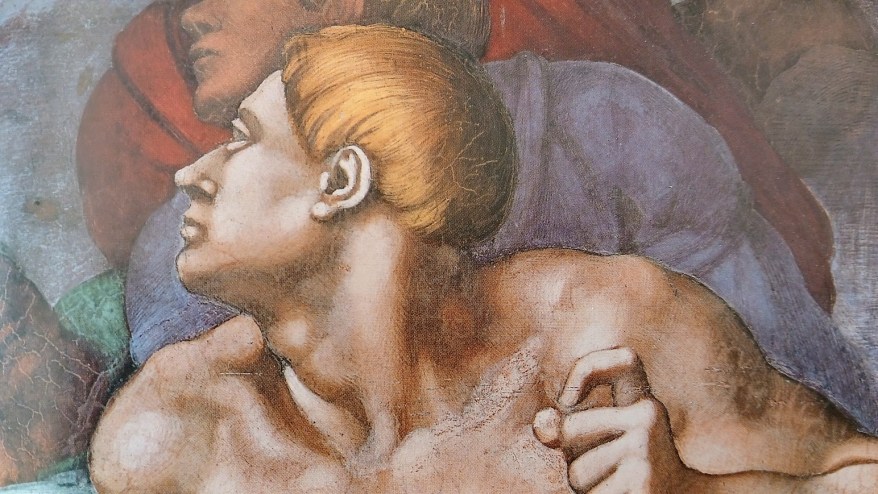
Il taglio a scodella nel Cinquecento: la curiosa acconciatura che compare nel Giudizio Universale della Sistina
🇮🇹Prima dei caschetti moderni e delle tendenze lanciate dai parrucchieri, nel Cinquecento esistevano già acconciature che ricordano sorprendentemente quelle di oggi e nel Giudizio Universale si vede bene… 🇬🇧<Long before modern bobs and trends set by hairstylists, 16th-century hairstyles existed that are surprisingly reminiscent of today's styles—as clearly seen in *The Last Judgment*…
-

La Natività mistica di Botticelli: il significato nascosto del dipinto più enigmatico del Natale
🇮🇹Angeli danzanti, demoni in fuga e una profezia apocalittica: scopri che cosa si nasconde nella Natività mistica di Sandro Botticelli, il dipinto che trasforma la nascita di Gesù in un messaggio di speranza per un mondo in crisi… 🇬🇧Dancing angels, fleeing demons, and an apocalyptic prophecy: discover what lies hidden in Sandro Botticelli’s *Mystic Nativity*,…
-
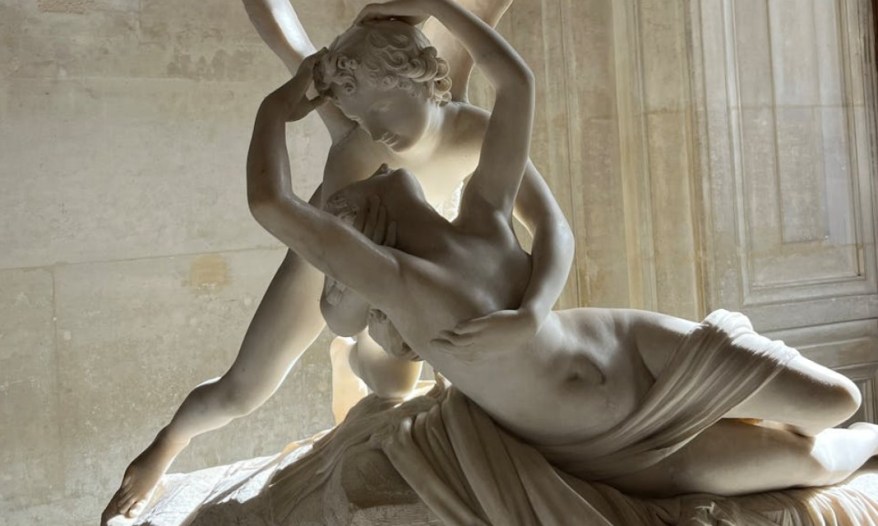
Antonio Canova, 13 ottobre 1822: muore lo scultore che diede vita al marmo
🇮🇹Il 13 ottobre 1822 moriva Antonio Canova. Scopri la vita, i capolavori, il rapporto con Napoleone e la missione per recuperare le opere d’arte italiane… 🇬🇧Antonio Canova died on October 13, 1822. Discover his life, his masterpieces, his relationship with Napoleon, and his mission to recover Italian works of art…
Condividi:


Questo sono io




sostienici

Sostienici – Support Us
Se questo blog ti piace e ti appassiona, puoi aiutarci a farlo crescere sempre più sostenendoci in modo concreto condividendo i post, seguendo le pagine social e con un contributo che ci aiuta ad andare avanti con il nostro lavoro di divulgazione. . ENGLISH: If you like and are passionate about this blog, you can help us make it grow more and more by supporting us in a concrete way by sharing posts, following social pages and with a contribution that helps us to move forward with our dissemination work.
€10,00


